
Recent from talks
First Battle of the Marne
Knowledge base stats:
Talk channels stats:
Members stats:
First Battle of the Marne
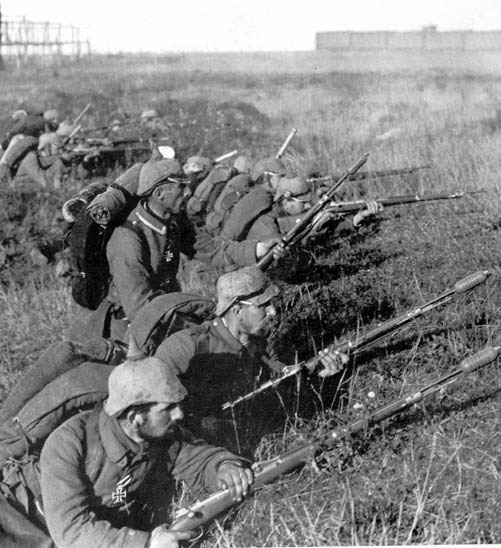
The First Battle of the Marne or known in France as the Miracle on the Marne (French: miracle de la Marne) was a battle of the First World War fought from 5 to 12 September 1914. The German army invaded France with a plan for winning the war in 40 days by occupying Paris and destroying the French and British armies. The Germans had initial successes in August. They were victorious in the Battles of Mons and the Frontiers and overran a large area of northern France and Belgium. In what is called the Great Retreat the Germans pursued the retreating French and British forces more than 250 km (160 mi) southwards. The French and British halted their retreat in the Marne River valley, while the Germans advanced to 40 km (25 miles) from Paris.
With the battlefield reverses of August, Field Marshal John French, commander of the British Expeditionary Force (BEF), lost faith in the French and began to plan for a British retreat to port cities on the English Channel for an evacuation to Britain. Joseph Joffre, the French commander, maintained good order in his retreating army and was able to reinforce it with troops from his eastern flank and by integrating military reserve units into the regular army. By early September, the Franco–British forces outnumbered the Germans, who were exhausted after a month-long campaign, had outrun their supply lines and were suffering shortages. On 3 September, the military governor of Paris, Joseph Gallieni, perceived that the German right flank was vulnerable and positioned his forces to attack.
On 4 September Joffre gave the order to begin a counter-offensive. The battle took place between Paris and Verdun, a west-to-east[clarification needed] distance of 230 km (140 mi). The point of decision and the severest fighting was in the western half of that area. By 9 September, the success of the Franco–British left the German 1st and 2nd Armies at risk of encirclement, and they were ordered to retreat to the Aisne River. The German armies ceased their retreat after 65 km (40 mi) on a line north of the Aisne River, where they dug in on the heights and fought the First Battle of the Aisne. The German retreat from 9 to 12 September marked the end of the German attempt to defeat France quickly. Both sides next commenced reciprocal operations to envelop the northern flank of their opponent in what became known as the Race to the Sea that culminated in the First Battle of Ypres and led to the bloody four-year long stalemate of trench warfare on the Western Front.
The Battle of the Marne from September 5 to 12 resulted in estimated casualties of 250,000 French, 12,733 British and 298,000 Germans. Holger Herwig called the Battle of the Marne the most important land battle of the 20th century, John J. Tierney, Jr, argued it was the most important battle in history. The battle is described in French folklore as the "miracle on the Marne."
Germany declared war on France on 3 August 1914. Both sides expected a short war. Germany faced the spectre of a two-front war, facing Russia in the east and France and Britain in the west. German strategy was to defeat France in six weeks and then turn its attention to Russia. As envisioned by the Schlieffen Plan (revised by Helmuth von Moltke), the Germans embarked on a rapid, circular, counter-clockwise offensive through Belgium and into France with the objective of capturing Paris and enveloping and destroying the French army east of Paris within their six-week timetable. The German violation of Belgium's neutrality brought the United Kingdom into the war. Britain sent the British Expeditionary Force (BEF) to France.
Germany created seven armies for service on the western front. Three of them on the German right flank would be most involved in the Battle of the Marne. At the beginning of the war, the First Army numbered 320,000 men commanded by Alexander von Kluck; the Second Army had 260,000 men commanded by Karl von Bülow; and the Third Army commanded by Max von Hausen had 180,000 men. These numbers would be depleted by the time of the Marne Battle. The French army stationed on the western front initially consisted of five armies of which the Fourth Army, commanded by Fernand de Langle de Cary, and the Fifth Army, commanded by Charles Lanrezac, on its left flank would be most involved in the Battle of the Marne. Two additional French armies would be created to stem off the German offensive: the 6th Army commanded by Joseph Gallieni, created to protect Paris; and the 9th commanded by Ferdinand Foch. The French armies engaged in the Marne Battle were reinforced by reservists, recruits, and by transfers from other French and colonial armies. French divisions facing the German right wing rose from 17.5 on 23 August to 41 on 6 September, numbering more than 700,000 men. The BEF numbered 130,000 men at the beginning of the war and was commanded by John French.
The Commanders-in-Chief of the armies were a study in contrasts. Moltke, the chief of the German General Staff, remained at his headquarters in Luxembourg throughout the battle. He issued General Directives by way of emissaries from his headquarters, but gave his army commanders wide latitude in their operations. By contrast, the French commander, Joseph Joffre, was a whirlwind of activity (although insisting on fine dining and an uninterrupted eight hours of sleep every night). Joffre visited his armies and their commanders frequently, driven by a Grand Prix race car driver. He was ruthless in firing more than 30 French generals who did not meet his standards (or, as some say, who dared to disagree with him). John French, the British commander, was intimidated by the casualties suffered by the British in initial battles and thereafter reluctant to engage the Germans, but finally played an important role in the Battle of the Marne.
The strategies of the French and Germans likewise contrasted. The French focused their attention, troops, and defences in eastern France where they believed the Germans would be most dangerous. They were wrong. The Germans mostly stayed on defence in the east, although blunting French attacks. In the east, France had the objective of regaining Alsace–Lorraine which it had lost to Germany in the Franco-German war of 1870. The French did not fortify their northwestern border with Belgium as they did not expect the Germans to attack there and also feared being accused of violating Belgian neutrality—and thereby losing British participation in the war. Germany, however, had no compunctions about violating Belgian neutrality as its objective was to win the war quickly before the United Kingdom could intervene decisively. The French and British were outnumbered in contesting the German offensive through Belgium into France.
Hub AI
First Battle of the Marne AI simulator
(@First Battle of the Marne_simulator)
First Battle of the Marne
The First Battle of the Marne or known in France as the Miracle on the Marne (French: miracle de la Marne) was a battle of the First World War fought from 5 to 12 September 1914. The German army invaded France with a plan for winning the war in 40 days by occupying Paris and destroying the French and British armies. The Germans had initial successes in August. They were victorious in the Battles of Mons and the Frontiers and overran a large area of northern France and Belgium. In what is called the Great Retreat the Germans pursued the retreating French and British forces more than 250 km (160 mi) southwards. The French and British halted their retreat in the Marne River valley, while the Germans advanced to 40 km (25 miles) from Paris.
With the battlefield reverses of August, Field Marshal John French, commander of the British Expeditionary Force (BEF), lost faith in the French and began to plan for a British retreat to port cities on the English Channel for an evacuation to Britain. Joseph Joffre, the French commander, maintained good order in his retreating army and was able to reinforce it with troops from his eastern flank and by integrating military reserve units into the regular army. By early September, the Franco–British forces outnumbered the Germans, who were exhausted after a month-long campaign, had outrun their supply lines and were suffering shortages. On 3 September, the military governor of Paris, Joseph Gallieni, perceived that the German right flank was vulnerable and positioned his forces to attack.
On 4 September Joffre gave the order to begin a counter-offensive. The battle took place between Paris and Verdun, a west-to-east[clarification needed] distance of 230 km (140 mi). The point of decision and the severest fighting was in the western half of that area. By 9 September, the success of the Franco–British left the German 1st and 2nd Armies at risk of encirclement, and they were ordered to retreat to the Aisne River. The German armies ceased their retreat after 65 km (40 mi) on a line north of the Aisne River, where they dug in on the heights and fought the First Battle of the Aisne. The German retreat from 9 to 12 September marked the end of the German attempt to defeat France quickly. Both sides next commenced reciprocal operations to envelop the northern flank of their opponent in what became known as the Race to the Sea that culminated in the First Battle of Ypres and led to the bloody four-year long stalemate of trench warfare on the Western Front.
The Battle of the Marne from September 5 to 12 resulted in estimated casualties of 250,000 French, 12,733 British and 298,000 Germans. Holger Herwig called the Battle of the Marne the most important land battle of the 20th century, John J. Tierney, Jr, argued it was the most important battle in history. The battle is described in French folklore as the "miracle on the Marne."
Germany declared war on France on 3 August 1914. Both sides expected a short war. Germany faced the spectre of a two-front war, facing Russia in the east and France and Britain in the west. German strategy was to defeat France in six weeks and then turn its attention to Russia. As envisioned by the Schlieffen Plan (revised by Helmuth von Moltke), the Germans embarked on a rapid, circular, counter-clockwise offensive through Belgium and into France with the objective of capturing Paris and enveloping and destroying the French army east of Paris within their six-week timetable. The German violation of Belgium's neutrality brought the United Kingdom into the war. Britain sent the British Expeditionary Force (BEF) to France.
Germany created seven armies for service on the western front. Three of them on the German right flank would be most involved in the Battle of the Marne. At the beginning of the war, the First Army numbered 320,000 men commanded by Alexander von Kluck; the Second Army had 260,000 men commanded by Karl von Bülow; and the Third Army commanded by Max von Hausen had 180,000 men. These numbers would be depleted by the time of the Marne Battle. The French army stationed on the western front initially consisted of five armies of which the Fourth Army, commanded by Fernand de Langle de Cary, and the Fifth Army, commanded by Charles Lanrezac, on its left flank would be most involved in the Battle of the Marne. Two additional French armies would be created to stem off the German offensive: the 6th Army commanded by Joseph Gallieni, created to protect Paris; and the 9th commanded by Ferdinand Foch. The French armies engaged in the Marne Battle were reinforced by reservists, recruits, and by transfers from other French and colonial armies. French divisions facing the German right wing rose from 17.5 on 23 August to 41 on 6 September, numbering more than 700,000 men. The BEF numbered 130,000 men at the beginning of the war and was commanded by John French.
The Commanders-in-Chief of the armies were a study in contrasts. Moltke, the chief of the German General Staff, remained at his headquarters in Luxembourg throughout the battle. He issued General Directives by way of emissaries from his headquarters, but gave his army commanders wide latitude in their operations. By contrast, the French commander, Joseph Joffre, was a whirlwind of activity (although insisting on fine dining and an uninterrupted eight hours of sleep every night). Joffre visited his armies and their commanders frequently, driven by a Grand Prix race car driver. He was ruthless in firing more than 30 French generals who did not meet his standards (or, as some say, who dared to disagree with him). John French, the British commander, was intimidated by the casualties suffered by the British in initial battles and thereafter reluctant to engage the Germans, but finally played an important role in the Battle of the Marne.
The strategies of the French and Germans likewise contrasted. The French focused their attention, troops, and defences in eastern France where they believed the Germans would be most dangerous. They were wrong. The Germans mostly stayed on defence in the east, although blunting French attacks. In the east, France had the objective of regaining Alsace–Lorraine which it had lost to Germany in the Franco-German war of 1870. The French did not fortify their northwestern border with Belgium as they did not expect the Germans to attack there and also feared being accused of violating Belgian neutrality—and thereby losing British participation in the war. Germany, however, had no compunctions about violating Belgian neutrality as its objective was to win the war quickly before the United Kingdom could intervene decisively. The French and British were outnumbered in contesting the German offensive through Belgium into France.
Recent media