
Recent from talks
Erico Verissimo
Knowledge base stats:
Talk channels stats:
Members stats:
Erico Verissimo
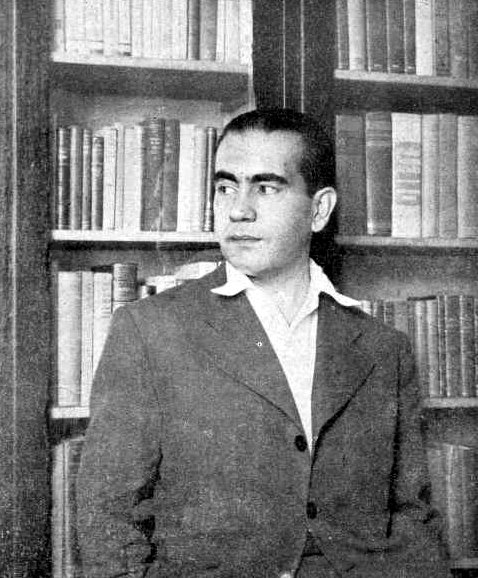
Érico Lopes Veríssimo (December 17, 1905 – November 28, 1975) was an important Brazilian writer, born in the State of Rio Grande do Sul.
Érico Veríssimo was the son of Sebastião Veríssimo da Fonseca and Abegahy Lopes Veríssimo. His father, heir of a rich family in Cruz Alta, met financial ruin during his son's youth and, as a result, Erico didn't complete secondary school because of the need to work.
Veríssimo settled in Cruz Alta as the owner of a drugstore, but was unsuccessful. He then moved to Porto Alegre in 1930, willing to live solely by selling his writing. There he began to live around writers of renown, such as Mário Quintana, Augusto Meyer, Guilhermino César and others. In the following year, he was hired to occupy the position of secretary of edition of the Revista do Globo, of which he would become editor in 1933. He then undertook the whole editorial project at Editora Globo, propelling its nationwide fame.
He published his first work, Fantoches ("Puppets"), in 1932, with a sequence of short stories, mostly in the form of short plays. The following year, he saw his first great success with the romance Clarissa.
Veríssimo married in 1931 to Mafalda Volpe and had two children, Luis Fernando Verissimo, also a writer, and Clarissa.
In 1938 Veríssimo published Olhai os Lírios do Campo (Behold the Lilies of the Field) and had great success in Brazil; the novel was translated into German, French, Italian, Japanese, Indochinese, and adapted into a film by Ernesto Arancibia in Argentina in 1947 and into a soap opera by TV Globo in Brazil in 1980.
In 1943 he moved with his family to the United States, where he gave lessons on Brazilian Literature in the University of California-Berkeley, until 1945. Between 1953 and 1956 he was director of the Department of Cultural Affairs of the Organization of American States, in Washington, D.C. This period of his life was recorded in some of his books, including: Gato Preto em Campo de Neve ("Black Cat in a Snow Field"), A Volta do Gato Preto ("The Return of the Black Cat"), and História da Literatura Brasileira ("History of Brazilian Literature"), which contains some of his lectures at UCLA. His epic O Tempo e o Vento ("The Time and the Wind'") became one of the great masterpieces of the Brazilian novel, alongside Os Sertões by Euclides da Cunha, and Grande Sertão: Veredas by Guimarães Rosa.
His historical trilogy O Tempo e o Vento ("The Time and the Wind") is considered as his greatest work, written in the period of 1949–1961, from which arose primordial characters such as Ana Terra and Capitão Rodrigo that went on to become popular amongst his readers. Four of his, Time and the Wind, Night, Mexico, and His Excellency, the Ambassador, were translated into the English language by Linton Lomas Barrett.
Hub AI
Erico Verissimo AI simulator
(@Erico Verissimo_simulator)
Erico Verissimo
Érico Lopes Veríssimo (December 17, 1905 – November 28, 1975) was an important Brazilian writer, born in the State of Rio Grande do Sul.
Érico Veríssimo was the son of Sebastião Veríssimo da Fonseca and Abegahy Lopes Veríssimo. His father, heir of a rich family in Cruz Alta, met financial ruin during his son's youth and, as a result, Erico didn't complete secondary school because of the need to work.
Veríssimo settled in Cruz Alta as the owner of a drugstore, but was unsuccessful. He then moved to Porto Alegre in 1930, willing to live solely by selling his writing. There he began to live around writers of renown, such as Mário Quintana, Augusto Meyer, Guilhermino César and others. In the following year, he was hired to occupy the position of secretary of edition of the Revista do Globo, of which he would become editor in 1933. He then undertook the whole editorial project at Editora Globo, propelling its nationwide fame.
He published his first work, Fantoches ("Puppets"), in 1932, with a sequence of short stories, mostly in the form of short plays. The following year, he saw his first great success with the romance Clarissa.
Veríssimo married in 1931 to Mafalda Volpe and had two children, Luis Fernando Verissimo, also a writer, and Clarissa.
In 1938 Veríssimo published Olhai os Lírios do Campo (Behold the Lilies of the Field) and had great success in Brazil; the novel was translated into German, French, Italian, Japanese, Indochinese, and adapted into a film by Ernesto Arancibia in Argentina in 1947 and into a soap opera by TV Globo in Brazil in 1980.
In 1943 he moved with his family to the United States, where he gave lessons on Brazilian Literature in the University of California-Berkeley, until 1945. Between 1953 and 1956 he was director of the Department of Cultural Affairs of the Organization of American States, in Washington, D.C. This period of his life was recorded in some of his books, including: Gato Preto em Campo de Neve ("Black Cat in a Snow Field"), A Volta do Gato Preto ("The Return of the Black Cat"), and História da Literatura Brasileira ("History of Brazilian Literature"), which contains some of his lectures at UCLA. His epic O Tempo e o Vento ("The Time and the Wind'") became one of the great masterpieces of the Brazilian novel, alongside Os Sertões by Euclides da Cunha, and Grande Sertão: Veredas by Guimarães Rosa.
His historical trilogy O Tempo e o Vento ("The Time and the Wind") is considered as his greatest work, written in the period of 1949–1961, from which arose primordial characters such as Ana Terra and Capitão Rodrigo that went on to become popular amongst his readers. Four of his, Time and the Wind, Night, Mexico, and His Excellency, the Ambassador, were translated into the English language by Linton Lomas Barrett.
Recent media