Hubbry Logo
The Fridge (nightclub)The Fridge (nightclub)Main
Open search
The Fridge (nightclub)
Community hub
The Fridge (nightclub)
logo
8 pages, 0 posts
0 subscribers
Be the first to start a discussion here.
The Fridge (nightclub)
from Wikipedia

The Fridge was a nightclub in the Brixton area of South London, England, founded, in 1981, by Andrew Czezowski and Susan Carrington,[1] who had run the Roxy during punk music's heyday in 1977. The Fridge closed on 17 March 2010 and has no link with Electric Brixton which opened in September 2011 and now occupies the building.[2][3]

Key Information

History

[edit]

The Fridge started in 1981, in a small club at 390 Brixton Rd, and later, in 1982, above Iceland in Brixton Road with a radical decor that included beat-up ice boxes and artificial dead cats hanging from its ceiling. Early guest DJs included Keith Barker-Main, later a lifestyle journalist and social commentator. It claims to have been the first British club to have such innovations as video screens and a chill out lounge. The Fridge was at the heart of the early 80s New Romantic movement, and booked such acts as Eurythmics and the Pet Shop Boys before they were well known and drew famous faces such as Boy George,[4] Frankie Goes to Hollywood, Magenta Devine, as well as Marc Almond and Grace Jones, who also performed there. Although all the nights at The Fridge welcomed anyone, the Friday nights were aimed primarily at the straight community in contrast to Love Muscle on Saturday nights which was promoted as a gay night.

FRIDGE nightclub, Brixton, 1985 invitation card to the opening on Friday 7 June 1985. (pink)

In 1984, as a result of its increased popularity, the owners of the club signed a lease on a converted 1913 cinema (The Palladium Picture House) formerly a roller-disco called the ACE on the Town Hall Parade.[5][6][7] After renovating the building, the new Fridge club opened on 7 June 1985. Joe Strummer from The Clash invested £5,000 in the new club. Andrew explains during an interview for 3:AM magazine, "what the club achieved since then -- its visuals laid the template for the rave scene, it's a look that's being copied across the world. There's been no recognition of course -- if a record is influential it's on vinyl for all to hear throughout history, but you can't really encapsulate a visual in the same way, people just take it for granted. Basically the look of modern-day clubs was started here in 1986."[7]

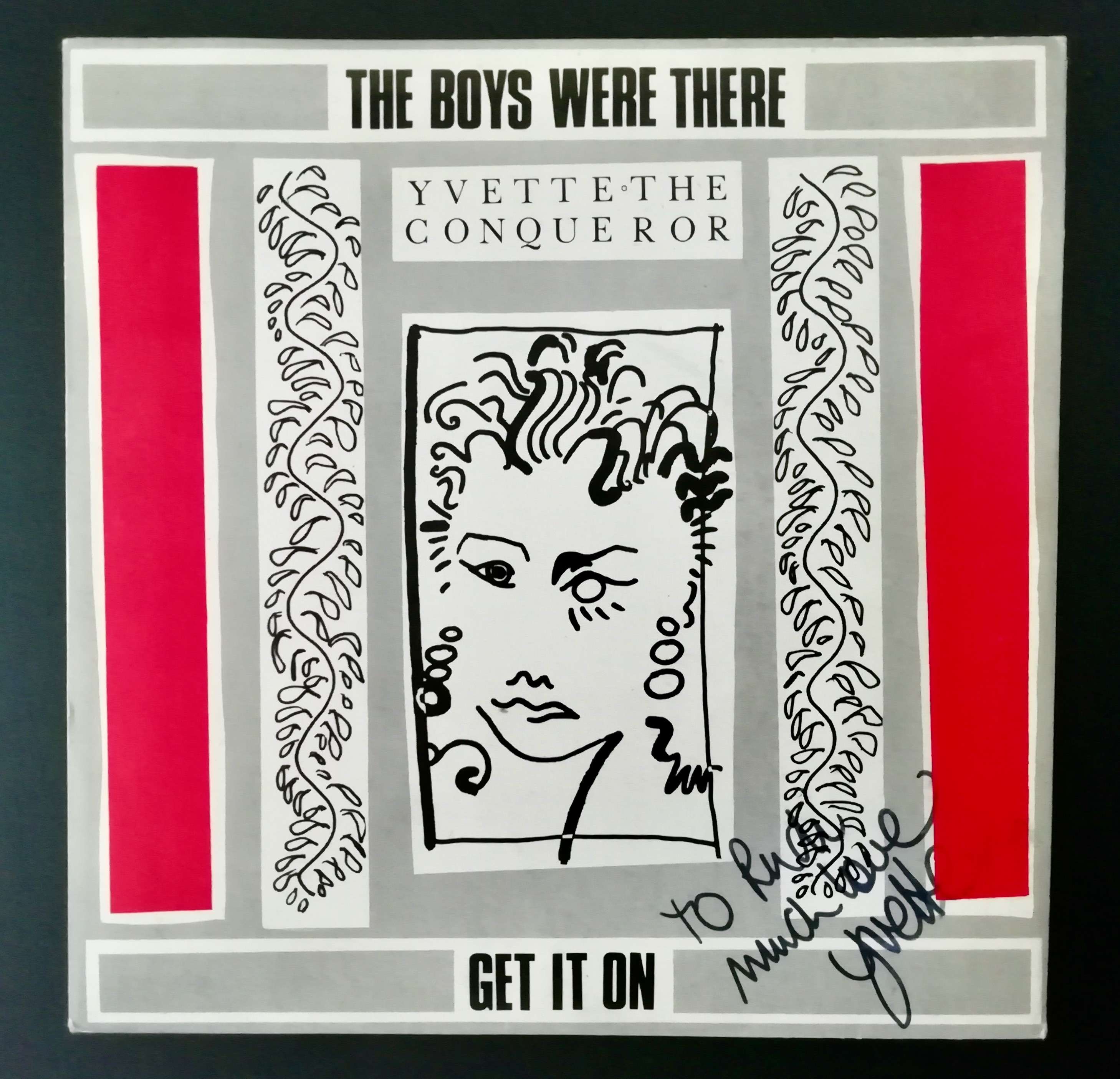
LATEX RECORDS, 1985, Yvette the Conqueror 1st single press release

In July 1985, Czezowski and Carrington launched their own Record Company, Latex Records, located at the Fridge. Yvette the Conqueror was the first artist signed to the label. The label's first release was a single by Yvette the Conqueror, titled "The Boys Were There",[8] produced by Iain 'Rudi' Williams (from the bands You You You and Big Bang).[9] Czezowski and Carrington also promoted many bands at the Fridge, one of which was the cult club-band You You You featuring club promoter Laurence Malice, Karen O'Connor and Iain 'Rudi' Williams. The band performed a sell-out concert at the Fridge on 27 March 1987, at which Czezowski had a huge white staircase built on the stage for the band to perform on.[10][11] The show was filmed for Japanese television. Since then it has hosted a variety of club nights most notably Soul II Soul (1988 - 1993) Daisy Chain (1987-1990) and Escape From Samsara (1995-2005).

Club nights

[edit]

Launched in September 1992 by Czezowski and Carrington, Love Muscle became one of the major gay club nights in London, running every Saturday night for almost a decade.[12]

The night was temporarily closed in 1998, but was soon brought back due to public demand. It never fully recovered however, and became increasingly infrequent during the period 2000–2002, then finally closed permanently in 2004.

Love Muscle returned to the Fridge on 31 December 2008 with the original promoter Andrew Czezowski with pyrotechnics and production effects.[13]

Other club nights included a residency from Soul II Soul, Escape From Samsara, and Return To The Source.

The Fridge Bar

[edit]

The Fridge Bar, located next-door to The Fridge, was typically used to host an afterparty on Saturday mornings, with DJs playing music to the small basement dancefloor.[14] A hand-stamp allowed paying punters to come and go freely, some choosing to spend part of the morning in the Peace Gardens park situated immediately opposite the venue.

Album releases

[edit]

An embodiment of The Fridge's most revered night Soul II Soul named "At the Africa Centre" for its original venue was released as a compilation album in 2003, mixed by Jazzie B

Escape from Samsara released a total of three unmixed compilation albums between 1996 and 1999. The group Zen Terrorists and solo artist SBL (Silicon Based Life) also both later released Live at Escape from Samsara albums. The second CD of the debut album by Lab 4 consisted of a live set recorded at Escape from Samsara at the Fridge, too.

Return to the Source released a number of compilation albums and a few singles on their label of the same name. Otherworld released a trance compilation entitled Dance, Trance & Magic Plants on the Transient label in 1997.

Closure

[edit]

The Fridge finally closed on 17 March 2010. The Love Muscle xx[15] website was online until 2014 and played loops of the club's memorable tracks, starting with Bob Sinclar's Save Our Souls.

The venue reopened in 2011 as Electric Brixton.[16] The venue is now owned by Electric Group.

See also

[edit]

References

[edit]
[edit]
Revisions and contributorsEdit on WikipediaRead on Wikipedia
from Grokipedia
The Fridge was a prominent nightclub in Brixton, South London, England, that operated from December 1981 until its closure on 17 March 2010. Founded by Andrew Czezowski and Susan Carrington—former operators of the Roxy club during the 1977 punk era—it began in a small venue at 390 Brixton Lane before relocating in 1982 above an Iceland supermarket and settling in 1985 at 101 Town Hall Parade in a former Edwardian Baroque cinema known as the Palladium. Pioneering innovations like video screens and a dedicated chill-out lounge, The Fridge quickly became a cornerstone of British club culture, especially as a hub for the scene where figures like were regulars. In the late and 1990s, it evolved to host influential events such as the nights, which helped launch the group's career, and the long-running gay club night Love Muscle, contributing significantly to London's queer nightlife history. The venue was celebrated for its diverse programming, including teen parties and wild weekly events that drew a multiracial crowd, fostering a vibrant, inclusive atmosphere amid Brixton's cultural landscape. The Fridge's decline began in 2009 when police discovered incidents of underage drinking at its teen events, threatening of its alcohol licence, prompting the cancellation of these lucrative events and leading to severe financial strain. Unable to recover from lost revenue and booking cancellations, the club declared and shut down in early 2010. The building reopened in September 2011 as Electric , a separate venue with no operational ties to The Fridge, continuing to host club nights but marking the end of the original establishment's legacy.

History

Founding and early years (1981–1984)

The Fridge nightclub was established in December 1981 by Andrew Czezowski and Susan Carrington, a couple with prior experience in London's music scene from managing the Roxy club during the punk explosion of 1977. The venue opened at 390 Brixton Lane in South London, a modest space that quickly became a focal point for emerging talent amid the post-punk transition. From its inception, The Fridge positioned itself as a hub for the burgeoning movement, characterized by flamboyant fashion, synthesizer-driven music, and a rejection of punk's austerity. It hosted early performances by key figures in the scene, including the on December 16, 1981, during their promotional tour for the album In the Garden, and the ' debut live appearance on September 24, 1984, where they performed over pre-recorded tapes. and were also associated with the venue through performances and attendance, contributing to its reputation as a launchpad for New Romantic icons. In 1982, the nightclub relocated to larger premises above an Iceland supermarket on Brixton Road to accommodate growing crowds, though it still operated on a small scale with limited capacity that presented logistical hurdles for events and crowds. These early years were marked by operational challenges typical of a startup venue in a post-riot Brixton neighborhood, including managing security and infrastructure in confined spaces, yet the club's innovative programming fostered rapid growth in popularity. This foundation set the stage for further expansion by 1985.

Relocation and golden age (1985–2000)

In 1985, The Fridge relocated to a permanent venue at 1 Parade, , transforming the former Picture House—a cinema that had opened on 20 1913—into a dedicated space. The move was supported by a £5,000 investment from of , enabling founders Andrew Czezowski and Susan Carrington to renovate the disused building after its closure as a cinema in 1981 and brief stints as a concert hall and roller-disco. The club officially reopened on 7 June 1985, marking a shift from its earlier temporary locations and establishing a stable base in Brixton's vibrant, multicultural district. The Edwardian-era structure, designed by architect Gilbert Booth in a Neo-Classical style with elements, underwent significant adaptations to suit nightclub operations, including the removal of original seating and the addition of dance floors and lighting systems while preserving much of the auditorium's tiered layout. These modifications increased the venue's capacity from the cinema's original 1,200 seats to approximately 1,700 patrons across multiple rooms, allowing for larger, more immersive events that blended live performances with club nights. This expansion positioned The Fridge as a key player in London's , drawing on the building's acoustics and spacious interior to host diverse programming. During the late 1980s and 1990s, The Fridge emerged as a hub for emerging electronic genres, including acid house in the late 1980s and precursors to jungle in the 1990s, attracting a broad spectrum of crowds from across London and beyond. The venue's reputation grew organically through word-of-mouth among music enthusiasts, supplemented by media coverage in outlets like The New York Times, which highlighted its role in the city's evolving dance scene. A pivotal event was the launch of the Daisy Chain night in 1987, a weekly Tuesday gathering that ran until 1990 and drew nearly 2,000 revelers for eclectic dance music, fostering an inclusive atmosphere amid the era's underground rave culture. This period of expansion occurred against Brixton's challenging economic and social backdrop, where high unemployment, de-industrialization, and lingering racial tensions from the 1981 riots shaped community dynamics. Nightclubs like The Fridge navigated these pressures by promoting mixed crowds and avoiding overt conflicts, contributing to a gradual diversification of Brixton's while contending with police scrutiny and local hostilities toward venues seen as flashpoints for unrest.

Final years and closure (2001–2010)

In the early , The Fridge faced mounting operational challenges amid a shifting landscape, including intensified competition from superclubs and newer venues, stricter licensing regulations, and escalating property costs driven by in . These pressures contributed to financial strain, as the venue struggled to maintain its attendance and revenue streams while navigating police scrutiny over events. By 2009, issues escalated when underage drinking was discovered at teen-oriented parties, leading to cancellations to protect the club's licence and resulting in substantial lost bookings. Efforts to revive interest included the one-off return of the popular Love Muscle club night on 31 December 2008, organized by original promoter Andrew Czezowski, featuring and production effects to recapture its energy. Despite such attempts, the continued to grapple with economic downturns and rising operational expenses, culminating in proceedings. Under the stewardship of co-owner Susan Carrington, who had been involved since the club's founding, The Fridge hosted its final event on 17 March 2010—a farewell party marking the end of nearly three decades of operation. The venue entered the following day due to loan defaults by the leaseholder, leaving the building vacant until its reopening in September 2011 as Electric Brixton under new management, with no affiliation to the original operators. This closure reflected wider transformations in London's nightlife, exacerbated by urban redevelopment and fiscal constraints.

Venue and facilities

Main auditorium

The main auditorium of The Fridge nightclub originated as the interior of the Palladium Picture House, a cinema constructed in 1913 on Town Hall Parade in Brixton, which operated under various names until its closure in March 1981. Following a period as the Brixton Ace music venue, the space was repaired after a fire and repurposed as a nightclub, reopening on 8 June 1985. This conversion preserved key architectural elements from its cinematic past, including the proscenium arch framing the stage area and the balcony overlooking the floor. The layout centered on a spacious dance floor in the former stalls area, accommodating over 1,000 patrons during peak events, complemented by raised seating sections on multiple levels for varied viewing and circulation. Multiple bars were integrated throughout the to facilitate service without disrupting flow, while the overall emphasized a multi-tiered structure with the balcony providing elevated vantage points. The venue's total licensed capacity reached 1,700 patrons across its primary spaces, with adaptations such as widened access routes and designated crowd management zones implemented to enhance and in line with licensing requirements. Sound systems were progressively upgraded, culminating in a 2009 installation of a J-Series setup for improved audio fidelity during performances. The auditorium's atmosphere was characterized by dim, atmospheric lighting that accentuated its historic contours, fostering an immersive environment suited to both intimate gatherings and large-scale events. Its multi-level configuration helped mitigate overcrowding by distributing patrons across floors, while the venue's embedding within Brixton's vibrant streetscape amplified its connection to the neighborhood's dynamic energy. Notably, the space supported versatile programming, hosting live bands on the stage alongside DJ sets, and featured early innovations like video screens for projections that enhanced visual experiences.

The Fridge Bar

The Fridge Bar, located next door to the main Fridge nightclub at 1 Town Hall Parade in , functioned as an adjacent extension space within the overall venue complex. It opened alongside the main club's relocation in and served as a secondary area for extended socializing. With a smaller capacity of approximately patrons, the bar featured a bustling street-level lounge area and a basement room equipped for lighter dancing and recovery, contrasting the main auditorium's larger, high-intensity setup. It included relaxed seating options and low lighting to foster a calmer environment, often playing lounge or , particularly on Sundays. These elements made it one of the first British clubs to introduce a dedicated chill-out lounge as an in design. The bar's primary usage centered on post-midnight wind-downs, especially after Saturday nights at the main club, where it hosted afterparties extending into Sunday mornings until 6 a.m. This setup allowed patrons to decompress in a less frenetic space following the main events' energy. It also accommodated occasional standalone programming, such as R&B, classics, and hip-hop sessions on weekends, or more subdued dub nights earlier in the week. As a recovery-focused area, the Fridge Bar helped retain visitors longer by providing a transitional zone from the main club's intensity, thereby enhancing overall venue revenue through prolonged stays and additional bar sales.

Programming

Signature club nights

One of the defining features of The Fridge was its signature club nights, which pioneered genre-blending experiences and promoted inclusivity across London's nightlife scene during the late . These themed events drew diverse crowds, emphasizing community and experimentation in music and atmosphere, and helped establish the venue as a hub for cultural innovation. In its early years from 1981, the club was central to scene, hosting nights that attracted figures like and booking emerging acts such as and before their fame. The club also featured regular under-18 teen parties, which fostered a multiracial and inclusive atmosphere, running weekly and contributing significantly to revenue until their cancellation in due to licensing issues. Launched in 1992 by club founders Andrew Czezowski and Susan Carrington, Love Muscle emerged as a flagship gay-oriented night, quickly becoming one of the capital's premier clubbing destinations with its focus on infused with eclectic, high-energy sounds. The event ran weekly through much of the , featuring a distinctive music policy that blended vocal house and hardbag tracks, fostering an intense, sweat-drenched atmosphere celebrated for its unapologetic vibrancy and shirtless dancefloor crowds. It continued on a less frequent basis into the amid the venue's evolving programming, culminating in a revival event on 31 December 2008 that reunited original elements of the night before the club's closure. Love Muscle's longevity and bold inclusivity solidified its status as a cornerstone of 1990s LGBTQ+ . Preceding the explosion of club culture, Daisy Chain operated from 1987 to 1990 as an influential Tuesday night event centered on and , attracting a diverse mix of and multicultural attendees to . Hosted at The Fridge during the nascent rave era, it featured pioneering DJs and a welcoming vibe that bridged underground scenes, with promotional flyers highlighting its role in the emerging movement as early as 1987. The night's emphasis on soulful grooves and ecstatic house rhythms helped cultivate The Fridge's reputation for fostering early genre fusion and broad accessibility. From 1995 to 2005, Escape From Samsara provided a contrasting immersive escape through , , and psychedelic , running as a weekly or bi-weekly fixture that showcased international DJ talent and elaborate visual elements. Launched in September 1995 by promoters Tim Samsara and Richard, the event drew from in its name to evoke transcendence, featuring uplifting sets and psychedelic projections that created a , otherworldly environment popular among students, travelers, and electronic music enthusiasts. Its decade-long run, including high-profile birthdays and guest appearances by global acts, underscored The Fridge's commitment to boundary-pushing electronic nights. These nights, alongside occasional radio station takeovers and special raves, exemplified The Fridge's role in driving genre innovation and inclusivity, influencing broader club culture through their thematic depth and community focus.

DJ residencies and live performances

The Fridge nightclub established itself as a key venue for DJ residencies in the late 1980s and 1990s, beginning with the influential weekly sets by from 1988 to 1993. Led by and his crew, these sessions focused on soul and , attracting a diverse crowd and serving as a creative hub where the group honed their sound system style before achieving mainstream breakthrough. The residency culminated in 's first full live performance at the venue in 1991, marking a pivotal milestone that propelled the act toward global success, including Grammy-winning hits like "Back to Life." In the , The Fridge expanded its residency lineup to include prominent figures in the emerging scene, such as Mark EG and Mark Sinclair, who anchored regular nights dedicated to uplifting and sounds. These commitments, often tied to events like Escape From Samsara starting in 1995, featured extended sets blending high-energy builds with melodic breakdowns, drawing dedicated followers and helping solidify the venue's reputation in London's underground electronic music circuit. Mark Sinclair, in particular, became a staple with his warm-up and peak-time mixes, contributing to the night's immersive atmosphere. The venue also played a significant role in the and scenes during the 1990s, hosting residencies and appearances by various pioneers who experimented with rhythms and bass-heavy productions, including a Thursday night residency from 1990 to 1992. This programming shifted the focus from earlier live band performances to DJ-led events, providing a platform for emerging acts to test innovative tracks amid Brixton's vibrant multicultural energy. Residencies blended seamlessly with one-off guest spots, fostering an environment where artists like those in the jungle collective could launch elements of their careers through high-impact sets. Overall, The Fridge's approach to residencies and performances launched several artists into prominence, with its consistent hosting of over hundreds of events yearly at its peak underscoring its status as a launchpad for electronic music talents.

Cultural impact

Innovations and influence

The Fridge introduced several technological innovations that set it apart in London's nightlife during the and . It was among the earliest venues to incorporate video screens, enhancing the club experience with visual elements synchronized to music, a feature that became a staple in subsequent club designs. In the mid-, the club pioneered the regular use of video projections in a nightclub setting through the creation of "Scratch Video," experimental montages that influenced the integration of in live performances. By the early , The Fridge established one of Britain's first dedicated chill-out lounges, providing a relaxed space for patrons to recover from intense dancing, which helped normalize recovery areas in extended club sessions. The nightclub played a pivotal role in shaping London's underground music scenes across decades. In the early 1980s, it served as a hub for movement, hosting emerging acts and fostering an atmosphere of flamboyant self-expression that blended punk's edge with romantic aesthetics. By the late 1980s, The Fridge embraced wave, hosting key events that drew crowds seeking the genre's hypnotic rhythms and communal energy, as documented in contemporary reviews of packed nights featuring imported Chicago sounds. During the , it became central to the jungle and scenes, with residencies by influential DJs like those from Boilerhouse introducing rapid breakbeats and basslines to diverse audiences in . These evolutions promoted inclusivity, particularly for LGBTQ+ communities, as the venue operated as a welcoming gay club that encouraged multicultural participation and challenged social barriers through its programming. Socially, The Fridge contributed to Brixton's nightlife resurgence following the 1981 riots, which had devastated the area amid racial tensions and economic hardship. By transforming a modest space into a vibrant Friday night destination, it helped rebuild community spirit and attracted a mixed crowd of locals, fostering social mixing across racial and class lines in the riot's aftermath. The club's emphasis on themed nights and immersive experiences influenced emerging dance styles, from the theatrical poses of New Romantics to the energetic footwork of ravers, while its fashion-forward crowds popularized eclectic, boundary-pushing attire that echoed Brixton's multicultural vibrancy. The Fridge's approach to themed multimedia nights helped lay groundwork for the "superclub" concept in the UK, where venues combined high-production events with resident DJs to create destination experiences rather than one-off parties. Its legacy endures as an inspiration for later clubs, such as the 2011 reopening of its site as Electric Brixton, which sought to recapture its innovative spirit. The venue's contributions have been highlighted in reports on dance culture's evolution, underscoring its role in transitioning underground scenes into mainstream phenomena.

Album releases and legacy

The Fridge nightclub was associated with several music releases that captured its vibrant club nights, particularly through compilations and mixes produced by resident DJs. One prominent example is the Escape From Samsara series, a set of , hard , and psychedelic compilations mixed by residents such as Tim Samsara, reflecting the club's influential late-1990s programming. The inaugural volume, released in 1997 on Flying Records, featured tracks from the club's events and set the tone for subsequent installments, including Volume I in 1998 on Trebleate Records, which continued to showcase live energy from nights. A third compilation followed in 1999, further documenting the scene's evolution and the DJs' contributions to London's electronic music landscape. Soul II Soul's enduring connection to the venue is embodied in the 2003 mix album Soul II Soul At The Africa Centre by Jazzie B, which honors the group's origins while tying into their long-running residency at The Fridge; later compilations like Masterpiece: Created By Jazzie B (2008) explicitly reference both the Africa Centre and The Fridge in tracks that evoke the club's soulful, eclectic nights. Beyond formal albums, numerous live recordings and DJ mixes from Fridge events have been preserved and shared, including sets from Escape From Samsara birthdays captured on platforms like SoundCloud, offering archival glimpses into the club's dynamic atmosphere. The venue has appeared in archival footage featured in documentaries on 1990s UK rave culture, such as Kinolibrary's collections depicting and raves at The Fridge, which illustrate its role in the era's underground movements without starring in major feature films. Following its closure in 2010, The Fridge reopened as Electric Brixton in September 2011 after a £1 million refurbishment, transforming the space into a modern 1,500-capacity venue focused on live music and club events, though it maintains no operational ties to the original Fridge operators. As of 2025, Electric Brixton remains an active hub, hosting diverse programming including concerts by artists like and events such as the Disco Festival. In 2015, preservation efforts saved original Fridge signage from disposal during renovations, underscoring the building's historical significance in London's heritage. The club's legacy endures through nostalgia-driven events, such as Fridge Bar reunions that revive its spirit for contemporary audiences, and active online communities sharing memories and footage from its heyday. It receives recognition in accounts of London nightlife, including founder Andrew Czezowski and Susan Carrington's The Roxy Our Story (2018), which contextualizes The Fridge within their broader contributions to UK club culture.

References

Add your contribution
Related Hubs
User Avatar
No comments yet.