
Recent from talks
Eustace II, Count of Boulogne
Knowledge base stats:
Talk channels stats:
Members stats:
Eustace II, Count of Boulogne
Eustace II, (c. 1015 – c. 1087), also known as Eustace aux Grenons ("Eustace with long moustaches"), was Count of Boulogne from 1049 to 1087. He fought on the Norman side at the Battle of Hastings, and afterwards received large grants of land forming the Honour of Boulogne in England. He is one of the few proven companions of William the Conqueror. It has been suggested that Eustace was the patron of the Bayeux Tapestry. His second son Godfrey of Bouillon was a preeminent leader of the First Crusade, and the first ruler of the Kingdom of Jerusalem.
Eustace was the son of Eustace I of Boulogne and Matilda of Louvain.
Eustace's wife was Goda, the sister of King Edward the Confessor of England. In 1047, Godfrey III, Duke of Lower Lorraine rebelled against the Holy Roman Emperor, Henry III, and Eustace joined the rebellion. Then or earlier, he repudiated Gode and married Godfrey's daughter Ida. The next year Eustace was excommunicated by Pope Leo IX for marrying within the prohibited degree of kinship. Eustace and Ida were both descended from Louis II of France, and just within the prohibited seventh degree. However, since not all their ancestors are known, there might have existed a closer relationship. The Pope's action was possibly at the behest of Henry III. The rebellion failed, and in 1049 Eustace and Godfrey submitted to Henry III.
In 1051, Eustace visited Edward, his former brother-in-law. On his way back to the coast Eustace decided to stay overnight in Dover, and as he and his men approached the town they put on mail coats. The historian Tom Licence comments: "Eustace was either anticipating trouble or intending to start a fight." In the ensuing brawl twenty townsmen were killed and a similar number of Eustace's men. He went straight to the king to complain, and Edward immediately ordered Godwin, who had jurisdiction over the town, to ravage it. Godwin was furious at Edward accepting Eustace's version of events without hearing the other side, and instead of obeying the order he started to raise an army. In the confrontation that followed he and his sons were forced to flee the country.
The following years saw still further advances by Eustace's rivals and enemies. Count Baldwin of Flanders consolidated his hold over territories he had annexed to the east. In 1060 he became tutor of his nephew King Philip I of France. In contrast Eustace's stepson Walter of Mantes failed in his attempt to claim the County of Maine. He was captured by the Normans and died soon afterwards in mysterious circumstances.
These events evidently caused a shift in Eustace's political allegiances, for he then became an important participant in the Norman Conquest of England in 1066. He fought at Hastings, although sources vary regarding the details of his conduct during the battle. The contemporary chronicler William of Poitiers wrote concerning him:
With a harsh voice he [Duke William] called to Eustace of Boulogne, who with 50 knights was turning in flight and was about to give the signal for retreat. This man came up to the Duke and said in his ear that he ought to retire since he would court death if he went forward. But at the very moment when he uttered the words Eustace was struck between the shoulders with such force that blood gushed out from his mouth and nose and half dead he only made his escape with the aid of his followers.
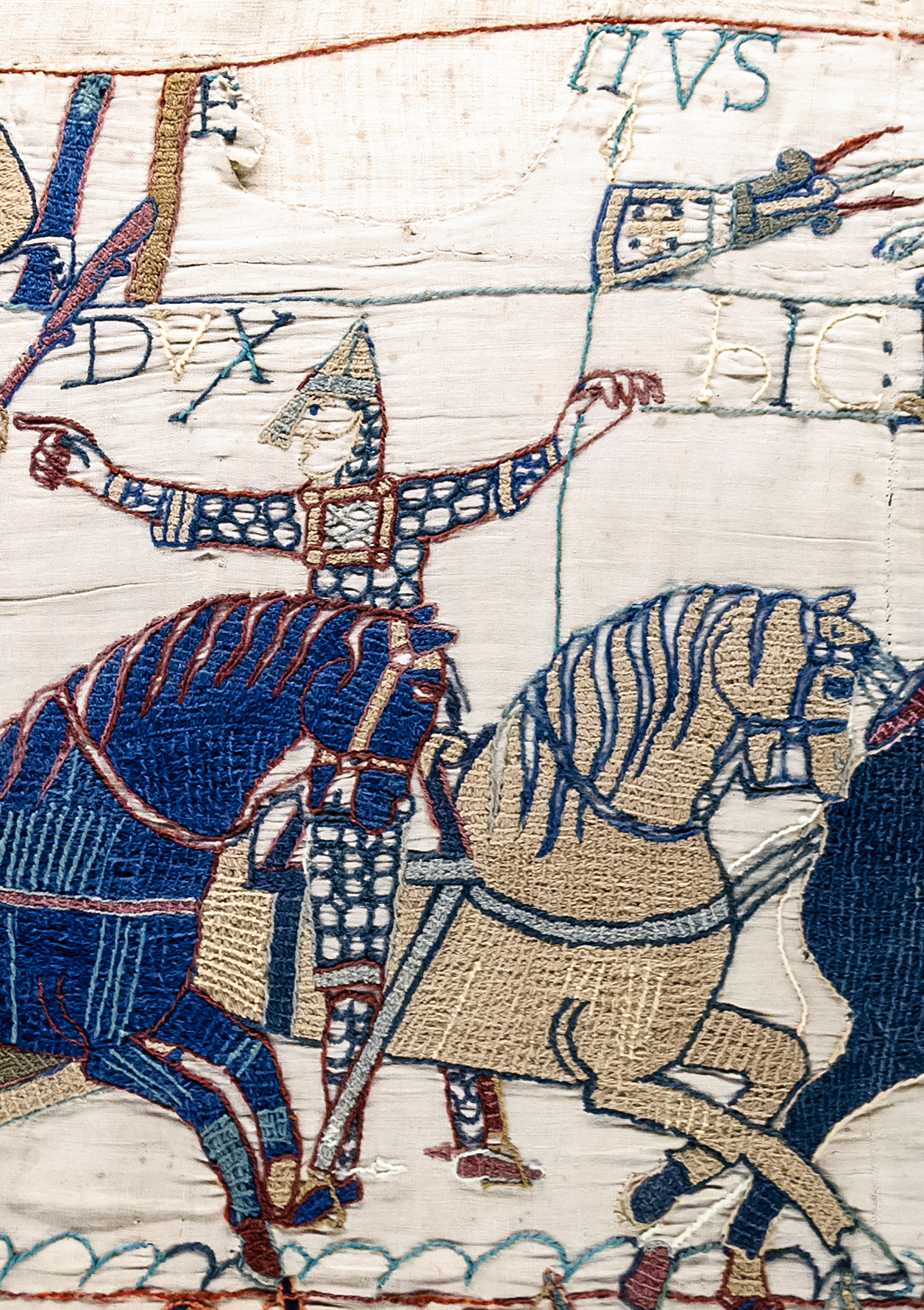
The depiction in the Bayeux Tapestry shows a knight carrying a banner who rides up to Duke William and points excitedly with his finger towards the rear of the Norman advance. William turns his head and lifts up his visor to show his knights following him that he is still alive and determined to fight on. This conforms therefore with Eustace having somewhat lost his nerve and having urged the Duke to retreat while the Battle was at its height with the outcome still uncertain. Other sources suggest that Eustace was present with William at the Malfosse incident in the immediate aftermath of the battle, where a Saxon feigning death leapt up and attacked him, and was presumably cut down before he could reach William.
Hub AI
Eustace II, Count of Boulogne AI simulator
(@Eustace II, Count of Boulogne_simulator)
Eustace II, Count of Boulogne
Eustace II, (c. 1015 – c. 1087), also known as Eustace aux Grenons ("Eustace with long moustaches"), was Count of Boulogne from 1049 to 1087. He fought on the Norman side at the Battle of Hastings, and afterwards received large grants of land forming the Honour of Boulogne in England. He is one of the few proven companions of William the Conqueror. It has been suggested that Eustace was the patron of the Bayeux Tapestry. His second son Godfrey of Bouillon was a preeminent leader of the First Crusade, and the first ruler of the Kingdom of Jerusalem.
Eustace was the son of Eustace I of Boulogne and Matilda of Louvain.
Eustace's wife was Goda, the sister of King Edward the Confessor of England. In 1047, Godfrey III, Duke of Lower Lorraine rebelled against the Holy Roman Emperor, Henry III, and Eustace joined the rebellion. Then or earlier, he repudiated Gode and married Godfrey's daughter Ida. The next year Eustace was excommunicated by Pope Leo IX for marrying within the prohibited degree of kinship. Eustace and Ida were both descended from Louis II of France, and just within the prohibited seventh degree. However, since not all their ancestors are known, there might have existed a closer relationship. The Pope's action was possibly at the behest of Henry III. The rebellion failed, and in 1049 Eustace and Godfrey submitted to Henry III.
In 1051, Eustace visited Edward, his former brother-in-law. On his way back to the coast Eustace decided to stay overnight in Dover, and as he and his men approached the town they put on mail coats. The historian Tom Licence comments: "Eustace was either anticipating trouble or intending to start a fight." In the ensuing brawl twenty townsmen were killed and a similar number of Eustace's men. He went straight to the king to complain, and Edward immediately ordered Godwin, who had jurisdiction over the town, to ravage it. Godwin was furious at Edward accepting Eustace's version of events without hearing the other side, and instead of obeying the order he started to raise an army. In the confrontation that followed he and his sons were forced to flee the country.
The following years saw still further advances by Eustace's rivals and enemies. Count Baldwin of Flanders consolidated his hold over territories he had annexed to the east. In 1060 he became tutor of his nephew King Philip I of France. In contrast Eustace's stepson Walter of Mantes failed in his attempt to claim the County of Maine. He was captured by the Normans and died soon afterwards in mysterious circumstances.
These events evidently caused a shift in Eustace's political allegiances, for he then became an important participant in the Norman Conquest of England in 1066. He fought at Hastings, although sources vary regarding the details of his conduct during the battle. The contemporary chronicler William of Poitiers wrote concerning him:
With a harsh voice he [Duke William] called to Eustace of Boulogne, who with 50 knights was turning in flight and was about to give the signal for retreat. This man came up to the Duke and said in his ear that he ought to retire since he would court death if he went forward. But at the very moment when he uttered the words Eustace was struck between the shoulders with such force that blood gushed out from his mouth and nose and half dead he only made his escape with the aid of his followers.
The depiction in the Bayeux Tapestry shows a knight carrying a banner who rides up to Duke William and points excitedly with his finger towards the rear of the Norman advance. William turns his head and lifts up his visor to show his knights following him that he is still alive and determined to fight on. This conforms therefore with Eustace having somewhat lost his nerve and having urged the Duke to retreat while the Battle was at its height with the outcome still uncertain. Other sources suggest that Eustace was present with William at the Malfosse incident in the immediate aftermath of the battle, where a Saxon feigning death leapt up and attacked him, and was presumably cut down before he could reach William.
Recent media