Hubbry Logo
Eva WilmaEva WilmaMain
Open search
Eva Wilma
Community hub
Eva Wilma
logo
8 pages, 0 posts
0 subscribers
Be the first to start a discussion here.
Eva Wilma
Eva Wilma
from Wikipedia

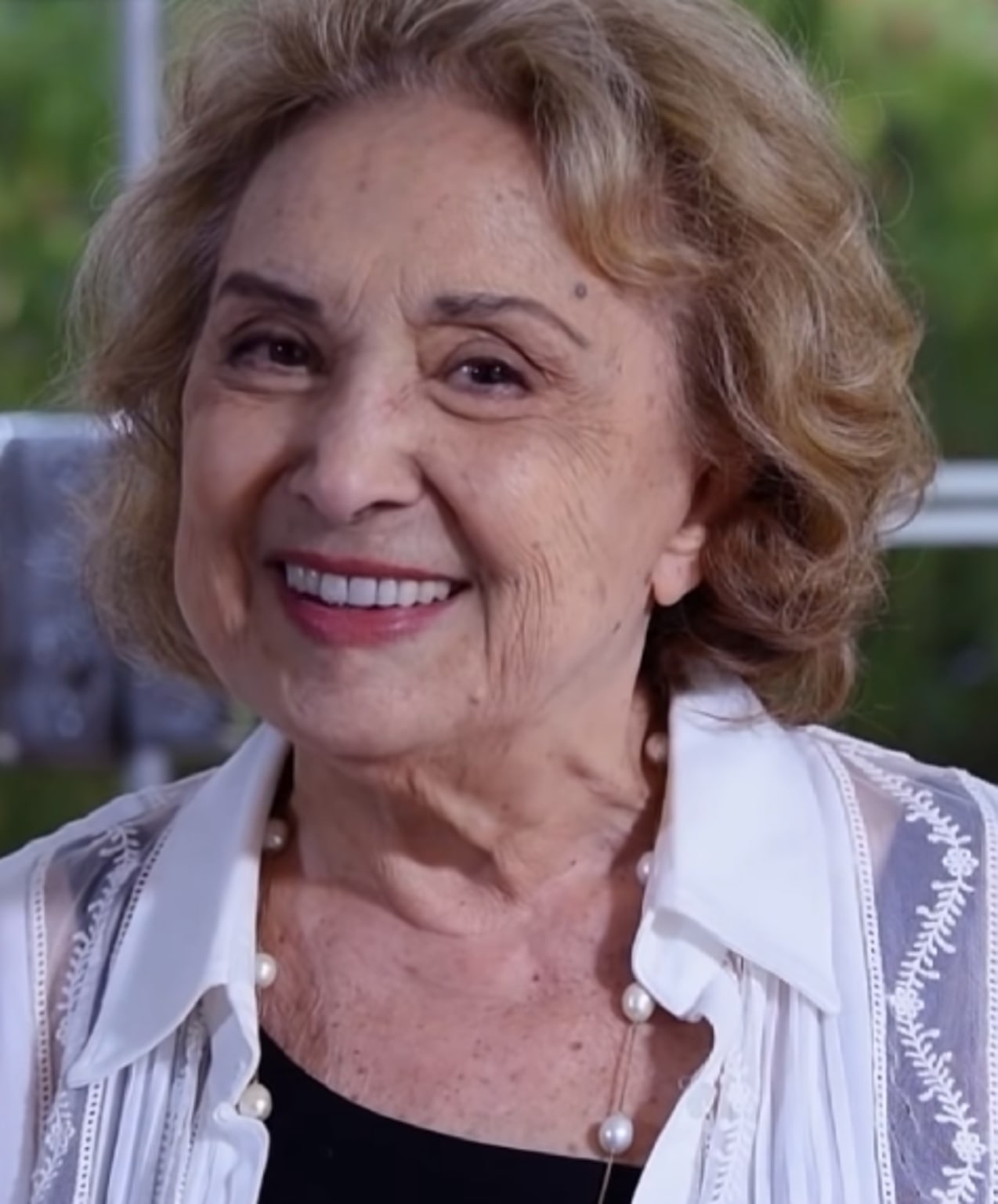
Eva Wilma Buckup (née Riefle; 14 December 1933 – 15 May 2021) was a Brazilian actress and dancer. Among her several roles, she starred in the 1950s Brazilian television series Alô, Doçura!.[1]

Key Information

Biography

[edit]

Eva Wilma was born in São Paulo. Her father, Otto Riefle Jr, was a German metallurgist from the Black Forest region of Pforzheim near Stuttgart in southern Germany. He went to Brazil, more precisely to the city of Rio de Janeiro in 1929, at the age of 19, to work in a metallurgy firm. Eva Wilma's mother, Luísa Carp, was born in Buenos Aires, Argentina, she was the daughter of Ukrainian Jews from Kyiv who immigrated to Argentina. Eva's parents met in the city of São Paulo when Eva's father was transferred to the city, and her mother, after living in Buenos Aires, moved to Brazil.[2] In 1956 she was awarded with Prêmio Saci.

She was married for 23 years to actor John Herbert,[1] with whom she had two children, Vivian and John Jr. She later married actor Carlos Zara.

Death

[edit]

Eva Wilma died at the age of 87 in São Paulo, 15 May 2021, at the Albert Einstein Hospital, of ovarian cancer.[3]

Filmography

[edit]
Year Title Role Notes
1953 A Flea on the Scales
1953 O Homem Dos Papagaios
1953 O Craque Elisa
1954 A Sogra
1955 Chico Viola Não Morreu
1958 O Cantor e o Milionário Laura
1960 Cidade Ameaçada Terezinha
1962 The Fifth Power Laura Leal
1963 A Ilha
1963 Murder in Rio Leila
1965 São Paulo, Sociedade Anônima Luciana
1967 Juego peligroso Lucía (segment "Divertimento")
1969 Topaz Rosita Gomez Uncredited
1970 A Arte de Amar Bem Inês (segment "A Inconfidência de Ser Esposa")
1973-1974 Mulheres de Areia Ruth and Raquel TV series
1975 Cada um Dá o que Tem (segment "Cartão de Crédito")
1980 Asa Branca: Um Sonho Brasileiro Mother of Asa Branca
1981 Ciranda de Pedra Laura Prado TV series
1983 O Menino Arco-Íris
1987 Feliz Ano Velho Lúcia (based on Eunice Paiva)[4][5]
1992 Pedra sobre Pedra Hilda Pontes TV series
1995 História de Amor Zuleika Viana Sampaio TV series
1997 A Indomada Maria Altiva Pedreira de Mendonça e Albuquerque 203 episodes
2002 Esperança Rosa TV series
2004-2005 Começar de Novo Lucrécia 159 episodes
2006 Veias e Vinhos - Uma História Brasileira
2007 The Sign of the City Adélia
2007-2008 Desejo Proibido Cândida 120 episodes
2010 A Guerra dos Vizinhos Adélia
2011-2012 Fina Estampa Maria Íris Siqueira De Maciel TV series
2015 Verdades Secretas Fábia 48 episodes
2018 O Tempo Não Para Petra Vaisánen 22 episodes, (final appearance)

References

[edit]
[edit]
Revisions and contributorsEdit on WikipediaRead on Wikipedia
from Grokipedia
Eva Wilma is a Brazilian actress and dancer known for her pioneering contributions to Brazilian television and her acclaimed performances across telenovelas, theater, and cinema over more than six decades. She began her artistic career as a classical ballet dancer before transitioning to acting in the 1950s, joining the first class of actors at Teatro de Arena in São Paulo and quickly gaining recognition on stage, which led to work in television and film. Her breakthrough came with the long-running TV Tupi series Alô, Doçura! (1953–1964), where she starred alongside John Herbert, marking one of the earliest successes in Brazilian television drama. She later delivered memorable performances in iconic telenovelas, including dual roles as Ruth and Raquel in Mulheres de Areia, the complex Diná in A Viagem, Zuleika in História de Amor, the extravagant villain Maria Altiva in A Indomada, and appearances in Verdades Secretas and O Tempo Não Para. Her work earned critical praise, including theater awards such as the Shell, Sharp, and Molière for Querida Mamã and the Contigo! Award for Best Actress for A Indomada. Eva Wilma remained active until her later years and is remembered as one of the most respected figures in Brazilian entertainment, with a theater named in her honor in São Paulo. She died on May 15, 2021, in São Paulo at age 87 from ovarian cancer.

Early life

Birth and family background

Eva Wilma was born Eva Wilma Riefle on December 14, 1933, in São Paulo, Brazil. She was the daughter of Otto Riefle Jr., a metalworker of German descent who immigrated to Brazil from Pforzheim in the Black Forest region, and Luiza Carp Riefle, of Argentine descent with Jewish-Ukrainian family roots. Her family settled in São Paulo as part of the city's immigrant communities, where her father worked in the metal industry.

Dance training and early performances

Eva Wilma began her artistic career as a classical ballet dancer in São Paulo. She started her professional engagement as a ballerina at the age of 14. She participated in the corpo de balé of the São Paulo Ballet, directed by teacher Maria Oleneva. Eva Wilma also took part in the Balé do IV Centenário de São Paulo, a significant early performance opportunity tied to the city's 400th anniversary celebrations. Her dance activities included presentations with a group of ballet in theater settings, reflecting her dedication to training in music, singing, and dance from an early stage. She eventually left ballet after a brief period in a company, resigning in the third month after her first ballet performance. This shift marked the transition toward opportunities in acting.

Career

Theater beginnings and stage work

Eva Wilma initiated her acting career on stage in the early 1950s after receiving an invitation to join the Teatro de Arena, recognized as the first arena theater group in Latin America, where she became one of its founders. She participated in the group's early production of Marcel Achard's Uma Mulher e Três Palhaços, which the company presented at the Palácio da Nação in Rio de Janeiro before the president. Her training as an actress was profoundly shaped by Eugênio Kusnet, one of her principal mentors, as the Teatro de Arena established its permanent headquarters in São Paulo, later known as the Teatro Eugênio Kusnet. Theater served as her primary school and lifelong commitment, sustaining a presence on stage for nearly seven decades even as she pursued work in other media. Among her notable performances was a role in Samuel Beckett's Esperando Godot. In 2000, she performed internationally in Madame by Maria Velho da Costa, directed by Ricardo Pais in a coproduction between the Teatro Nacional São João and the Teatro Nacional D. Maria II, where she portrayed Capitu—inspired by Machado de Assis's Dom Casmurro—opposite Eunice Muñoz. In her later years, Eva Wilma continued her stage work with Azul Resplendor by Eduardo Adrianzén, directed by Renato Borghi and Elcio Nogueira Seixas, in which she played Blanca Estela, a forgotten and solitary aging actress confronting the end of her life; the production, staged in São Paulo around 2013 and later in Rio de Janeiro, commemorated her 80th birthday and approximately 60 years of career.

Television debut and breakthrough roles

Eva Wilma made her television debut in 1953 with the sitcom Alô, Doçura! on Rede Tupi, a Brazilian adaptation of the American series I Love Lucy, where she starred opposite her husband at the time, John Herbert. The program, created by Cassiano Gabus Mendes, featured comedic situations drawn from domestic life and aired from 1953 to 1964, marking one of the earliest and most enduring successes in Brazilian television. Her performance in Alô, Doçura! served as her breakthrough role in the medium, leveraging her prior experience in theater and dance to establish her as a charismatic and popular presence on screen during the formative years of TV in Brazil. The series' popularity helped transition her from stage work to widespread recognition in television. Following this success, Wilma appeared in various telenovelas and series on Rede Tupi and RecordTV throughout the 1950s, 1960s, and early 1970s, building her reputation as a versatile actress capable of handling both comedic and dramatic roles in the emerging telenovela format. These early television credits solidified her status as a key figure in Brazilian TV before her later achievements.

Major telenovela achievements

Eva Wilma achieved some of her most notable success in Brazilian telenovelas during the 1970s, particularly with her dual portrayal of the twin sisters Ruth and Raquel in Mulheres de Areia (1973–1974) on TV Tupi, considered one of the biggest successes of her television career. The contrasting personalities of the sisters—one good-natured and the other antagonistic—allowed her to showcase remarkable versatility within a single production, cementing the roles as iconic in Brazilian television history. She followed this with another prominent leading role as Diná in the original version of A Viagem (1975), also on TV Tupi, further establishing her reputation for compelling performances in spiritually themed stories. After joining Rede Globo in 1980, Wilma built a prolific career with recurring appearances across decades, but her portrayal of the flamboyant villain Maria Altiva Pedreira de Mendonça e Albuquerque in A Indomada (1997) emerged as one of her most memorable and impactful roles on the network. The character became a national phenomenon, largely due to her distinctive speech blending a Northeastern Brazilian accent with English phrases, earning widespread recognition for Wilma's ability to create larger-than-life antagonists that resonated with audiences. These standout performances across both antagonist and protagonist roles underscored her enduring influence in the genre.

Film and other media appearances

Although Eva Wilma's career was predominantly centered on television and theater, she made selective appearances in Brazilian cinema and other non-telenovela media formats. She received particular recognition for her role as Luciana in the film São Paulo S/A (1965), directed by Luiz Sérgio Person, which is regarded as a landmark in Brazilian cinematography. In the late 1960s, she traveled to Hollywood and auditioned for a role in Alfred Hitchcock's Topaz (Topázio, 1969), but was not selected for the part. Beyond feature films, Wilma appeared in limited-episode television formats, including the miniseries O Quinto dos Infernos (2002), where she portrayed Dona Maria, the queen of the decadent Portuguese empire, and the series Mulher (1998–1999), in which she played Dra. Martha.

Personal life

Marriages and children

Eva Wilma was first married to the actor John Herbert from 1955 to 1976. The couple had two children: a daughter, Vivian Buckup (born in 1956), who later worked as a choreographer and theater director, and a son, John Herbert Junior (born in 1958), who pursued a career as a musician. Following her separation from Herbert, Eva Wilma married the actor Carlos Zara in 1979, and the marriage lasted 23 years until his death in 2002. No children were born from this second marriage.

Illness and death

Cancer diagnosis and death

Eva Wilma was hospitalized at the Hospital Israelita Albert Einstein in São Paulo on April 15, 2021, for cardiac and renal problems. The diagnosis of ovarian cancer was publicly confirmed on May 8, 2021, via a medical bulletin announcing the start of oncological treatment that week; at the time she remained stable, conscious, and breathing spontaneously. She was 87 years old and had previously been hospitalized in January 2021 for pneumonia. Eva Wilma died on May 15, 2021, in São Paulo at age 87, due to respiratory failure caused by metastasis of the ovarian cancer. She passed away at the Hospital Israelita Albert Einstein, where she had been receiving treatment.

Legacy

Awards and cultural recognition

Eva Wilma received numerous awards and honors throughout her career, particularly for her contributions to Brazilian television, theater, and film. She achieved notable success at the Troféu Imprensa in Brazil, securing 7 wins for her performances in telenovelas and other television work. She also earned 4 wins from Prêmio Contigo, Brazil, 2 from Melhores do Ano, and 1 from the CinEuphoria Awards. In theater, she was recognized in 1994 with the Shell Award, Sharp Award, and Molière Award for best actress for her role in the play "Querida Mamã", directed by José Wilker. In 2020, she was the grand honoree of the Prêmio Cesgranrio de Teatro in Rio de Janeiro, which celebrated her 66 years of career and her dedication to the acting profession. In her acceptance speech, she expressed her love for the craft, stating that actors lend themselves entirely to reveal human frailties in order to foster self-understanding and a better world through harmony and love.

Influence and tributes

Eva Wilma's enduring influence on Brazilian television and theater stems from her remarkable ability to forge an intimate connection with audiences, making her a familiar and beloved presence in homes across the country through her nuanced performances in telenovelas and series. Colleagues frequently highlighted her generosity as a mentor, often guiding younger actors with practical advice, encouragement, and personal stories that helped them navigate the challenges of the profession. Her legacy also encompasses a commitment to cultural policies and the defense of actors' rights, alongside a rigorous dedication to her craft that inspired peers to pursue excellence and intellectual growth in their work. Following her death on May 15, 2021, Eva Wilma was widely honored by the Brazilian entertainment community, with tributes emphasizing her courage, perseverance, and profound impact as one of the most significant figures in the industry. Tony Ramos described her as an "important, bold, and courageous" professional who faced her work without fear, while remembering her as a fascinating and generous person who encouraged colleagues to engage deeply with books, films, and culture. Lília Cabral recalled her supportive guidance on set, noting how Eva Wilma offered affection, courage, and direction to help others thrive in the industry. Other tributes appeared in media outlets and programs, including a special segment on Fantástico and a radio homage on Estação Cultura, as well as appearances on shows like Altas Horas, all celebrating her multifaceted contributions to the arts. The Teatro Eva Wilma in São Paulo, inaugurated in 2003 as a homage to her 50 years of career, remains a lasting symbol of her prominence in Brazilian performing arts.

References

Add your contribution
Related Hubs
User Avatar
No comments yet.