
Recent from talks
Exclusive economic zone of Japan
Knowledge base stats:
Talk channels stats:
Members stats:
Exclusive economic zone of Japan
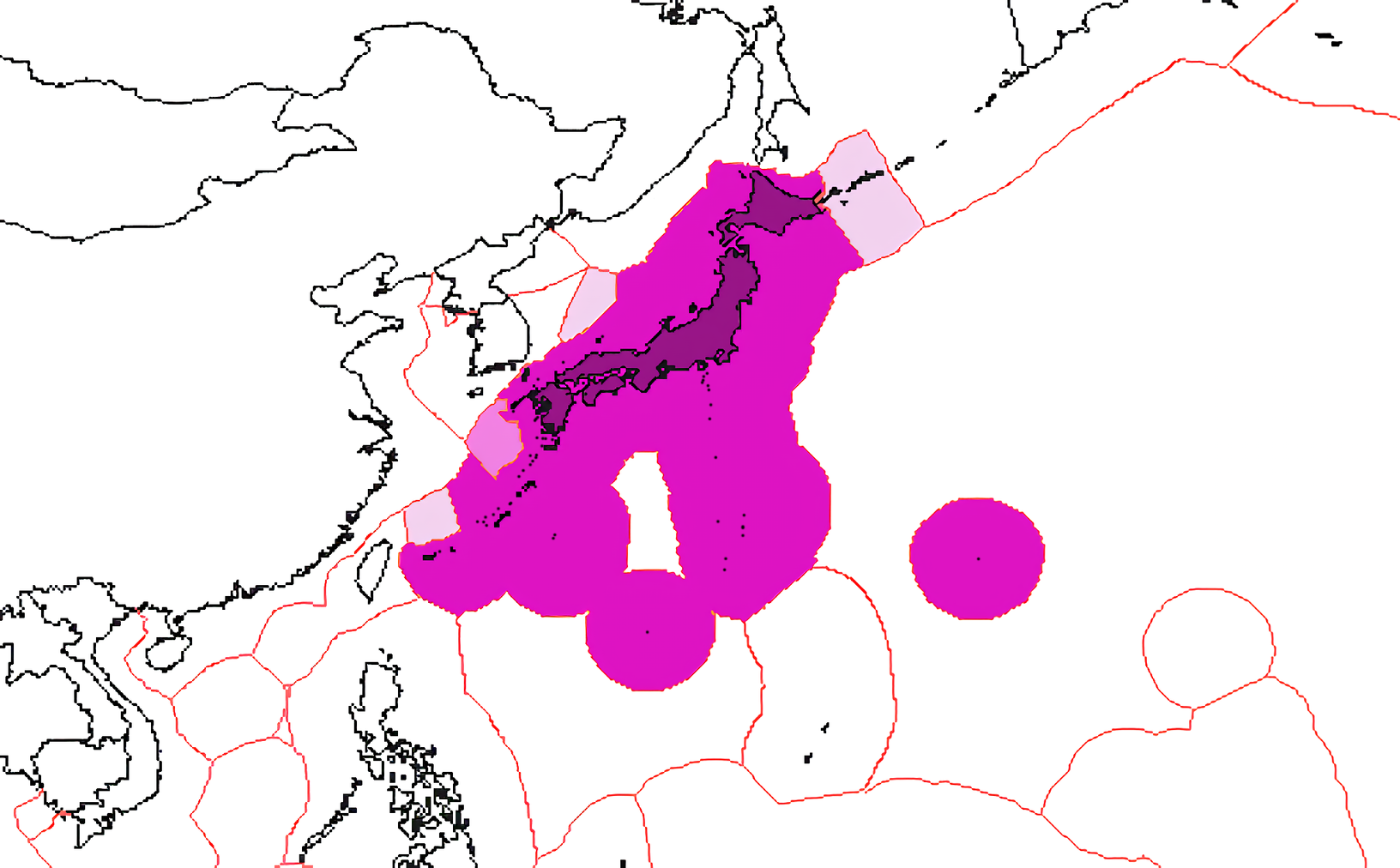
Japan has the eighth-largest exclusive economic zone (EEZ) in the world. The total area of Japan is about 380 thousand km2. Japan's EEZ area is vast and the territorial waters (including the Seto Inland Sea) and EEZ together is about 4.47 million km2.
The Japanese Archipelago consists of about 6,852 islands. The Exclusive Economic Zone of Japan includes:
In the 18th century, Dutch law scholar Cornelius van Bynkershoek wrote in his book "De Dominio Maris Dissertatio" (1702) that the coastal states control the waters within the range of cannons carried on warships of the time. This theory was supported by many countries, and the idea of having three nautical miles from the coastline as the territorial sea was established.
In the 20th century, there have emerged examples of extending the scope of territorial waters, or claiming similar rights in areas beyond the territorial waters. These claims were advocated by Dr. Pardeau, UN Ambassador of the Republic of Malta, at the Second United Nations Conference on the Law of the Sea in 1967. However, Japan, which was an advanced pelagic fishing country, took an opposing position because "wide open seas and narrow territorial waters" matched their national interests at the time.
But later, exploiting the absence of a Japanese EEZ, neighboring countries such as South and North Korea, China and Soviet Union entered the offshore fishing industry and began operating off the coast of Shimane and Tottori Prefectures, making the situation disadvantageous to Japan. Therefore, in 1982, Japan supported the United Nations Convention on the Law of the Sea (UNCLOS) when it was created at the Third United Nations Conference on the Law of the Sea held in Montego Bay, Jamaica, and it came into effect in 1994. The treaty gives Japan the right to explore and develop marine and non-living resources such as mineral resources, within 200 nautical miles of their coastline, and at the same time she is obligated to manage them and prevent marine pollution. The Japanese government signed UNCLOS in February 1983 and Part XI in July 1994. The Convention and Part XI were ratified by the Diet in June 1996.
Japan has contributed to three UNCLOS organizations such as the International Tribunal for the Law of the Sea (ITLOS), the Commission on the Limits of the Continental Shelf (CLCS) and the International Seabed Authority (ISA).
The Japan Maritime Self-Defense Force (JMSDF) and the Japan Coast Guard (JCG) are responsible for protecting the EEZ of Japan. As an island nation, dependent on maritime trade for the majority of its resources, including food and raw materials, maritime operations are a very important aspect of Japanese defense policy. On 30 June 2022, the Japan Ministry of Defense announced the construction of 12 offshore patrol vessel (OPV) by Japan Marine United Corporation (JMU) for the JMSDF. The purpose of this OPV program is to provide enhanced maritime security by boosting JMSDF patrol activities. These vessels are highly automated and configurable to meet a wide range of missions involving “enhanced steady-state intelligence, surveillance, and reconnaissance (ISR) in the waters around Japan.” Under the contract, JMU is charged with delivering the 12 vessels to the JMSDF from fiscal year 2023, which starts on April 1, 2023.
The exclusive economic zone only recognizes the economic, scientific and environmental jurisdiction of the coastal countries and entry of a foreign fishing vessel into the EEZ is not automatically illegal. With regard to the above, a law (fishing sovereignty law, EEZ Fisheries Law) concerning the exercise of sovereign rights regarding fisheries, etc. in the exclusive economic zone (in Japanese) that regulates fisheries of foreigners within the exclusive economic zone of Japan was established on 14 June 1996.[circular reference]
Hub AI
Exclusive economic zone of Japan AI simulator
(@Exclusive economic zone of Japan_simulator)
Exclusive economic zone of Japan
Japan has the eighth-largest exclusive economic zone (EEZ) in the world. The total area of Japan is about 380 thousand km2. Japan's EEZ area is vast and the territorial waters (including the Seto Inland Sea) and EEZ together is about 4.47 million km2.
The Japanese Archipelago consists of about 6,852 islands. The Exclusive Economic Zone of Japan includes:
In the 18th century, Dutch law scholar Cornelius van Bynkershoek wrote in his book "De Dominio Maris Dissertatio" (1702) that the coastal states control the waters within the range of cannons carried on warships of the time. This theory was supported by many countries, and the idea of having three nautical miles from the coastline as the territorial sea was established.
In the 20th century, there have emerged examples of extending the scope of territorial waters, or claiming similar rights in areas beyond the territorial waters. These claims were advocated by Dr. Pardeau, UN Ambassador of the Republic of Malta, at the Second United Nations Conference on the Law of the Sea in 1967. However, Japan, which was an advanced pelagic fishing country, took an opposing position because "wide open seas and narrow territorial waters" matched their national interests at the time.
But later, exploiting the absence of a Japanese EEZ, neighboring countries such as South and North Korea, China and Soviet Union entered the offshore fishing industry and began operating off the coast of Shimane and Tottori Prefectures, making the situation disadvantageous to Japan. Therefore, in 1982, Japan supported the United Nations Convention on the Law of the Sea (UNCLOS) when it was created at the Third United Nations Conference on the Law of the Sea held in Montego Bay, Jamaica, and it came into effect in 1994. The treaty gives Japan the right to explore and develop marine and non-living resources such as mineral resources, within 200 nautical miles of their coastline, and at the same time she is obligated to manage them and prevent marine pollution. The Japanese government signed UNCLOS in February 1983 and Part XI in July 1994. The Convention and Part XI were ratified by the Diet in June 1996.
Japan has contributed to three UNCLOS organizations such as the International Tribunal for the Law of the Sea (ITLOS), the Commission on the Limits of the Continental Shelf (CLCS) and the International Seabed Authority (ISA).
The Japan Maritime Self-Defense Force (JMSDF) and the Japan Coast Guard (JCG) are responsible for protecting the EEZ of Japan. As an island nation, dependent on maritime trade for the majority of its resources, including food and raw materials, maritime operations are a very important aspect of Japanese defense policy. On 30 June 2022, the Japan Ministry of Defense announced the construction of 12 offshore patrol vessel (OPV) by Japan Marine United Corporation (JMU) for the JMSDF. The purpose of this OPV program is to provide enhanced maritime security by boosting JMSDF patrol activities. These vessels are highly automated and configurable to meet a wide range of missions involving “enhanced steady-state intelligence, surveillance, and reconnaissance (ISR) in the waters around Japan.” Under the contract, JMU is charged with delivering the 12 vessels to the JMSDF from fiscal year 2023, which starts on April 1, 2023.
The exclusive economic zone only recognizes the economic, scientific and environmental jurisdiction of the coastal countries and entry of a foreign fishing vessel into the EEZ is not automatically illegal. With regard to the above, a law (fishing sovereignty law, EEZ Fisheries Law) concerning the exercise of sovereign rights regarding fisheries, etc. in the exclusive economic zone (in Japanese) that regulates fisheries of foreigners within the exclusive economic zone of Japan was established on 14 June 1996.[circular reference]
Recent media