
Recent from talks
Exosome (vesicle)
Knowledge base stats:
Talk channels stats:
Members stats:
Exosome (vesicle)
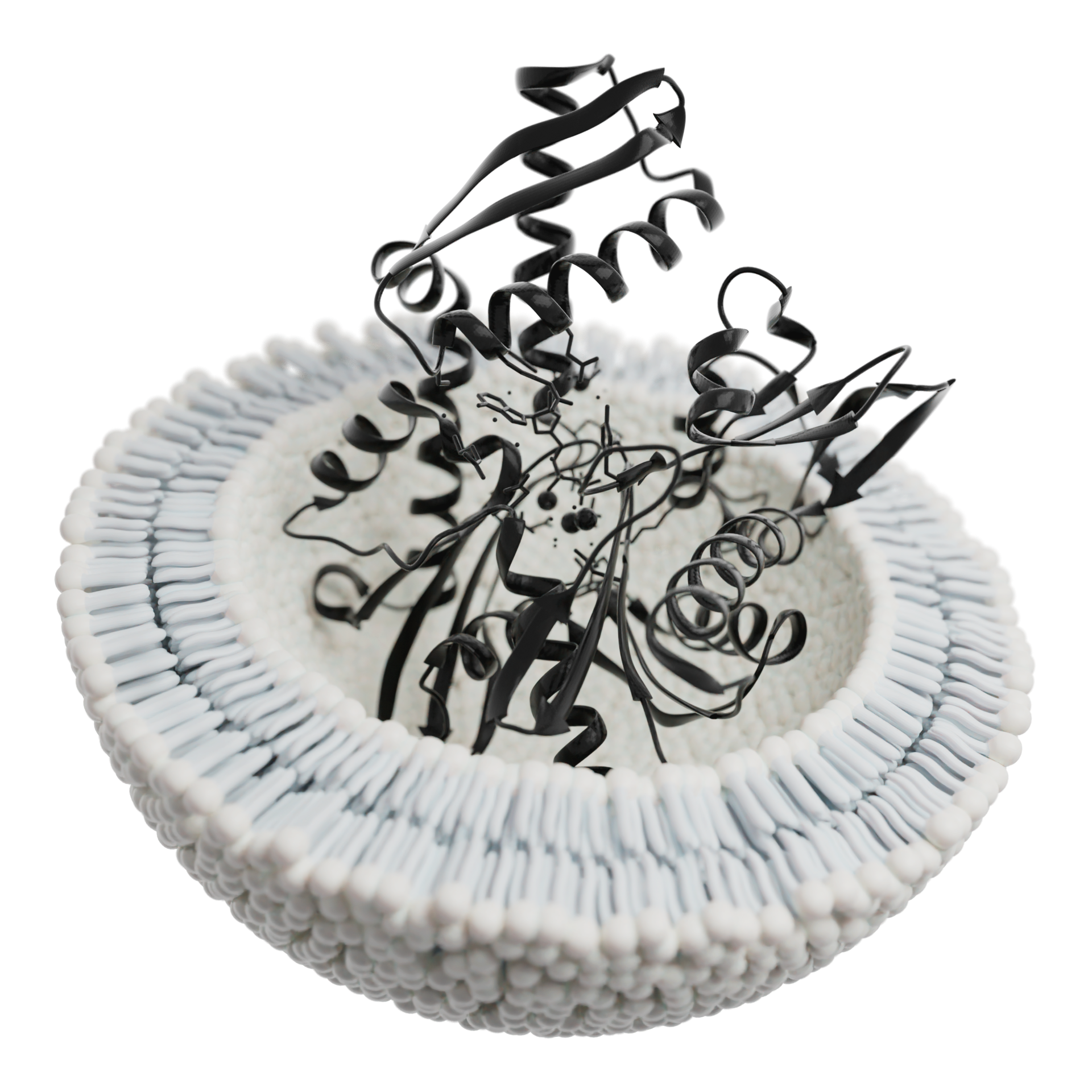
Exosomes, ranging in size from 30 to 150 nanometers, are membrane-bound extracellular vesicles (EVs) that are produced in the endosomal compartment of most eukaryotic cells. In multicellular organisms, exosomes and other EVs are found in biological fluids including saliva, blood, urine and cerebrospinal fluid. EVs have specialized functions in physiological processes, from coagulation and waste management to intercellular communication.
Exosomes are formed through the inward budding of a late endosome, also known as a multivesicular body (MVB). The intraluminal vesicles (ILVs) of the multivesicular body (MVB) bud inward into the endosomal lumen. If the MVB fuses with the cell surface (the plasma membrane), these ILVs are released as exosomes. Exosomes were also identified within the tissue matrix, coined Matrix-Bound Nanovesicles (MBV). They are also released in vitro by cultured cells into their growth medium. Enriched with a diverse array of biological elements from their source cells, exosomes contain proteins (such as adhesion molecules, cytoskeletons, cytokines, ribosomal proteins, growth factors, and metabolic enzymes), lipids (including cholesterol, lipid rafts, and ceramides), and nucleic acids (such as DNA, mRNA, and miRNA). Since the size of exosomes is limited by that of the parent MVB, exosomes are generally thought to be smaller than most other EVs, from about 30 to 150 nanometres (nm) in diameter: around the same size as many lipoproteins but much smaller than cells. Compared with EVs in general, it is unclear whether exosomes have unique characteristics or functions or can be separated or distinguished effectively from other EVs.
EVs in circulation carry genetic material and proteins from their cell of origin, proteo-transcriptomic signatures that act as biomarkers. In the case of cancer cells, exosomes may show differences in size, shape, morphology, and canonical markers from their donor cells. They may encapsulate relevant information that can be used for disease detection. Consequently, there is a growing interest in clinical applications of EVs as biomarkers and therapies alike, prompting establishment of an International Society for Extracellular Vesicles (ISEV) and a scientific journal devoted to EVs, the Journal of Extracellular Vesicles.
Exosomes were first discovered in the maturing mammalian reticulocyte (immature red blood cell) by Stahl and group in 1983 and Johnstone and group in 1983 further termed 'exosomes' by Johnstone and group in 1987. Exosomes were shown to participate in selective removal of many plasma membrane proteins as the reticulocyte becomes a mature red blood cell (erythrocyte). In the reticulocyte, as in most mammalian cells, portions of the plasma membrane are regularly internalized as endosomes, with 50 to 180% of the plasma membrane being recycled every hour. In turn, parts of the membranes of some endosomes are subsequently internalized as smaller vesicles. Such endosomes are called multivesicular bodies because of their appearance, with many small vesicles, (ILVs or "intralumenal endosomal vesicles"), inside the larger body. The ILVs become exosomes if the MVB merges with the cell membrane, releasing the internal vesicles into the extracellular space.
Exosomes contain various molecular constituents of their cell of origin, including proteins and RNA. Although the exosomal protein composition varies with the cell and tissue of origin, most exosomes contain an evolutionarily-conserved common set of protein molecules. The protein content of a single exosome, given certain assumptions of protein size and configuration, and packing parameters, can be about 20,000 molecules. The cargo of mRNA and miRNA in exosomes was first discovered at the University of Gothenburg in Sweden.
The content of exosomes changes depending on the cells of origin, and they thereby reflect their originating cells. Analysis of the dynamic variation of exosomes may provide a valuable means of monitoring diseases. In that study, the differences in cellular and exosomal mRNA and miRNA content was described, as well as the functionality of the exosomal mRNA cargo. Exosomes have also been shown to carry double-stranded DNA.
Exosomes can transfer molecules from one cell to another via membrane vesicle trafficking, thereby influencing the immune system, such as dendritic cells and B cells, and may play a functional role in mediating adaptive immune responses to pathogens and tumors. Therefore, scientists who are actively researching the role that exosomes may play in cell-to-cell signaling, often hypothesize that delivery of their cargo RNA molecules can explain biological effects. For example, mRNA in exosomes has been suggested to affect protein production in the recipient cell. However, another study has suggested that miRNAs in exosomes secreted by mesenchymal stem cells (MSC) are predominantly pre- and not mature miRNAs. Because the authors of this study did not find RNA-induced silencing complex-associated proteins in these exosomes, they suggested that only the pre-miRNAs, but not the mature miRNAs in MSC exosomes, have the potential to be biologically active in the recipient cells. Multiple mechanisms have been reported to be involved in loading miRNAs into exosomes, including specific motifs in the miRNA sequences, interactions with lncRNAs localized to the exosomes, interactions with RBPs, and post-translational modifications of Ago.
Conversely, exosome production and content may be influenced by molecular signals received by the cell of origin. As evidence for this hypothesis, tumor cells exposed to hypoxia secrete exosomes with enhanced angiogenic and metastatic potential, suggesting that tumor cells adapt to a hypoxic microenvironment by secreting exosomes to stimulate angiogenesis or facilitate metastasis to more favorable environment.
Hub AI
Exosome (vesicle) AI simulator
(@Exosome (vesicle)_simulator)
Exosome (vesicle)
Exosomes, ranging in size from 30 to 150 nanometers, are membrane-bound extracellular vesicles (EVs) that are produced in the endosomal compartment of most eukaryotic cells. In multicellular organisms, exosomes and other EVs are found in biological fluids including saliva, blood, urine and cerebrospinal fluid. EVs have specialized functions in physiological processes, from coagulation and waste management to intercellular communication.
Exosomes are formed through the inward budding of a late endosome, also known as a multivesicular body (MVB). The intraluminal vesicles (ILVs) of the multivesicular body (MVB) bud inward into the endosomal lumen. If the MVB fuses with the cell surface (the plasma membrane), these ILVs are released as exosomes. Exosomes were also identified within the tissue matrix, coined Matrix-Bound Nanovesicles (MBV). They are also released in vitro by cultured cells into their growth medium. Enriched with a diverse array of biological elements from their source cells, exosomes contain proteins (such as adhesion molecules, cytoskeletons, cytokines, ribosomal proteins, growth factors, and metabolic enzymes), lipids (including cholesterol, lipid rafts, and ceramides), and nucleic acids (such as DNA, mRNA, and miRNA). Since the size of exosomes is limited by that of the parent MVB, exosomes are generally thought to be smaller than most other EVs, from about 30 to 150 nanometres (nm) in diameter: around the same size as many lipoproteins but much smaller than cells. Compared with EVs in general, it is unclear whether exosomes have unique characteristics or functions or can be separated or distinguished effectively from other EVs.
EVs in circulation carry genetic material and proteins from their cell of origin, proteo-transcriptomic signatures that act as biomarkers. In the case of cancer cells, exosomes may show differences in size, shape, morphology, and canonical markers from their donor cells. They may encapsulate relevant information that can be used for disease detection. Consequently, there is a growing interest in clinical applications of EVs as biomarkers and therapies alike, prompting establishment of an International Society for Extracellular Vesicles (ISEV) and a scientific journal devoted to EVs, the Journal of Extracellular Vesicles.
Exosomes were first discovered in the maturing mammalian reticulocyte (immature red blood cell) by Stahl and group in 1983 and Johnstone and group in 1983 further termed 'exosomes' by Johnstone and group in 1987. Exosomes were shown to participate in selective removal of many plasma membrane proteins as the reticulocyte becomes a mature red blood cell (erythrocyte). In the reticulocyte, as in most mammalian cells, portions of the plasma membrane are regularly internalized as endosomes, with 50 to 180% of the plasma membrane being recycled every hour. In turn, parts of the membranes of some endosomes are subsequently internalized as smaller vesicles. Such endosomes are called multivesicular bodies because of their appearance, with many small vesicles, (ILVs or "intralumenal endosomal vesicles"), inside the larger body. The ILVs become exosomes if the MVB merges with the cell membrane, releasing the internal vesicles into the extracellular space.
Exosomes contain various molecular constituents of their cell of origin, including proteins and RNA. Although the exosomal protein composition varies with the cell and tissue of origin, most exosomes contain an evolutionarily-conserved common set of protein molecules. The protein content of a single exosome, given certain assumptions of protein size and configuration, and packing parameters, can be about 20,000 molecules. The cargo of mRNA and miRNA in exosomes was first discovered at the University of Gothenburg in Sweden.
The content of exosomes changes depending on the cells of origin, and they thereby reflect their originating cells. Analysis of the dynamic variation of exosomes may provide a valuable means of monitoring diseases. In that study, the differences in cellular and exosomal mRNA and miRNA content was described, as well as the functionality of the exosomal mRNA cargo. Exosomes have also been shown to carry double-stranded DNA.
Exosomes can transfer molecules from one cell to another via membrane vesicle trafficking, thereby influencing the immune system, such as dendritic cells and B cells, and may play a functional role in mediating adaptive immune responses to pathogens and tumors. Therefore, scientists who are actively researching the role that exosomes may play in cell-to-cell signaling, often hypothesize that delivery of their cargo RNA molecules can explain biological effects. For example, mRNA in exosomes has been suggested to affect protein production in the recipient cell. However, another study has suggested that miRNAs in exosomes secreted by mesenchymal stem cells (MSC) are predominantly pre- and not mature miRNAs. Because the authors of this study did not find RNA-induced silencing complex-associated proteins in these exosomes, they suggested that only the pre-miRNAs, but not the mature miRNAs in MSC exosomes, have the potential to be biologically active in the recipient cells. Multiple mechanisms have been reported to be involved in loading miRNAs into exosomes, including specific motifs in the miRNA sequences, interactions with lncRNAs localized to the exosomes, interactions with RBPs, and post-translational modifications of Ago.
Conversely, exosome production and content may be influenced by molecular signals received by the cell of origin. As evidence for this hypothesis, tumor cells exposed to hypoxia secrete exosomes with enhanced angiogenic and metastatic potential, suggesting that tumor cells adapt to a hypoxic microenvironment by secreting exosomes to stimulate angiogenesis or facilitate metastasis to more favorable environment.
Recent media