
Recent from talks
Experimental theatre
Knowledge base stats:
Talk channels stats:
Members stats:
Experimental theatre
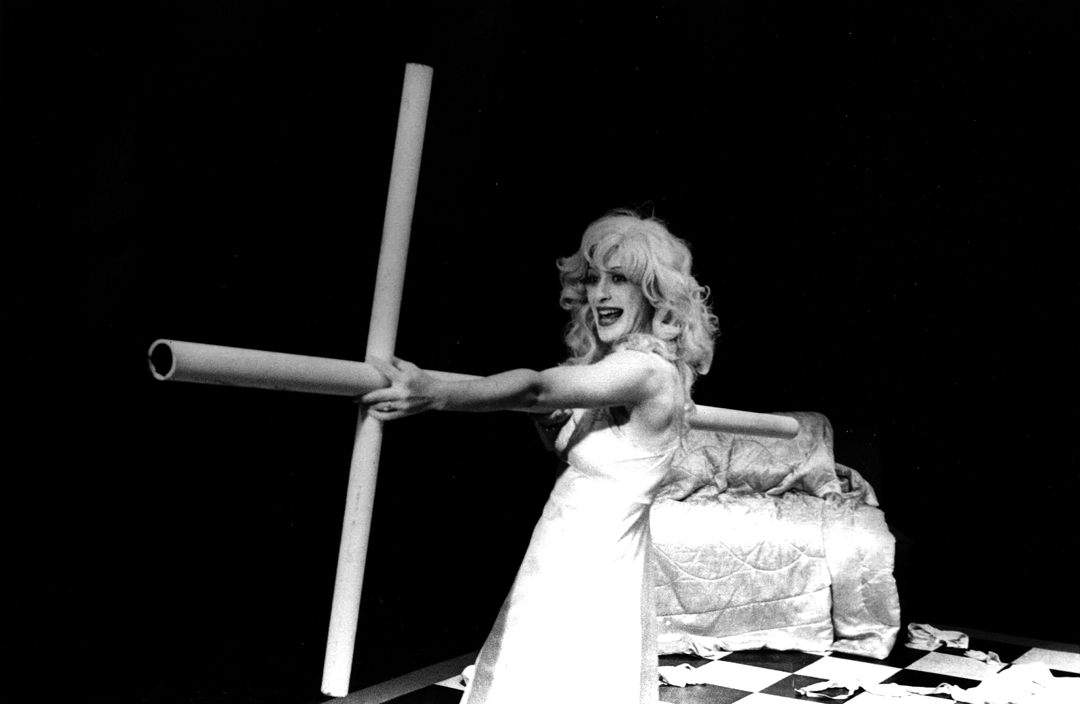
Experimental theatre (also known as avant-garde theatre), inspired largely by Wagner's concept of Gesamtkunstwerk, began in Western theatre in the late 19th century with Alfred Jarry and his Ubu plays as a rejection of both the age in particular and, in general, the dominant ways of writing and producing plays. The term has shifted over time as the mainstream theatre world has adopted many forms that were once considered radical.
Like other forms of the avant-garde, it was created as a response to a perceived general cultural crisis. Despite different political and formal approaches, all avant-garde theatre opposes bourgeois theatre. It tries to introduce a different use of language and the body to change the mode of perception and to create a new, more active relation with the audience.
Famed experimental theatre director and playwright Peter Brook describes his task as building "… a necessary theatre, one in which there is only a practical difference between actor and audience, not a fundamental one."
Traditionally audiences are seen as passive observers. Many practitioners of experimental theatre have wanted to challenge this. For example, Bertolt Brecht wanted to mobilise his audiences by having a character in a play break through the invisible "fourth wall", directly ask the audience questions, not giving them answers, thereby getting them to think for themselves; Augusto Boal wanted his audiences to react directly to the action; and Antonin Artaud wanted to affect them directly on a subconscious level. Peter Brook has identified a triangle of relationships within a performance: the performers' internal relationships, the performers' relationships to each other on stage, and their relationship with the audience. The British experimental theatre group Welfare State International has spoken of a ceremonial circle during performance, the cast providing one half, the audience providing another, and the energy in the middle.
Aside from ideological implications of the role of the audience, theatres and performances have addressed or involved the audience in a variety of ways. The proscenium arch has been called into question, with performances venturing into non-theatrical spaces. Audiences have been engaged differently, often as active participants in the action on a highly practical level. When a proscenium arch has been used, its usual use has often been subverted.
Audience participation can range from asking for volunteers to go onstage to having actors scream in audience members' faces. By using audience participation, the performer invites the audience to feel a certain way and by doing so they may change their attitudes, values and beliefs in regard to the performance's topic. For example, in a performance on bullying the character may approach an audience member, size them up and challenge them to a fight on the spot. The terrified look on the audience member's face will strongly embody the message of bullying to the member and the rest of the audience.
Physically, theatre spaces took on different shapes, and practitioners re-explored different ways of staging performance and a lot of research was done into Elizabethan and Greek theatre spaces. This was integrated into the mainstream, the National Theatre in London, for example, has a highly flexible, somewhat Elizabethan traverse space (the Dorfman), a proscenium space (the Lyttelton) and an amphitheatre space (the Olivier) and the directors and architects consciously wanted to break away from the primacy of the proscenium arch. Jacques Copeau was an important figure in terms of stage design, and was very keen to break away from the excesses of naturalism to get to a more pared down, representational way of looking at the stage.
The increase of the production of experimental theaters during the 1950s through the 1960s has prompted some to cite the connection between theater groups and the socio-political contexts in which they operated. Some groups have been prominent in changing the social face of theatre, rather than its stylistic appearance. Performers have used their skills to engage in a form of cultural activism. This may be in the form of didactic agit-prop theatre, or some (such as Welfare State International) see a performance environment as being one in which a micro-society can emerge and can lead a way of life alternative to that of the broader society in which they are placed. For instance, in a study of South American theatrical developments during the 1960s, the Nuevo Teatro Popular materialized amid the change and innovations entailed in the social and political developments of the period. This theatrical initiative was organized around groups or collective driven by specific events and performed themes tied to class and cultural identity that empowered their audience and help create movements that spanned national and cultural borders. These included Utopian projects, which sought to reconstruct social and cultural production, including their objectives.
Hub AI
Experimental theatre AI simulator
(@Experimental theatre_simulator)
Experimental theatre
Experimental theatre (also known as avant-garde theatre), inspired largely by Wagner's concept of Gesamtkunstwerk, began in Western theatre in the late 19th century with Alfred Jarry and his Ubu plays as a rejection of both the age in particular and, in general, the dominant ways of writing and producing plays. The term has shifted over time as the mainstream theatre world has adopted many forms that were once considered radical.
Like other forms of the avant-garde, it was created as a response to a perceived general cultural crisis. Despite different political and formal approaches, all avant-garde theatre opposes bourgeois theatre. It tries to introduce a different use of language and the body to change the mode of perception and to create a new, more active relation with the audience.
Famed experimental theatre director and playwright Peter Brook describes his task as building "… a necessary theatre, one in which there is only a practical difference between actor and audience, not a fundamental one."
Traditionally audiences are seen as passive observers. Many practitioners of experimental theatre have wanted to challenge this. For example, Bertolt Brecht wanted to mobilise his audiences by having a character in a play break through the invisible "fourth wall", directly ask the audience questions, not giving them answers, thereby getting them to think for themselves; Augusto Boal wanted his audiences to react directly to the action; and Antonin Artaud wanted to affect them directly on a subconscious level. Peter Brook has identified a triangle of relationships within a performance: the performers' internal relationships, the performers' relationships to each other on stage, and their relationship with the audience. The British experimental theatre group Welfare State International has spoken of a ceremonial circle during performance, the cast providing one half, the audience providing another, and the energy in the middle.
Aside from ideological implications of the role of the audience, theatres and performances have addressed or involved the audience in a variety of ways. The proscenium arch has been called into question, with performances venturing into non-theatrical spaces. Audiences have been engaged differently, often as active participants in the action on a highly practical level. When a proscenium arch has been used, its usual use has often been subverted.
Audience participation can range from asking for volunteers to go onstage to having actors scream in audience members' faces. By using audience participation, the performer invites the audience to feel a certain way and by doing so they may change their attitudes, values and beliefs in regard to the performance's topic. For example, in a performance on bullying the character may approach an audience member, size them up and challenge them to a fight on the spot. The terrified look on the audience member's face will strongly embody the message of bullying to the member and the rest of the audience.
Physically, theatre spaces took on different shapes, and practitioners re-explored different ways of staging performance and a lot of research was done into Elizabethan and Greek theatre spaces. This was integrated into the mainstream, the National Theatre in London, for example, has a highly flexible, somewhat Elizabethan traverse space (the Dorfman), a proscenium space (the Lyttelton) and an amphitheatre space (the Olivier) and the directors and architects consciously wanted to break away from the primacy of the proscenium arch. Jacques Copeau was an important figure in terms of stage design, and was very keen to break away from the excesses of naturalism to get to a more pared down, representational way of looking at the stage.
The increase of the production of experimental theaters during the 1950s through the 1960s has prompted some to cite the connection between theater groups and the socio-political contexts in which they operated. Some groups have been prominent in changing the social face of theatre, rather than its stylistic appearance. Performers have used their skills to engage in a form of cultural activism. This may be in the form of didactic agit-prop theatre, or some (such as Welfare State International) see a performance environment as being one in which a micro-society can emerge and can lead a way of life alternative to that of the broader society in which they are placed. For instance, in a study of South American theatrical developments during the 1960s, the Nuevo Teatro Popular materialized amid the change and innovations entailed in the social and political developments of the period. This theatrical initiative was organized around groups or collective driven by specific events and performed themes tied to class and cultural identity that empowered their audience and help create movements that spanned national and cultural borders. These included Utopian projects, which sought to reconstruct social and cultural production, including their objectives.
Recent media