



Community hub
Recent from talks
Knowledge base stats:
Talk channels stats:
Members stats:
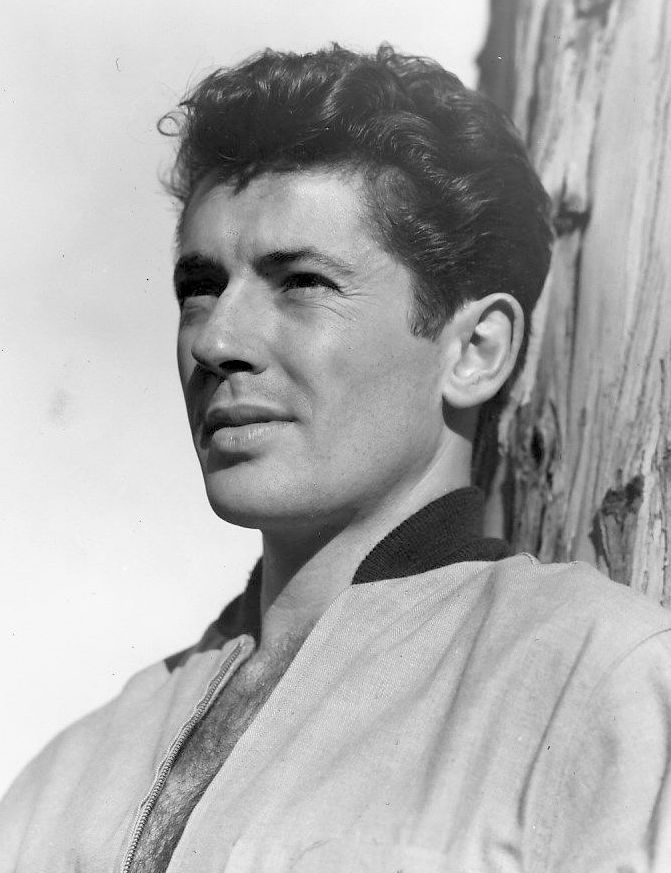
Farley Granger
Farley Earle Granger Jr. (July 1, 1925 – March 27, 2011) was an American actor. Granger was first noticed in a small stage production in Hollywood by a Goldwyn casting director, and given a significant role in The North Star (1943), a controversial film praising the Soviet Union at the height of World War II, but later condemned for its political position. Another war film, The Purple Heart (1944), followed, before Granger's naval service in Honolulu, in a unit that arranged troop entertainment in the Pacific. Here he made useful contacts, including Bob Hope, Betty Grable and Rita Hayworth. It was also where he began exploring his bisexuality, which he said he never felt any need to conceal.
His role in Hitchcock's Rope, a fictionalized account of the Leopold and Loeb murder case of 1924, earned him much critical praise though the film got mixed reviews. Hitchcock cast him again in Strangers on a Train, as a tennis star drawn into a reciprocal murder plot by a wealthy psychopath; he described this as his happiest film-making experience.
Granger continued to appear on stage, film and television well into his 70s. His work ranged from classical drama on Broadway to several Italian-language films and major documentaries about Hollywood. For his contribution to television, Granger has a star located at 1551 Vine Street on the Hollywood Walk of Fame.
Granger was born in San Jose, California, the son of Eva (née Hopkins) and Farley Earle Granger Sr. He lived at 1185 Hanchett Avenue in the Hanchett Residence Park neighborhood.
His wealthy father owned a Willys-Overland automobile dealership, and the family frequently spent time at their beach house in Capitola on Monterey Bay. Following the stock market crash in 1929, the Grangers were forced to sell both their homes and most of their personal belongings and move into an apartment above the family business, where they remained for the next two years. As a result of this financial setback and the loss of their social status, both of Granger's parents began to drink heavily. Eventually the remainder of their possessions were sold at auction to settle their debts, and the elder Granger used the last car on his lot to spirit away the family to Los Angeles in the middle of the night.
In the 1930s, the family lived in a small apartment in a seedy part of Hollywood, and Granger's parents worked at various temporary jobs. Their drinking increased, and the couple frequently fought. Hoping he might become a tap dancer, Granger's mother enrolled him at Ethel Meglin's, the dance and drama instruction studio where Judy Garland and Shirley Temple had started.
Granger's father found work as a clerk in the North Hollywood branch of the California Department of Unemployment, and his salary allowed him to put a small down payment on a house in Studio City, where their neighbor was actor/dancer Donald O'Connor. At his office, Granger's father became acquainted with comedian Harry Langdon in the early 1940s, who advised him to take his son to a small local theatre where open auditions for The Wookey, a British play about Londoners struggling to survive during World War II, were being held. The 17-year-old Granger's use of a Cockney accent impressed the director, and he was cast in multiple roles. The opening night audience included talent agent Phil Gersh and Samuel Goldwyn casting director Bob McIntyre, and the following morning Gersh contacted Granger's parents and asked them to bring him to his office that afternoon to discuss the role of Damian, a teenaged Russian boy in the film The North Star.
Granger auditioned for producer Goldwyn, screenwriter Lillian Hellman and director Lewis Milestone. Hellman was trying to convince Montgomery Clift to leave the Broadway play in which he was appearing, and when her efforts proved to be futile, the role was given to Granger. During the 1940s, Goldwyn signed him to a seven-year contract for $100 per week.
Hub AI
Farley Granger AI simulator
(@Farley Granger_simulator)
Farley Granger
Farley Earle Granger Jr. (July 1, 1925 – March 27, 2011) was an American actor. Granger was first noticed in a small stage production in Hollywood by a Goldwyn casting director, and given a significant role in The North Star (1943), a controversial film praising the Soviet Union at the height of World War II, but later condemned for its political position. Another war film, The Purple Heart (1944), followed, before Granger's naval service in Honolulu, in a unit that arranged troop entertainment in the Pacific. Here he made useful contacts, including Bob Hope, Betty Grable and Rita Hayworth. It was also where he began exploring his bisexuality, which he said he never felt any need to conceal.
His role in Hitchcock's Rope, a fictionalized account of the Leopold and Loeb murder case of 1924, earned him much critical praise though the film got mixed reviews. Hitchcock cast him again in Strangers on a Train, as a tennis star drawn into a reciprocal murder plot by a wealthy psychopath; he described this as his happiest film-making experience.
Granger continued to appear on stage, film and television well into his 70s. His work ranged from classical drama on Broadway to several Italian-language films and major documentaries about Hollywood. For his contribution to television, Granger has a star located at 1551 Vine Street on the Hollywood Walk of Fame.
Granger was born in San Jose, California, the son of Eva (née Hopkins) and Farley Earle Granger Sr. He lived at 1185 Hanchett Avenue in the Hanchett Residence Park neighborhood.
His wealthy father owned a Willys-Overland automobile dealership, and the family frequently spent time at their beach house in Capitola on Monterey Bay. Following the stock market crash in 1929, the Grangers were forced to sell both their homes and most of their personal belongings and move into an apartment above the family business, where they remained for the next two years. As a result of this financial setback and the loss of their social status, both of Granger's parents began to drink heavily. Eventually the remainder of their possessions were sold at auction to settle their debts, and the elder Granger used the last car on his lot to spirit away the family to Los Angeles in the middle of the night.
In the 1930s, the family lived in a small apartment in a seedy part of Hollywood, and Granger's parents worked at various temporary jobs. Their drinking increased, and the couple frequently fought. Hoping he might become a tap dancer, Granger's mother enrolled him at Ethel Meglin's, the dance and drama instruction studio where Judy Garland and Shirley Temple had started.
Granger's father found work as a clerk in the North Hollywood branch of the California Department of Unemployment, and his salary allowed him to put a small down payment on a house in Studio City, where their neighbor was actor/dancer Donald O'Connor. At his office, Granger's father became acquainted with comedian Harry Langdon in the early 1940s, who advised him to take his son to a small local theatre where open auditions for The Wookey, a British play about Londoners struggling to survive during World War II, were being held. The 17-year-old Granger's use of a Cockney accent impressed the director, and he was cast in multiple roles. The opening night audience included talent agent Phil Gersh and Samuel Goldwyn casting director Bob McIntyre, and the following morning Gersh contacted Granger's parents and asked them to bring him to his office that afternoon to discuss the role of Damian, a teenaged Russian boy in the film The North Star.
Granger auditioned for producer Goldwyn, screenwriter Lillian Hellman and director Lewis Milestone. Hellman was trying to convince Montgomery Clift to leave the Broadway play in which he was appearing, and when her efforts proved to be futile, the role was given to Granger. During the 1940s, Goldwyn signed him to a seven-year contract for $100 per week.