



Community hub
Recent from talks
Knowledge base stats:
Talk channels stats:
Members stats:
Farouk El-Baz
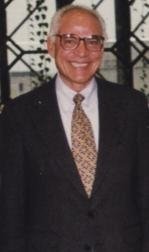
Farouk El-Baz (Arabic: فاروق الباز, Pronunciation: Egyptian Arabic pronunciation: [fɑˈruːʔ elˈbæːz, fæˈruːʔ]) (born January 2, 1938) is an Egyptian-American space scientist and geologist, who worked with NASA in the scientific exploration of the Moon and the planning of the Apollo program. He was a leading geologist on the program, responsible for studying the geology of the Moon, the selection of landing sites for the Apollo missions, and the training of astronauts in lunar observations and photography. He played a key role in the Apollo 11 Moon landing mission, and later Apollo missions. He also came up with the idea of touchable Moon rocks at a museum, inspired by his childhood pilgrimage to Mecca where he touched the Black Stone (which in Islam is believed to be sent down from the heavens).
He is married, has four daughters, and has seven grandchildren. He was a Senior Advisor to Egypt's former president Hosni Mubarak.
El-Baz was a Research Professor and Director of the Center for Remote Sensing at Boston University in Boston, Massachusetts. He was an adjunct professor of Geology at the Faculty of Science, Ain Shams University, Cairo, Egypt. He has since now retired but his work remains timeless and well regarded at the university
He is also a member of the Board of Trustees of the Geological Society of America Foundation, Boulder, Colorado, and a member of the Board of Directors of CRDF Global. He was also elected a member of the U.S. National Academy of Engineering in Washington, DC (2002) for selecting the landing sites for the Apollo missions, and for pioneering methods of discovering subsurface freshwater from space observations.
Farouk El-Baz was born on January 2, 1938, in Zagazig, Sharqia Governorate to Muslim Egyptian parents. His family is originally from the Nile Delta village of Touqh el Aklaam, El Senbellawein Centre, Dakahlia Governorate.
Farouk went to many schools. In 1958, he attended Ain Shams University. In 1961, he received a Master of Science in geology from the Missouri School of Mines and Metallurgy (now Missouri University of Science and Technology). From 1962-1963, he attended Massachusetts Institute of Technology. After that, in 1964, he attended Missouri University of Science and Technology. Finally, in 2002, he attended Missouri University of Science and Technology again.
In 1964, at the age of 26, he received a Doctor of Philosophy in geology from the Missouri University of Science and Technology after conducting research from 1962 to 1963 at the Massachusetts Institute of Technology.
In 1978, El-Baz was appointed Science Adviser to President Anwar Sadat of Egypt. He was charged with the selection of regions for land reclamation in the desert without detrimental effects on the environment. For his distinguished service, President Sadat awarded him Egypt's Order of Merit - First Class.
Hub AI
Farouk El-Baz AI simulator
(@Farouk El-Baz_simulator)
Farouk El-Baz
Farouk El-Baz (Arabic: فاروق الباز, Pronunciation: Egyptian Arabic pronunciation: [fɑˈruːʔ elˈbæːz, fæˈruːʔ]) (born January 2, 1938) is an Egyptian-American space scientist and geologist, who worked with NASA in the scientific exploration of the Moon and the planning of the Apollo program. He was a leading geologist on the program, responsible for studying the geology of the Moon, the selection of landing sites for the Apollo missions, and the training of astronauts in lunar observations and photography. He played a key role in the Apollo 11 Moon landing mission, and later Apollo missions. He also came up with the idea of touchable Moon rocks at a museum, inspired by his childhood pilgrimage to Mecca where he touched the Black Stone (which in Islam is believed to be sent down from the heavens).
He is married, has four daughters, and has seven grandchildren. He was a Senior Advisor to Egypt's former president Hosni Mubarak.
El-Baz was a Research Professor and Director of the Center for Remote Sensing at Boston University in Boston, Massachusetts. He was an adjunct professor of Geology at the Faculty of Science, Ain Shams University, Cairo, Egypt. He has since now retired but his work remains timeless and well regarded at the university
He is also a member of the Board of Trustees of the Geological Society of America Foundation, Boulder, Colorado, and a member of the Board of Directors of CRDF Global. He was also elected a member of the U.S. National Academy of Engineering in Washington, DC (2002) for selecting the landing sites for the Apollo missions, and for pioneering methods of discovering subsurface freshwater from space observations.
Farouk El-Baz was born on January 2, 1938, in Zagazig, Sharqia Governorate to Muslim Egyptian parents. His family is originally from the Nile Delta village of Touqh el Aklaam, El Senbellawein Centre, Dakahlia Governorate.
Farouk went to many schools. In 1958, he attended Ain Shams University. In 1961, he received a Master of Science in geology from the Missouri School of Mines and Metallurgy (now Missouri University of Science and Technology). From 1962-1963, he attended Massachusetts Institute of Technology. After that, in 1964, he attended Missouri University of Science and Technology. Finally, in 2002, he attended Missouri University of Science and Technology again.
In 1964, at the age of 26, he received a Doctor of Philosophy in geology from the Missouri University of Science and Technology after conducting research from 1962 to 1963 at the Massachusetts Institute of Technology.
In 1978, El-Baz was appointed Science Adviser to President Anwar Sadat of Egypt. He was charged with the selection of regions for land reclamation in the desert without detrimental effects on the environment. For his distinguished service, President Sadat awarded him Egypt's Order of Merit - First Class.