
Recent from talks
Fatty acid-binding protein
Knowledge base stats:
Talk channels stats:
Members stats:
Fatty acid-binding protein
The fatty-acid-binding proteins (FABPs) are a family of transport proteins for fatty acids and other lipophilic substances such as eicosanoids and retinoids. These proteins are thought to facilitate the transfer of fatty acids between extra- and intracellular membranes. Some family members are also believed to transport lipophilic molecules from outer cell membrane to certain intracellular receptors such as PPAR. The FABPs are intracellular carriers that “solubilize” the endocannabinoid anandamide (AEA), transporting AEA to the breakdown by FAAH, and compounds that bind to FABPs block AEA breakdown, raising its level. The cannabinoids (THC and CBD) are also discovered to bind human FABPs (1, 3, 5, and 7) that function as intracellular carriers, as THC and CBD inhibit the cellular uptake and catabolism of AEA by targeting FABPs. Competition for FABPs may in part or wholly explain the increased circulating levels of endocannabinoids reported after consumption of cannabinoids. Levels of fatty-acid-binding protein have been shown to decline with ageing in the mouse brain, possibly contributing to age-associated decline in synaptic activity.
Fatty Acid Binding Proteins (FABPs) represent a family of proteins that play a pivotal role in cellular lipid metabolism. These proteins act as intracellular carriers, facilitating the transport and utilization of fatty acids within cells. With their diverse tissue-specific distribution and involvement in various cellular processes, FABPs contribute significantly to energy homeostasis, lipid metabolism, and even cellular signaling. Fatty acid-binding proteins (FABPs) are members of the intracellular lipid-binding protein (iLBP) family and are involved in reversibly binding intracellular hydrophobic ligands and trafficking them throughout cellular compartments, including the peroxisomes, mitochondria, endoplasmic reticulum and nucleus. This comprehensive exploration aims to delve into the structure, function, types, and implications of FABPs in health and disease.
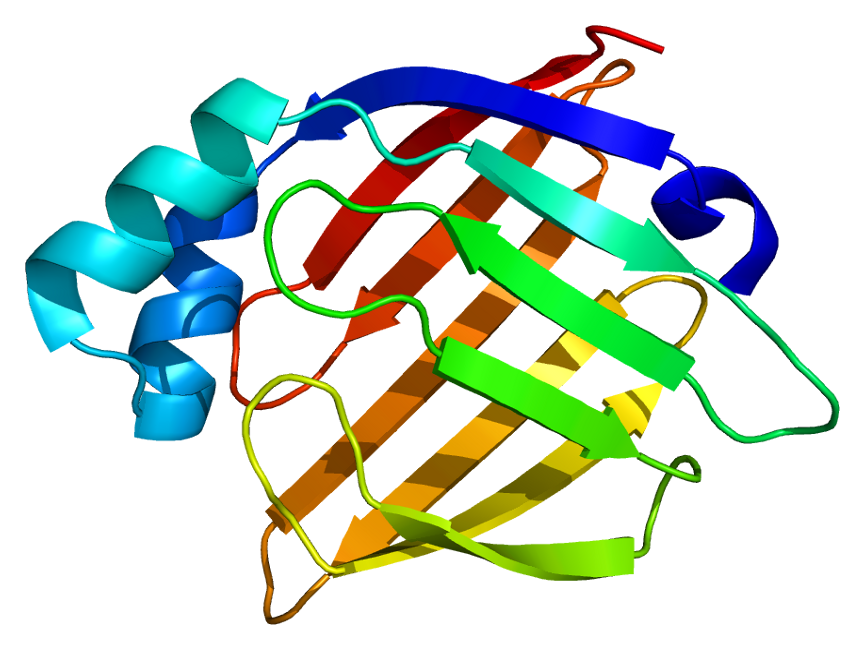
FABPs are small, structurally conserved cytosolic proteins consisting of a water-filled, interior-binding pocket surrounded by ten anti-parallel beta sheets, forming a beta barrel. At the superior surface, two alpha-helices cap the pocket and are thought to regulate binding. FABPs have broad specificity, including the ability to bind long-chain (C16-C20) fatty acids, eicosanoids, bile salts and peroxisome proliferators. FABPs demonstrate strong evolutionary conservation and are present in a spectrum of species including Drosophila melanogaster, Caenorhabditis elegans, mouse and human. The human genome consists of nine putatively functional protein-coding FABP genes. The most recently identified family member, FABP12, has been less studied.
Dictated by the characteristic structure, the main function of the FABPs is to bind fatty acids, as well as the intake, transportation and consumption, despite their different selectivity, affinity, and binding mechanism. They enhance the solubility of hydrophobic fatty acids, allowing their efficient transport within the aqueous cytoplasm. FABPs also participate in the uptake of fatty acids from the extracellular environment and their subsequent delivery to specific cellular compartments, such as the nucleus, mitochondria, or endoplasmic reticulum. Research emerging in the last decade has suggested that FABPs have tissue-specific functions that reflect tissue-specific aspects of lipid and fatty acid metabolism. Proposed roles for FABPs include assimilation of dietary lipids in the intestine, targeting of liver lipids to catabolic and anabolic pathways, regulation of lipid storage and lipid-mediated gene expression in adipose tissue and macrophages, fatty acid targeting to β-oxidation pathways in muscle, and maintenance of phospholipid membranes in neural tissues.
FABPs facilitate the transport of fatty acids by forming a complex with them. This complex shields the hydrophobic fatty acids from the surrounding aqueous environment, enabling their transit through the cytoplasm. Different types of FABPs exhibit tissue-specific expression, ensuring the efficient transport of fatty acids to locations where they are needed most for various cellular processes. Studies have reported that the intracellular trafficking of fatty acids is a complicated and dynamic process that directly or indirectly influences multiple functions of the cell and especially regulates important biochemical processes in normal cells, including gene expression modulation, cell development, metabolism, and inflammatory response through enzymatic and transcriptional networks.
Beyond their role in fatty acid transport, FABPs also participate in cellular signaling pathways. By transporting fatty acids to the nucleus, FABPs can modulate the activity of nuclear receptors involved in transcriptional regulation. This interaction can influence gene expression, contributing to the overall regulation of cellular processes, including those related to lipid metabolism.
FABPs are integral to lipid metabolism, participating in various processes that contribute to energy homeostasis. These include fatty acid uptake, storage, and oxidation. In adipocytes, A-FABP is involved in the storage of fatty acids as triglycerides, while in the liver, L-FABP contributes to the regulation of lipid metabolism and cholesterol homeostasis. Metabolic syndromes such as obesity, high uric acid, high blood fat, hypertension, type II diabetes, and atherosclerosis, have received increasing attention due to the great changes that have occurred in eating habits and the general lifestyle. Accumulating evidence shows that the level of FABP5 may be closely associated with the pathogenesis of chronic metabolic diseases through its expression in adipocytes and macrophages.
Several distinct types of FABPs have been identified, each exhibiting a tissue-specific distribution. Some prominent examples include:
Hub AI
Fatty acid-binding protein AI simulator
(@Fatty acid-binding protein_simulator)
Fatty acid-binding protein
The fatty-acid-binding proteins (FABPs) are a family of transport proteins for fatty acids and other lipophilic substances such as eicosanoids and retinoids. These proteins are thought to facilitate the transfer of fatty acids between extra- and intracellular membranes. Some family members are also believed to transport lipophilic molecules from outer cell membrane to certain intracellular receptors such as PPAR. The FABPs are intracellular carriers that “solubilize” the endocannabinoid anandamide (AEA), transporting AEA to the breakdown by FAAH, and compounds that bind to FABPs block AEA breakdown, raising its level. The cannabinoids (THC and CBD) are also discovered to bind human FABPs (1, 3, 5, and 7) that function as intracellular carriers, as THC and CBD inhibit the cellular uptake and catabolism of AEA by targeting FABPs. Competition for FABPs may in part or wholly explain the increased circulating levels of endocannabinoids reported after consumption of cannabinoids. Levels of fatty-acid-binding protein have been shown to decline with ageing in the mouse brain, possibly contributing to age-associated decline in synaptic activity.
Fatty Acid Binding Proteins (FABPs) represent a family of proteins that play a pivotal role in cellular lipid metabolism. These proteins act as intracellular carriers, facilitating the transport and utilization of fatty acids within cells. With their diverse tissue-specific distribution and involvement in various cellular processes, FABPs contribute significantly to energy homeostasis, lipid metabolism, and even cellular signaling. Fatty acid-binding proteins (FABPs) are members of the intracellular lipid-binding protein (iLBP) family and are involved in reversibly binding intracellular hydrophobic ligands and trafficking them throughout cellular compartments, including the peroxisomes, mitochondria, endoplasmic reticulum and nucleus. This comprehensive exploration aims to delve into the structure, function, types, and implications of FABPs in health and disease.
FABPs are small, structurally conserved cytosolic proteins consisting of a water-filled, interior-binding pocket surrounded by ten anti-parallel beta sheets, forming a beta barrel. At the superior surface, two alpha-helices cap the pocket and are thought to regulate binding. FABPs have broad specificity, including the ability to bind long-chain (C16-C20) fatty acids, eicosanoids, bile salts and peroxisome proliferators. FABPs demonstrate strong evolutionary conservation and are present in a spectrum of species including Drosophila melanogaster, Caenorhabditis elegans, mouse and human. The human genome consists of nine putatively functional protein-coding FABP genes. The most recently identified family member, FABP12, has been less studied.
Dictated by the characteristic structure, the main function of the FABPs is to bind fatty acids, as well as the intake, transportation and consumption, despite their different selectivity, affinity, and binding mechanism. They enhance the solubility of hydrophobic fatty acids, allowing their efficient transport within the aqueous cytoplasm. FABPs also participate in the uptake of fatty acids from the extracellular environment and their subsequent delivery to specific cellular compartments, such as the nucleus, mitochondria, or endoplasmic reticulum. Research emerging in the last decade has suggested that FABPs have tissue-specific functions that reflect tissue-specific aspects of lipid and fatty acid metabolism. Proposed roles for FABPs include assimilation of dietary lipids in the intestine, targeting of liver lipids to catabolic and anabolic pathways, regulation of lipid storage and lipid-mediated gene expression in adipose tissue and macrophages, fatty acid targeting to β-oxidation pathways in muscle, and maintenance of phospholipid membranes in neural tissues.
FABPs facilitate the transport of fatty acids by forming a complex with them. This complex shields the hydrophobic fatty acids from the surrounding aqueous environment, enabling their transit through the cytoplasm. Different types of FABPs exhibit tissue-specific expression, ensuring the efficient transport of fatty acids to locations where they are needed most for various cellular processes. Studies have reported that the intracellular trafficking of fatty acids is a complicated and dynamic process that directly or indirectly influences multiple functions of the cell and especially regulates important biochemical processes in normal cells, including gene expression modulation, cell development, metabolism, and inflammatory response through enzymatic and transcriptional networks.
Beyond their role in fatty acid transport, FABPs also participate in cellular signaling pathways. By transporting fatty acids to the nucleus, FABPs can modulate the activity of nuclear receptors involved in transcriptional regulation. This interaction can influence gene expression, contributing to the overall regulation of cellular processes, including those related to lipid metabolism.
FABPs are integral to lipid metabolism, participating in various processes that contribute to energy homeostasis. These include fatty acid uptake, storage, and oxidation. In adipocytes, A-FABP is involved in the storage of fatty acids as triglycerides, while in the liver, L-FABP contributes to the regulation of lipid metabolism and cholesterol homeostasis. Metabolic syndromes such as obesity, high uric acid, high blood fat, hypertension, type II diabetes, and atherosclerosis, have received increasing attention due to the great changes that have occurred in eating habits and the general lifestyle. Accumulating evidence shows that the level of FABP5 may be closely associated with the pathogenesis of chronic metabolic diseases through its expression in adipocytes and macrophages.
Several distinct types of FABPs have been identified, each exhibiting a tissue-specific distribution. Some prominent examples include:
Recent media