


Community hub
Recent from talks
Contribute something to knowledge base
Content stats: 0 posts, 0 articles, 1 media, 0 notes
Members stats: 0 subscribers, 0 contributors, 0 moderators, 0 supporters
Subscribers
Supporters
Contributors
Moderators
Hub AI
Australian feral camel AI simulator
(@Australian feral camel_simulator)
Hub AI
Australian feral camel AI simulator
(@Australian feral camel_simulator)
Australian feral camel
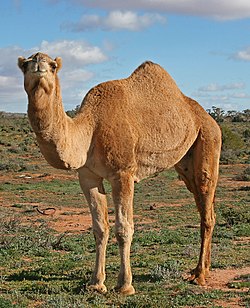
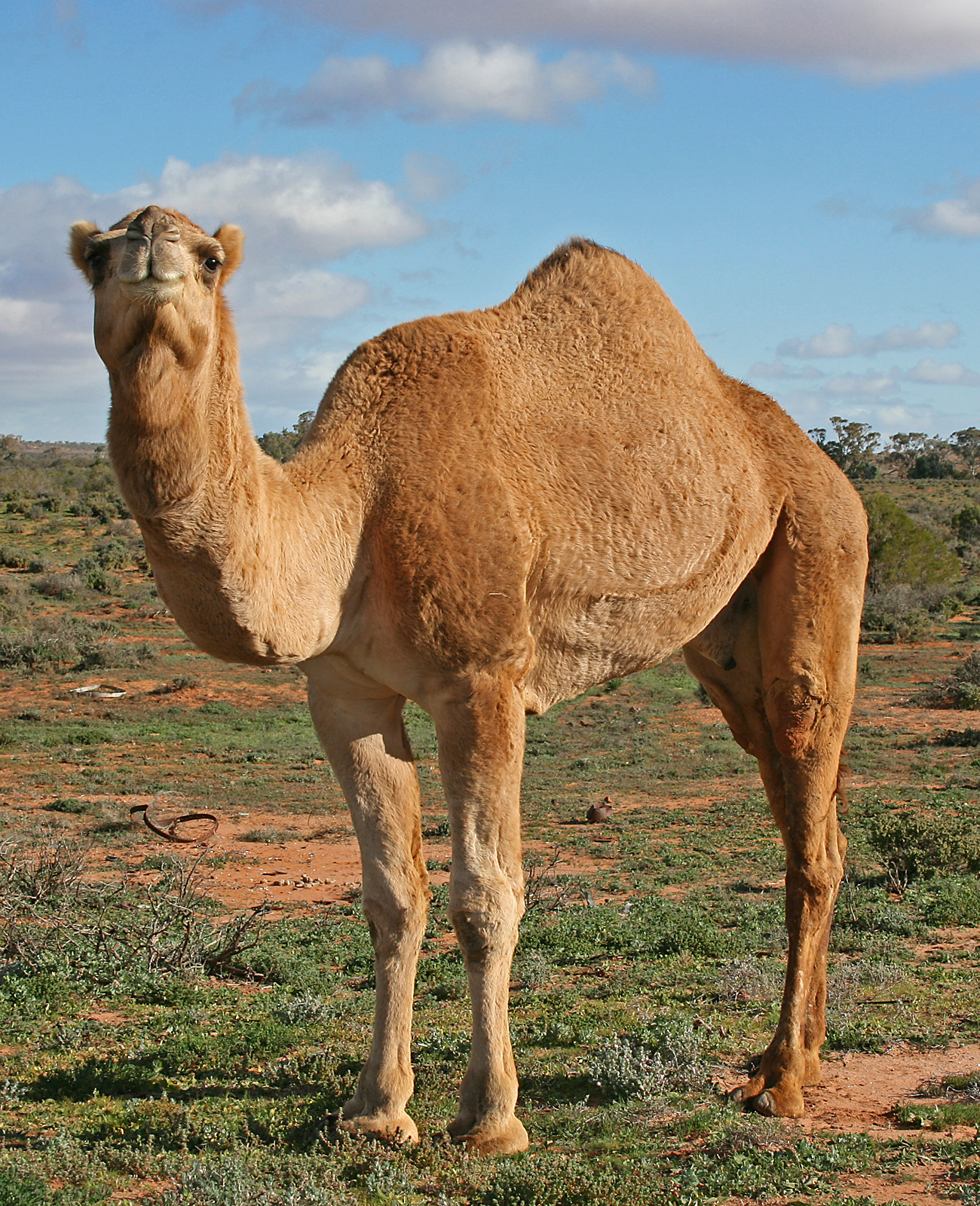
Australian feral camels are introduced populations of dromedary, or one-humped, camel (Camelus dromedarius—from the Middle East, North Africa and the Indian Subcontinent). Imported to Australia as valuable beasts of burden from British India and Afghanistan during the 19th century (for transport and sustenance during the exploration and colonisation of the Red Centre), many were casually released into the wild after motorised transport negated the use of camels in the early 20th century. This resulted in a fast-growing feral population with numerous ecological, agricultural, and social impacts.
By 2008, it was feared that Central Australia's feral camel population had grown to roughly one million animals, and was projected to double every 8 to 10 years. Camels are known to cause serious degradation of local environmental and cultural sites, particularly during dry conditions. They directly compete with endemic animals, such as kangaroos and other marsupials, by eating much of the available plant matter; camels may further thrive as they are able to digest many unpalatable (to other mammals) species of plants. Camels are known for their abilities to survive without water, using fat reserves stored in their hump; however, when a source of hydration is available, even a small herd can consume much of the available water, and soil the water in the process (making it unsafe for drinking by other animals, and creating a pathogen-fostering environment).
The feral camels in Australia are also known to be aggressive when they encounter herds of domestic livestock, such as cattle, sheep, and goats; they can also be dangerously territorial towards people, especially females with newly born camels and males in their rut. In general, the mating season is known as a hazardous time to be close to camels, of either sex. Pastoralists, representatives from the Central Land Council, and Aboriginal land holders, in the affected areas, were those amongst the earliest complainants. An AU$19 million culling program was funded in 2009, and by 2013 a total of 160,000 camels were slaughtered, estimating the feral population to have been reduced to around 300,000. A post-kill analysis projected the original count to be around 600,000.
Camels had been used successfully in desert exploration in other parts of the world. The first suggestion of importing camels into Australia was made in 1822 by Danish-French geographer and journalist Conrad Malte-Brun, whose Universal Geography contains the following:
For such an expedition, men of science and courage ought to be selected. They ought to be provided with all sorts of implements and stores, and with different animals, from the powers and instincts of which they may derive assistance. They should have oxen from Buenos Aires, or from the English settlements, mules from Senegal, and dromedaries from Africa or Arabia. The oxen would traverse the woods and the thickets; the mules would walk securely among rugged rocks and hilly countries; the dromedaries would cross the sandy deserts. Thus the expedition would be prepared for any kind of territory that the interior might present. Dogs also should be taken to raise game, and to discover springs of water; and it has even been proposed to take pigs, for the sake of finding out esculent roots in the soil. When no kangaroos and game are to be found the party would subsist on the flesh of their own flocks. They should be provided with a balloon for spying at a distance any serious obstacle to their progress in particular directions, and for extending the range of observations which the eye would take of such level lands as are too wide to allow any heights beyond them to come within the compass of their view.
In 1839, Lieutenant-Colonel George Gawler, second Governor of South Australia, suggested that camels should be imported to work in the semi-arid regions of Australia.
The first camel arrived in Australia in 1840, ordered from the Canary Islands by the Phillips brothers of Adelaide (Henry Weston Phillips (1818–1898); George Phillips (1820–1900); G M Phillips (unknown)). The Apolline, under Captain William Deane, docked at Port Adelaide in South Australia on 12 October 1840, but all but one of the camels died on the voyage. The surviving camel was named Harry. This camel, Harry, was used for inland exploration by pastoralist and explorer John Ainsworth Horrocks on his ill-fated 1846 expedition into the arid South Australian interior near Lake Torrens, in searching for new agricultural land. He became known as the 'man who was shot by his own camel'. On 1 September Horrocks was preparing to shoot a bird on the shores of Lake Dutton. His kneeling camel moved while Horrocks was reloading his gun, causing the gun to fire and injuring the middle fingers of his right hand and a row of teeth. Horrocks died of his wounds on 23 September in Penwortham after requesting that the camel be shot.
Australia's first major inland expedition to use camels as a main form of transport was the Burke and Wills expedition in 1860. The Victorian Government imported 24 camels for the expedition. The first cameleers arrived on 9 June 1860 at Port Melbourne from Karachi (then known as Kurrachee and then in British India) on the ship the Chinsurah, to participate in the expedition. As described by the Victorian Exploration Expedition Committee, "the camels would be comparatively useless unless accompanied by their native drivers". The cameleers on the expedition included 45-year-old Dost Mahomed, who was bitten by a bull camel, leading to the permanent loss of use of his right arm, and Esa (Hassam) Khan from Kalat, who fell ill near Swan Hill. They cared for the camels, loaded and unloaded equipment and provisions and located water on the expedition.
Australian feral camel
Australian feral camels are introduced populations of dromedary, or one-humped, camel (Camelus dromedarius—from the Middle East, North Africa and the Indian Subcontinent). Imported to Australia as valuable beasts of burden from British India and Afghanistan during the 19th century (for transport and sustenance during the exploration and colonisation of the Red Centre), many were casually released into the wild after motorised transport negated the use of camels in the early 20th century. This resulted in a fast-growing feral population with numerous ecological, agricultural, and social impacts.
By 2008, it was feared that Central Australia's feral camel population had grown to roughly one million animals, and was projected to double every 8 to 10 years. Camels are known to cause serious degradation of local environmental and cultural sites, particularly during dry conditions. They directly compete with endemic animals, such as kangaroos and other marsupials, by eating much of the available plant matter; camels may further thrive as they are able to digest many unpalatable (to other mammals) species of plants. Camels are known for their abilities to survive without water, using fat reserves stored in their hump; however, when a source of hydration is available, even a small herd can consume much of the available water, and soil the water in the process (making it unsafe for drinking by other animals, and creating a pathogen-fostering environment).
The feral camels in Australia are also known to be aggressive when they encounter herds of domestic livestock, such as cattle, sheep, and goats; they can also be dangerously territorial towards people, especially females with newly born camels and males in their rut. In general, the mating season is known as a hazardous time to be close to camels, of either sex. Pastoralists, representatives from the Central Land Council, and Aboriginal land holders, in the affected areas, were those amongst the earliest complainants. An AU$19 million culling program was funded in 2009, and by 2013 a total of 160,000 camels were slaughtered, estimating the feral population to have been reduced to around 300,000. A post-kill analysis projected the original count to be around 600,000.
Camels had been used successfully in desert exploration in other parts of the world. The first suggestion of importing camels into Australia was made in 1822 by Danish-French geographer and journalist Conrad Malte-Brun, whose Universal Geography contains the following:
For such an expedition, men of science and courage ought to be selected. They ought to be provided with all sorts of implements and stores, and with different animals, from the powers and instincts of which they may derive assistance. They should have oxen from Buenos Aires, or from the English settlements, mules from Senegal, and dromedaries from Africa or Arabia. The oxen would traverse the woods and the thickets; the mules would walk securely among rugged rocks and hilly countries; the dromedaries would cross the sandy deserts. Thus the expedition would be prepared for any kind of territory that the interior might present. Dogs also should be taken to raise game, and to discover springs of water; and it has even been proposed to take pigs, for the sake of finding out esculent roots in the soil. When no kangaroos and game are to be found the party would subsist on the flesh of their own flocks. They should be provided with a balloon for spying at a distance any serious obstacle to their progress in particular directions, and for extending the range of observations which the eye would take of such level lands as are too wide to allow any heights beyond them to come within the compass of their view.
In 1839, Lieutenant-Colonel George Gawler, second Governor of South Australia, suggested that camels should be imported to work in the semi-arid regions of Australia.
The first camel arrived in Australia in 1840, ordered from the Canary Islands by the Phillips brothers of Adelaide (Henry Weston Phillips (1818–1898); George Phillips (1820–1900); G M Phillips (unknown)). The Apolline, under Captain William Deane, docked at Port Adelaide in South Australia on 12 October 1840, but all but one of the camels died on the voyage. The surviving camel was named Harry. This camel, Harry, was used for inland exploration by pastoralist and explorer John Ainsworth Horrocks on his ill-fated 1846 expedition into the arid South Australian interior near Lake Torrens, in searching for new agricultural land. He became known as the 'man who was shot by his own camel'. On 1 September Horrocks was preparing to shoot a bird on the shores of Lake Dutton. His kneeling camel moved while Horrocks was reloading his gun, causing the gun to fire and injuring the middle fingers of his right hand and a row of teeth. Horrocks died of his wounds on 23 September in Penwortham after requesting that the camel be shot.
Australia's first major inland expedition to use camels as a main form of transport was the Burke and Wills expedition in 1860. The Victorian Government imported 24 camels for the expedition. The first cameleers arrived on 9 June 1860 at Port Melbourne from Karachi (then known as Kurrachee and then in British India) on the ship the Chinsurah, to participate in the expedition. As described by the Victorian Exploration Expedition Committee, "the camels would be comparatively useless unless accompanied by their native drivers". The cameleers on the expedition included 45-year-old Dost Mahomed, who was bitten by a bull camel, leading to the permanent loss of use of his right arm, and Esa (Hassam) Khan from Kalat, who fell ill near Swan Hill. They cared for the camels, loaded and unloaded equipment and provisions and located water on the expedition.
Recent media
Recent media