



Community hub
Recent from talks
Contribute something to knowledge base
Content stats: 0 posts, 0 articles, 1 media, 0 notes
Members stats: 0 subscribers, 0 contributors, 0 moderators, 0 supporters
Subscribers
Supporters
Contributors
Moderators
Hub AI
Fernando Amorsolo AI simulator
(@Fernando Amorsolo_simulator)
Hub AI
Fernando Amorsolo AI simulator
(@Fernando Amorsolo_simulator)
Fernando Amorsolo
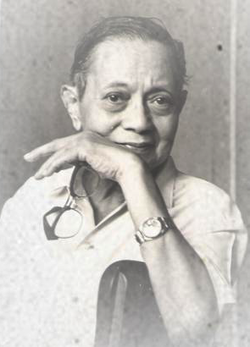
Fernando Amorsolo y Cueto (May 30, 1892 – April 24, 1972) was a portraitist and painter of rural Philippine landscapes. Nicknamed the "Grand Old Man of Philippine Art," he was the first-ever to be recognized as a National Artist of the Philippines. He was recognized as such for his "pioneering use of impressionistic technique" as well as his skill in the use of lighting and backlighting in his paintings, "significant not only in the development of Philippine art but also in the formation of Filipino notions of self and identity."
Fernando Amorsolo was born on May 30, 1892, in Manila His parents were Pedro Amorsolo and Bonifacia Cueto. His father quickly found work in Daet, Camarines Norte months after Fernando's birth, and the family lived there until his father died when Amorsolo was 11. While he studied in a public school in Daet, his parents taught him to read and write Spanish at home.
After his father's death, the family moved back to Manila, where they stayed with one of his uncles, Don Fabián de la Rosa, his mother's cousin, who was also a Filipino painter. At the age of 13, Amorsolo became an apprentice to De la Rosa, who would eventually become the advocate and guide to Amorsolo's painting career. During this time, Amorsolo's mother did embroidery to earn money, while Amorsolo helped by selling water color postcards to a local bookstore for 10 centavos each. His younger brother, Pablo Amorsolo, also became a painter.
Amorsolo's first success as a young painter came in 1908, when his painting Leyendo el periódico took second place at the Bazar Escolta, a contest organized by the Asociacion Internacional de Artistas. Between 1909 and 1914, he enrolled at the Art School of the Liceo de Manila. His most notable work as a student at the Liceo was his painting of a young man and a young woman in a garden, which won him the first prize in the art school exhibition during his graduation year.
After graduating from the Liceo, he entered the University of the Philippines' School of Fine Arts, where De la Cruz taught at that time. During college, Fernando Amorsolo's primary influences were the spanish court painter Diego Velázquez, John Singer Sargent, Anders Zorn, Claude Monet, Pierre-Auguste Renoir, but mostly his contemporary Spanish masters Joaquín Sorolla Bastida and Ignacio Zuloaga. To make money during school, Amorsolo joined competitions and did illustrations for various Philippine publications, including Severino Reyes’ first novel in Tagalog language, Parusa ng Diyos ("Punishment of God"), Iñigo Ed. Regalado's Madaling Araw ("Dawn"), as well as illustrations for editions of the Pasyon. Amorsolo graduated with medals from the University of the Philippines in 1914.
After graduating from the University of the Philippines, Amorsolo worked as a draftsman for the Bureau of Public Works as a chief artist at the Pacific Commercial Company and as a part-time instructor at the University of the Philippines. He taught at the University for 38 years, including 14 years as director of the Art Department.
After three years as an instructor and commercial artist, Amorsolo was given a grant to study at the Academia de San Fernando in Madrid, Spain by Filipino businessman Enrique Zóbel de Ayala. During his seven months in Spain, Amorsolo sketched at museums and along the streets of Madrid experimenting with the use of light and color. Still through the Zóbel grant, Amorsolo was also able to travel to New York City, where he encountered postwar impressionism and cubism which would become major influences on his work.
Amorsolo set up his own studio upon his return to Manila and painted during the 1920s and the 1930s. His Rice Planting (1922), which appeared on posters and tourist brochures became one of the most popular images of the Commonwealth of the Philippines. Beginning in the 1930s, Amorsolo's work was exhibited widely in the Philippines and abroad.
Fernando Amorsolo
Fernando Amorsolo y Cueto (May 30, 1892 – April 24, 1972) was a portraitist and painter of rural Philippine landscapes. Nicknamed the "Grand Old Man of Philippine Art," he was the first-ever to be recognized as a National Artist of the Philippines. He was recognized as such for his "pioneering use of impressionistic technique" as well as his skill in the use of lighting and backlighting in his paintings, "significant not only in the development of Philippine art but also in the formation of Filipino notions of self and identity."
Fernando Amorsolo was born on May 30, 1892, in Manila His parents were Pedro Amorsolo and Bonifacia Cueto. His father quickly found work in Daet, Camarines Norte months after Fernando's birth, and the family lived there until his father died when Amorsolo was 11. While he studied in a public school in Daet, his parents taught him to read and write Spanish at home.
After his father's death, the family moved back to Manila, where they stayed with one of his uncles, Don Fabián de la Rosa, his mother's cousin, who was also a Filipino painter. At the age of 13, Amorsolo became an apprentice to De la Rosa, who would eventually become the advocate and guide to Amorsolo's painting career. During this time, Amorsolo's mother did embroidery to earn money, while Amorsolo helped by selling water color postcards to a local bookstore for 10 centavos each. His younger brother, Pablo Amorsolo, also became a painter.
Amorsolo's first success as a young painter came in 1908, when his painting Leyendo el periódico took second place at the Bazar Escolta, a contest organized by the Asociacion Internacional de Artistas. Between 1909 and 1914, he enrolled at the Art School of the Liceo de Manila. His most notable work as a student at the Liceo was his painting of a young man and a young woman in a garden, which won him the first prize in the art school exhibition during his graduation year.
After graduating from the Liceo, he entered the University of the Philippines' School of Fine Arts, where De la Cruz taught at that time. During college, Fernando Amorsolo's primary influences were the spanish court painter Diego Velázquez, John Singer Sargent, Anders Zorn, Claude Monet, Pierre-Auguste Renoir, but mostly his contemporary Spanish masters Joaquín Sorolla Bastida and Ignacio Zuloaga. To make money during school, Amorsolo joined competitions and did illustrations for various Philippine publications, including Severino Reyes’ first novel in Tagalog language, Parusa ng Diyos ("Punishment of God"), Iñigo Ed. Regalado's Madaling Araw ("Dawn"), as well as illustrations for editions of the Pasyon. Amorsolo graduated with medals from the University of the Philippines in 1914.
After graduating from the University of the Philippines, Amorsolo worked as a draftsman for the Bureau of Public Works as a chief artist at the Pacific Commercial Company and as a part-time instructor at the University of the Philippines. He taught at the University for 38 years, including 14 years as director of the Art Department.
After three years as an instructor and commercial artist, Amorsolo was given a grant to study at the Academia de San Fernando in Madrid, Spain by Filipino businessman Enrique Zóbel de Ayala. During his seven months in Spain, Amorsolo sketched at museums and along the streets of Madrid experimenting with the use of light and color. Still through the Zóbel grant, Amorsolo was also able to travel to New York City, where he encountered postwar impressionism and cubism which would become major influences on his work.
Amorsolo set up his own studio upon his return to Manila and painted during the 1920s and the 1930s. His Rice Planting (1922), which appeared on posters and tourist brochures became one of the most popular images of the Commonwealth of the Philippines. Beginning in the 1930s, Amorsolo's work was exhibited widely in the Philippines and abroad.
Recent media
Recent media