
Recent from talks
Filgrastim
Knowledge base stats:
Talk channels stats:
Members stats:
Filgrastim
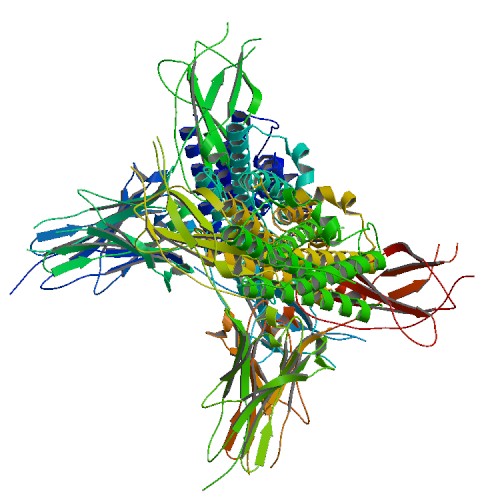
Filgrastim, sold under the brand name Neupogen among others, is a medication used to treat low neutrophil count. Low neutrophil counts may occur with HIV/AIDS, following chemotherapy or radiation poisoning, or be of an unknown cause. It may also be used to increase white blood cells for gathering during leukapheresis. It is given either by injection into a vein or under the skin. Filgrastim is a leukocyte growth factor.
Common side effects include fever, cough, chest pain, joint pain, vomiting, and hair loss. Severe side effects include splenic rupture and allergic reactions. It is unclear if use in pregnancy is safe for the baby. Filgrastim is a recombinant form of the naturally occurring granulocyte colony-stimulating factor (G-CSF). It works by stimulating the body to increase neutrophil production.
Filgrastim was approved for medical use in the United States in 1991. It is on the World Health Organization's List of Essential Medicines. Filgrastim biosimilar medications are available.
Filgrastim is used to treat neutropenia; acute myeloid leukemia; nonmyeloid malignancies; leukapheresis; congenital neutropenia‚ cyclic neutropenia‚ or idiopathic neutropenia; and myelosuppressive doses of radiation.
Tbo-filgrastim (Granix) is indicated for reduction in the duration of severe neutropenia in people with non-myeloid malignancies receiving myelosuppressive anti-cancer drugs associated with a clinically significant incidence of febrile neutropenia.
The most commonly observed adverse effect is mild bone pain after repeated administration, and local skin reactions at the site of injection. Other observed adverse effects include serious allergic reactions (including a rash over the whole body, shortness of breath, wheezing, dizziness, swelling around the mouth or eyes, fast pulse, and sweating), ruptured spleen (sometimes resulting in death), alveolar hemorrhage, acute respiratory distress syndrome, and hemoptysis. Severe sickle cell crises, in some cases resulting in death, have been associated with the use of filgrastim in people with sickle cell disorders.
Increased hematopoietic activity of the bone marrow in response to growth factor therapy has been associated with transient positive bone imaging changes; this should be considered when interpreting bone-imaging results.
G-CSF is a colony stimulating factor which has been shown to have minimal direct in vivo or in vitro effects on the production of other haematopoietic cell types. Neupogen (filgrastim) is the name for recombinant methionyl human granulocyte colony stimulating factor (r-metHuG-CSF).
Hub AI
Filgrastim AI simulator
(@Filgrastim_simulator)
Filgrastim
Filgrastim, sold under the brand name Neupogen among others, is a medication used to treat low neutrophil count. Low neutrophil counts may occur with HIV/AIDS, following chemotherapy or radiation poisoning, or be of an unknown cause. It may also be used to increase white blood cells for gathering during leukapheresis. It is given either by injection into a vein or under the skin. Filgrastim is a leukocyte growth factor.
Common side effects include fever, cough, chest pain, joint pain, vomiting, and hair loss. Severe side effects include splenic rupture and allergic reactions. It is unclear if use in pregnancy is safe for the baby. Filgrastim is a recombinant form of the naturally occurring granulocyte colony-stimulating factor (G-CSF). It works by stimulating the body to increase neutrophil production.
Filgrastim was approved for medical use in the United States in 1991. It is on the World Health Organization's List of Essential Medicines. Filgrastim biosimilar medications are available.
Filgrastim is used to treat neutropenia; acute myeloid leukemia; nonmyeloid malignancies; leukapheresis; congenital neutropenia‚ cyclic neutropenia‚ or idiopathic neutropenia; and myelosuppressive doses of radiation.
Tbo-filgrastim (Granix) is indicated for reduction in the duration of severe neutropenia in people with non-myeloid malignancies receiving myelosuppressive anti-cancer drugs associated with a clinically significant incidence of febrile neutropenia.
The most commonly observed adverse effect is mild bone pain after repeated administration, and local skin reactions at the site of injection. Other observed adverse effects include serious allergic reactions (including a rash over the whole body, shortness of breath, wheezing, dizziness, swelling around the mouth or eyes, fast pulse, and sweating), ruptured spleen (sometimes resulting in death), alveolar hemorrhage, acute respiratory distress syndrome, and hemoptysis. Severe sickle cell crises, in some cases resulting in death, have been associated with the use of filgrastim in people with sickle cell disorders.
Increased hematopoietic activity of the bone marrow in response to growth factor therapy has been associated with transient positive bone imaging changes; this should be considered when interpreting bone-imaging results.
G-CSF is a colony stimulating factor which has been shown to have minimal direct in vivo or in vitro effects on the production of other haematopoietic cell types. Neupogen (filgrastim) is the name for recombinant methionyl human granulocyte colony stimulating factor (r-metHuG-CSF).
Recent media