
Recent from talks
Film noir
Knowledge base stats:
Talk channels stats:
Members stats:
Film noir
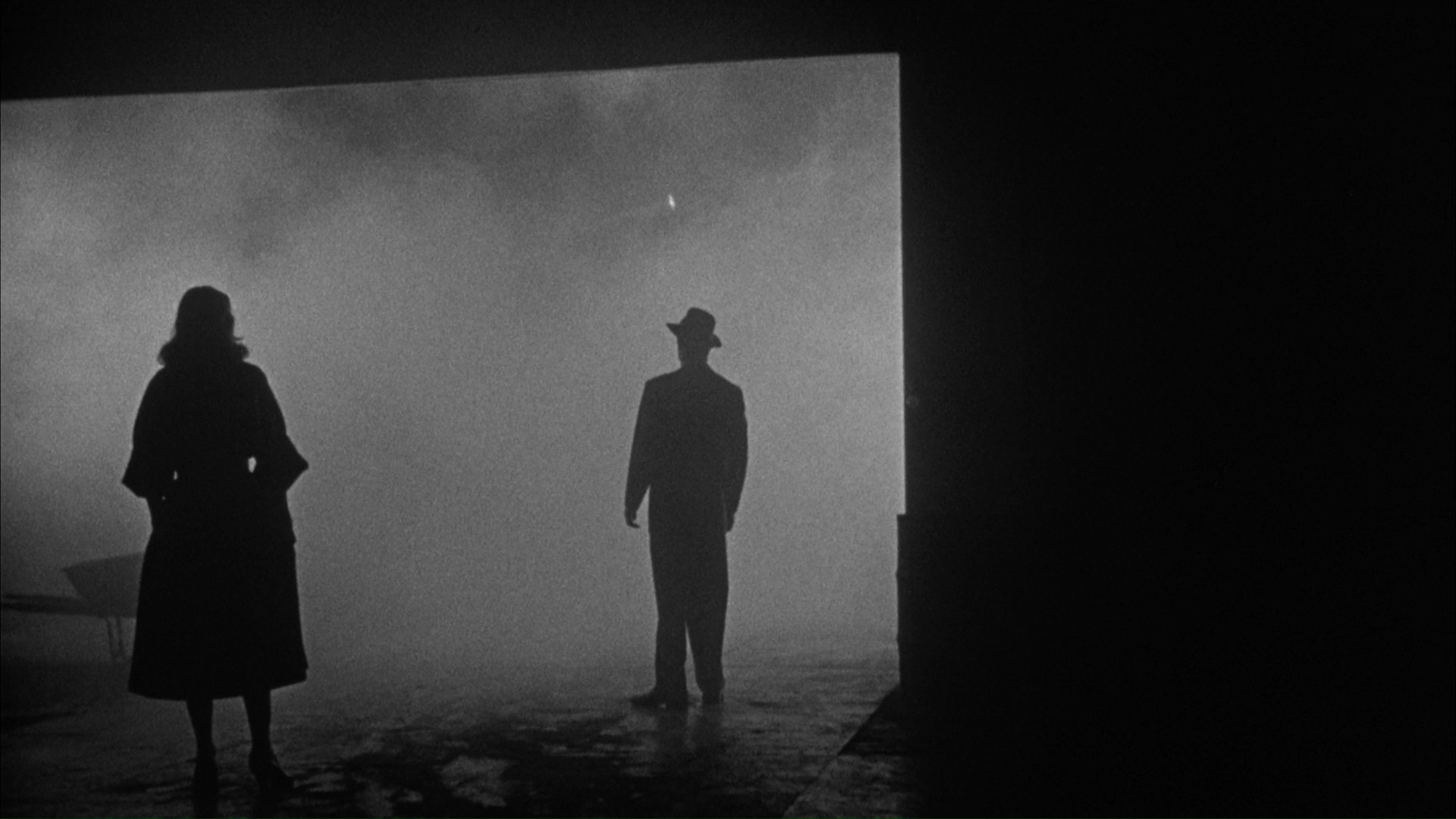
Film noir (/nwɑːr/; French: [film nwaʁ]) is a style of Hollywood crime drama that emphasizes cynical attitudes and motivations. The 1940s and 1950s are generally regarded as the "classic period" of American film noir. Film noir of this era is associated with a low-key, black-and-white visual style that has roots in German expressionist cinematography. Many of the prototypical stories and attitudes expressed in classic noir derive from the hardboiled school of crime fiction that emerged in the United States during the Great Depression, known as noir fiction.
The term film noir, French for "black film" (literal) or "dark film" (closer meaning), was first applied to Hollywood films by French critic Nino Frank in 1946, but was unrecognized by most American film industry professionals of that era. Frank is believed to have been inspired by the French literary publishing imprint Série noire, founded in 1945.
Cinema historians and critics defined the category retrospectively. Before the notion was widely adopted in the 1970s, many of the classic film noirs[a] were referred to as "melodramas". Whether film noir qualifies as a distinct genre or whether it should be considered a filmmaking style is a matter of ongoing and heavy debate among film scholars.
Film noir encompasses a range of plots; common archetypical protagonists include a private investigator (The Big Sleep), a plainclothes police officer (The Big Heat), an aging boxer (The Set-Up), a hapless grifter (Night and the City), a law-abiding citizen lured into a life of crime (Gun Crazy), a femme fatale (Gilda) or simply a victim of circumstance (D.O.A.). Although film noir was originally associated with American productions, the term has been used to describe films from around the world. Many films released from the 1960s onward share attributes with film noirs of the classical period, and often treat its conventions self-referentially. Latter-day works are typically referred to as neo-noir. The clichés of film noir have inspired parody since the mid-1940s.
The question of what defines film noir and what sort of category it is, provokes continuing debate. "We'd be oversimplifying things in calling film noir oneiric, strange, erotic, ambivalent, and cruel ..."—this set of attributes constitutes the first of many attempts to define film noir made by French critics Raymond Borde and Étienne Chaumeton in their 1955 book Panorama du film noir américain 1941–1953 (A Panorama of American Film Noir), the original and seminal extended treatment of the subject. They emphasize that not every noir film embodies all five attributes in equal measure—one might be more dreamlike; another, particularly brutal. The authors' caveats and repeated efforts at alternative definition have been echoed in subsequent scholarship, but in the words of cinema historian Mark Bould, film noir remains an "elusive phenomenon."
Though film noir is often identified with a visual style that emphasizes low-key lighting and unbalanced compositions, films commonly identified as noir evidence a variety of visual approaches, including ones that fit comfortably within the Hollywood mainstream. Film noir similarly embraces a variety of genres, from the gangster film to the police procedural to the gothic romance to the social problem picture—any example of which from the 1940s and 1950s, now seen as noir's classical era, was likely to be described as a melodrama at the time.
It is night, always. The hero enters a labyrinth on a quest. He is alone and off balance. He may be desperate, in flight, or coldly calculating, imagining he is the pursuer rather than the pursued.
A woman invariably joins him at a critical juncture, when he is most vulnerable. [Her] eventual betrayal of him (or herself) is as ambiguous as her feelings about him.
Hub AI
Film noir AI simulator
(@Film noir_simulator)
Film noir
Film noir (/nwɑːr/; French: [film nwaʁ]) is a style of Hollywood crime drama that emphasizes cynical attitudes and motivations. The 1940s and 1950s are generally regarded as the "classic period" of American film noir. Film noir of this era is associated with a low-key, black-and-white visual style that has roots in German expressionist cinematography. Many of the prototypical stories and attitudes expressed in classic noir derive from the hardboiled school of crime fiction that emerged in the United States during the Great Depression, known as noir fiction.
The term film noir, French for "black film" (literal) or "dark film" (closer meaning), was first applied to Hollywood films by French critic Nino Frank in 1946, but was unrecognized by most American film industry professionals of that era. Frank is believed to have been inspired by the French literary publishing imprint Série noire, founded in 1945.
Cinema historians and critics defined the category retrospectively. Before the notion was widely adopted in the 1970s, many of the classic film noirs[a] were referred to as "melodramas". Whether film noir qualifies as a distinct genre or whether it should be considered a filmmaking style is a matter of ongoing and heavy debate among film scholars.
Film noir encompasses a range of plots; common archetypical protagonists include a private investigator (The Big Sleep), a plainclothes police officer (The Big Heat), an aging boxer (The Set-Up), a hapless grifter (Night and the City), a law-abiding citizen lured into a life of crime (Gun Crazy), a femme fatale (Gilda) or simply a victim of circumstance (D.O.A.). Although film noir was originally associated with American productions, the term has been used to describe films from around the world. Many films released from the 1960s onward share attributes with film noirs of the classical period, and often treat its conventions self-referentially. Latter-day works are typically referred to as neo-noir. The clichés of film noir have inspired parody since the mid-1940s.
The question of what defines film noir and what sort of category it is, provokes continuing debate. "We'd be oversimplifying things in calling film noir oneiric, strange, erotic, ambivalent, and cruel ..."—this set of attributes constitutes the first of many attempts to define film noir made by French critics Raymond Borde and Étienne Chaumeton in their 1955 book Panorama du film noir américain 1941–1953 (A Panorama of American Film Noir), the original and seminal extended treatment of the subject. They emphasize that not every noir film embodies all five attributes in equal measure—one might be more dreamlike; another, particularly brutal. The authors' caveats and repeated efforts at alternative definition have been echoed in subsequent scholarship, but in the words of cinema historian Mark Bould, film noir remains an "elusive phenomenon."
Though film noir is often identified with a visual style that emphasizes low-key lighting and unbalanced compositions, films commonly identified as noir evidence a variety of visual approaches, including ones that fit comfortably within the Hollywood mainstream. Film noir similarly embraces a variety of genres, from the gangster film to the police procedural to the gothic romance to the social problem picture—any example of which from the 1940s and 1950s, now seen as noir's classical era, was likely to be described as a melodrama at the time.
It is night, always. The hero enters a labyrinth on a quest. He is alone and off balance. He may be desperate, in flight, or coldly calculating, imagining he is the pursuer rather than the pursued.
A woman invariably joins him at a critical juncture, when he is most vulnerable. [Her] eventual betrayal of him (or herself) is as ambiguous as her feelings about him.
Recent media