


Community hub
Recent from talks
Contribute something to knowledge base
Content stats: 0 posts, 0 articles, 1 media, 0 notes
Members stats: 0 subscribers, 0 contributors, 0 moderators, 0 supporters
Subscribers
Supporters
Contributors
Moderators
Hub AI
First Partition of Poland AI simulator
(@First Partition of Poland_simulator)
Hub AI
First Partition of Poland AI simulator
(@First Partition of Poland_simulator)
First Partition of Poland
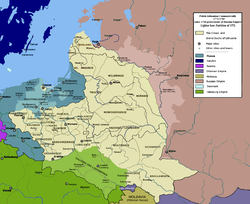
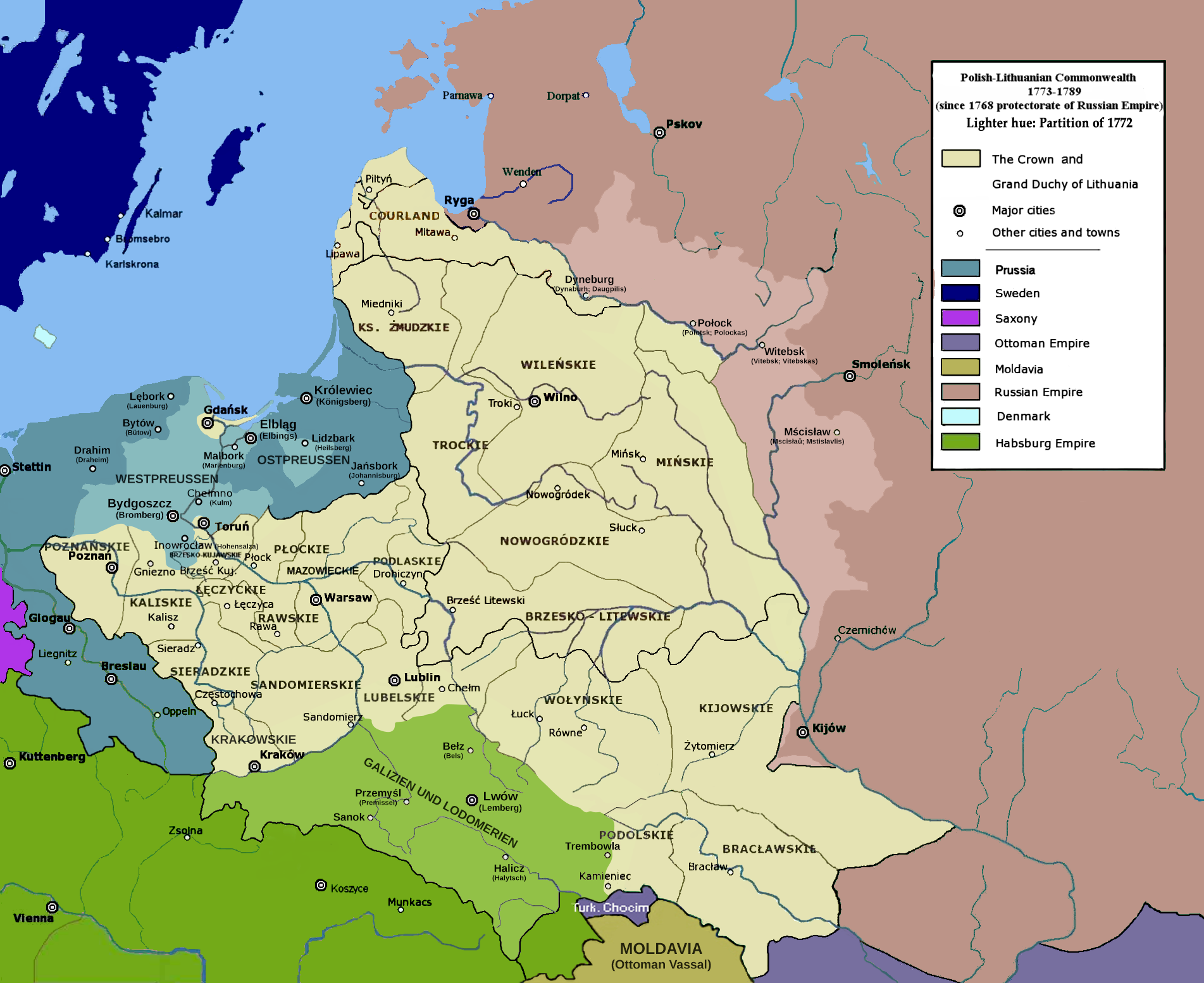
The First Partition of Poland took place in 1772 as the first of three partitions that eventually ended the existence of the Polish–Lithuanian Commonwealth by 1795. The growth of power in the Russian Empire threatened the Kingdom of Prussia and the Habsburg monarchy and was the primary motive behind the First Partition.
Frederick the Great, King in Prussia, engineered the partition to prevent Austria, which was envious of Russian successes against the Ottoman Empire, from going to war. Territories in Poland–Lithuania were divided by its more powerful neighbours (Austria, Russia and Prussia) to restore the regional balance of power in Central Europe among those three countries.
With Poland unable to defend itself effectively and foreign troops already inside the country, the Polish Sejm ratified the partition in 1773 during the Partition Sejm, which was convened by the three powers.
By the late 18th century, the Polish–Lithuanian Commonwealth had been reduced from the status of a European power to that of a country under major influence of, and almost becoming the protectorate (or vassal) of, the Russian Empire, with the Russian tsar effectively choosing Polish–Lithuanian monarchs during the free elections and deciding the outcome of much of Poland's internal politics. For example, the Repnin Sejm of 1767–68 was named after the Russian ambassador who had unofficially presided over its proceedings.
The First Partition occurred after the balance of power in Europe shifted, with Russian victories against the Ottomans in the Russo-Turkish War (1768–1774) strengthening Russia and endangering Habsburg interests in the region (particularly in Moldavia and Wallachia). Habsburg Austria then started considering waging war against Russia.
France was friendly towards the Ottoman Empire but also both Prussia and Austria and suggested a series of territorial adjustments in which the Ottoman Empire would not suffer from Austria and Russia. In return, Austria would be compensated with parts of Prussian Silesia, and Prussia would regain Ermland (Warmia) from the part of Prussia which Poland had annexed in the Second Treaty of Thorn, plus the Duchy of Courland and Semigallia, already under Baltic German hegemony.
King Frederick II of Prussia had no intention of giving up Silesia, having recently gained it in the Silesian Wars, but was also interested in finding a peaceful solution. The Russo-Prussian alliance would draw him into a potential war against Austria, and the Seven Years' War had left Prussia's treasury and army weakened. Like France, he was interested in protecting the weakening Ottoman Empire, which could be advantageously used in the event of a Prussian war either against Russia or Austria.
Frederick's brother, Prince Henry, spent the winter of 1770–71 as a representative of the Prussian court at Saint Petersburg. As Austria had annexed the 13 Polish-held towns in the Hungarian Szepes region in 1769 in violation of the Treaty of Lubowla, Catherine II of Russia and her advisor General Ivan Chernyshyov suggested to Henry that Prussia claim some land currently held by Poland, such as Ermland. After Henry had informed him of the proposal, Frederick suggested a partition of the Polish borderlands by Austria, Prussia and Russia, with the largest share going to Austria, the party most weakened by the recent changes in the balance of power.
First Partition of Poland
The First Partition of Poland took place in 1772 as the first of three partitions that eventually ended the existence of the Polish–Lithuanian Commonwealth by 1795. The growth of power in the Russian Empire threatened the Kingdom of Prussia and the Habsburg monarchy and was the primary motive behind the First Partition.
Frederick the Great, King in Prussia, engineered the partition to prevent Austria, which was envious of Russian successes against the Ottoman Empire, from going to war. Territories in Poland–Lithuania were divided by its more powerful neighbours (Austria, Russia and Prussia) to restore the regional balance of power in Central Europe among those three countries.
With Poland unable to defend itself effectively and foreign troops already inside the country, the Polish Sejm ratified the partition in 1773 during the Partition Sejm, which was convened by the three powers.
By the late 18th century, the Polish–Lithuanian Commonwealth had been reduced from the status of a European power to that of a country under major influence of, and almost becoming the protectorate (or vassal) of, the Russian Empire, with the Russian tsar effectively choosing Polish–Lithuanian monarchs during the free elections and deciding the outcome of much of Poland's internal politics. For example, the Repnin Sejm of 1767–68 was named after the Russian ambassador who had unofficially presided over its proceedings.
The First Partition occurred after the balance of power in Europe shifted, with Russian victories against the Ottomans in the Russo-Turkish War (1768–1774) strengthening Russia and endangering Habsburg interests in the region (particularly in Moldavia and Wallachia). Habsburg Austria then started considering waging war against Russia.
France was friendly towards the Ottoman Empire but also both Prussia and Austria and suggested a series of territorial adjustments in which the Ottoman Empire would not suffer from Austria and Russia. In return, Austria would be compensated with parts of Prussian Silesia, and Prussia would regain Ermland (Warmia) from the part of Prussia which Poland had annexed in the Second Treaty of Thorn, plus the Duchy of Courland and Semigallia, already under Baltic German hegemony.
King Frederick II of Prussia had no intention of giving up Silesia, having recently gained it in the Silesian Wars, but was also interested in finding a peaceful solution. The Russo-Prussian alliance would draw him into a potential war against Austria, and the Seven Years' War had left Prussia's treasury and army weakened. Like France, he was interested in protecting the weakening Ottoman Empire, which could be advantageously used in the event of a Prussian war either against Russia or Austria.
Frederick's brother, Prince Henry, spent the winter of 1770–71 as a representative of the Prussian court at Saint Petersburg. As Austria had annexed the 13 Polish-held towns in the Hungarian Szepes region in 1769 in violation of the Treaty of Lubowla, Catherine II of Russia and her advisor General Ivan Chernyshyov suggested to Henry that Prussia claim some land currently held by Poland, such as Ermland. After Henry had informed him of the proposal, Frederick suggested a partition of the Polish borderlands by Austria, Prussia and Russia, with the largest share going to Austria, the party most weakened by the recent changes in the balance of power.
Recent media
Recent media