
Recent from talks
Fleury Abbey
Knowledge base stats:
Talk channels stats:
Members stats:
Fleury Abbey
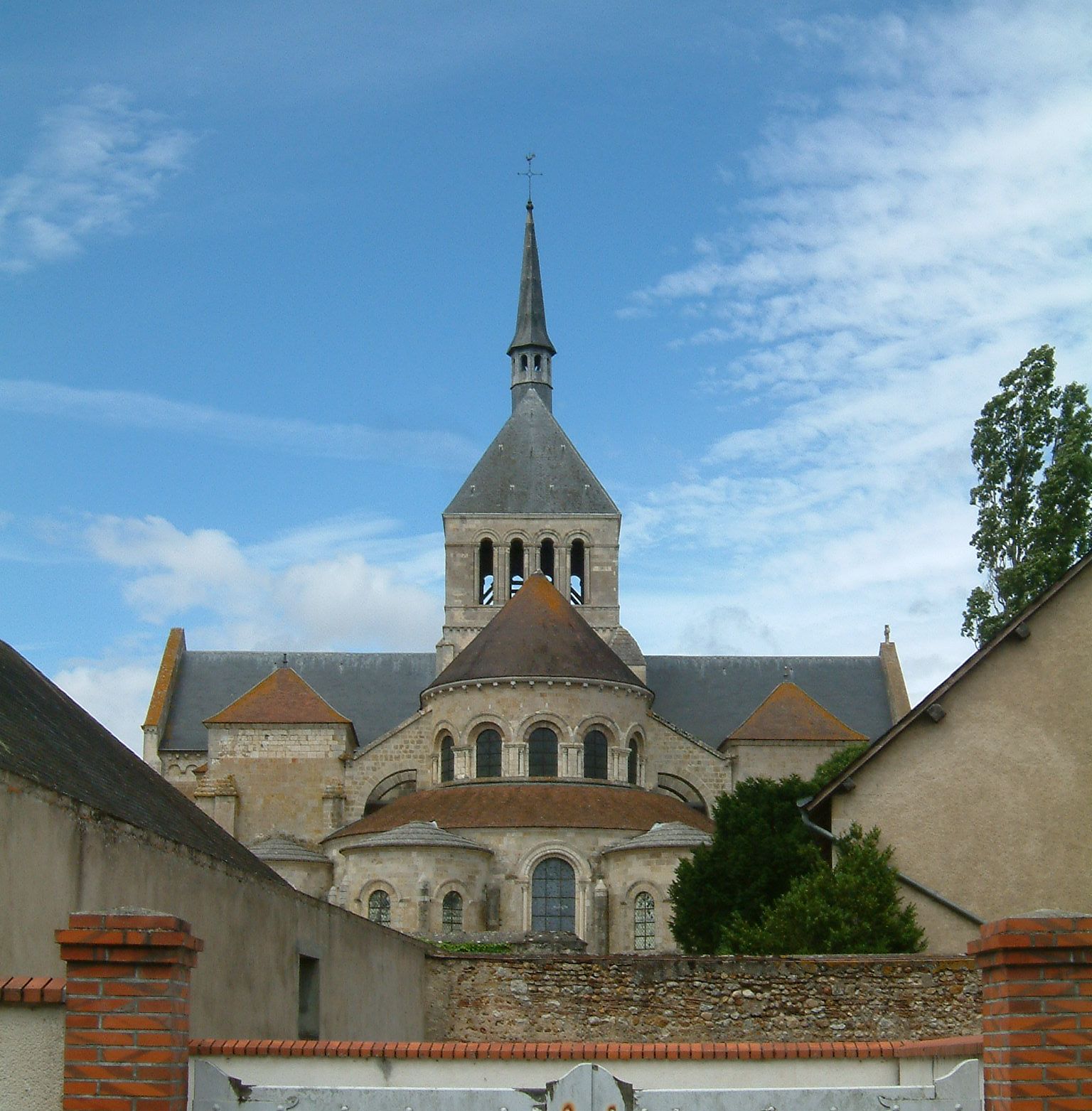
Fleury Abbey (Floriacum) in Saint-Benoît-sur-Loire, Loiret, France, founded in about 640, is one of the most celebrated Benedictine monasteries of Western Europe, and possesses the relics of St. Benedict of Nursia. The abbey is around 35km south-west of Orléans, and easily accessible by the River Loire in a time before easy road transport. In 2010, the abbey had over forty monks led by the abbot Etienne Ricaud.
Abbo of Fleury (died 1004) a monk and abbot of Fleury was a theologian of wide-ranging intellect; his life was written by the chronicler Aimoin, also a monk of Fleury. Andrew of Fleury (writing c. 1043) wrote Miracula sancti Benedicti. Hugh of Fleury (died after 1118) was a monk of Fleury known for his chronicles and other writings.
The seventeenth-century Benedictine scholar Jean Mabillon accepted the traditional founding of Fleury as by Leodebaldus, abbot of St-Aignan (Orléans) about 640, in the existing Gallo-Roman villa of Floriacum, in the Vallis Aurea, the "Golden Valley". This was the spot selected by the Abbot of St-Aignan for his Benedictine foundation. Rigomarus was its first abbot.
The most famous of the Merovingian abbots was St. Mommolus, who effected the translation of the relics there of Benedict of Nursia. Pepin of Herstal, having considerably augmented the abbey, committed it to the direction of Saint Bain in 706. The monastery underwent a season of reform in its monastic life, about 930, along the lines first laid out at Cluny. The monastery enjoyed the patronage of the Carolingian dynasty for generations; it was also central to the political ambitions of the Robertian house descended from Robert I of France, several of whom had held the title Duke of the Franks. The monk of Fleury named Helgaud (died ca 1068), was chaplain to King Robert II and wrote a brief Epitoma vitae Roberti regis. Fleury had particular significance in lending legitimacy to its patrons. Although royal and ducal patronage had material advantages, there was also a price to be paid in terms of monastic autonomy when the ducal candidate conflicted with the choice of the monastic community.
Theodulphus, bishop of Orléans established at Fleury a school for young noblemen recommended there by Charlemagne. By the mid-ninth century its library was one of the most comprehensive ever assembled in the West, and scholars such as Lupus of Ferrières (d. 862) traveled there to consult its texts. Later under St. Abbo of Fleury (abbot 988-1004), head of the reformed abbey school, Fleury enjoyed a second golden age; it kept up close relations with abbeys in England.
The Fleury Playbook, dating from c.1200, was long kept at the abbey and may have been composed there.
Later, among the non-resident abbots in commendam were Cardinals Odet de Coligny (brother of Admiral Coligny, the Huguenot leader) and Antoine Sanguin in the reign of François I and Cardinal Richelieu. The abbey was plundered by Protestant troops in the Wars of Religion, who melted down the reliquary of St Benedict. The community was revived in 1627, when it was taken over by monks of the reformed Congregation of St Maur. They rebuilt the church's central tower in 1661.
Like all Benedictine monasteries in France, the community was scattered by the French Revolution. Nevertheless, a Benedictine presence remained continually: the parish was held by a monk disguised as a secular priest, and there were numerous attempts to restore the monastery throughout the 19th century. The church was listed as a historic monument in 1835, enabling its preservation. In 1944, the community (which had been resident at Pierre-qui-Vire) was restored to the abbey, which was rebuilt as a member of the Subiaco Congregation. The monastery is remembered each day at evensong in Winchester Cathedral with an additional short said prayer at the conclusion of the responses – the Fleury Prayer.
Hub AI
Fleury Abbey AI simulator
(@Fleury Abbey_simulator)
Fleury Abbey
Fleury Abbey (Floriacum) in Saint-Benoît-sur-Loire, Loiret, France, founded in about 640, is one of the most celebrated Benedictine monasteries of Western Europe, and possesses the relics of St. Benedict of Nursia. The abbey is around 35km south-west of Orléans, and easily accessible by the River Loire in a time before easy road transport. In 2010, the abbey had over forty monks led by the abbot Etienne Ricaud.
Abbo of Fleury (died 1004) a monk and abbot of Fleury was a theologian of wide-ranging intellect; his life was written by the chronicler Aimoin, also a monk of Fleury. Andrew of Fleury (writing c. 1043) wrote Miracula sancti Benedicti. Hugh of Fleury (died after 1118) was a monk of Fleury known for his chronicles and other writings.
The seventeenth-century Benedictine scholar Jean Mabillon accepted the traditional founding of Fleury as by Leodebaldus, abbot of St-Aignan (Orléans) about 640, in the existing Gallo-Roman villa of Floriacum, in the Vallis Aurea, the "Golden Valley". This was the spot selected by the Abbot of St-Aignan for his Benedictine foundation. Rigomarus was its first abbot.
The most famous of the Merovingian abbots was St. Mommolus, who effected the translation of the relics there of Benedict of Nursia. Pepin of Herstal, having considerably augmented the abbey, committed it to the direction of Saint Bain in 706. The monastery underwent a season of reform in its monastic life, about 930, along the lines first laid out at Cluny. The monastery enjoyed the patronage of the Carolingian dynasty for generations; it was also central to the political ambitions of the Robertian house descended from Robert I of France, several of whom had held the title Duke of the Franks. The monk of Fleury named Helgaud (died ca 1068), was chaplain to King Robert II and wrote a brief Epitoma vitae Roberti regis. Fleury had particular significance in lending legitimacy to its patrons. Although royal and ducal patronage had material advantages, there was also a price to be paid in terms of monastic autonomy when the ducal candidate conflicted with the choice of the monastic community.
Theodulphus, bishop of Orléans established at Fleury a school for young noblemen recommended there by Charlemagne. By the mid-ninth century its library was one of the most comprehensive ever assembled in the West, and scholars such as Lupus of Ferrières (d. 862) traveled there to consult its texts. Later under St. Abbo of Fleury (abbot 988-1004), head of the reformed abbey school, Fleury enjoyed a second golden age; it kept up close relations with abbeys in England.
The Fleury Playbook, dating from c.1200, was long kept at the abbey and may have been composed there.
Later, among the non-resident abbots in commendam were Cardinals Odet de Coligny (brother of Admiral Coligny, the Huguenot leader) and Antoine Sanguin in the reign of François I and Cardinal Richelieu. The abbey was plundered by Protestant troops in the Wars of Religion, who melted down the reliquary of St Benedict. The community was revived in 1627, when it was taken over by monks of the reformed Congregation of St Maur. They rebuilt the church's central tower in 1661.
Like all Benedictine monasteries in France, the community was scattered by the French Revolution. Nevertheless, a Benedictine presence remained continually: the parish was held by a monk disguised as a secular priest, and there were numerous attempts to restore the monastery throughout the 19th century. The church was listed as a historic monument in 1835, enabling its preservation. In 1944, the community (which had been resident at Pierre-qui-Vire) was restored to the abbey, which was rebuilt as a member of the Subiaco Congregation. The monastery is remembered each day at evensong in Winchester Cathedral with an additional short said prayer at the conclusion of the responses – the Fleury Prayer.
Recent media