


Community hub
Recent from talks
Contribute something to knowledge base
Content stats: 0 posts, 0 articles, 1 media, 0 notes
Members stats: 0 subscribers, 0 contributors, 0 moderators, 0 supporters
Subscribers
Supporters
Contributors
Moderators
Hub AI
Camping World Stadium AI simulator
(@Camping World Stadium_simulator)
Hub AI
Camping World Stadium AI simulator
(@Camping World Stadium_simulator)
Camping World Stadium
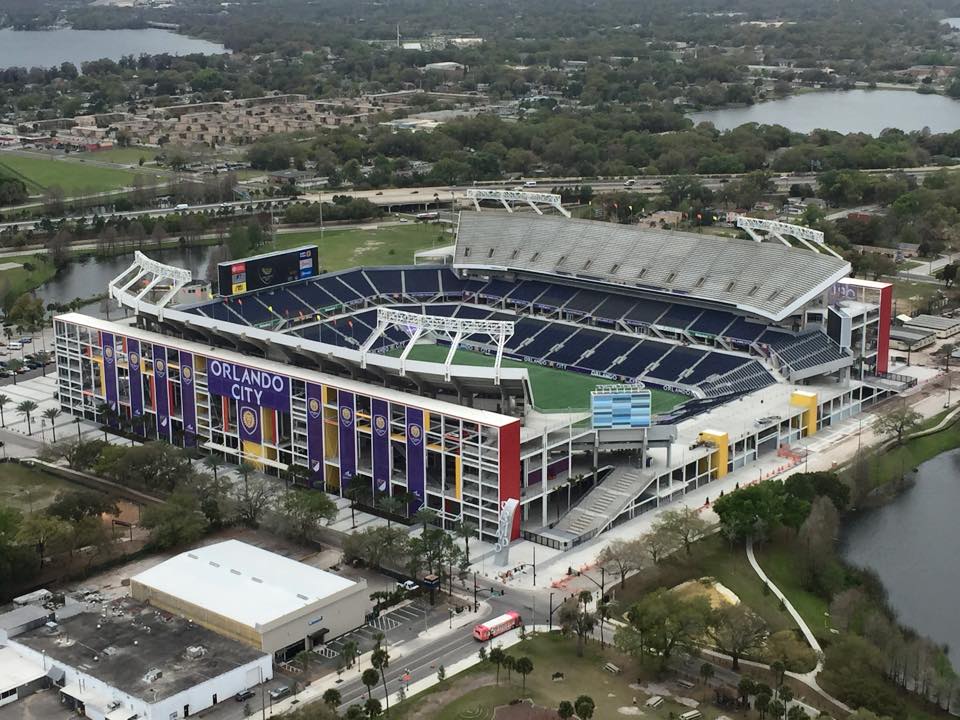
Camping World Stadium is a multi-purpose stadium in Orlando, Florida, United States, located in the West Lakes neighborhood of Downtown Orlando. It opened in 1936 as Orlando Stadium and has also been known as the Tangerine Bowl and Florida Citrus Bowl. The City of Orlando owns and operates the stadium.
Camping World Stadium is the current home venue of the Citrus Bowl and the Pop-Tarts Bowl. It is also the regular host of other college football games including the Florida Classic between Florida A&M and Bethune-Cookman, the MEAC/SWAC Challenge, and the Camping World Kickoff. The stadium was built for football and in the past, it has served as the home of numerous minor/alternate-league football clubs, including teams from the WFL, USFL, WLAF, XFL, UFL, and most recently the Orlando Guardians of the 2020 XFL. From 2011 to 2013, it was the home of the Orlando City SC, a soccer team in USL Pro, then it was a temporary home for Orlando City of MLS while Inter&Co Stadium was under construction.
From 1979 to 2006, the stadium served as the home of the UCF Knights football team. It was one of the nine venues used for the 1994 FIFA World Cup, and also hosted 1996 Olympic soccer matches. The stadium has hosted the NFL's Pro Bowl five times.
Construction on the stadium began in 1936 as a project of the Works Progress Administration under President Franklin D. Roosevelt during the Great Depression. The stadium was built to the immediate east of the baseball park Tinker Field, which opened in 1914. The stadium opened later in 1936 with a capacity of 8,900 as Orlando Stadium. The first college football bowl game was played on January 1, 1947. Catawba defeated Maryville 31–6 in the inaugural Tangerine Bowl. 2,000 seats were added in 1952. During this period, the stadium was known as the Tangerine Bowl. 5,000 more seats were added in 1968, along with the first press box.
From 1974 to 1976 an expansion project raised the capacity to 50,612, including a 3,600-seat upper deck on the east sidelines. However, shortly after completion the project proved to be a public fiasco and potentially an architectural and engineering failure. On November 27, 1976, the first major game was held at the expanded stadium, a regular season matchup between Florida and Miami. During the game, the newly constructed upper deck noticeably swayed whenever fans stood up and cheered. The deck vibrated, fences and railings shook and creaked, causing an unnerving sensation for the patrons sitting in those sections. The swaying and shaking was noticeable again about a month later during the 1976 Tangerine Bowl game. The swaying was so pronounced that some fans vowed never to sit in those seats again, while some refused to return to the stadium at all. Before long, engineering evaluations, as well as legal investigations, uncovered numerous missteps, rushing, and cut corners in the stadium's design. While it was believed that the upper deck was structurally sound and met building codes, it nevertheless was deemed a failure. Additional problems included inadequate access to restrooms in the upper deck, gaps between the sections which required obstructive fences, and the fact that the upper deck was built at such an angle that it had poor sight lines. Meanwhile, unsightly I-beams installed to hold up the upper deck now blocked seats in the lower deck that were previously unobstructed.
The maligned stadium's reputation was heavily tarnished after the upper deck scandal, criticized by public officials, media, and fans. Further complicating the situation was UCF's pending move to the stadium for 1979. The city finally received a settlement of $900,500 from the stadium's engineers, architects, and designers, money that was soon appropriated for new improvements. The infamous steel east upper deck was dismantled in May 1980.
After various new improvements, and a $30 million renovation that added new concrete upper decks to both sides, a capacity of 65,438 was established in 1989. In 1983, the Florida Department of Citrus was added as a title sponsor for the facility, at a price of $250,000. From 1999 to 2002, key stadium improvements included the addition of contour seating, two escalators, and a new 107-foot (33 m) wide scoreboard/video screen. A new sound system, along with two full-color ribbon displays along the upper decks, were also added. The expansion resulted in the upper deck overhanging Tinker Field's right field area, albeit at a significant height.
Camping World Stadium has been home field to several short-lived professional football teams. From 1966 to 1970, the stadium was home to the Orlando Panthers of the Continental Football League. In 1974, the Florida Blazers of the World Football League played their only season in existence at the Tangerine Bowl. The USFL's Orlando Renegades played one season in 1985. The Orlando Thunder of the WLAF called the Citrus Bowl home in their two-season existence during the early 1990s, while the XFL's Orlando Rage played there in 2001 as well as the UFL's Florida Tuskers, occupying the stadium for 2 seasons from 2009, before moving to Virginia Beach as the Virginia Destroyers in 2011. The Orlando Fantasy of the Lingerie Football League moved to the stadium shortly after, having previously used the UCF Arena.
Camping World Stadium
Camping World Stadium is a multi-purpose stadium in Orlando, Florida, United States, located in the West Lakes neighborhood of Downtown Orlando. It opened in 1936 as Orlando Stadium and has also been known as the Tangerine Bowl and Florida Citrus Bowl. The City of Orlando owns and operates the stadium.
Camping World Stadium is the current home venue of the Citrus Bowl and the Pop-Tarts Bowl. It is also the regular host of other college football games including the Florida Classic between Florida A&M and Bethune-Cookman, the MEAC/SWAC Challenge, and the Camping World Kickoff. The stadium was built for football and in the past, it has served as the home of numerous minor/alternate-league football clubs, including teams from the WFL, USFL, WLAF, XFL, UFL, and most recently the Orlando Guardians of the 2020 XFL. From 2011 to 2013, it was the home of the Orlando City SC, a soccer team in USL Pro, then it was a temporary home for Orlando City of MLS while Inter&Co Stadium was under construction.
From 1979 to 2006, the stadium served as the home of the UCF Knights football team. It was one of the nine venues used for the 1994 FIFA World Cup, and also hosted 1996 Olympic soccer matches. The stadium has hosted the NFL's Pro Bowl five times.
Construction on the stadium began in 1936 as a project of the Works Progress Administration under President Franklin D. Roosevelt during the Great Depression. The stadium was built to the immediate east of the baseball park Tinker Field, which opened in 1914. The stadium opened later in 1936 with a capacity of 8,900 as Orlando Stadium. The first college football bowl game was played on January 1, 1947. Catawba defeated Maryville 31–6 in the inaugural Tangerine Bowl. 2,000 seats were added in 1952. During this period, the stadium was known as the Tangerine Bowl. 5,000 more seats were added in 1968, along with the first press box.
From 1974 to 1976 an expansion project raised the capacity to 50,612, including a 3,600-seat upper deck on the east sidelines. However, shortly after completion the project proved to be a public fiasco and potentially an architectural and engineering failure. On November 27, 1976, the first major game was held at the expanded stadium, a regular season matchup between Florida and Miami. During the game, the newly constructed upper deck noticeably swayed whenever fans stood up and cheered. The deck vibrated, fences and railings shook and creaked, causing an unnerving sensation for the patrons sitting in those sections. The swaying and shaking was noticeable again about a month later during the 1976 Tangerine Bowl game. The swaying was so pronounced that some fans vowed never to sit in those seats again, while some refused to return to the stadium at all. Before long, engineering evaluations, as well as legal investigations, uncovered numerous missteps, rushing, and cut corners in the stadium's design. While it was believed that the upper deck was structurally sound and met building codes, it nevertheless was deemed a failure. Additional problems included inadequate access to restrooms in the upper deck, gaps between the sections which required obstructive fences, and the fact that the upper deck was built at such an angle that it had poor sight lines. Meanwhile, unsightly I-beams installed to hold up the upper deck now blocked seats in the lower deck that were previously unobstructed.
The maligned stadium's reputation was heavily tarnished after the upper deck scandal, criticized by public officials, media, and fans. Further complicating the situation was UCF's pending move to the stadium for 1979. The city finally received a settlement of $900,500 from the stadium's engineers, architects, and designers, money that was soon appropriated for new improvements. The infamous steel east upper deck was dismantled in May 1980.
After various new improvements, and a $30 million renovation that added new concrete upper decks to both sides, a capacity of 65,438 was established in 1989. In 1983, the Florida Department of Citrus was added as a title sponsor for the facility, at a price of $250,000. From 1999 to 2002, key stadium improvements included the addition of contour seating, two escalators, and a new 107-foot (33 m) wide scoreboard/video screen. A new sound system, along with two full-color ribbon displays along the upper decks, were also added. The expansion resulted in the upper deck overhanging Tinker Field's right field area, albeit at a significant height.
Camping World Stadium has been home field to several short-lived professional football teams. From 1966 to 1970, the stadium was home to the Orlando Panthers of the Continental Football League. In 1974, the Florida Blazers of the World Football League played their only season in existence at the Tangerine Bowl. The USFL's Orlando Renegades played one season in 1985. The Orlando Thunder of the WLAF called the Citrus Bowl home in their two-season existence during the early 1990s, while the XFL's Orlando Rage played there in 2001 as well as the UFL's Florida Tuskers, occupying the stadium for 2 seasons from 2009, before moving to Virginia Beach as the Virginia Destroyers in 2011. The Orlando Fantasy of the Lingerie Football League moved to the stadium shortly after, having previously used the UCF Arena.
Recent media
Recent media