



Community hub
Recent from talks
Knowledge base stats:
Talk channels stats:
Members stats:
Fluid replacement
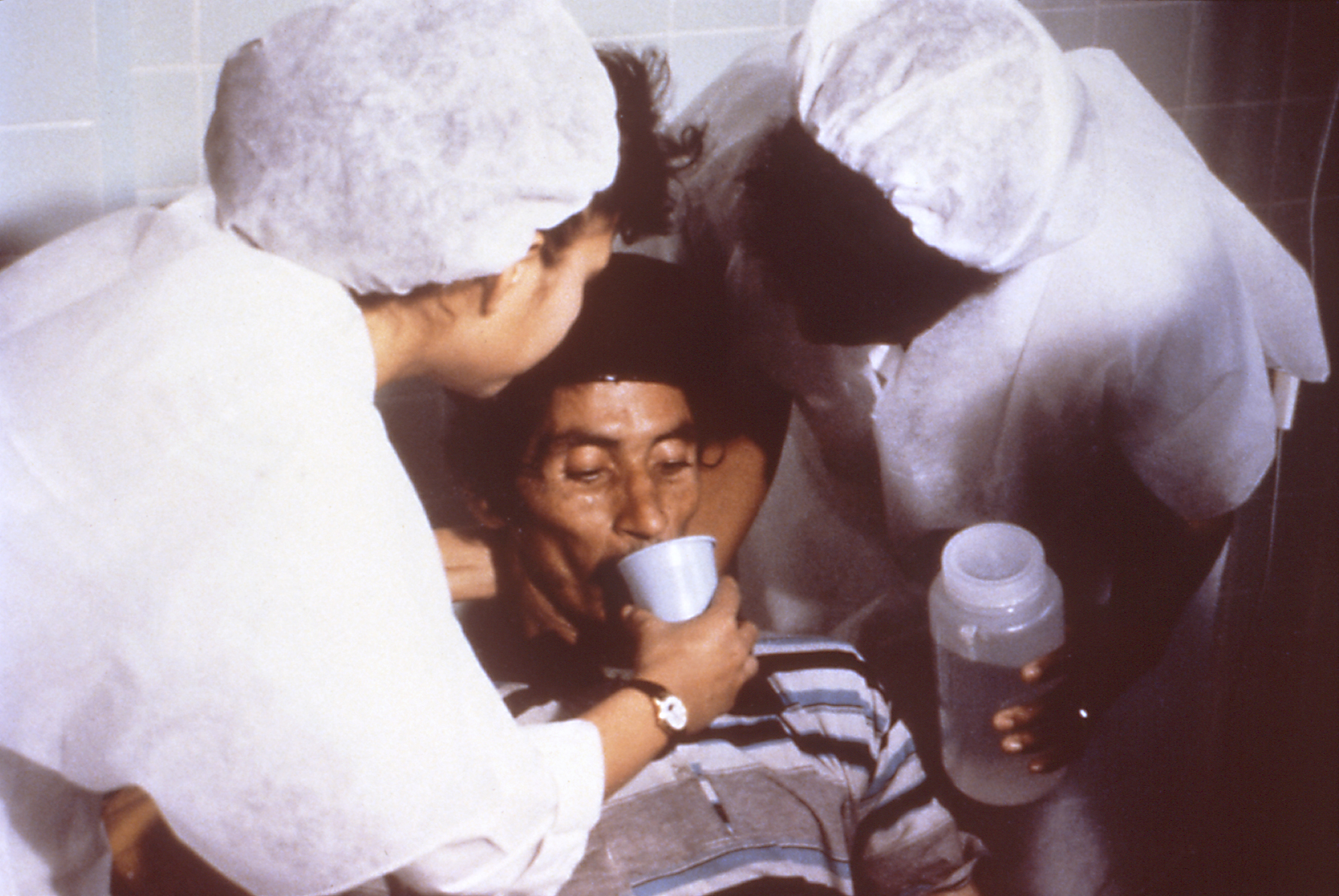
Fluid replacement or fluid resuscitation is the medical practice of replenishing bodily fluid lost through sweating, bleeding, fluid shifts or other pathologic processes. Fluids can be replaced with oral rehydration therapy (drinking), intravenous therapy, rectally such as with a Murphy drip, or by hypodermoclysis, the direct injection of fluid into the subcutaneous tissue. Fluids administered by the oral and hypodermic routes are absorbed more slowly than those given intravenously.
Oral rehydration therapy (ORT) is a simple treatment for dehydration associated with diarrhea, particularly gastroenteritis/gastroenteropathy, such as that caused by cholera or rotavirus. ORT consists of a solution of salts and sugars which is taken by mouth. For most mild to moderate dehydration in children, the preferable treatment in an emergency department is ORT over intravenous replacement of fluid.
It is used around the world, but is most important in the developing world, where it saves millions of children a year from death due to diarrhea—the second leading cause of death in children under five.
Similar precaution should be taken in administration of resuscitation fluid as to drug prescription. Fluid replacement should be considered as part of the complex physiological in the human body. Therefore, fluid requirements should be adjusted from time to time in those who are severely ill.
In severe dehydration, intravenous fluid replacement is preferred, and may be lifesaving. It is especially useful where there is depletion of fluid both in the intracellular space and the vascular spaces.[citation needed]
Fluid replacement is also indicated in fluid depletion due to hemorrhage, extensive burns and excessive sweating (as from a prolonged fever), and prolonged diarrhea (cholera).[citation needed]
During surgical procedures, fluid requirement increases by increased evaporation, fluid shifts, or excessive urine production, among other possible causes. Even a small surgery may cause a loss of approximately 4 ml/kg/hour, and a large surgery approximately 8 ml/kg/hour, in addition to the basal fluid requirement.[citation needed]
The table to the right shows daily requirements for some major fluid components. If these cannot be given enterally, they may need to be given entirely intravenously. If continued long-term (more than approx. 2 days), a more complete regimen of total parenteral nutrition may be required.[citation needed]
Hub AI
Fluid replacement AI simulator
(@Fluid replacement_simulator)
Fluid replacement
Fluid replacement or fluid resuscitation is the medical practice of replenishing bodily fluid lost through sweating, bleeding, fluid shifts or other pathologic processes. Fluids can be replaced with oral rehydration therapy (drinking), intravenous therapy, rectally such as with a Murphy drip, or by hypodermoclysis, the direct injection of fluid into the subcutaneous tissue. Fluids administered by the oral and hypodermic routes are absorbed more slowly than those given intravenously.
Oral rehydration therapy (ORT) is a simple treatment for dehydration associated with diarrhea, particularly gastroenteritis/gastroenteropathy, such as that caused by cholera or rotavirus. ORT consists of a solution of salts and sugars which is taken by mouth. For most mild to moderate dehydration in children, the preferable treatment in an emergency department is ORT over intravenous replacement of fluid.
It is used around the world, but is most important in the developing world, where it saves millions of children a year from death due to diarrhea—the second leading cause of death in children under five.
Similar precaution should be taken in administration of resuscitation fluid as to drug prescription. Fluid replacement should be considered as part of the complex physiological in the human body. Therefore, fluid requirements should be adjusted from time to time in those who are severely ill.
In severe dehydration, intravenous fluid replacement is preferred, and may be lifesaving. It is especially useful where there is depletion of fluid both in the intracellular space and the vascular spaces.[citation needed]
Fluid replacement is also indicated in fluid depletion due to hemorrhage, extensive burns and excessive sweating (as from a prolonged fever), and prolonged diarrhea (cholera).[citation needed]
During surgical procedures, fluid requirement increases by increased evaporation, fluid shifts, or excessive urine production, among other possible causes. Even a small surgery may cause a loss of approximately 4 ml/kg/hour, and a large surgery approximately 8 ml/kg/hour, in addition to the basal fluid requirement.[citation needed]
The table to the right shows daily requirements for some major fluid components. If these cannot be given enterally, they may need to be given entirely intravenously. If continued long-term (more than approx. 2 days), a more complete regimen of total parenteral nutrition may be required.[citation needed]