



Community hub
Recent from talks
Knowledge base stats:
Talk channels stats:
Members stats:
Food safety in China
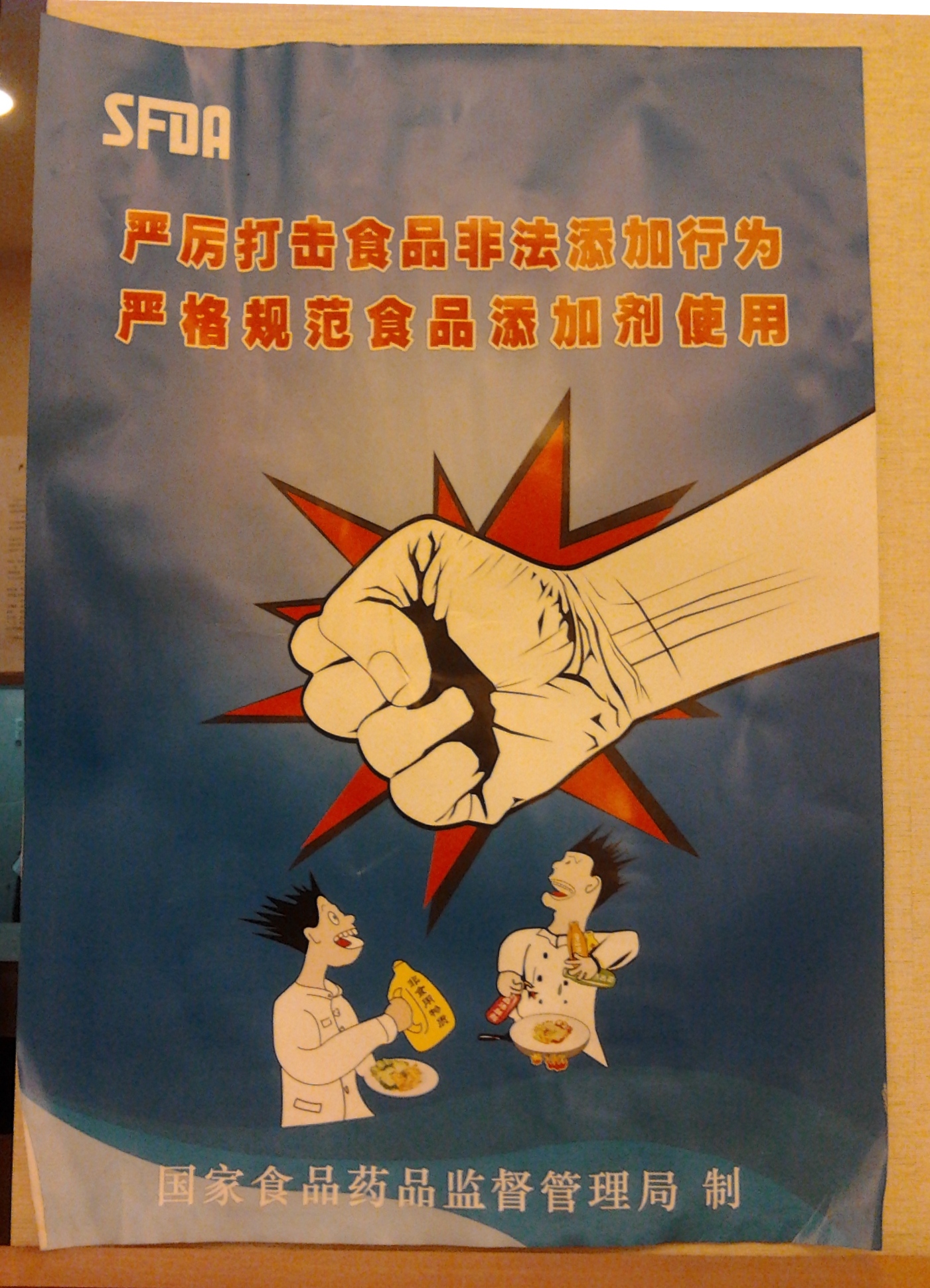
Food safety in China is a widespread concern for the country's agricultural industry and consumers. China's principal crops are rice, corn, wheat, soybeans, and cotton in addition to apples and other fruits and vegetables. China's principal livestock products include pork, beef, dairy, and eggs. The Chinese government oversees agricultural production as well as the manufacture of food packaging, containers, chemical additives, drug production, and business regulation. In recent years, the Chinese government attempted to consolidate food safety regulation with the creation of the State Food and Drug Administration of China in 2003; officials have also been under increasing public and international pressure to solve food safety problems. Chinese Vice Premier Li Keqiang said, "Food is essential, and safety should be a top priority. Food safety is closely related to people's lives and health and economic development and social harmony," at a State Council meeting in Beijing.
Food safety has been a concern for many decades in China. The majority of food problems lies within poisonous foods deliberately contaminated by producers for higher profits. The most common types poisonous foods in China include: adulteration, additives, pesticides, and fake foods. These poisonous food production techniques allowed producers to either increase production, increase mass of produce, lower market prices, and increase shelf-life. Poisonous food production was very well-organized and largely scaled, involving government agencies participating in such malpractice.
The growing unrest over food safety in China reached a climax in early 2007, shortly after circulation to the State Council of an Asian Development Bank policy note based on a technical assistance project in collaboration with the State Food and Drug Administration and the World Health Organization. The note and a subsequent report applauded increased efforts by the Chinese government but noted remaining gaps, calling in particular for urgent reforms to strengthen and streamline inter-agency coordination and enact an overarching "basic food law". The State Food and Drug Administration of China also published a survey in early 2007 where 65% of the respondents expressed concern about food safety. Shortly afterwards, Lu Jianzhong, a member of the National Committee of the Chinese People's Political Consultative Conference (CPPCC), and China's Vice Premier, Wu Yi, issued statements of apology and promised to create a food safety monitoring system.
China's food regulations are complex, its monitoring system can be unresponsive, and the government departments that oversee and enforce policies have overlapping and often ambiguous duties. There are around ten national government departments that share the responsibility to ensure food safety. There are also numerous provincial and local agencies that monitor local food production and sales. The food and drug laws themselves have been created "in an ad hoc way without the benefit of a basic food law," as Henk Bekedam of the World Health Organization told the Wall Street Journal (9 April 2007, B1). The last major revision of the food and drug laws was made in 1995 when the Food Hygiene Law of the People's Republic of China established general food safety principles. Both the State Council and the departments under the State Council can issue regulations and directives concerning food.
Changes in China's food production system are generating an awareness of food safety problems. China's agricultural system is composed mostly of small land-holding farmers and subsistence agriculture. China, however, has less arable land than other nations and farmers intensively use fertilizer and pesticides to maintain high food production. Food is sold in both open air markets and urban supermarkets, and by the late 1990s, China's farms were adapting to more specialized crop production as the local markets become more connected to the national and international markets. However, local authorities largely control food regulation enforcement unless the central government steps in. As urban consumers' incomes increase, the demand for quality food goods, safer production, and processed foods also increases, and urban residents and supermarkets attract more national and media attention to food problems.
On July 10, 2007, Zheng Xiaoyu, the former head of State Food And Drug Administration, was executed by lethal injection for taking bribes from various firms in exchange for state licenses related to product safety. A 2023 survey by Insight China found that only a quarter of respondents in China were satisfied with the country's food safety standards.
Approximately ten government departments and ministries under the State Council monitor food safety in China. These include the Ministry of Health, the State Food and Drug Administration, and the Ministry of Agriculture, the State Administration for Industry and Commerce, the General Administration of Quality Supervision, Inspection, and Quarantine, the Ministry of Commerce, the Ministry of Science and Technology, and the National Institute of Nutrition and Food Safety.
No single agency is responsible for all food safety regulations and enforcement in China, and the departments' duties often overlap. There are also local and regional food safety agencies, but there is no clear hierarchy of agencies at the local or national levels. In response to complexity of numerous agencies monitoring and regulating food safety, the National People's Congress established the State Food and Drug Administration in 2003. The State Food and Drug Administration was supposed to oversee the all aspects of food safety regulations and unify food safety controls. However, the State Food and Drug Administration has not become the main governing department as the government had intended, and the other national agencies have continued to regulate and monitor food safety. This unclear division of duties has created conflict and confusion when citizens have sought to complain or when a major crisis needed to be resolved.
Hub AI
Food safety in China AI simulator
(@Food safety in China_simulator)
Food safety in China
Food safety in China is a widespread concern for the country's agricultural industry and consumers. China's principal crops are rice, corn, wheat, soybeans, and cotton in addition to apples and other fruits and vegetables. China's principal livestock products include pork, beef, dairy, and eggs. The Chinese government oversees agricultural production as well as the manufacture of food packaging, containers, chemical additives, drug production, and business regulation. In recent years, the Chinese government attempted to consolidate food safety regulation with the creation of the State Food and Drug Administration of China in 2003; officials have also been under increasing public and international pressure to solve food safety problems. Chinese Vice Premier Li Keqiang said, "Food is essential, and safety should be a top priority. Food safety is closely related to people's lives and health and economic development and social harmony," at a State Council meeting in Beijing.
Food safety has been a concern for many decades in China. The majority of food problems lies within poisonous foods deliberately contaminated by producers for higher profits. The most common types poisonous foods in China include: adulteration, additives, pesticides, and fake foods. These poisonous food production techniques allowed producers to either increase production, increase mass of produce, lower market prices, and increase shelf-life. Poisonous food production was very well-organized and largely scaled, involving government agencies participating in such malpractice.
The growing unrest over food safety in China reached a climax in early 2007, shortly after circulation to the State Council of an Asian Development Bank policy note based on a technical assistance project in collaboration with the State Food and Drug Administration and the World Health Organization. The note and a subsequent report applauded increased efforts by the Chinese government but noted remaining gaps, calling in particular for urgent reforms to strengthen and streamline inter-agency coordination and enact an overarching "basic food law". The State Food and Drug Administration of China also published a survey in early 2007 where 65% of the respondents expressed concern about food safety. Shortly afterwards, Lu Jianzhong, a member of the National Committee of the Chinese People's Political Consultative Conference (CPPCC), and China's Vice Premier, Wu Yi, issued statements of apology and promised to create a food safety monitoring system.
China's food regulations are complex, its monitoring system can be unresponsive, and the government departments that oversee and enforce policies have overlapping and often ambiguous duties. There are around ten national government departments that share the responsibility to ensure food safety. There are also numerous provincial and local agencies that monitor local food production and sales. The food and drug laws themselves have been created "in an ad hoc way without the benefit of a basic food law," as Henk Bekedam of the World Health Organization told the Wall Street Journal (9 April 2007, B1). The last major revision of the food and drug laws was made in 1995 when the Food Hygiene Law of the People's Republic of China established general food safety principles. Both the State Council and the departments under the State Council can issue regulations and directives concerning food.
Changes in China's food production system are generating an awareness of food safety problems. China's agricultural system is composed mostly of small land-holding farmers and subsistence agriculture. China, however, has less arable land than other nations and farmers intensively use fertilizer and pesticides to maintain high food production. Food is sold in both open air markets and urban supermarkets, and by the late 1990s, China's farms were adapting to more specialized crop production as the local markets become more connected to the national and international markets. However, local authorities largely control food regulation enforcement unless the central government steps in. As urban consumers' incomes increase, the demand for quality food goods, safer production, and processed foods also increases, and urban residents and supermarkets attract more national and media attention to food problems.
On July 10, 2007, Zheng Xiaoyu, the former head of State Food And Drug Administration, was executed by lethal injection for taking bribes from various firms in exchange for state licenses related to product safety. A 2023 survey by Insight China found that only a quarter of respondents in China were satisfied with the country's food safety standards.
Approximately ten government departments and ministries under the State Council monitor food safety in China. These include the Ministry of Health, the State Food and Drug Administration, and the Ministry of Agriculture, the State Administration for Industry and Commerce, the General Administration of Quality Supervision, Inspection, and Quarantine, the Ministry of Commerce, the Ministry of Science and Technology, and the National Institute of Nutrition and Food Safety.
No single agency is responsible for all food safety regulations and enforcement in China, and the departments' duties often overlap. There are also local and regional food safety agencies, but there is no clear hierarchy of agencies at the local or national levels. In response to complexity of numerous agencies monitoring and regulating food safety, the National People's Congress established the State Food and Drug Administration in 2003. The State Food and Drug Administration was supposed to oversee the all aspects of food safety regulations and unify food safety controls. However, the State Food and Drug Administration has not become the main governing department as the government had intended, and the other national agencies have continued to regulate and monitor food safety. This unclear division of duties has created conflict and confusion when citizens have sought to complain or when a major crisis needed to be resolved.