Hubbry Logo
Ford CourierFord CourierMain
Open search
Ford Courier
Community hub
Ford Courier
logo
8 pages, 0 posts
0 subscribers
Be the first to start a discussion here.
Ford Courier
Ford Courier
from Wikipedia

Ford Courier
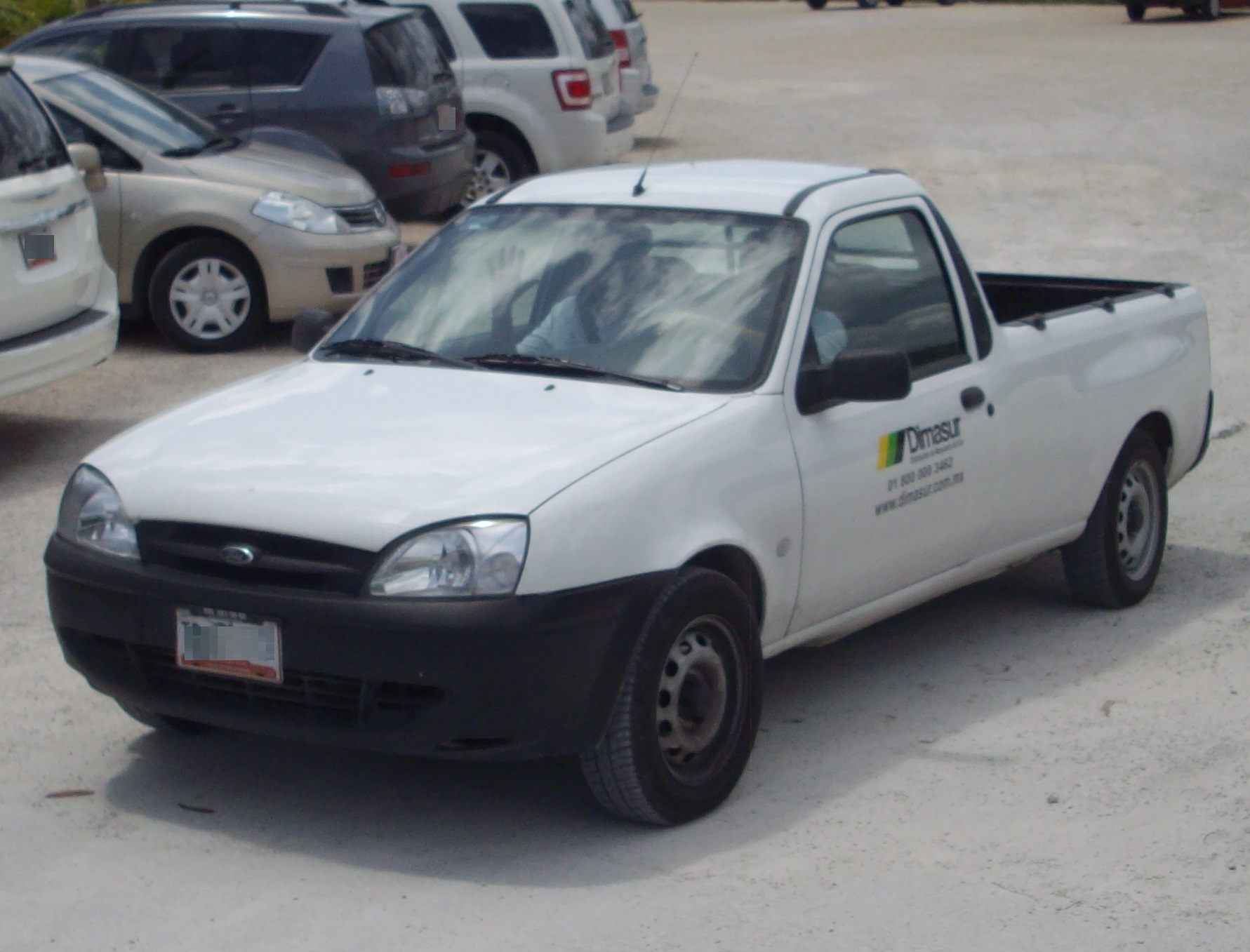
The most recent model in the Ford Courier series, developed by Ford Brazil and introduced in 1998
Overview
ManufacturerFord
Production1952–1960
1971–2013
Model years1952–1960 (sedan delivery)
1972–2007 (compact pickup)
1991–2002 (compact panel van)
1998–2013 (coupe utility)
Chronology
SuccessorFord Transit Courier (Europe)
Ford Transit Connect (Europe)
Ford Ranger
Ford Ranger (T6) (Europe and Brazil)
Ford Maverick (Americas)

Ford Courier is a model nameplate used by Ford since the early 1950s. The Courier moniker has been used on a variety of vehicles all around the world since it was first used in North America for a sedan delivery. The Courier nameplate was also used by Ford for a series of compact pickup trucks (produced by Mazda) and would also see use by Ford of Europe denoting a Fiesta-based panel van. Ford Brazil used the nameplate for a Fiesta-based coupe utility pickup marketed across Latin America.

During the 2000s, the Courier pickup truck was replaced by the Ranger nameplate (which replaced the Courier in North America for 1983); the Courier panel van was replaced by the Ford Transit Connect in 2002. For 2014, the stand-alone Courier name was withdrawn, but returned as the Transit Courier, the smallest vehicle of the Ford Transit van series.

Sedan delivery (1952–1960)

[edit]

From 1952 to 1960, the Ford Courier nameplate was used for the sedan delivery bodystyle of the full-size Ford line. Sharing its body with the two-door Ford station wagon, the Courier was intended for use primarily as a commercial vehicle, replacing the rear seating area with storage; the side windows were replaced with painted steel panels. Ford also marketed a similar vehicle derived from the F-Series pickup truck named the panel delivery; both of these served as precursors of the modern-day cargo van.

Marketed exclusively as a two-door vehicle, the Courier was initially designed with a side-hinged rear cargo access door (unique to the model line). For 1957 and 1958, the Courier adopted the two-piece "clamshell" rear door of the Ford Parklane and Ford Del Rio station wagons.

For 1959 and 1960, to lower production costs of the model line, the Courier adopted the body of the two-door Ford Ranch Wagon in its entirety, distinguished only by its rear cargo area.

For the 1961 model year, Ford discontinued the Courier sedan delivery and F-Series panel delivery, replacing both model lines with the Ford Econoline cargo van. The two-door sedan delivery bodystyle was made part of the compact Ford Falcon range, offered through the 1964 model year.

Mazda-based models

[edit]

For 1972 production, Ford revived the Courier nameplate after a 12-year hiatus, applying it to its first compact pickup truck, a rebranded version of the Mazda B-Series. Sold worldwide, the model line was the first product marketed jointly between the two manufacturers, launching an alliance that would last through 2020 production.

First generation (1972–1976)

[edit]
1972 Ford Courier
1975 Ford Courier

In the early 1970s, the Ford Courier name was applied to the Mazda B series, a compact pickup manufactured by Mazda. It had greater fuel economy than the full-sized pickups of the time. The Courier was manufactured by Toyo Kogyo (Mazda) and imported to North America and sold by Ford Motor Company as a response to the unforeseen popularity of the small Toyota and Nissan/Datsun Pickups. It occupied the market segment previously held by the Ford Falcon-based Ranchero when that platform was upgraded to the larger Ford Fairlane in 1966.

Like the other minipickups of the time, it featured a small (by US standards) four-cylinder engine, a four-speed manual transmission, rear-wheel drive, an impressive load capability of 1,400 lb (635 kg) considering its size, and a fairly small price tag compared to full-sized pickups of the time. To circumvent the 25% "chicken tax" on light trucks, Couriers (as with Chevrolet LUVs) were imported in "cab chassis" configurations, which included the entire light truck—less the cargo box or truck bed—and were only subject to a 4% tariff. Subsequently, a truck bed was attached to the chassis and the vehicle could be sold as a light truck.

The body styling was effectively that of the related Mazda B-series; however, its front styling was unique in that the grille was designed to emulate the larger Ford F-series, and large single headlights instead of the B-series' smaller twin units.

When the Courier was introduced, it came standard with a 1.8-liter overhead-cam engine, which produced 74 hp (55 kW) at 5,070 rpm, and 92 lb-ft (125 Nm) at 3,500 rpm. A four-speed manual transmission was standard, and a three-speed automatic was optional. A five-speed manual option was introduced for the 1976 model year. Northwest A.T.V. in Kelso, Washington converted around 1500 examples to the 4WD "Courier Sasquatch". The Sasquatch was fitted with a Dana Spicer two-speed transfer case and a solid front axle; they were only sold along the west coast of the United States.[1]

The Courier's badging changed a few times in the first generation. In 1972 and 1973, the tailgate read "COURIER" in large raised letters, with a small "FORD" badge on the upper left. The 1972 model has a small "COURIER" badge on the front driver's side edge of the hood, and from 1973 through 1976, the hood badging read "FORD". From the 1974 model year, the tailgate read "FORD" in large letters, with a small "COURIER" badge on the lower right. In 1976, the cab was lengthened by 3 in (76 mm), and the grille received added trim.[1]

Second generation (1977–1985)

[edit]
1979 Ford Courier
1985 Ford Courier

Beginning in 1977, Ford gave the Courier a fresh look, moving into the more blocky, angular styling that is distinct of 1980s automotive design. The base model engine remained the 1.8 L (1,796 cc) VB engine.

The truck was available with front disc brakes, and a Ford-built 2.3-liter engine option (which was the same as that of the Ford Pinto & Mustang II and Mercury Bobcat & Capri). The key identifying feature of the Courier from the Mazda B-Series was still the singular headlights, although with park and indicator lights placed in the grille starting in '78 ('77s still had the turn signal lights in the bumper). In 1979, the base model was increased in size to 2.0 liter (120.1 CID). The optional Ford 2.3-liter (140 cid) engine was produced in Brazil. The Courier was never available with a diesel engine in the US. However, the 1980 Mazda B2200 was available with the S2, a Mazda license built Perkins 4.135 (four-cylinder, 135-cid) 2.2-liter diesel engine, producing 66 hp (49 kW) at 2,100 rpm. This same diesel engine was available in the 1983 and 1984 Ford Rangers, but it was replaced by the Mitsubishi 4D55T 2.3-liter turbodiesel (also used in Mitsubishi's own Mighty Max and the Dodge Ram 50) for the 1985 to 1987 Ford Rangers.

The Courier continued to be sold in North America until 1982 model year. For 1983, Ford introduced its own Ford Ranger to fill its compact truck segment in the United States and Canada, effectively replacing the Courier. However, in other markets (such as Australia), this generation of Couriers continued on until the 1985 model year, when the next generation was introduced. Australian models received a facelift around 1982/1983.

Between 1979 and 1982, a number of electric Ford Couriers were produced. Jet Industries purchased "vehicle gliders" (Ford Courier bodies minus their engines) and put in a series DC motor and lead-acid batteries to produce the Jet Industries ElectraVan 750. These were sold mainly for use as service trucks, generally to local government departments. They had a top speed of about 70 mph (113 km/h), and would go 50 to 60 miles (97 km) on a full charge. A number of these vehicles still exist, usually with upgraded motor control systems and higher-voltage battery packs.

Third generation (1985–1998)

[edit]
1990 Ford Courier
1995 Ford Courier

Coinciding with the 1985 redesign of the Mazda Proceed/B-Series, the Courier was given a larger, more modern cab. New options included five-speed manual transmissions, four-wheel drive, and a V6 engine. For the first time, extended and four-door cabs were available.

In a similar fashion to the North American Ford Ranger becoming the donor platform for the Ford Explorer SUV, a sport utility would be based upon this version of the Courier. Branded the Ford Raider (and equivalent Mazda Proceed Marvie), it was sold from 1991 to 1997.

Fourth generation (1998–2007)

[edit]
2000 Ford Courier
2000 Ford Courier

In 1998, Mazda released a complete redesign of the B-Series, with Ford adopting the Ranger nameplate for both Mazda-produced and Ford-produced compact trucks. This Ranger was sold worldwide, with the exception of North America (and certain Latin American markets).

Ford Australia continued the use of the Ford Courier nameplate, selling it through 2006 in Australia and New Zealand.

Fiesta-based models

[edit]

Europe (1991–2002)

[edit]

A Ford Courier B-segment car-derived van was launched in Europe in June 1991 with a front-engine, front-wheel-drive layout and 1.3-litre OHV petrol or 1.8-litre OHC Diesel power. Based on the Ford BE-2 platform also used by the Mark III and Mark IV Fiesta, Mark I Ka and Puma (sport compact) cars, the Ford Courier van was initially based on the Mark III Fiesta that had been introduced two years earlier in 1989, but with a longer wheelbase and Renault-derived torsion bar rear suspension.

From August 1995, the Courier van was instead produced in a Mark IV-based version and did receive that Fiesta's facelift in 1999, meaning that it was produced with three different front ends, all with similar rear ends using the 1986–2000 Transit rear lights. As well as the two-seat cargo version, there was also a glazed version produced with rear seats fitted; this five-seat passenger model was sold as the Courier Kombi.

The Courier van was built in the Dagenham, England and Cologne, Germany factories and is 4,115 mm long, 1,650 mm wide and 1,835 mm tall, with a curb weight of 1,700 kg. With a capacity of 590 kg, competing products were initially the Fiat Fiorino and the Renault Express, and all units received a five-speed manual gearbox.

In France, the Ford Courier was called Ford Courrier (with two "r"s), likely because "Courier" looked like the French word "Courrier" (mail) was misspelled.

The 60 PS (44 kW) 1.8-litre naturally aspirated Diesel engine achieves its maximum power at 4,800 rpm, and its maximum torque is 110 Nm at 2,500 rpm. The claimed top speed of the Courier van 1.8D is 84 mph (135 km/h), with acceleration not specified.

From 1999 to 2002, a 1.8-litre turbo-diesel engine was available as an option for improved performance. However, the 1.8TD was only offered in 75 PS low-boost guise; the 90 PS intercooled version (as offered on the Mark VI Escort van) was not made available on the Courier van.

Production of the Courier van ended in August 2002, and both it and the Escort van were replaced in September 2002 by the Ford Transit Connect, based on the Focus. However, after 11 years of no direct replacement, a van based on the Fiesta bearing the Transit Courier/Tourneo Courier name was revealed in Yeniköy, Turkey, in 2013 under Ford Otosan (Koc-Ford Motor Company Joint Venture).

Brazil (1998–2013)

[edit]
Brazilian Ford Courier pickup

The name was also applied to a small coupe utility of similar layout produced by Ford in Brazil and exported to countries such as Mexico.[2] It is based on the 1998 model of the Ford Fiesta. While its front treatment is the same as the South African-built Fiesta-based Ford Bantam "bakkie" coupe utility, it has a completely different load box. The South African version had the short doors of the five-door hatchback and small quarter lights in the style of larger extended cab pickups, and the Brazilian version had the three-door's longer doors and no quarter windows.

Its load capacity is 700 kg (1,543 lb). Until 1999, the Courier used the Endura 1.3-liter engine and the Zetec-SE 1.4-l 16v engine. The Mk IV 1.4 16v Zetec-SE has a top speed of 170 km/h (106 mph) and can accelerate from 0–100 km/h (0–62 mph) in 12 seconds. Since 2000, both engines were replaced by the Zetec Rocam 1.6-liter. The Mk V 1.6 model has top speed of 180 km/h (112 mph) and can accelerate from 0–100 km/h in 10 seconds.

Its dimensions are 2,830 mm (111.4 in) wheelbase, 4,457 mm (175.5 in) length, 1,793 mm (70.6 in) width and 1,477 mm (58.1 in) height.

Ford announced in January 2002 that it is going to transfer the entire production of the Courier pickup to the factory in São Bernardo do Campo, in the ABC region of São Paulo, starting in May 2002. Production of the pickup truck is currently divided between the São Bernardo do Campo plant in the state of São Paulo and the Camaçari plant in Bahia state. The transfer agreement was signed on January 22, 2002 with workers representatives.

From 2013, the plant in São Bernardo do Campo in Brazil has suspended the manufacturing model for ordinary consumers and business, but Ford has not confirmed that the model was taken from line definitely. Despite Ford not confirming that the Courier was taken from line definitely, the Courier had seemed to end production and was possibly replaced by the Ford Ranger (T6). In Mexico, it stopped being sold after 2010.

Sales

[edit]
Year Brazil
2002 7,306[3]
2003 6,373[4]
2004 7,044[5]
2005 7,004[6]
2006 8,668[7]
2007 9,563[8]
2008 8,333[9]
2009 8,261[10]
2010 7,309[11]
2011 7,706[12]
2012 7,264[13]
2013 3,053[14]

References

[edit]
[edit]
Revisions and contributorsEdit on WikipediaRead on Wikipedia
from Grokipedia
The Ford Courier is a model nameplate applied by Ford to various light commercial vehicles since the early , most notably a compact sold in from 1972 to 1982 that pioneered the segment for the company through a partnership with . This pickup, Ford's first dedicated compact truck, was a rebadged and slightly modified version of the Mazda B-Series (known as the Mazda Proceed in ), featuring , a 1.8-liter inline-four producing 74 horsepower, and options for a four-speed manual or three-speed , with a base price around $2,200. It offered improved fuel economy over full-size trucks, achieving EPA estimates up to 36 mpg highway for later models, and came in standard (6-foot) or long (7-foot) bed configurations, appealing to urban users and small businesses amid the oil crises. The Courier name originated with a sedan delivery variant of the Ford Ranch Wagon, produced from 1952 to 1960 as a two-door, windowless for urban deliveries, powered by a 215-cubic-inch inline-six or optional flathead . After a hiatus, the pickup version debuted in 1972 with a grille echoing the F-Series design and two headlights, receiving a significant redesign in 1977 that included a larger 2.3-liter option (up to 88 horsepower), improved safety features like crush zones, and sporty variants like the XLT trim. The partnership fostered Ford's long-term alliance with and paved the way for the Ranger's introduction in 1983. In , Ford revived the Courier designation for compact panel vans starting in 1991 with a front-wheel-drive model based on the third-generation Fiesta, offering 1.3- to 1.8-liter engines and a capacity of around 500 kg, produced until 2002. A coupe utility version was also produced in from 1998 to 2013. This was followed by the in 2014, a dedicated small with a 1.0-liter EcoBoost engine, 2.3 cubic meters of cargo space, and modern features like connectivity, later expanded to include an all-electric E-Transit Courier variant in 2024 for urban fleets.

Early sedan deliveries

1952–1954 models

The Ford Courier debuted in 1952 as a sedan delivery variant of the Crestline full-size passenger car series, engineered specifically for urban commercial delivery by converting the rear seating area into a fully enclosed compartment. This marked Ford's return to the sedan delivery market after a brief hiatus, emphasizing practicality for and fleet use while retaining the stylish exterior lines of the Crestline model. The space measured 106 cubic feet, lined with durable to protect contents during transport, and was tailored for easy loading of parcels and goods in city environments. Key mechanical specifications included a standard 215-cubic-inch (3.5 L) overhead-valve inline-six engine delivering 101 horsepower, paired with a three-speed ; an optional 239-cubic-inch (3.9 L) flathead provided 110 horsepower for heavier-duty applications. The Courier rode on a 115-inch with an overall of 197.8 inches, width of 73.9 inches, and of approximately 60 inches under normal load, contributing to its maneuverability in tight urban settings. As a half-ton rated , it supported a capacity of around 1,200 pounds, with a gross rating (GVWR) of 4,000 pounds, making it suitable for light commercial hauls without the bulk of dedicated panel trucks. Production occurred at Ford's primary U.S. assembly facilities, such as the Dearborn plant in , with initial marketing targeted toward fleet operators and small businesses seeking cost-effective delivery solutions. Sales brochures highlighted its commercial appeal, positioning the Courier as an affordable entry in Ford's lineup for 1952–1954, with total output remaining modest due to its niche role. Unique features included a single side-hinged rear for access—distinct from traditional tailgates—allowing convenient loading from the , though optional dual rear doors were available for enhanced versatility. Trim levels were spartan, omitting luxury passenger amenities like rear seats or elaborate interiors to prioritize utility, with even the front right passenger seat offered as an extra-cost option to keep base pricing competitive for work vehicles.

1955–1960 models

With the 1955 model year refresh, the Ford Courier sedan delivery transitioned to the Customline sedan platform, incorporating the updated full-size Ford styling with a more modern, aerodynamic appearance while retaining its enclosed cargo utility. This shift aligned the Courier more closely with mainstream passenger car designs, enhancing its appeal for urban delivery roles. Powertrain options expanded significantly, with the standard 223-cubic-inch (3.7 L) inline-six engine producing 123 horsepower complemented by the new optional 272-cubic-inch (4.5 L) Y-block V8, rated at 162 horsepower for improved performance in loaded conditions. Specifications were refined for greater utility, including an increased payload capacity of approximately 1,300 pounds, a extended to 116 inches for better stability, and the addition of optional features such as padded dashboards to mitigate injury risks. These updates positioned the Courier as a versatile work vehicle, offering 102 cubic feet of cargo space with a durable plywood-lined . Annual production hovered around 8,000 units in the mid-1950s, with 7,754 Couriers built in 1955 and 8,757 in 1956, primarily targeting small businesses, tradesmen, and delivery services for local routes. By the late 1950s, however, sales began to decline amid growing competition from specialized panel vans, culminating in the model's discontinuation after the 1960 model year as Ford shifted focus to the newly introduced Econoline van.

Mazda-based compact pickups

First generation (1972–1976)

The first generation Ford Courier marked Ford's entry into the compact pickup segment for the North American market, debuting as a rebadged version of the B-Series KE truck to address growing demand for fuel-efficient vehicles during the early 1970s oil crisis. Manufactured by Toyo Kogyo (now ) in , the Courier was imported starting in late under a new partnership where supplied the Proceed model exclusively to Ford for rebadging and distribution. This collaboration allowed Ford to quickly offer a smaller alternative to its full-size F-Series trucks without investing in new domestic production, capitalizing on the rising popularity of imported mini-trucks like the . Powered by a 1.8-liter inline-four overhead-cam engine sourced from , the Courier delivered 74 horsepower at 5,070 rpm and 92 lb-ft of torque at 3,500 rpm, emphasizing reliability over performance in an era of fuel shortages. It came standard with a four-speed , with a three-speed automatic available as an option, and as the sole configuration, paired with a 104-inch for maneuverability in urban settings. The truck's simple design featured a basic cab with seating for two or three, vinyl upholstery, and minimal , reflecting its utilitarian focus. Key specifications highlighted the Courier's practicality, with a payload capacity of 1,400 pounds, a 5-foot bed measuring 71.5 inches long, and a curb weight of around 2,300 pounds, making it lighter and more agile than traditional American pickups. Fuel economy ranged from 20 to 25 in mixed driving, a significant advantage over larger competitors and a key selling point amid rising gas prices. Overall length was 173.4 inches, with a width of 62.6 inches and height of 59.5 inches, contributing to its compact footprint suitable for city use. The Courier received favorable market reception for its durable engineering and economical operation, achieving strong sales in the U.S. and as consumers sought affordable light-duty haulers. However, it faced criticism for modest power output, which limited its appeal for heavy or , though optional cosmetic packages with added a sporty aesthetic for enthusiasts. This generation laid the groundwork for Ford's long-term collaboration with in the compact category.

Second generation (1977–1985)

The second-generation Ford Courier, produced from 1977 to 1985, represented a mid-cycle refresh of the Mazda-based compact pickup, featuring updated styling aligned with the angular aesthetics of late-1970s . It was based on the third-generation Mazda B-Series (PE/UC platform), which included square headlights in place of the previous round units, a revised grille with horizontal slats resembling Ford's larger F-Series trucks, and a longer of 104.4 inches for improved stability and bed capacity. This generation maintained the rear-wheel-drive layout and cab-over-engine configuration of its predecessor but addressed some earlier limitations, such as the 1.8-liter engine's modest power output, by introducing larger displacement options. Powertrains emphasized efficiency and reliability, with the standard engine being a 2.0-liter FE inline-four producing 83 horsepower and 98 lb-ft of torque, paired with a four-speed or optional three-speed automatic. From 1980 onward, an optional 2.3-liter (Lima) inline-four was available, delivering 88 horsepower and 120 lb-ft of torque for slightly better low-end response in heavier loads. These engines contributed to fuel economy ratings of around 20-25 mpg combined, making the Courier a practical choice for urban and light-duty tasks. North American production and sales of the Courier concluded after the 1982 model year, when it was replaced by the domestically built to meet growing demand for American-made vehicles amid rising import tariffs. However, manufacturing continued at Mazda's plant for export markets in and under the Ford Courier name until 1985, incorporating minor facelifts such as updated badging and trim while retaining the core mechanicals. The offered a capacity of approximately 1,400 pounds, supported by a 6-foot bed, with standard bench seating for three passengers and optional features like for enhanced comfort in warmer climates. Contemporary reviews noted persistent issues on the frame, cab corners, and underbody, particularly in salt-belt regions, which could compromise long-term durability despite the vehicle's overall ruggedness.

Third generation (1985–1998)

The third generation Ford Courier, spanning 1985 to 1998, transitioned to the B2000 (UN-Series) platform, adopting a conventional front-engine pickup layout with the engine ahead of , providing a traditional position with improved interior space and visibility over the hood compared to the cab-over-engine of earlier generations. This shift, along with the introduction of optional (4WD), addressed limitations of pre-1985 models, such as restricted off-road potential due to only, allowing better traction in varied terrains and expanding the truck's appeal for rural and commercial applications. Powertrain options included a base 2.0-liter inline-four (FE series) delivering 82 horsepower, suitable for everyday hauling and fuel-efficient operation. Optional powertrains included a 2.6-liter inline-four (approximately 120 horsepower) and a 2.2-liter for better torque in commercial use. A five-speed became available, offering improved gear ratios for highway cruising and low-speed torque management, alongside a standard four-speed manual or optional three-speed automatic. Key specifications emphasized practicality, with an extended cab variant accommodating additional passengers while maintaining a 6-foot bed for versatile loading. The model supported a of up to 1,600 pounds, ideal for tools, materials, or small equipment in light-duty scenarios. Marketed primarily outside , it found strong demand in for urban and farm use, in various Asian countries for compact delivery fleets, and in where the diesel variant suited rugged conditions. This generation's platform extended to derivatives like the Ford Raider SUV, a four-door variant produced from to for family-oriented off-road needs. All units were manufactured at Mazda's plant in , benefiting from shared Ford-Mazda engineering for cost efficiency and . A facelift refreshed the exterior with updated styling cues and integrated driver-side airbags as standard in , aligning with evolving safety regulations.

Fourth generation (1998–2007)

The fourth generation of the Ford Courier, produced from 1998 to 2007, represented the final iteration of the Mazda-based compact pickup lineup, built on the B-Series UN platform, also known as the B2500 or precursor to the BT-50. This generation introduced a more modern, rounded styling with smoother body lines and aerodynamic contours, departing from the boxier appearance of prior models to appeal to international commercial users. It featured independent front suspension with double-wishbone design for improved handling and ride comfort over rough terrain, paired with a leaf-spring rear setup standard for pickup utility. (4WD) was available as standard on higher trims in select markets, enhancing its versatility for off-road and work applications. Powertrain options included a 2.4-liter inline-four producing 140 horsepower, suitable for lighter-duty tasks, and a 3.0-liter delivering 154 horsepower for greater capability. The 2.5-liter turbocharged diesel inline-four, common in variants, offered around 126 horsepower and strong low-end for heavy hauling. These engines were mated to five-speed manual or four-speed transmissions, emphasizing durability in demanding environments. Production continued primarily in international markets, with assembly at the Ford-Mazda AutoAlliance facility starting in late 1998 for export to regions including , , and . Sales persisted in and until 2006, while Thai production extended to 2007 to meet local demand. Payload capacity reached up to 1,800 pounds, supporting its role as a reliable for trades and small businesses. The model's phase-out aligned Ford's global strategy with the introduction of the T6-based Ranger platform, ending the long-standing Mazda partnership that had produced over 1.8 million B-Series trucks cumulatively since 1961, including rebadged Couriers.

Fiesta-based light commercials

European (1991–2002)

The Ford Courier was introduced in Europe in June 1991 as a compact, car-derived built on the third-generation (Mk3) platform, later updated to the Mk4 chassis during its production run. Designed for urban delivery and use, it emphasized maneuverability in tight environments, with a particular focus on right-hand-drive configurations for key markets such as the and . The vehicle's contributed to its compact footprint, measuring approximately 3.8 meters in length, making it ideal for navigating narrow streets and parking in congested areas. Powertrain options were limited to efficient, low-maintenance units suited to commercial duties: a 1.3-litre CVH overhead-valve producing 60 hp (44 kW) and a 1.8-litre Endura-DE inline-four also rated at 60 hp (44 kW), with the latter offering better torque for loaded operations at 110 Nm. Both engines were mated exclusively to a five-speed , prioritizing reliability and fuel economy over performance, with the diesel variant achieving a top speed of around 135 km/h. These powerplants were direct carryovers from the Fiesta lineup, ensuring parts commonality and cost-effective servicing for fleet operators. Key specifications included a volume of approximately 1.0 cubic meters behind the front seats, supported by a maximum of 513–576 kg, which allowed for versatile loading of tools, parcels, or goods for tradespeople. Access to the load area was facilitated by a standard sliding side door on the passenger side, enhancing practicality in confined spaces, while the rear doors opened to 180 degrees for easier unloading. Production took place at Ford's facility in , , with the model remaining in production until 2002, when it was succeeded by the larger Transit Connect as Ford shifted toward dedicated van platforms for improved capacity and safety. The Courier came in a basic commercial specification with durable vinyl flooring, a metal bulkhead for security, and minimal creature comforts to keep costs down, though optional glazing kits for the side and rear panels allowed conversion to a window van for mixed passenger-cargo use. It appealed to small trades, couriers, and urban fleets due to its affordability and shared components with the consumer Fiesta, facilitating widespread adoption across before the rise of more specialized light commercials.

South American coupe utility (1998–2013)

The South American Ford Courier was introduced in 1998 as a compact coupe utility vehicle tailored for the Brazilian market, replacing the earlier Pampa model and blending passenger car comfort with light cargo capabilities. Based on the fourth-generation platform, it featured a ute-style open rear bed integrated with the passenger cabin, allowing for versatile use in urban and rural settings across . The design emphasized affordability and practicality for small businesses and families, with production initially handled in before consolidation at the São Bernardo do Campo assembly plant in 2002. Power came from a 1.6-liter Zetec-SE inline-four producing 95 horsepower, paired exclusively with a five-speed and configuration for efficient handling and fuel economy. The vehicle accommodated up to five passengers in its two-door cabin, while the rear cargo bed measured approximately 1.4 meters in length with a capacity of around 700-750 kilograms, making it suitable for everyday hauling tasks without compromising ride quality derived from the Fiesta's suspension. Optional configurations included basic 2WD setups focused on cost-effectiveness, though no four-wheel-drive variants were offered in this market. Production of the Courier continued through updates aligned with Fiesta Mk4 and Mk5 evolutions, including minor facelifts for improved styling and flex-fuel compatibility in , until its discontinuation in 2013. The phase-out reflected Ford Brazil's strategic pivot toward models like the EcoSport, which captured growing demand for more enclosed and versatile vehicles in the region. Over its lifespan, the Courier sold steadily in , serving as a reliable workhorse before being overshadowed by evolving market preferences.

Transit Courier panel vans

First generation (2014–2023)

The first-generation was introduced as a compact in 2014, built on the underpinnings of the (sixth and seventh generations) to target urban delivery fleets and small businesses in European and select Asian markets. This model revived the historic nameplate for enclosed commercial vehicles, offering a versatile alternative smaller than the Transit Connect while maintaining Ford's emphasis on efficiency and load-carrying capability. Designed with a focus on maneuverability in tight city environments, it featured a of 2,489 mm and overall length of 4,160 mm, making it ideal for last-mile logistics. Production began at Ford Otosan's Yeniköy plant in Kocaeli, , following the facility's opening in May 2014 specifically for the Transit Courier and its passenger variant, the Tourneo Courier. The van was unveiled at the 2013 Commercial Vehicle Show in Birmingham, , with orders opening in early 2014 and deliveries starting that spring. Engine options at launch included the 1.0-liter EcoBoost three-cylinder delivering 100 hp (74 kW) and 170 Nm of torque, alongside diesel variants: a 1.6-liter Duratorq TDCi with 95 hp (70 kW) and 215 Nm, later supplemented by a 1.5-liter Duratorq TDCi in 75 hp (55 kW) and 100 hp (74 kW) outputs with up to 250 Nm. These were mated to a five-speed initially, upgrading to six-speed manuals by 2015, with a six-speed automatic available on select petrol models from 2016. highlights included the 1.0 EcoBoost achieving 54.3 (5.2 l/100 km) combined, while the 1.5-liter diesel reached 72.3 (3.9 l/100 km). Key specifications emphasized practicality, with a standard load volume of 2.3 cubic meters extensible to 2.9 cubic meters via optional fold-flat passenger seating, a maximum payload of 633 kg, and a gross vehicle weight of 2,000 kg. Access was facilitated by dual sliding side doors (one standard, both optional) providing 453 mm width, plus rear doors opening to 180 degrees, and a low load floor height of 509 mm for easy handling. Safety features included seven airbags, electronic stability control, and hill-start assist as standard. In 2018, a mid-cycle facelift introduced updated styling with new LED headlights, revised front grille, and the SYNC 3 infotainment system supporting Apple CarPlay and Android Auto, alongside refined engines meeting Euro 6d-TEMP emissions standards and improved NVH insulation. The model proved popular, with annual European sales averaging over 20,000 units in peak years and cumulative figures exceeding 200,000 by 2023, effectively bridging the gap below the larger Transit Connect in Ford's commercial lineup.

Second generation (2024–present)

The second-generation , launched in early , represents a complete redesign on a dedicated compact platform, moving away from its previous Fiesta-based to offer enhanced versatility for urban delivery operations. This shift enables greater load flexibility, with a standard cargo volume of 2.9 cubic meters—a 25 percent increase over the prior model—accommodating items up to 1.8 meters in length, or extended to 2.6 meters with the optional load-through bulkhead. Production of petrol and diesel variants began in late 2023 at Ford Otosan's plant in , while the all-electric E-Transit Courier entered production in at the same facility. The model offers a range of powertrains tailored for efficiency and low emissions in city environments. The petrol option features a 1.0-liter EcoBoost three-cylinder engine producing 125 PS (123 hp), paired with a six-speed manual or seven-speed dual-clutch automatic transmission. Diesel buyers can select a 1.5-liter EcoBlue four-cylinder unit delivering 100 PS (99 hp), also available with manual or automatic options for optimized fuel economy under WLTP testing. The E-Transit Courier introduces an electric powertrain with a 100 kW (136 hp) front-mounted motor and 290 Nm of torque, powered by a 43 kWh usable lithium-ion battery pack, providing up to 292 km (181 miles) of WLTP-rated range for zero-tailpipe-emission urban logistics. Key features emphasize productivity and safety for professional users. The E-Transit Courier supports DC fast charging at up to 100 kW, achieving 10-80 percent capacity in approximately 23 minutes, enabling quick top-ups during delivery routes. Advanced driver-assistance systems (ADAS) are available in configurable packs, including Lane-Keeping System with Lane-Keeping Aid, Pre-Collision Assist with pedestrian detection, and , enhancing safety in congested traffic. The interior integrates Ford Pro connectivity solutions, such as a 12-inch digital cluster and eight-inch touchscreen with wireless Apple CarPlay and , alongside for . Introduced amid tightening regulations on CO2 emissions, the E-Transit Courier aligns with Ford's strategy to electrify its van lineup for sustainable operations, targeting the growing demand for compact electric vehicles in urban delivery fleets. Available initially in as a or kombi body style, it supports payloads up to 700 kg and towing up to 750 kg, positioning it as a versatile entry in the sub-one-tonne segment.

Sales and production

North American markets

The Ford Courier nameplate first appeared in on sedan delivery variants from 1952 to 1960, which were based on the full-size Ford passenger and primarily targeted commercial fleet operators for urban delivery needs. These models featured a dedicated area behind the front seats, with production focused on practicality rather than high volume, reflecting the niche demand for car-derived light commercial vehicles during the . In 1972, Ford revived the Courier name for a compact , rebadged from Mazda's B-Series and imported to the U.S. and as a response to rising demand for fuel-efficient alternatives amid the growing popularity of Japanese imports like the and 521. Initial U.S. sales reached approximately 27,000 units in the 1972 calendar year, establishing the model as a viable entry in the emerging compact segment. By the mid-1970s, annual sales stabilized around 50,000 units, benefiting from the that heightened consumer interest in thrifty vehicles; the Courier's 1.8-liter engine delivered competitive fuel economy, contributing to sustained demand through the decade. Marketing emphasized the Courier's role as an affordable, car-like complement to Ford's full-size F-Series trucks, priced starting at around $2,222 (equivalent to about $17,000 in 2024 dollars) and positioned for second-vehicle owners, urban commuters, and light-duty tasks rather than heavy hauling. Advertisements highlighted Mazda's engineering for reliability, such as the rotary valve design in early models and later overhead-cam four-cylinders, alongside features like optional XLT trim with upgraded interiors to appeal to recreational users. By 1980, sales peaked at 77,735 units in the U.S., capturing 17% of the imported pickup market amid ongoing fuel economy concerns, though overall compact truck imports totaled 462,000 that year. Total U.S. sales of the Mazda-based Courier from 1972 to 1982 exceeded 600,000 units. The Courier was discontinued after the 1982 model year, with production shifting to the domestically built introduced for 1983, as Ford sought to reduce reliance on imports amid escalating U.S. Customs Service tariffs on light trucks. To circumvent the 25% "chicken tax" on completed vehicles, Couriers had been imported as incomplete stake-body trucks for final assembly, but rising costs from 1980 tariff expansions on such imports, combined with pressures for domestic to support U.S. jobs and unions, prompted the transition. This move aligned with broader protectionist policies, including voluntary export restraints on Japanese autos starting in 1981, which indirectly influenced truck import dynamics.

International markets

The Mazda-based Ford Courier pickup, marketed in Australia and Asia from 1985 to 2007, benefited from its robust design and availability in right-hand drive configuration for markets like and the . Adaptations included options to meet local fuel preferences and emissions standards in , contributing to its role as a reliable workhorse for small businesses and tradespeople. In , the Fiesta-based coupe utility variant, produced in from 1998 to 2013, underscored its appeal in urban and rural amid growing demand for compact, fuel-efficient pickups. This model featured regional tuning for flex-fuel compatibility, aligning with 's ethanol infrastructure to enhance affordability and environmental performance. The European Fiesta-based panel van, available from 1991 to 2002, was primarily driven by its compact size and diesel powertrains optimized for city deliveries and compliance with tightening EU emissions regulations. Right-hand drive versions supported sales in the UK, while the emphasis on efficient 1.4- and 1.8-liter diesel engines catered to fleet operators seeking low operating costs. Since its introduction in 2014, the Transit Courier panel van has seen strong performance in Europe where it forms part of Ford's leading commercial vehicle portfolio. The broader Transit family experienced 52 percent growth in sales from 2014 to 2024, fueled by versatile cargo space and connectivity features for urban fleets. Regional adaptations for the Transit Courier include right-hand drive for the and , alongside a diesel-heavy lineup in to prioritize and economy for short-haul operations. The 2024 launch of the E-Transit Courier, with up to 300 km of range and production ramping in 2025, is projected to accelerate EV adoption, supporting Ford's goal of electrifying its entire Transit range and boosting commercial EV sales amid Europe's push for zero-emission zones. Post-2007, sales of Courier pickup variants declined sharply following the end of the Ford-Mazda partnership, shifting focus to van models as urban delivery needs grew. By 2025, van sales have overtaken pickups, with the Transit Courier contributing to Ford's ongoing leadership as Europe's top brand.

References

Add your contribution
Related Hubs
User Avatar
No comments yet.