



Community hub
Recent from talks
Contribute something to knowledge base
Content stats: 0 posts, 0 articles, 1 media, 0 notes
Members stats: 0 subscribers, 0 contributors, 0 moderators, 0 supporters
Subscribers
Supporters
Contributors
Moderators
Hub AI
Fort Blount AI simulator
(@Fort Blount_simulator)
Hub AI
Fort Blount AI simulator
(@Fort Blount_simulator)
Fort Blount
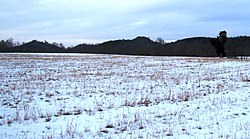
Fort Blount was a frontier fort and federal outpost located along the Cumberland River in Jackson County, Tennessee, United States. Situated at the point where Avery's Trace crossed the river, the fort provided an important stopover for migrants and merchants travelling from the Knoxville area to the Nashville area in the 1790s. After the fort was abandoned around 1800, the community of Williamsburg developed on the site and served as county seat for the newly formed Jackson County from 1807 and 1819. The fort and now vanished village sites were added to the National Register of Historic Places in 1974.
Constructed in 1788, Avery's Trace crossed the Cumberland River at a natural river ford known as "Crossing of the Cumberland," where sandbars made it possible to wade across for much of the year. A ferry was established in 1791, and the following year a blockhouse was built on the river's east bank. In 1794, a larger fort was constructed on the west bank of the river opposite the ferry. Eventually named for Southwest Territory governor William Blount, the fort was garrisoned by militia and later by U.S. Army regulars until it was closed in 1798. Excavations conducted by the Tennessee Division of Archaeology between 1989 and 1994 revealed the fort's location and provided evidence of its shape.
The Fort Blount site is on an embankment overlooking the west side of the Cumberland River about 340 miles (550 km) above the mouth of the river. (This section of the river is now part of Cordell Hull Lake). The embankment is at the eastern end of a peninsula created by a narrow turn in the river called Smith's Bend. Smith's Bend Road, which intersects Tennessee State Highway 53 in the Gladdis community 10 miles (16 km) west of Gainesboro, traverses the peninsula and provides the chief road access to the area.
The old Williamsburg community was near the Williams Cemetery, which contains the graves of early settler Sampson Williams and his wife, Margaret. It was about 1,500 feet (460 m) southwest of Fort Blount. The Fort Blount Ferry was near the end of Smith's Bend Road, which it connected to the Flynns Creek community across the river. Most of Smith's Bend is still private farmland, though the Army Corps of Engineers, which built Cordell Hull Dam, manages several recreational areas along the peninsula's lakeshore.
In 1788, the governor of North Carolina commissioned the construction of a road to connect the Washington District of what is now East Tennessee with the Mero District in Middle Tennessee, to make it easier for travellers to cross the rugged Cumberland Plateau region. Known as Avery's Trace, the road crossed the Cumberland River at the natural ford known as the "Crossing of the Cumberland", which then was at the eastern edge of Sumner County. In 1791, Sampson Williams (1762–1841), an early Nashville pioneer and sheriff of Davidson County, was granted the right to operate a ferry at this spot.
The influx of settlers to Middle Tennessee after the American Revolution agitated tensions between the Native Americans and white settlers, and Indian attacks rose sharply. A series of small forts, called "stations," were built throughout Middle Tennessee during the 1780s and 1790s. In 1792, Governor William Blount instructed Sampson Williams to raise a militia force and built a blockhouse at the Crossing of the Cumberland. The blockhouse was completed in late 1792 or early 1793, possibly with help from a detachment led by Major Hugh Beard, and was sometimes called "Beard's blockhouse." Williams was commissioned a lieutenant and commanded the garrison, which consisted of a handful of local volunteer militiamen.
In 1794, Secretary of War Henry Knox— who believed blockhouses were inadequate protection— suggested that Governor Blount replace the blockhouse with a strong stockade. The new fort was completed in 1794 and was called "Fort Blount". Sampson Williams, who had established a tavern at the ferry, provided provisions for the fort's garrison. The original militia garrison was commanded by William Gillespie for most of 1795 and by Oliver Williams (Sampson's brother) in 1796. After Tennessee became a state in 1796, Governor John Sevier discharged the militia garrison, and the following year a company of U. S. regulars commanded by Captain William Rickard took charge of the post. The garrison, which guarded the supply lines, was there only a few months. By February 1798, Fort Blount was abandoned.
In 1796, French botanist André Michaux was staying at Fort Blount when he discovered the rare American yellowwood tree in the surrounding forests. The following year, future French King Louis-Philippe passed through Fort Blount, and reported it was being modified or replaced. In 1802, Michaux's son, François André Michaux (1770–1855), travelling with prominent early Middle Tennessean Moses Fiske, stayed at the Williams' tavern. He reported that Fort Blount had been demolished.
Fort Blount
Fort Blount was a frontier fort and federal outpost located along the Cumberland River in Jackson County, Tennessee, United States. Situated at the point where Avery's Trace crossed the river, the fort provided an important stopover for migrants and merchants travelling from the Knoxville area to the Nashville area in the 1790s. After the fort was abandoned around 1800, the community of Williamsburg developed on the site and served as county seat for the newly formed Jackson County from 1807 and 1819. The fort and now vanished village sites were added to the National Register of Historic Places in 1974.
Constructed in 1788, Avery's Trace crossed the Cumberland River at a natural river ford known as "Crossing of the Cumberland," where sandbars made it possible to wade across for much of the year. A ferry was established in 1791, and the following year a blockhouse was built on the river's east bank. In 1794, a larger fort was constructed on the west bank of the river opposite the ferry. Eventually named for Southwest Territory governor William Blount, the fort was garrisoned by militia and later by U.S. Army regulars until it was closed in 1798. Excavations conducted by the Tennessee Division of Archaeology between 1989 and 1994 revealed the fort's location and provided evidence of its shape.
The Fort Blount site is on an embankment overlooking the west side of the Cumberland River about 340 miles (550 km) above the mouth of the river. (This section of the river is now part of Cordell Hull Lake). The embankment is at the eastern end of a peninsula created by a narrow turn in the river called Smith's Bend. Smith's Bend Road, which intersects Tennessee State Highway 53 in the Gladdis community 10 miles (16 km) west of Gainesboro, traverses the peninsula and provides the chief road access to the area.
The old Williamsburg community was near the Williams Cemetery, which contains the graves of early settler Sampson Williams and his wife, Margaret. It was about 1,500 feet (460 m) southwest of Fort Blount. The Fort Blount Ferry was near the end of Smith's Bend Road, which it connected to the Flynns Creek community across the river. Most of Smith's Bend is still private farmland, though the Army Corps of Engineers, which built Cordell Hull Dam, manages several recreational areas along the peninsula's lakeshore.
In 1788, the governor of North Carolina commissioned the construction of a road to connect the Washington District of what is now East Tennessee with the Mero District in Middle Tennessee, to make it easier for travellers to cross the rugged Cumberland Plateau region. Known as Avery's Trace, the road crossed the Cumberland River at the natural ford known as the "Crossing of the Cumberland", which then was at the eastern edge of Sumner County. In 1791, Sampson Williams (1762–1841), an early Nashville pioneer and sheriff of Davidson County, was granted the right to operate a ferry at this spot.
The influx of settlers to Middle Tennessee after the American Revolution agitated tensions between the Native Americans and white settlers, and Indian attacks rose sharply. A series of small forts, called "stations," were built throughout Middle Tennessee during the 1780s and 1790s. In 1792, Governor William Blount instructed Sampson Williams to raise a militia force and built a blockhouse at the Crossing of the Cumberland. The blockhouse was completed in late 1792 or early 1793, possibly with help from a detachment led by Major Hugh Beard, and was sometimes called "Beard's blockhouse." Williams was commissioned a lieutenant and commanded the garrison, which consisted of a handful of local volunteer militiamen.
In 1794, Secretary of War Henry Knox— who believed blockhouses were inadequate protection— suggested that Governor Blount replace the blockhouse with a strong stockade. The new fort was completed in 1794 and was called "Fort Blount". Sampson Williams, who had established a tavern at the ferry, provided provisions for the fort's garrison. The original militia garrison was commanded by William Gillespie for most of 1795 and by Oliver Williams (Sampson's brother) in 1796. After Tennessee became a state in 1796, Governor John Sevier discharged the militia garrison, and the following year a company of U. S. regulars commanded by Captain William Rickard took charge of the post. The garrison, which guarded the supply lines, was there only a few months. By February 1798, Fort Blount was abandoned.
In 1796, French botanist André Michaux was staying at Fort Blount when he discovered the rare American yellowwood tree in the surrounding forests. The following year, future French King Louis-Philippe passed through Fort Blount, and reported it was being modified or replaced. In 1802, Michaux's son, François André Michaux (1770–1855), travelling with prominent early Middle Tennessean Moses Fiske, stayed at the Williams' tavern. He reported that Fort Blount had been demolished.
Recent media
Recent media