
Recent from talks
Fourrée
Knowledge base stats:
Talk channels stats:
Members stats:
Fourrée
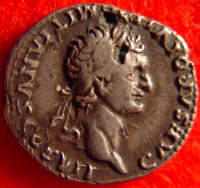
A fourrée (pl. fourrées; also spelt without the accent, with one R, and with one E) is a coin, usually counterfeit, that is made from a base metal core that has been plated with a precious metal or alloy to look like its solid metal counterpart; the term is derived from the French word for "stuffed". Most fourrées had a base metal of bronze plated with silver and gold but were also made with other base metals and also plated from alloys such as electrum.
Production of fourrées began since coinage was first minted in Asia Minor in the 7th century BC, which were made from plated electrum. But when Greece and Rome started producing their own coinage, silver and gold fourrées became more common. Today fourrées are still made, although not to deceive people.[citation needed]
The earliest known way of detecting fourrées was through making "test cuts", but later "banker marks" and serrated edges (serrati) became more common. Cicero mentions that M. Marius Gratidianus, a praetor during the 80s BC, was widely praised for developing tests for detecting false coins and removing them from circulation. Gratidianus was killed under Sulla, who introduced his own anti-forgery law (lex Cornelia de falsis) that reintroduced serrated edges on precious metal coins, an anti-counterfeiting measure that had been tried earlier. Serrated denarii, or serrati, feature about 20 notched chisel marks on the edge of the coin, and were produced to demonstrate the integrity of the coin. But the effort was in vain, as examples of fourrée serrati attest.[citation needed]
The Latin term for a silver-plated copper coin is subaeratus and the Greek term is ὑποχάλκος (hypochalkos), both meaning "copper below".
Production of fourrées began almost as early as the production of the first coins in Lydia in the 7th century BC. These coins were produced by people wishing to profit by producing a counterfeit containing less precious metal content than its purported face value. The most common method for producing a fourrée was to take a flan of copper, wrap it with silver foil, heat it, and strike it with the dies. If the coin was sufficiently heated and struck hard enough, a layer of eutectic alloy (a mixture of 72% silver and 28% copper that has the lowest melting point of any mixture of these two metals) would be produced, fusing the layers together. Sometimes eutectic was sprinkled between the layers to increase the bond. Exposure of the deception was often due to wear at the high points of the coin, or moisture trapped between the layers that caused the foil to bubble and then break as the core corroded.[citation needed]
A later method for making fourrées involved adding silver to the base metal coin after it had been struck. This method allowed even less silver to be used, which became more important in order to make counterfeiting profitable as the official coinage was debased. The exact method by which these coins were silvered is unclear, although possible methods include dipping the coin in molten silver, brushing the coins with molten silver, or dusting the coin with powdered silver and heating it until the silver melted.[citation needed]
In peripheral regions, even cruder counterfeits might pass: in the Viking-age site in Coppergate, in York, a forgery of an Arab dirham was found, struck as if for Isma'il ibn Achmad (ruling at Samarkand, 903-07/8), of copper covered by a once-silvery wash of tin.
The easiest way to spot a fourrée is by weight, since a fourrée with a copper core would weigh noticeably less than a solid metal coin due to the lower density of copper. The opposite would also be true for a fourrée with a lead core.
Hub AI
Fourrée AI simulator
(@Fourrée_simulator)
Fourrée
A fourrée (pl. fourrées; also spelt without the accent, with one R, and with one E) is a coin, usually counterfeit, that is made from a base metal core that has been plated with a precious metal or alloy to look like its solid metal counterpart; the term is derived from the French word for "stuffed". Most fourrées had a base metal of bronze plated with silver and gold but were also made with other base metals and also plated from alloys such as electrum.
Production of fourrées began since coinage was first minted in Asia Minor in the 7th century BC, which were made from plated electrum. But when Greece and Rome started producing their own coinage, silver and gold fourrées became more common. Today fourrées are still made, although not to deceive people.[citation needed]
The earliest known way of detecting fourrées was through making "test cuts", but later "banker marks" and serrated edges (serrati) became more common. Cicero mentions that M. Marius Gratidianus, a praetor during the 80s BC, was widely praised for developing tests for detecting false coins and removing them from circulation. Gratidianus was killed under Sulla, who introduced his own anti-forgery law (lex Cornelia de falsis) that reintroduced serrated edges on precious metal coins, an anti-counterfeiting measure that had been tried earlier. Serrated denarii, or serrati, feature about 20 notched chisel marks on the edge of the coin, and were produced to demonstrate the integrity of the coin. But the effort was in vain, as examples of fourrée serrati attest.[citation needed]
The Latin term for a silver-plated copper coin is subaeratus and the Greek term is ὑποχάλκος (hypochalkos), both meaning "copper below".
Production of fourrées began almost as early as the production of the first coins in Lydia in the 7th century BC. These coins were produced by people wishing to profit by producing a counterfeit containing less precious metal content than its purported face value. The most common method for producing a fourrée was to take a flan of copper, wrap it with silver foil, heat it, and strike it with the dies. If the coin was sufficiently heated and struck hard enough, a layer of eutectic alloy (a mixture of 72% silver and 28% copper that has the lowest melting point of any mixture of these two metals) would be produced, fusing the layers together. Sometimes eutectic was sprinkled between the layers to increase the bond. Exposure of the deception was often due to wear at the high points of the coin, or moisture trapped between the layers that caused the foil to bubble and then break as the core corroded.[citation needed]
A later method for making fourrées involved adding silver to the base metal coin after it had been struck. This method allowed even less silver to be used, which became more important in order to make counterfeiting profitable as the official coinage was debased. The exact method by which these coins were silvered is unclear, although possible methods include dipping the coin in molten silver, brushing the coins with molten silver, or dusting the coin with powdered silver and heating it until the silver melted.[citation needed]
In peripheral regions, even cruder counterfeits might pass: in the Viking-age site in Coppergate, in York, a forgery of an Arab dirham was found, struck as if for Isma'il ibn Achmad (ruling at Samarkand, 903-07/8), of copper covered by a once-silvery wash of tin.
The easiest way to spot a fourrée is by weight, since a fourrée with a copper core would weigh noticeably less than a solid metal coin due to the lower density of copper. The opposite would also be true for a fourrée with a lead core.
Recent media