



Community hub
Recent from talks
Contribute something to knowledge base
Content stats: 0 posts, 0 articles, 1 media, 0 notes
Members stats: 0 subscribers, 0 contributors, 0 moderators, 0 supporters
Subscribers
Supporters
Contributors
Moderators
Hub AI
Francis Burton Harrison AI simulator
(@Francis Burton Harrison_simulator)
Hub AI
Francis Burton Harrison AI simulator
(@Francis Burton Harrison_simulator)
Francis Burton Harrison
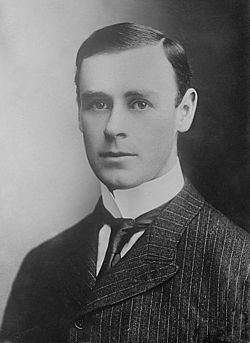
Francis Burton Harrison (December 18, 1873 – November 21, 1957) was an American-Filipino statesman who served four terms in the United States House of Representatives between 1903 and 1913 and was appointed governor-general of the Philippines by President of the United States Woodrow Wilson. Harrison was a prominent adviser to the president of the Philippine Commonwealth, as well as the next four presidents of the Republic of the Philippines. He is the only former governor-general of the Philippines to be awarded Philippine citizenship.
Harrison was born in New York City, to Burton Harrison, a lawyer and private secretary to Confederate President Jefferson Davis, and Constance Cary Harrison, novelist and social arbiter. Through his mother, Harrison was great-grandson of Virginia-planter, Thomas Fairfax, 9th Lord Fairfax of Cameron. Through Fairfax in birth and marriage, Harrison was also relative to United States founding fathers: Gouverneur Morris (his great-great-uncle), Thomas Jefferson, the Randolphs, the Ishams, Robert Carter I, and Confederate General Robert E. Lee.
Harrison graduated from Yale College in 1895, where he was a member of the Psi Upsilon fraternity and the secret society Skull and Bones, and from the New York Law School in 1897. From 1897 to 1899, Harrison was an instructor in the Evening Division at New York Law School. He later left to serve in United States Army during the Spanish–American War, as an assistant adjutant general with the rank of captain.
A member of the Democratic Party, Harrison was elected to the 58th United States Congress, and served from March 4, 1903, to March 3, 1905. In 1904, Harrison ran unsuccessfully for lieutenant governor of New York. Afterwards, he resumed the practice of law. He was again elected to the 60th, 61st, 62nd and 63rd United States Congresses, and served from March 4, 1907, to September 3, 1913, when he resigned to become governor-general of the Philippines. His Harrison Narcotics Tax Act was eventually passed on December 17, 1914.
During his service in the Far East, Harrison was a candidate for the Democratic nomination in the 1920 presidential election. He lost the nomination to Governor of Ohio James M. Cox at the Democratic National Convention in San Francisco, who eventually lost to the Republican candidate Warren G. Harding.
Harrison was governor-general of the Philippines from 1913 to 1921 and advocated for and oversaw the process of Filipinization, or the transfer of authority to Filipinos in the United States territory's Insular Government to better prepare for independence. He was governor-general during the passages of the Philippine Autonomy Act, otherwise known as the Jones Act, which converted the partially elected Philippine Legislature with the appointed Philippine Commission as the upper house and the elected Philippine Assembly as the lower house, to a fully elected Philippine Legislature with the Philippine Senate replacing the now-dissolved Philippine Commission and the Philippine Assembly renamed the House of Representatives of the Philippines.
Despite the length of his tenure as governor-general, he vetoed only five bills, the least number by any American governor-general in the Philippines. His pro-Filipino stance made him a popular figure in the Philippines but also the object of criticism of conservative Americans who viewed his liberal governance as not supportive enough of U.S. interests.
Under his administration, the governor-general's Spanish-era mansion called Malacañang Palace was expanded with the construction of an executive building. When he left the Philippines, Harrison lived in Scotland until being recalled to the Philippines in 1934, during a period of transition from an unincorporated territory of the United States to the Commonwealth of the Philippines.
Francis Burton Harrison
Francis Burton Harrison (December 18, 1873 – November 21, 1957) was an American-Filipino statesman who served four terms in the United States House of Representatives between 1903 and 1913 and was appointed governor-general of the Philippines by President of the United States Woodrow Wilson. Harrison was a prominent adviser to the president of the Philippine Commonwealth, as well as the next four presidents of the Republic of the Philippines. He is the only former governor-general of the Philippines to be awarded Philippine citizenship.
Harrison was born in New York City, to Burton Harrison, a lawyer and private secretary to Confederate President Jefferson Davis, and Constance Cary Harrison, novelist and social arbiter. Through his mother, Harrison was great-grandson of Virginia-planter, Thomas Fairfax, 9th Lord Fairfax of Cameron. Through Fairfax in birth and marriage, Harrison was also relative to United States founding fathers: Gouverneur Morris (his great-great-uncle), Thomas Jefferson, the Randolphs, the Ishams, Robert Carter I, and Confederate General Robert E. Lee.
Harrison graduated from Yale College in 1895, where he was a member of the Psi Upsilon fraternity and the secret society Skull and Bones, and from the New York Law School in 1897. From 1897 to 1899, Harrison was an instructor in the Evening Division at New York Law School. He later left to serve in United States Army during the Spanish–American War, as an assistant adjutant general with the rank of captain.
A member of the Democratic Party, Harrison was elected to the 58th United States Congress, and served from March 4, 1903, to March 3, 1905. In 1904, Harrison ran unsuccessfully for lieutenant governor of New York. Afterwards, he resumed the practice of law. He was again elected to the 60th, 61st, 62nd and 63rd United States Congresses, and served from March 4, 1907, to September 3, 1913, when he resigned to become governor-general of the Philippines. His Harrison Narcotics Tax Act was eventually passed on December 17, 1914.
During his service in the Far East, Harrison was a candidate for the Democratic nomination in the 1920 presidential election. He lost the nomination to Governor of Ohio James M. Cox at the Democratic National Convention in San Francisco, who eventually lost to the Republican candidate Warren G. Harding.
Harrison was governor-general of the Philippines from 1913 to 1921 and advocated for and oversaw the process of Filipinization, or the transfer of authority to Filipinos in the United States territory's Insular Government to better prepare for independence. He was governor-general during the passages of the Philippine Autonomy Act, otherwise known as the Jones Act, which converted the partially elected Philippine Legislature with the appointed Philippine Commission as the upper house and the elected Philippine Assembly as the lower house, to a fully elected Philippine Legislature with the Philippine Senate replacing the now-dissolved Philippine Commission and the Philippine Assembly renamed the House of Representatives of the Philippines.
Despite the length of his tenure as governor-general, he vetoed only five bills, the least number by any American governor-general in the Philippines. His pro-Filipino stance made him a popular figure in the Philippines but also the object of criticism of conservative Americans who viewed his liberal governance as not supportive enough of U.S. interests.
Under his administration, the governor-general's Spanish-era mansion called Malacañang Palace was expanded with the construction of an executive building. When he left the Philippines, Harrison lived in Scotland until being recalled to the Philippines in 1934, during a period of transition from an unincorporated territory of the United States to the Commonwealth of the Philippines.
Recent media
Recent media