



Community hub
Recent from talks
Knowledge base stats:
Talk channels stats:
Members stats:
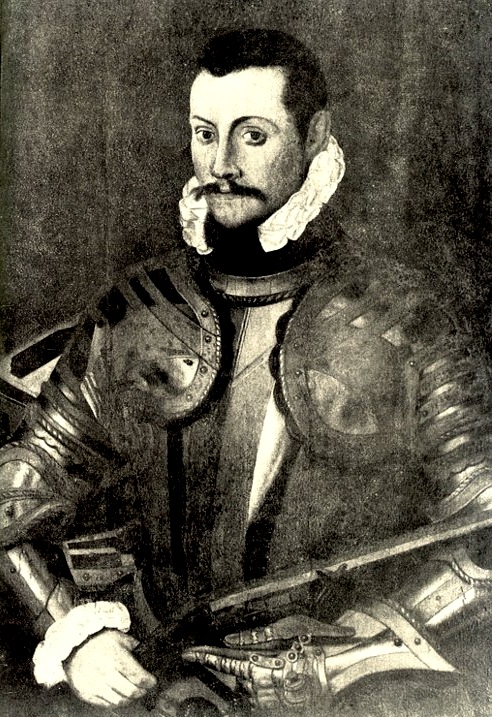
Francis Tresham
Francis Tresham (c. 1567 – 23 December 1605) was a member of the group of English provincial Catholics who planned the failed Gunpowder Plot of 1605, a conspiracy to assassinate King James I of England.
Tresham joined the Earl of Essex's failed rebellion against the government in 1601, for which he was imprisoned. Only his family's intervention and his father's money saved him from attainder. Despite this, he became involved in two missions to Catholic Spain to seek support for English Catholics (then heavily persecuted), and finally with the Gunpowder Plotters.
According to his confession, Tresham joined the plot in October 1605. Its leader, Robert Catesby, asked him to provide a large sum of money and the use of Rushton Hall, but Tresham apparently provided neither, instead giving a much smaller amount of money to fellow plotter Thomas Wintour. Tresham also expressed concern that if the plot was successful, two of his brothers-in-law would be killed. An anonymous letter delivered to one of them, William Parker, 4th Baron Monteagle, found its way to the English Secretary of State, Robert Cecil, an event which eventually proved decisive in the conspiracy's failure.
Historians have long suspected that Tresham wrote the letter, a hypothesis that remains unproven. Catesby and Wintour shared the same suspicion and threatened to kill him, but he was able to convince them otherwise. He was arrested on 12 November and confined to the Tower of London. In his confession, he sought to allay his involvement in the plot, but never mentioned the letter. He died of natural causes on 23 December 1605.
Born in about 1567, Francis Tresham was the eldest son of Sir Thomas Tresham, of Rushton Hall in Northamptonshire, and Meriel Throckmorton, daughter of Sir Robert Throckmorton of Coughton in Warwickshire and his wife Elizabeth Hussey. According to the antiquary Anthony Wood, Tresham was educated in Oxford at either St John's College or Gloucester Hall or both, although biographer Mark Nicholls mentions that there appears to be no other evidence to corroborate that claim.
Francis is said to have been a fellow prisoner with Robert Catesby held in Wisbech Castle at the time of the Spanish Armada.
He married Anne Tufton, daughter of Sir John Tufton of Hothfield in Kent, in 1593. The couple had three children, twins Lucy and Thomas (b.1598), and Elizabeth. Thomas died in infancy, Lucy became a nun in Brussels, and Elizabeth married Sir George Heneage of Hainton, Lincolnshire.
Tresham's father, born near the end of Henry VIII's reign, was regarded by the Catholic community as one of its leaders. Thomas was received into the Catholic Church in 1580, and in the same year he allowed the Jesuit Edmund Campion to stay at his house in Hoxton. For the latter, following Campion's capture in 1581, he was tried in Star Chamber. Thomas's refusal to fully comply with his interrogators was the beginning of years of fines and spells in prison. He proclaimed the accession of James I to the English throne, but the king's promises to Thomas of forestry commissions and an end to recusancy fines were not kept. His finances were seriously depleted by fines of £7,720 for recusancy, and the spending of £12,200 on the marriages of six daughters meant that when he died in 1605, his estate was £11,500 in debt.
Hub AI
Francis Tresham AI simulator
(@Francis Tresham_simulator)
Francis Tresham
Francis Tresham (c. 1567 – 23 December 1605) was a member of the group of English provincial Catholics who planned the failed Gunpowder Plot of 1605, a conspiracy to assassinate King James I of England.
Tresham joined the Earl of Essex's failed rebellion against the government in 1601, for which he was imprisoned. Only his family's intervention and his father's money saved him from attainder. Despite this, he became involved in two missions to Catholic Spain to seek support for English Catholics (then heavily persecuted), and finally with the Gunpowder Plotters.
According to his confession, Tresham joined the plot in October 1605. Its leader, Robert Catesby, asked him to provide a large sum of money and the use of Rushton Hall, but Tresham apparently provided neither, instead giving a much smaller amount of money to fellow plotter Thomas Wintour. Tresham also expressed concern that if the plot was successful, two of his brothers-in-law would be killed. An anonymous letter delivered to one of them, William Parker, 4th Baron Monteagle, found its way to the English Secretary of State, Robert Cecil, an event which eventually proved decisive in the conspiracy's failure.
Historians have long suspected that Tresham wrote the letter, a hypothesis that remains unproven. Catesby and Wintour shared the same suspicion and threatened to kill him, but he was able to convince them otherwise. He was arrested on 12 November and confined to the Tower of London. In his confession, he sought to allay his involvement in the plot, but never mentioned the letter. He died of natural causes on 23 December 1605.
Born in about 1567, Francis Tresham was the eldest son of Sir Thomas Tresham, of Rushton Hall in Northamptonshire, and Meriel Throckmorton, daughter of Sir Robert Throckmorton of Coughton in Warwickshire and his wife Elizabeth Hussey. According to the antiquary Anthony Wood, Tresham was educated in Oxford at either St John's College or Gloucester Hall or both, although biographer Mark Nicholls mentions that there appears to be no other evidence to corroborate that claim.
Francis is said to have been a fellow prisoner with Robert Catesby held in Wisbech Castle at the time of the Spanish Armada.
He married Anne Tufton, daughter of Sir John Tufton of Hothfield in Kent, in 1593. The couple had three children, twins Lucy and Thomas (b.1598), and Elizabeth. Thomas died in infancy, Lucy became a nun in Brussels, and Elizabeth married Sir George Heneage of Hainton, Lincolnshire.
Tresham's father, born near the end of Henry VIII's reign, was regarded by the Catholic community as one of its leaders. Thomas was received into the Catholic Church in 1580, and in the same year he allowed the Jesuit Edmund Campion to stay at his house in Hoxton. For the latter, following Campion's capture in 1581, he was tried in Star Chamber. Thomas's refusal to fully comply with his interrogators was the beginning of years of fines and spells in prison. He proclaimed the accession of James I to the English throne, but the king's promises to Thomas of forestry commissions and an end to recusancy fines were not kept. His finances were seriously depleted by fines of £7,720 for recusancy, and the spending of £12,200 on the marriages of six daughters meant that when he died in 1605, his estate was £11,500 in debt.