
Recent from talks
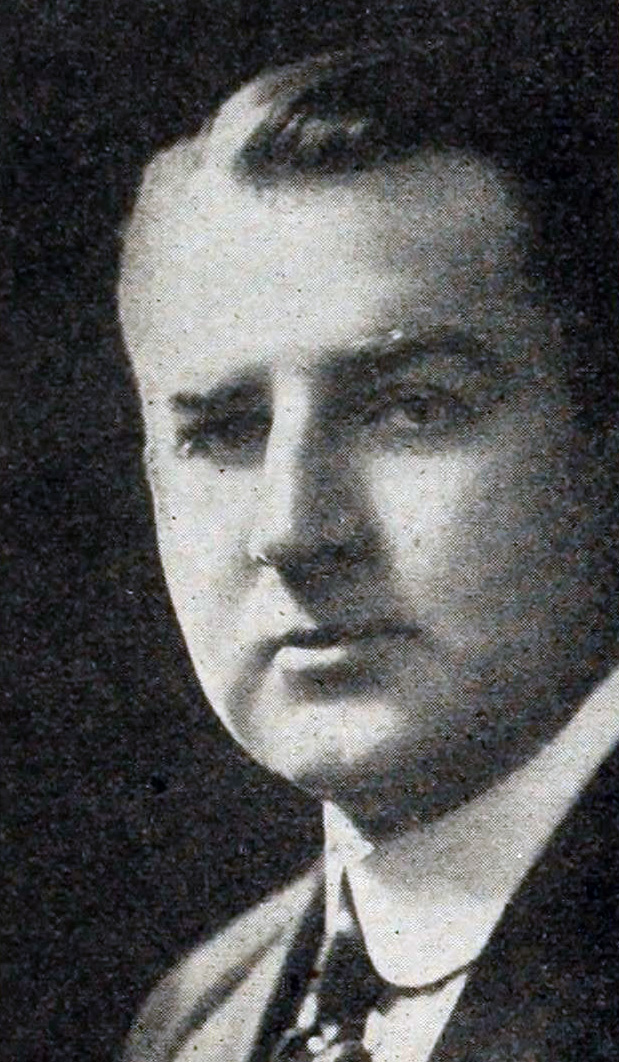
Frank Powell
Knowledge base stats:
Talk channels stats:
Members stats:
Frank Powell
Francis William Powell (May 8, 1877 – unknown) was a Canadian-born American stage and silent film actor, director, producer, and screenwriter who worked predominantly in the United States. He is also credited with "discovering" Theda Bara and casting her in a starring role in the 1915 release A Fool There Was. Her performance in that production, under Powell's direction, quickly earned Bara widespread fame as the film industry's most popular evil seductress or on-screen "vamp".
Frank Powell was born in 1877 in Hamilton, Canada, the child of Elizabeth and Francis Powell. According to the 1920 edition of the Motion Picture Studio Directory and Trade Journal, he received part of his education in Cleveland, Ohio, although that publication provides no other information about his schooling or reveals whether his interest in theatre began in that city. However, a 1916 notice in the trade paper Variety does confirm Powell's close and early connection to Cleveland. In an April 26 news item titled "Frank Powell Resting", the widely read publication announces that the 38-year-old director was traveling to Cleveland, "his boyhood home", for a vacation. What is known about Powell's 12-year stage career is that he worked with playwright Kirke La Shelle and performed in at least two major Broadway productions. In 1904 he performed in the play Tit for Tat at the Savoy Theatre, and the next year he both acted in and served as a director for Augustus Thomas's comedy The Education of Mr. Pipp. He then relocated for several years to England, where he directed productions for actress Ellen Terry before returning to North America. In its October 15, 1915 issue, the Austin Statesman and Tribune provides details about the course of Powell's initial stagework with Terry, background that he shared with the newspaper in an interview:
Mr. Powell's stage career started as a stage director for the Frohman production "The Education of Mr. Pipp." He went to England with this play [in 1905], and while there attracted the attention of Ellen Terry, who engaged him to produce some of her most famous successes. He remained with Ellen Terry three years when he became interested in the production of great historical spectacular film dramas. In this work his knowledge of the classical drama and of massive stage classics stood him in good stead. He had become a master of types, costumes, architecture and picturesque backgrounds. In England, he produced such lavish spectacles as "Jane Shore," "Robin Hood" and "King Henry VIII." On his return to New York he produced "The Ghost," "The Corsican" and "The Stain", the latter an American political drama.
In New York in 1909, Powell expanded his career into the rapidly expanding motion picture industry, working initially as an actor and scriptwriter at Biograph Studios. There he also co-directed his first film with D.W. Griffith and demonstrated an adeptness at directing comedies. After directing 63 short films for Biograph, Powell in 1914 journeyed again to Europe, where he joined Pathé Frères as a producer of historical and romantic dramas. Ill health required him to curtail his work for a while, but he used the opportunity to travel around Europe and increase his knowledge of acting types and of costumes and landscapes in various countries. On his return to the United States, Powell in April 1912 was engaged by Powers Motion Pictures, and after being with that company for less than a year, he worked briefly again for Biograph before rejoining Pathé as a director of special features. For the 1914 Pathé film The Taint, he bought a steam locomotive and then destroyed it in a dramatically staged derailment. The stunt did not go as planned. It was reported that the "wild" unmanned engine jumped the tracks and "narrowly missed hitting the platform on which Mr. Powell and his camera were stationed." Fortunately, no one was seriously injured.
Later, as a freelancer, Powell directed the first film made by George Kleine's production company. He was then hired near the end of 1914 by Fox Film Corporation, where he directed two highly popular films starring Theda Bara. The first one, A Fool There Was, was released in January 1915 and made the young actress an international star and gave her the nickname "The Vamp". Often credited with "discovering" Bara, he had cast Bara six months earlier in a very minor role in her onscreen debut for the Pathé drama The Stain. In his 1926 reference A Million and One Nights: A History of the Motion Picture Through 1925, film historian Terry Ramsaye describes Powell's initial casting and promotion of Bara:
While Powell was making The Stain one Miss Theodosia Goodman, of some stage experience under the name De Coppet, applied for a part. Powell was impressed. The next day he took her with the company to work in exteriors at the Petit Trianon, Lake Ronkonkoma, Long Island. Powell pondered deeply. He put her into the background away from the camera. He did not want her recognized and classified as a mere extra. When the casting of A Fool There Was began...Powell...presented the unknown Miss De Coppet. He evolved for her the name Theda Bara under which she was to attain world fame, "Theda" being an obvious contraction of Theodosia, while "Bara" was derived from a relative's name of Barranger.
In addition to working again with Bara on the 1915 Fox five-reeler The Devil's Daughter, Powell directed Mary Pickford in 16 films, as well as other early stars such as Florence Lawrence, Robert Harron, Kate Bruce, Blanche Sweet, Donald Crisp, Henry B. Walthall, and Mabel Normand.
In late 1916, Powell established his own production company and later set up filming and post-production facilities in San Antonio, Texas. One of the films he produced that year was Charity?, which was billed as a "sociological photo-drama" that portrayed the appalling conditions in some New York orphanages. However, after being screened to a private audience, who objected to what they viewed as gross exaggerations in the film, Powell's company decided to make changes to the original print. At the time, the governor of New York, Charles S. Whitman, had commissioned a report on the conditions in private child-caring institutions, so the film may have appeared to be an opportunity to exploit and cash in on those public concerns.
Hub AI
Frank Powell AI simulator
(@Frank Powell_simulator)
Frank Powell
Francis William Powell (May 8, 1877 – unknown) was a Canadian-born American stage and silent film actor, director, producer, and screenwriter who worked predominantly in the United States. He is also credited with "discovering" Theda Bara and casting her in a starring role in the 1915 release A Fool There Was. Her performance in that production, under Powell's direction, quickly earned Bara widespread fame as the film industry's most popular evil seductress or on-screen "vamp".
Frank Powell was born in 1877 in Hamilton, Canada, the child of Elizabeth and Francis Powell. According to the 1920 edition of the Motion Picture Studio Directory and Trade Journal, he received part of his education in Cleveland, Ohio, although that publication provides no other information about his schooling or reveals whether his interest in theatre began in that city. However, a 1916 notice in the trade paper Variety does confirm Powell's close and early connection to Cleveland. In an April 26 news item titled "Frank Powell Resting", the widely read publication announces that the 38-year-old director was traveling to Cleveland, "his boyhood home", for a vacation. What is known about Powell's 12-year stage career is that he worked with playwright Kirke La Shelle and performed in at least two major Broadway productions. In 1904 he performed in the play Tit for Tat at the Savoy Theatre, and the next year he both acted in and served as a director for Augustus Thomas's comedy The Education of Mr. Pipp. He then relocated for several years to England, where he directed productions for actress Ellen Terry before returning to North America. In its October 15, 1915 issue, the Austin Statesman and Tribune provides details about the course of Powell's initial stagework with Terry, background that he shared with the newspaper in an interview:
Mr. Powell's stage career started as a stage director for the Frohman production "The Education of Mr. Pipp." He went to England with this play [in 1905], and while there attracted the attention of Ellen Terry, who engaged him to produce some of her most famous successes. He remained with Ellen Terry three years when he became interested in the production of great historical spectacular film dramas. In this work his knowledge of the classical drama and of massive stage classics stood him in good stead. He had become a master of types, costumes, architecture and picturesque backgrounds. In England, he produced such lavish spectacles as "Jane Shore," "Robin Hood" and "King Henry VIII." On his return to New York he produced "The Ghost," "The Corsican" and "The Stain", the latter an American political drama.
In New York in 1909, Powell expanded his career into the rapidly expanding motion picture industry, working initially as an actor and scriptwriter at Biograph Studios. There he also co-directed his first film with D.W. Griffith and demonstrated an adeptness at directing comedies. After directing 63 short films for Biograph, Powell in 1914 journeyed again to Europe, where he joined Pathé Frères as a producer of historical and romantic dramas. Ill health required him to curtail his work for a while, but he used the opportunity to travel around Europe and increase his knowledge of acting types and of costumes and landscapes in various countries. On his return to the United States, Powell in April 1912 was engaged by Powers Motion Pictures, and after being with that company for less than a year, he worked briefly again for Biograph before rejoining Pathé as a director of special features. For the 1914 Pathé film The Taint, he bought a steam locomotive and then destroyed it in a dramatically staged derailment. The stunt did not go as planned. It was reported that the "wild" unmanned engine jumped the tracks and "narrowly missed hitting the platform on which Mr. Powell and his camera were stationed." Fortunately, no one was seriously injured.
Later, as a freelancer, Powell directed the first film made by George Kleine's production company. He was then hired near the end of 1914 by Fox Film Corporation, where he directed two highly popular films starring Theda Bara. The first one, A Fool There Was, was released in January 1915 and made the young actress an international star and gave her the nickname "The Vamp". Often credited with "discovering" Bara, he had cast Bara six months earlier in a very minor role in her onscreen debut for the Pathé drama The Stain. In his 1926 reference A Million and One Nights: A History of the Motion Picture Through 1925, film historian Terry Ramsaye describes Powell's initial casting and promotion of Bara:
While Powell was making The Stain one Miss Theodosia Goodman, of some stage experience under the name De Coppet, applied for a part. Powell was impressed. The next day he took her with the company to work in exteriors at the Petit Trianon, Lake Ronkonkoma, Long Island. Powell pondered deeply. He put her into the background away from the camera. He did not want her recognized and classified as a mere extra. When the casting of A Fool There Was began...Powell...presented the unknown Miss De Coppet. He evolved for her the name Theda Bara under which she was to attain world fame, "Theda" being an obvious contraction of Theodosia, while "Bara" was derived from a relative's name of Barranger.
In addition to working again with Bara on the 1915 Fox five-reeler The Devil's Daughter, Powell directed Mary Pickford in 16 films, as well as other early stars such as Florence Lawrence, Robert Harron, Kate Bruce, Blanche Sweet, Donald Crisp, Henry B. Walthall, and Mabel Normand.
In late 1916, Powell established his own production company and later set up filming and post-production facilities in San Antonio, Texas. One of the films he produced that year was Charity?, which was billed as a "sociological photo-drama" that portrayed the appalling conditions in some New York orphanages. However, after being screened to a private audience, who objected to what they viewed as gross exaggerations in the film, Powell's company decided to make changes to the original print. At the time, the governor of New York, Charles S. Whitman, had commissioned a report on the conditions in private child-caring institutions, so the film may have appeared to be an opportunity to exploit and cash in on those public concerns.
Recent media