Hubbry Logo
search
logo
1241864

Frank Shellenback

logo
Community Hub0 Subscribers
Read side by side
from Wikipedia

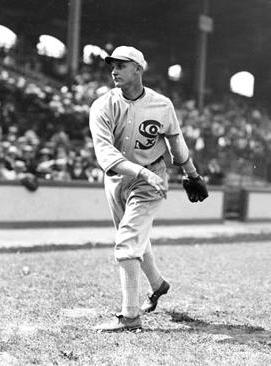
Frank Victor Shellenback (December 16, 1898 – August 17, 1969) was an American pitcher, pitching coach, and scout in Major League Baseball. As a pitcher, he was famous as an expert spitballer when the pitch was still legal in organized baseball; however, because Shellenback, then 21, was on a minor league roster when "trick pitches" was outlawed after the 1919 season, he was banned from throwing the pitch in the major leagues.[1]

Key Information

As a result, Shellenback spent 19 years (1920–38) — the remainder of his active career — throwing the spitball legally in the Pacific Coast League. He won a record 296 PCL games and was elected to the Pacific Coast League Hall of Fame in 1943.

Shellenback was a born in Joplin, Missouri, the son of a machinist. When he was 11 years old, his family moved to Los Angeles,[1] where he graduated from Hollywood High School.

Playing career

[edit]

Shellenback threw and batted right-handed and stood 6 ft 2 in (1.88 m) tall and weighed 200 pounds (91 kg). After attending the University of Santa Clara, he became a professional baseball player during World War I and was acquired by the Chicago White Sox at age 19 during the 1918 season. In 36 American League games during 1918–19, Shellenback won ten games and lost 15, with an earned run average of 3.06 in 21723 innings pitched.

Shellenback with the Minneapolis Millers

He appeared in his last MLB game on July 5, 1919, before his contract was transferred to the Minneapolis Millers of the American Association. Although Shellenback posted a 7–3 record there, because of his minor league status, he was not included on a list of "grandfathered" spitball hurlers who would be allowed to continue to use the pitch at the major-league level. He would never again pitch in the majors, but was permitted to continue his career legally in minor league baseball.

Minneapolis sent Shellenback to the Vernon Tigers of the Pacific Coast League at the close of the 1919 campaign, and Shellenback began his long career in the circuit. He would hurl for Vernon, the Sacramento Solons, Hollywood Stars, and San Diego Padres, and win more than 20 games five times, with two 18-game and three 19-game winning seasons as well. All told, as a minor league pitcher, Shellenback won 315 games and lost 192 (for a winning percentage of .621), with an ERA of 3.55 over 4,51413 innings.[2] Shellenback's long tenure with Los Angeles-based teams even led to a brief movie career; he had roles in the comedies Fireman, Save My Child (1932) and Alibi Ike (1935).[3] Both films starred comedian and baseball enthusiast Joe E. Brown, whose son would become known as a successful baseball executive.

Manager, coach and longtime scout

[edit]

Shellenback had a long career as a manager, coach, and scout as well. In 1935, still an active pitcher, he took over the managerial reins of the Stars and moved with them to San Diego the following season. There, in 1936, he helped discover and groom one of the greatest hitters of all time, Ted Williams, who signed with the Padres as a 17-year-old pitcher-outfielder out of San Diego's Hoover High School. Williams was soon acquired by the Boston Red Sox, while Shellenback remained manager of the Padres through 1938, winning the 1937 PCL championship.

He then became a pitching coach for the St. Louis Browns (1939), Red Sox (1940–44), Detroit Tigers (1946–47), and New York Giants (1950–55), working on two pennant winners and one World Series champion with the Giants of Leo Durocher.

Shellenback overcame serious health setbacks (a heart attack in 1948 and an abdominal infection in 1951) to continue his coaching career. He became a Giants scout and roving minor league pitching instructor in 1956 and continued in that role until his death at age 70 in Newton, Massachusetts. Survivors included six children and 45 grandchildren.[4]

References

[edit]
[edit]
Revisions and contributorsEdit on WikipediaRead on Wikipedia
from Grokipedia
Frank Shellenback is an American professional baseball pitcher known for his mastery of the spitball and his record as the all-time winningest pitcher in Pacific Coast League history.[1] Born on December 16, 1898, in Joplin, Missouri, he developed his skills in Los Angeles after his family relocated there, attending Hollywood High School where he excelled in multiple sports and later briefly at Santa Clara University before turning professional.[1] Shellenback reached Major League Baseball with the Chicago White Sox, debuting in 1918 and pitching in 36 games over two seasons with a 10–15 record and a 3.06 ERA before his final appearance in 1919.[2] The 1920 ban on the spitball in the major leagues, which did not include him among the grandfathered pitchers, effectively ended his big-league career despite his effectiveness with the pitch.[1] He went on to enjoy an extraordinary 19-year tenure in the Pacific Coast League spanning 1920 to 1938, primarily with the Vernon, Hollywood, and San Diego teams, where the league permitted him to continue throwing the spitball legally, making him the last legal spitball pitcher in Organized Baseball.[1] There he amassed 296 wins—the most in league history—along with numerous 20-win seasons, high innings totals, and strong performances as both a pitcher and hitter, later serving as a player-manager.[1] [3] After retiring as a player, Shellenback became a respected pitching coach and scout in Major League Baseball, working for the St. Louis Browns, Boston Red Sox, Detroit Tigers, and New York Giants, including contributions to the Giants' World Series teams in 1951 and 1954.[1] He was inducted into the Pacific Coast League Hall of Fame in 1943 and remained active in baseball until his death on August 17, 1969, in Newton, Massachusetts.[1]

Early life

Family background and youth

Frank Victor Shellenback was born on December 16, 1898, in Joplin, Missouri, the youngest of five children born to John Albert Shellenback and Caroline A. Nolte.[1] His father worked as a machinist, and the family surname had originally been Schellenbach.[1][4] Caroline A. Nolte, known as Carrie, was born in Illinois in 1867 to German-born parents.[1] By the time Frank was 10 years old, the family had relocated to Los Angeles, California.[1] In the Los Angeles area, Shellenback spent his formative youth and experienced early exposure to sports.[1]

Education and early athletics

Frank Shellenback attended Hollywood High School in Los Angeles, where he was a standout multi-sport athlete competing in baseball, football, basketball, and rugby.[1] The 1915 Hollywood High baseball team, which included Shellenback and his brother Paul, won the Southern California championship, and during that season Shellenback pitched a no-hitter against Los Angeles High.[1] After high school, Shellenback briefly attended Santa Clara University in the fall of 1915, where he played rugby and basketball.[1] In early 1916, he enrolled at Hollywood Junior College and was immediately appointed as an assistant baseball coach.[1]

Major League playing career

Chicago White Sox (1918–1919)

Frank Shellenback pitched in the major leagues exclusively for the Chicago White Sox from 1918 to 1919, compiling a career record of 10–15 with a 3.06 earned run average across 36 games and 217⅔ innings, while recording 57 strikeouts.[2] He made his MLB debut on May 8, 1918, in relief against the Cleveland Indians, pitching four innings and earning the win in a 9–5 victory despite issuing five walks.[2] Shellenback had attended spring training with the White Sox in 1918 after re-signing with the club in February, and he returned for spring training again in 1919.[1] Shellenback's most effective MLB season came in 1918, when he posted a 9–12 record and a 2.66 ERA in 28 appearances, including 21 starts and 182⅔ innings with 47 strikeouts.[2] This performance benefited from the temporary absence of established White Sox pitchers such as Red Faber, who was serving in the Navy, and Lefty Williams, who was working in a shipyard, creating opportunities for the 19-year-old Shellenback to join the rotation as one of the few players on the roster ineligible for the World War I draft due to his age.[1] He relied heavily on the spitball during this period, a pitch he had developed prior to joining the White Sox organization.[1] Shellenback's major league time diminished in 1919 after the return of Faber and Williams to the pitching staff, limiting him to eight appearances, four starts, a 1–3 record, and a higher ERA.[2] His final MLB appearance came on July 5, 1919, in relief against the Detroit Tigers, after which he was sent outright to the Minneapolis Millers of the American Association on July 9.[2] Shellenback was acquainted with several Black Sox players—including Chick Gandil, Fred McMullin, Lefty Williams, Buck Weaver, and Swede Risberg—through winter semipro baseball in California during 1918–1919, but he was not involved in the 1919 World Series scandal.[1] After Shellenback's demotion to the minors in mid-1919, the major leagues banned the spitball and other foreign-substance pitches in February 1920, with a grandfather clause permitting a limited number of established pitchers to continue using the delivery legally.[1] Because he was no longer on a major league roster and was in the minor leagues at the time the exemptions were finalized, Shellenback was ineligible for this protection, effectively ending his path back to the majors given his dependence on the spitball.[1]

Pacific Coast League playing career

Teams, spitball mastery, and records

Frank Shellenback embarked on his 19-season Pacific Coast League career with the Vernon Tigers in 1920 after leaving the major leagues. [1] He remained with Vernon through 1925, then joined the Hollywood Stars from 1926 to 1935, and concluded his playing days with the San Diego Padres from 1936 to 1938. [1] When the spitball was banned in the major leagues after the 1919 season, the Pacific Coast League grandfathered Shellenback, allowing him to continue throwing it legally with annual registration to the league office. [5] He became renowned as a spitball specialist and was widely recognized as the last legal spitball pitcher in organized baseball upon retiring as a player after the 1938 season, often attributing his longevity and effectiveness to the pitch. [1] Shellenback amassed a Pacific Coast League-record 296 wins during his tenure in the circuit. [1] His complete minor league pitching record stood at 315–192 with a .621 winning percentage and a 3.55 earned run average across 4,514⅓ innings. [6] He achieved five 20-win seasons, including a 26–12 record that led the league in 1929 and a career-high 27 victories in 1931. [1] Shellenback distinguished himself as one of the PCL's best-hitting pitchers, batting .269 with 73 home runs over his minor league career. [7] Arm troubles plagued him, beginning with a bone chip removed from his pitching elbow in 1921 and continuing with neuritis that increasingly limited his availability in the 1930s. [1] For his dominance and records, Shellenback was elected to the Pacific Coast League Hall of Fame in 1943. [1]

Minor league managerial career

Hollywood Stars and San Diego Padres

Frank Shellenback transitioned to managing in the Pacific Coast League in 1935 when he was named player-manager of the Hollywood Stars, replacing Oscar Vitt. [1] The team struggled that season and finished in last place despite Shellenback contributing 14 wins as a pitcher. [1] The following year the franchise relocated to San Diego and became the Padres, with Shellenback remaining as player-manager through 1938. [1] His pitching appearances decreased significantly due to neuritis and back pain—he pitched in only 15 games in 1936, six in 1937, and three in 1938—but he focused on leading the team. [1] The 1936 Padres finished second in the PCL, missing the pennant by one and a half games, with a roster that included Bobby Doerr, Vince DiMaggio, and rookie Ted Williams. [1] Under Shellenback's guidance, the Padres signed 17-year-old Ted Williams in 1936 and began his professional development. [8] Shellenback gave Williams his first professional hit as a pinch hitter on July 3, 1936, and later used him in relief pitching once before shifting him to a full-time outfield role in September after another player departed. [8] [9] Williams started every game in left field during the final month and credited Shellenback highly, later writing that he was “a wonderful, wonderful man, a man I respected as much as any I’ve known in baseball.” [1] In 1937 the Padres placed third in the regular season but captured the PCL championship by winning the playoffs. [1] The team fell to fifth place in 1938. [1] On October 2, 1938, owner Bill Lane fired Shellenback unconditionally, delivering the release via assistant Spider Baum with a terse pink slip reading “Frank Shellenback released unconditionally, W.H. Lane.” [1] This marked the end of Shellenback's tenure with the club and his playing career. [1]

Major League coaching and scouting career

Roles with Browns, Red Sox, Tigers, and Giants

Frank Shellenback transitioned to a major league coaching career after his playing days, serving as a pitching coach for multiple teams. He began with the St. Louis Browns in 1939. [1] He then joined the Boston Red Sox as pitching coach from 1940 to 1944. [1] After a stint as a New England scout for the Detroit Tigers in 1945, he became their pitching coach for the 1946 and 1947 seasons, overseeing the team during manager Steve O'Neill's occasional absences due to hospitalization. [1] Shellenback joined the New York Giants organization in 1949 as a roving pitching coach before becoming the major league pitching coach from 1950 to 1955 under manager Leo Durocher. [1] In this role, he contributed to the Giants' pitching effectiveness during successful campaigns, including National League pennants in 1951 and 1954, and the 1954 World Series championship. [1] Durocher expressed complete trust in Shellenback's judgment on pitchers, declaring him the best at spotting flaws and providing solutions, often saying he took Shellenback's word on pitching readiness. [10] Pitchers such as Larry Jansen praised Shellenback's uncanny perception for diagnosing mechanical issues quickly and recommending minor adjustments to restore performance. [10] Shellenback suffered serious health setbacks during his career, including a heart attack in 1948 while managing in the minors and a serious illness in 1951 that required hospitalization. [11] He overcame these challenges and continued with the Giants organization after his pitching coach tenure ended in 1955, serving as supervisor of minor-league personnel from 1956 to 1959 and then as a part-time Eastern scout and traveling coach from 1960 to 1969. [1] His longstanding expertise with the spitball led him to assist Giants pitchers Bob Shaw and Gaylord Perry in developing and controlling the pitch during his later years with the organization. [1]

Film appearances

Acting roles in baseball comedies

Frank Shellenback's extended residence in the Los Angeles area and his affiliation with the Hollywood Stars of the Pacific Coast League during the 1930s created opportunities for occasional involvement in Hollywood film productions, particularly baseball-themed comedies filmed locally.[1] He appeared in the 1935 screwball comedy Alibi Ike starring Joe E. Brown, as a pitcher, with scenes filmed at Wrigley Field in Los Angeles.[1] This role capitalized on Shellenback's background as a professional pitcher to provide realistic on-field sequences in the film.[1]

Personal life and death

Family, health challenges, and legacy

Frank Shellenback married Elizabeth H. Taylor on January 17, 1922.[1] The couple had six children, beginning with the first born in 1925.[1] During his Pacific Coast League playing career, the family resided in Los Angeles to remain close to his professional life and the West Coast climate.[1] In 1940, after Shellenback signed on as a coach with the Boston Red Sox, the family relocated to the Boston area, where they settled permanently.[1] Shellenback experienced various health issues throughout his later career, including recurring problems that prompted him to step away from managing the Minneapolis Millers mid-season in 1948 on his doctor's advice.[1] He had been ill off and on in his final years.[1] He died unexpectedly at his home in Newton, Massachusetts, on August 17, 1969, at the age of 70.[1] Shellenback was interred at Newton Cemetery.[12] Shellenback's legacy endures through his election as one of the first five members of the Pacific Coast League Hall of Fame in 1943.[1] He was widely recognized as an authority on the spitball, regarded as the last legal practitioner of the pitch in Organized Baseball upon his retirement as a player in 1938, and frequently consulted on its technique during his coaching years.[1] Holding the record for most wins by any pitcher in the Pacific Coast League with 296, he is often described as one of the greatest minor-league pitchers in history.[1] He also left a lasting impact as a mentor, particularly to Ted Williams, whom he managed in San Diego in 1936 and shifted to full-time outfield play; Williams later described him as "a wonderful, wonderful man" whom he respected as much as anyone in baseball.[1]
User Avatar
No comments yet.