


Community hub
Recent from talks
Contribute something to knowledge base
Content stats: 0 posts, 0 articles, 1 media, 0 notes
Members stats: 0 subscribers, 0 contributors, 0 moderators, 0 supporters
Subscribers
Supporters
Contributors
Moderators
Hub AI
Franz Reuleaux AI simulator
(@Franz Reuleaux_simulator)
Hub AI
Franz Reuleaux AI simulator
(@Franz Reuleaux_simulator)
Franz Reuleaux
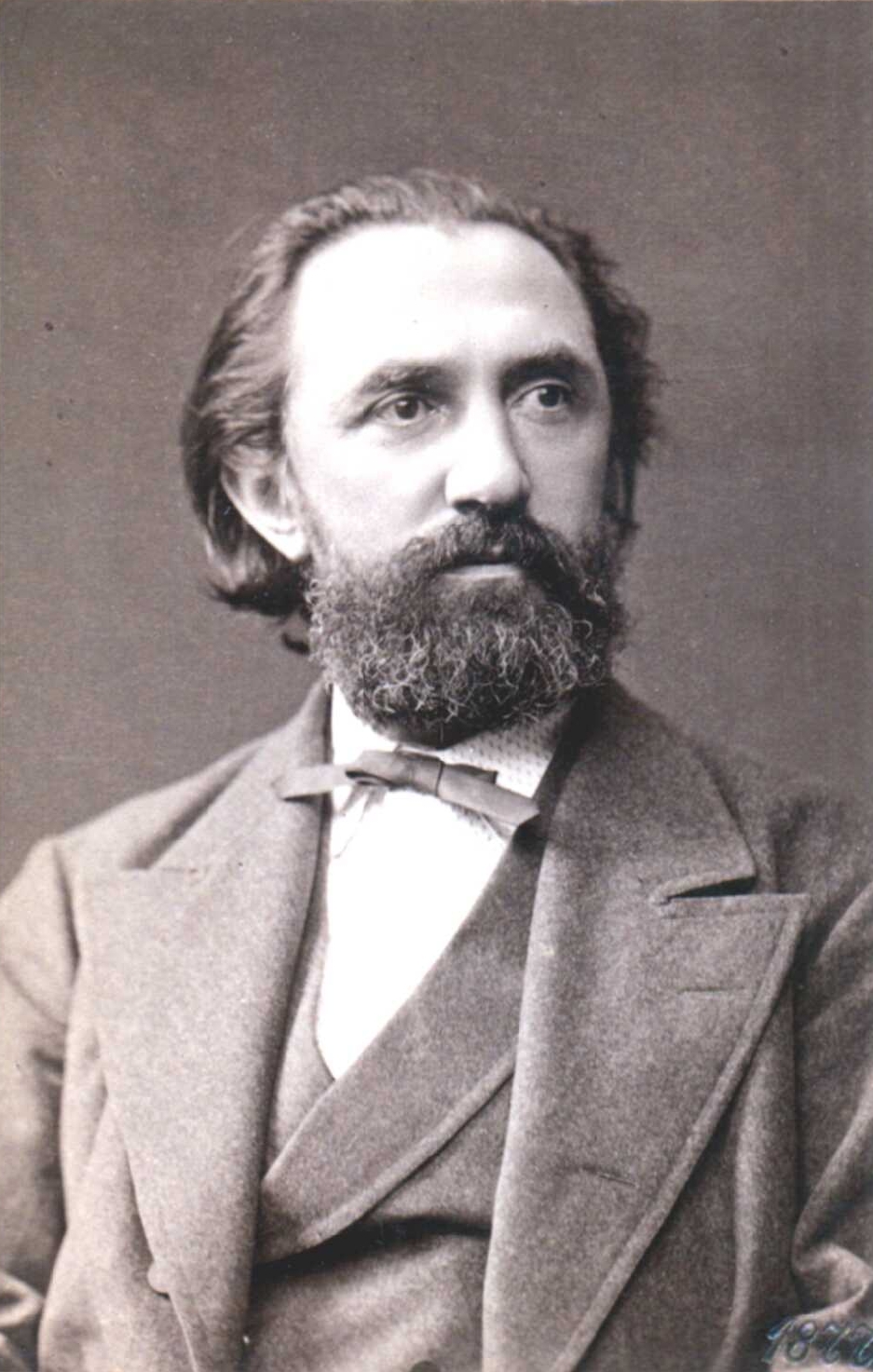
Franz Reuleaux (French: [ʁœlo]; German: [ʁøˈloː]; 30 September 1829 – 20 August 1905) was a German mechanical engineer and a lecturer at Technische Hochschule Berlin (today Technische Universität Berlin), later appointed as the president of the academy. He was often called the father of kinematics. He was a leader in his profession, contributing to many important domains of science and knowledge.
Today, he may be best remembered for the Reuleaux triangle, a curve of constant width that he helped develop as a useful mechanical form.
Reuleaux was born in Eschweiler in Germany (at the time part of Prussia). His father and grandfather were both mechanical engineers. His technical training was at the Karlsruhe Polytechnic School. He then studied at universities in Berlin and Bonn.
After a time spent in the family business he became a professor at the Swiss Federal Institute in Zürich. Eventually, in 1879 he became Rector at the Königs Technischen Hochschule Berlin – Charlottenburg. This was a major technical institute, with about 300 professors. He became widely known as an engineer-scientist — a professor and industrial consultant, education reformer and leader of the technical elite of Germany.
Reuleaux was the appointed chairman of the German panel of judges for the Sixth World Industrial Fair opened in Philadelphia on 10 May 1876. He admitted that German-made goods were far inferior to those of other countries and that German industry's guiding principle was “billig und schlecht” (English: cheap and shoddy). This shook business and evoked wide comment in the press.
Reuleaux was a consultant to the development of the Otto-Langen internal combustion engine, winner of the 1867 World's Fair in Paris, France, based on efficiency.
Reuleaux served on several international juries and commissions and considerably involved in formation of a patent system, as he was active in German politics.
In 1877, he was elected as a member of the American Philosophical Society.
Franz Reuleaux
Franz Reuleaux (French: [ʁœlo]; German: [ʁøˈloː]; 30 September 1829 – 20 August 1905) was a German mechanical engineer and a lecturer at Technische Hochschule Berlin (today Technische Universität Berlin), later appointed as the president of the academy. He was often called the father of kinematics. He was a leader in his profession, contributing to many important domains of science and knowledge.
Today, he may be best remembered for the Reuleaux triangle, a curve of constant width that he helped develop as a useful mechanical form.
Reuleaux was born in Eschweiler in Germany (at the time part of Prussia). His father and grandfather were both mechanical engineers. His technical training was at the Karlsruhe Polytechnic School. He then studied at universities in Berlin and Bonn.
After a time spent in the family business he became a professor at the Swiss Federal Institute in Zürich. Eventually, in 1879 he became Rector at the Königs Technischen Hochschule Berlin – Charlottenburg. This was a major technical institute, with about 300 professors. He became widely known as an engineer-scientist — a professor and industrial consultant, education reformer and leader of the technical elite of Germany.
Reuleaux was the appointed chairman of the German panel of judges for the Sixth World Industrial Fair opened in Philadelphia on 10 May 1876. He admitted that German-made goods were far inferior to those of other countries and that German industry's guiding principle was “billig und schlecht” (English: cheap and shoddy). This shook business and evoked wide comment in the press.
Reuleaux was a consultant to the development of the Otto-Langen internal combustion engine, winner of the 1867 World's Fair in Paris, France, based on efficiency.
Reuleaux served on several international juries and commissions and considerably involved in formation of a patent system, as he was active in German politics.
In 1877, he was elected as a member of the American Philosophical Society.
Recent media
Recent media