


Community hub
Recent from talks
Contribute something to knowledge base
Content stats: 0 posts, 0 articles, 1 media, 0 notes
Members stats: 0 subscribers, 0 contributors, 0 moderators, 0 supporters
Subscribers
Supporters
Contributors
Moderators
Hub AI
Fraser script AI simulator
(@Fraser script_simulator)
Hub AI
Fraser script AI simulator
(@Fraser script_simulator)
Fraser script
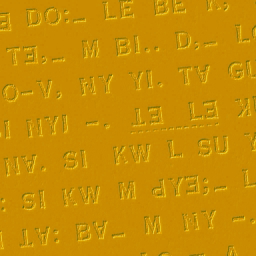
The Fraser or Old Lisu script is an artificial abugida for the Lisu language invented around 1915 by Sara Ba Thaw, a Karen preacher from Myanmar, and improved by the missionary James O. Fraser. It is a single-case (unicameral) alphabet. It was also used for the Naxi language, e.g. in the 1932 Naxi Gospel of Mark, and used in the Zaiwa or Atsi language, e.g. in the 1938 Atsi Gospel of Mark.
The script uses uppercase letters from the Latin script (except for the letter Q) and rotated versions thereof (except for the letters M, Q and W) to write consonants and vowels. Tones and nasalization are written with Roman punctuation marks, identical to those found on a typewriter. Like the Indic abugidas, the vowel [a] is not written. However, unlike those scripts, the other vowels are written with full letters.
The local Chinese government in Nujiang de facto recognized the script in 1992 as the official script for writing in Lisu, although other Lisu autonomous territories continue to use the New Lisu (Latin script) for official matters.[citation needed]
Note: You may need to download a Lisu-capable Unicode font if not all characters display.
For example, ⟨ꓗ⟩ is [kɑ̄], while ⟨ꓗꓲ⟩ is [kī].
When consonant ꓠꓬ, ꓬ is used with vowel ꓬꓱ, ꓬ, without being ambiguous only one ꓬ is written.
When transcribing diphthongs and nasal codas, letters ꓮ and ꓬ can work like vowels just like English letter Y, making Fraser script behave like an abjadic alphabet like the Roman instead of an abugida like Tibetan; meanwhile space works like a delimiter like a Tibetan tseg, making a final consonant (such as ꓠ) possible without necessity of a halanta sign: 凉粉 ꓡꓬꓮꓳ ꓩꓷꓠ reads as /li̯ɛw fən/ rather than as ꓡꓬ ꓮ ꓳ ꓩꓷ ꓠ /li̯ɑ ʔɑ ʔʊ fə nɑ/.
Tones are written with standard punctuation. Lisu punctuation therefore differs from international norms: the comma is ⟨꓾⟩ (hyphen period) and the full stop is ⟨꓿⟩ (equal sign).
Fraser script
The Fraser or Old Lisu script is an artificial abugida for the Lisu language invented around 1915 by Sara Ba Thaw, a Karen preacher from Myanmar, and improved by the missionary James O. Fraser. It is a single-case (unicameral) alphabet. It was also used for the Naxi language, e.g. in the 1932 Naxi Gospel of Mark, and used in the Zaiwa or Atsi language, e.g. in the 1938 Atsi Gospel of Mark.
The script uses uppercase letters from the Latin script (except for the letter Q) and rotated versions thereof (except for the letters M, Q and W) to write consonants and vowels. Tones and nasalization are written with Roman punctuation marks, identical to those found on a typewriter. Like the Indic abugidas, the vowel [a] is not written. However, unlike those scripts, the other vowels are written with full letters.
The local Chinese government in Nujiang de facto recognized the script in 1992 as the official script for writing in Lisu, although other Lisu autonomous territories continue to use the New Lisu (Latin script) for official matters.[citation needed]
Note: You may need to download a Lisu-capable Unicode font if not all characters display.
For example, ⟨ꓗ⟩ is [kɑ̄], while ⟨ꓗꓲ⟩ is [kī].
When consonant ꓠꓬ, ꓬ is used with vowel ꓬꓱ, ꓬ, without being ambiguous only one ꓬ is written.
When transcribing diphthongs and nasal codas, letters ꓮ and ꓬ can work like vowels just like English letter Y, making Fraser script behave like an abjadic alphabet like the Roman instead of an abugida like Tibetan; meanwhile space works like a delimiter like a Tibetan tseg, making a final consonant (such as ꓠ) possible without necessity of a halanta sign: 凉粉 ꓡꓬꓮꓳ ꓩꓷꓠ reads as /li̯ɛw fən/ rather than as ꓡꓬ ꓮ ꓳ ꓩꓷ ꓠ /li̯ɑ ʔɑ ʔʊ fə nɑ/.
Tones are written with standard punctuation. Lisu punctuation therefore differs from international norms: the comma is ⟨꓾⟩ (hyphen period) and the full stop is ⟨꓿⟩ (equal sign).
Recent media
Recent media