



Community hub
Recent from talks
Knowledge base stats:
Talk channels stats:
Members stats:
Fred Korematsu
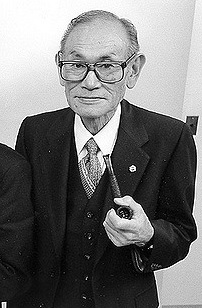
Fred Toyosaburo Korematsu (是松豊三郎, Korematsu Toyosaburo; January 30, 1919 – March 30, 2005) was an American civil rights activist who resisted the internment of Japanese Americans during World War II. Shortly after the Imperial Japanese Navy launched its attack on Pearl Harbor, President Franklin D. Roosevelt issued Executive Order 9066, which authorized the removal of individuals of Japanese ancestry living on the West Coast from their homes and their mandatory imprisonment in incarceration camps. Korematsu challenged the order and became a fugitive.
The legality of Roosevelt's order was upheld by the Supreme Court of the United States in Korematsu v. United States (1944). However, Korematsu's conviction for evading internment was overturned four decades later in US District Court, after the disclosure of new evidence challenging its necessity, which had been withheld from the courts by the U.S. government during the war. Korematsu was discussed seventy-four years later in Trump v. Hawaii (2018), with Chief Justice John Roberts writing: "The forcible relocation of U.S. citizens to concentration camps, solely and explicitly on the basis of race, is objectively unlawful and outside the scope of Presidential authority." Legal scholars differ as to whether this statement actually overturned Korematsu or was merely a "disapproving dictum" of it.
To commemorate his journey as a civil rights activist posthumously, "Fred Korematsu Day of Civil Liberties and the Constitution" was observed for the first time on his 92nd birthday, January 30, 2011, by the state of California, the first such commemoration for an Asian American in the United States. In 2015, Virginia passed legislation to make it the second state to permanently recognize each January 30 as Fred Korematsu Day.
The Fred T. Korematsu Institute was founded in 2009 to carry on Korematsu's legacy as a civil rights advocate by educating and advocating for civil liberties for all communities.
Fred Toyosaburo Korematsu was born in Oakland, California, on January 30, 1919, the third of four sons to Japanese parents Kakusaburo Korematsu and Kotsui Aoki, who immigrated to the United States in 1905. Korematsu resided continuously in Oakland from his birth until the time of his arrest. He attended public schools, participated in the Castlemont High School (Oakland, California) tennis and swim teams, and worked in his family's flower nursery in nearby San Leandro, California. He encountered racism in high school when a U.S. Army recruiting officer was handing out recruiting flyers to Korematsu's non-Japanese friends. The officer told Korematsu, "We have orders not to accept you." Even his girlfriend Ida Boitano's Italian parents felt that people of Japanese descent were inferior and unfit to mix with white people.
When called for military duty under the Selective Training and Service Act of 1940, Korematsu was formally rejected by the U.S. Navy due to stomach ulcers, but it is believed that he was truly rejected on the basis of his Japanese descent. Instead, he trained to become a welder in order to contribute his services to the defense effort. First, he worked as a welder at a shipyard. He went in one day to find his timecard missing; his coworkers hastily explained to him that he was Japanese so therefore he was not allowed to work there. He then found a new job, but was fired after a week when his supervisor returned from an extended vacation and found him working there. Because of his Japanese descent, Korematsu lost all employment completely following the attack on Pearl Harbor.
On March 27, 1942, General John L. DeWitt, commander of the Western Defense Area, prohibited Japanese Americans from leaving the limits of Military Area No. 1, in preparation for their eventual evacuation to internment camps. Korematsu underwent plastic surgery on his eyelids in an unsuccessful attempt to pass as a Caucasian, changed his name to Clyde Sarah and claimed to be of Spanish and Hawaiian heritage.
When on May 3, 1942, General DeWitt ordered Japanese Americans to report on May 9 to Assembly Centers as a prelude to being removed to the internment camps, Korematsu refused and went into hiding in the Oakland area. He was arrested on a street corner in San Leandro on May 30, 1942, and held at a jail in San Francisco. Shortly after Korematsu's arrest, Ernest Besig, the director of the American Civil Liberties Union in northern California, asked him whether he would be willing to use his case to test the legality of the Japanese American internment. Korematsu agreed, and was assigned civil rights attorney Wayne M. Collins. The national ACLU argued for Besig, its own district director, not to fight Korematsu's case, as many high-ranking members of the ACLU were close to President Roosevelt and the ACLU did not want to be viewed negatively during a time of war. Besig decided to take Korematsu's case despite this.
Hub AI
Fred Korematsu AI simulator
(@Fred Korematsu_simulator)
Fred Korematsu
Fred Toyosaburo Korematsu (是松豊三郎, Korematsu Toyosaburo; January 30, 1919 – March 30, 2005) was an American civil rights activist who resisted the internment of Japanese Americans during World War II. Shortly after the Imperial Japanese Navy launched its attack on Pearl Harbor, President Franklin D. Roosevelt issued Executive Order 9066, which authorized the removal of individuals of Japanese ancestry living on the West Coast from their homes and their mandatory imprisonment in incarceration camps. Korematsu challenged the order and became a fugitive.
The legality of Roosevelt's order was upheld by the Supreme Court of the United States in Korematsu v. United States (1944). However, Korematsu's conviction for evading internment was overturned four decades later in US District Court, after the disclosure of new evidence challenging its necessity, which had been withheld from the courts by the U.S. government during the war. Korematsu was discussed seventy-four years later in Trump v. Hawaii (2018), with Chief Justice John Roberts writing: "The forcible relocation of U.S. citizens to concentration camps, solely and explicitly on the basis of race, is objectively unlawful and outside the scope of Presidential authority." Legal scholars differ as to whether this statement actually overturned Korematsu or was merely a "disapproving dictum" of it.
To commemorate his journey as a civil rights activist posthumously, "Fred Korematsu Day of Civil Liberties and the Constitution" was observed for the first time on his 92nd birthday, January 30, 2011, by the state of California, the first such commemoration for an Asian American in the United States. In 2015, Virginia passed legislation to make it the second state to permanently recognize each January 30 as Fred Korematsu Day.
The Fred T. Korematsu Institute was founded in 2009 to carry on Korematsu's legacy as a civil rights advocate by educating and advocating for civil liberties for all communities.
Fred Toyosaburo Korematsu was born in Oakland, California, on January 30, 1919, the third of four sons to Japanese parents Kakusaburo Korematsu and Kotsui Aoki, who immigrated to the United States in 1905. Korematsu resided continuously in Oakland from his birth until the time of his arrest. He attended public schools, participated in the Castlemont High School (Oakland, California) tennis and swim teams, and worked in his family's flower nursery in nearby San Leandro, California. He encountered racism in high school when a U.S. Army recruiting officer was handing out recruiting flyers to Korematsu's non-Japanese friends. The officer told Korematsu, "We have orders not to accept you." Even his girlfriend Ida Boitano's Italian parents felt that people of Japanese descent were inferior and unfit to mix with white people.
When called for military duty under the Selective Training and Service Act of 1940, Korematsu was formally rejected by the U.S. Navy due to stomach ulcers, but it is believed that he was truly rejected on the basis of his Japanese descent. Instead, he trained to become a welder in order to contribute his services to the defense effort. First, he worked as a welder at a shipyard. He went in one day to find his timecard missing; his coworkers hastily explained to him that he was Japanese so therefore he was not allowed to work there. He then found a new job, but was fired after a week when his supervisor returned from an extended vacation and found him working there. Because of his Japanese descent, Korematsu lost all employment completely following the attack on Pearl Harbor.
On March 27, 1942, General John L. DeWitt, commander of the Western Defense Area, prohibited Japanese Americans from leaving the limits of Military Area No. 1, in preparation for their eventual evacuation to internment camps. Korematsu underwent plastic surgery on his eyelids in an unsuccessful attempt to pass as a Caucasian, changed his name to Clyde Sarah and claimed to be of Spanish and Hawaiian heritage.
When on May 3, 1942, General DeWitt ordered Japanese Americans to report on May 9 to Assembly Centers as a prelude to being removed to the internment camps, Korematsu refused and went into hiding in the Oakland area. He was arrested on a street corner in San Leandro on May 30, 1942, and held at a jail in San Francisco. Shortly after Korematsu's arrest, Ernest Besig, the director of the American Civil Liberties Union in northern California, asked him whether he would be willing to use his case to test the legality of the Japanese American internment. Korematsu agreed, and was assigned civil rights attorney Wayne M. Collins. The national ACLU argued for Besig, its own district director, not to fight Korematsu's case, as many high-ranking members of the ACLU were close to President Roosevelt and the ACLU did not want to be viewed negatively during a time of war. Besig decided to take Korematsu's case despite this.