
Recent from talks
French Revolutionary Army
Knowledge base stats:
Talk channels stats:
Members stats:
French Revolutionary Army
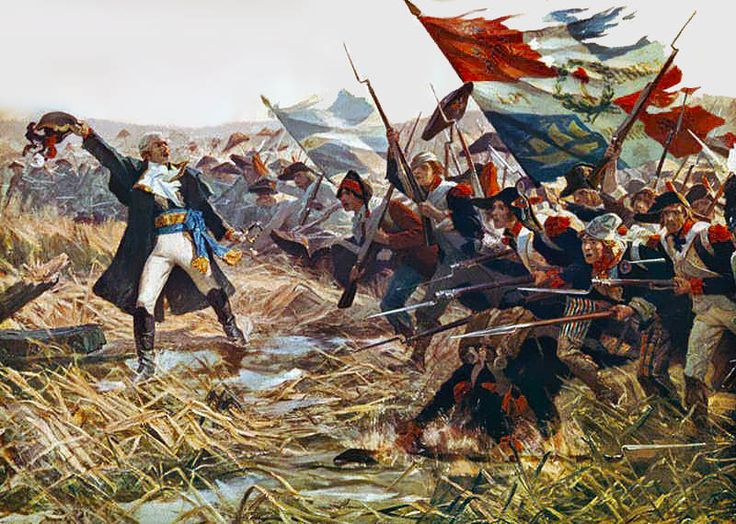
The French Revolutionary Army (French: Armée révolutionnaire française) was the French land force that fought the French Revolutionary Wars from 1792 to 1802. In the beginning, the French armies were characterised by their revolutionary fervour, their poor equipment and their great numbers. However, the French Revolutionary Army had become arguably the most powerful army in the world by the mid-1790s, as the French armies had become well-experienced and organized, enabling them to comfortably outfight their enemies.
Despite experiencing early disastrous defeats, the revolutionary armies successfully expelled foreign forces from French soil and then overran many neighboring countries, establishing client republics. Leading generals included Napoleon Bonaparte, Jean-Baptiste Jourdan, André Masséna, Jean Victor Marie Moreau and Étienne Macdonald.
As a general description of French military forces during this period, it should not be confused with the "revolutionary armies" (armées révolutionnaires) which were paramilitary forces set up during the Terror. Following the proclamation of the French Empire in 1804 the Revolutionary Army became the Imperial Army.
As the Ancien Régime gave way to a constitutional monarchy, and then to a republic, 1789–92, the entire structure of France was transformed to fall into line with the Revolutionary principles of "Liberty, Equality and Fraternity". Reactionary Europe stood opposed, especially after the French king was executed. The signing of the Declaration of Pillnitz between Leopold II, Holy Roman Emperor and King Frederick William II of Prussia and the subsequent French declaration of war meant that from its formation, the Republic of France was at war, and it required a potent military force to ensure its survival. As a result, one of the first major elements of the French state to be restructured was the army.
Almost all of the officers of the French Royal Army had been drawn from the aristocracy. During the period preceding the final overthrow of the Monarchy, large numbers of officers left their regiments and emigrated. Between 15 September and 1 December 1791 alone, 2,160 officers of the royal army fled France eventually to join the émigré army of Louis Joseph, Prince of Condé. Of those who stayed, many were either imprisoned or killed during the Reign of Terror. The few remaining officers from the old guard were promoted swiftly; this meant that the majority of the Revolutionary officers were far younger than their Monarchist counterparts. The high-ranking aristocratic officers who remained, among them Marquis de la Fayette, Comte de Rochambeau and Count Nicolas Luckner, were soon accused of having monarchist sympathies and either executed or forced into exile.
Revolutionary fervour, along with calls to save the new regime, resulted in a large influx of enthusiastic, yet untrained and undisciplined, volunteers. These were the first sans-culottes, so called because they wore peasants' trousers rather than the knee-breeches used by the other armies of the time. France's desperate military situation meant that these men were quickly inducted into the army. One reason for the success of the French Revolutionary Army is the "amalgamation" (amalgame) strategy organized by military strategist Lazare Carnot, later Napoleon's Minister of War. He assigned, to the same regiment (but in different battalions), both young volunteers enthusiastic at the thought of dying for liberty and old veterans from the former royal army.
The transformation of the Army was most apparent in the officer corps. Before the revolution, 90% of the officers had been aristocrats, compared to only 3% in 1794. Revolutionary fervor was high, and was closely monitored by the Committee of Public Safety, which assigned Representatives on Mission to keep watch on the army generals. Indeed, during the war, some generals deserted, and others were removed or executed. The government demanded that soldiers be loyal to the government in Paris, not to their generals.
Officially, the Revolutionary Armies were operating along the guidelines set down in the 1791 Reglement, a set of regulations created during the years before the Revolution. The 1791 Reglement laid down several complex tactical maneuvers, maneuvers which demanded well trained soldiers, officers and NCOs to perform correctly. The Revolutionary Army was lacking in all three of these areas, and as a result the early efforts to conform to the 1791 Reglement were met with disaster. The untrained troops could not perform the complex maneuvers required, unit cohesion was lost and defeat was ensured.
Hub AI
French Revolutionary Army AI simulator
(@French Revolutionary Army_simulator)
French Revolutionary Army
The French Revolutionary Army (French: Armée révolutionnaire française) was the French land force that fought the French Revolutionary Wars from 1792 to 1802. In the beginning, the French armies were characterised by their revolutionary fervour, their poor equipment and their great numbers. However, the French Revolutionary Army had become arguably the most powerful army in the world by the mid-1790s, as the French armies had become well-experienced and organized, enabling them to comfortably outfight their enemies.
Despite experiencing early disastrous defeats, the revolutionary armies successfully expelled foreign forces from French soil and then overran many neighboring countries, establishing client republics. Leading generals included Napoleon Bonaparte, Jean-Baptiste Jourdan, André Masséna, Jean Victor Marie Moreau and Étienne Macdonald.
As a general description of French military forces during this period, it should not be confused with the "revolutionary armies" (armées révolutionnaires) which were paramilitary forces set up during the Terror. Following the proclamation of the French Empire in 1804 the Revolutionary Army became the Imperial Army.
As the Ancien Régime gave way to a constitutional monarchy, and then to a republic, 1789–92, the entire structure of France was transformed to fall into line with the Revolutionary principles of "Liberty, Equality and Fraternity". Reactionary Europe stood opposed, especially after the French king was executed. The signing of the Declaration of Pillnitz between Leopold II, Holy Roman Emperor and King Frederick William II of Prussia and the subsequent French declaration of war meant that from its formation, the Republic of France was at war, and it required a potent military force to ensure its survival. As a result, one of the first major elements of the French state to be restructured was the army.
Almost all of the officers of the French Royal Army had been drawn from the aristocracy. During the period preceding the final overthrow of the Monarchy, large numbers of officers left their regiments and emigrated. Between 15 September and 1 December 1791 alone, 2,160 officers of the royal army fled France eventually to join the émigré army of Louis Joseph, Prince of Condé. Of those who stayed, many were either imprisoned or killed during the Reign of Terror. The few remaining officers from the old guard were promoted swiftly; this meant that the majority of the Revolutionary officers were far younger than their Monarchist counterparts. The high-ranking aristocratic officers who remained, among them Marquis de la Fayette, Comte de Rochambeau and Count Nicolas Luckner, were soon accused of having monarchist sympathies and either executed or forced into exile.
Revolutionary fervour, along with calls to save the new regime, resulted in a large influx of enthusiastic, yet untrained and undisciplined, volunteers. These were the first sans-culottes, so called because they wore peasants' trousers rather than the knee-breeches used by the other armies of the time. France's desperate military situation meant that these men were quickly inducted into the army. One reason for the success of the French Revolutionary Army is the "amalgamation" (amalgame) strategy organized by military strategist Lazare Carnot, later Napoleon's Minister of War. He assigned, to the same regiment (but in different battalions), both young volunteers enthusiastic at the thought of dying for liberty and old veterans from the former royal army.
The transformation of the Army was most apparent in the officer corps. Before the revolution, 90% of the officers had been aristocrats, compared to only 3% in 1794. Revolutionary fervor was high, and was closely monitored by the Committee of Public Safety, which assigned Representatives on Mission to keep watch on the army generals. Indeed, during the war, some generals deserted, and others were removed or executed. The government demanded that soldiers be loyal to the government in Paris, not to their generals.
Officially, the Revolutionary Armies were operating along the guidelines set down in the 1791 Reglement, a set of regulations created during the years before the Revolution. The 1791 Reglement laid down several complex tactical maneuvers, maneuvers which demanded well trained soldiers, officers and NCOs to perform correctly. The Revolutionary Army was lacking in all three of these areas, and as a result the early efforts to conform to the 1791 Reglement were met with disaster. The untrained troops could not perform the complex maneuvers required, unit cohesion was lost and defeat was ensured.
Recent media