



Community hub
Community hub
Recent from talks
Knowledge base stats:
Talk channels stats:
Members stats:
French Bulldog
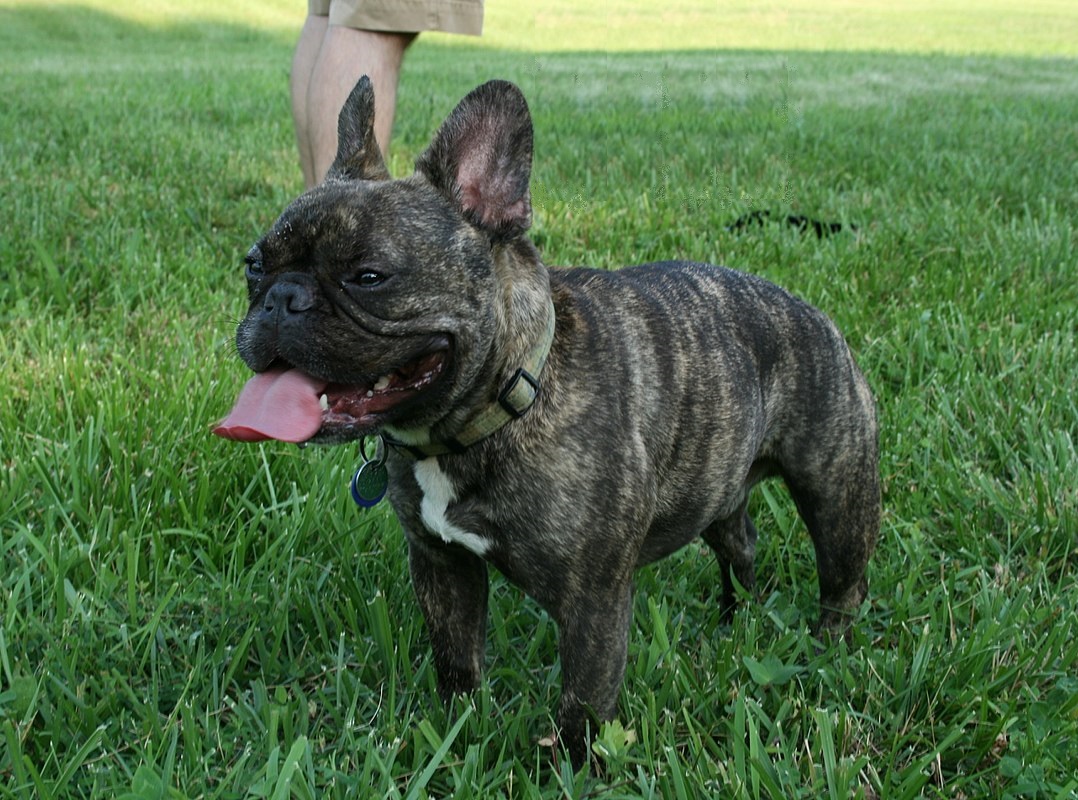
The French Bulldog (French: Bouledogue Français) is a French breed of companion dog or toy dog. It appeared in Paris in the mid-nineteenth century, apparently the result of cross-breeding of Toy Bulldogs imported from England and local Parisian ratters. It is commonly kept as a pet and is among the most frequently registered dogs in a number of countries including Australia, the United Kingdom, and the United States. The breed is susceptible to various health problems due to being bred for its distinctive flat face and skin wrinkles.
From the beginning of the nineteenth century, bulldogs were bred in the United Kingdom for purposes other than traditional blood sports such as bull-baiting, which were banned in 1835. By the middle of the century there were miniature bulldogs, most weighing around 7–11 kg (15–24 lb).
At the same time, lace workers from Nottingham who were displaced by the Industrial Revolution began to settle in Normandy, France. They brought a variety of dogs with them, including Toy Bulldogs. The dogs became popular in France and a trade in imported small Bulldogs was created, with breeders in England sending over Bulldogs that they considered to be too small, or with faults such as ears that stood up. By 1860, there were few Toy Bulldogs left in England, such was their popularity in France.
The small Bulldog type gradually became thought of as a breed, and received a name, the Bouledogue Français. This French version of the English name is also a contraction of the words boule ('ball') and dogue ('mastiff'). The dogs were highly fashionable and were sought after by society ladies and Parisian prostitutes alike, as well as creators such as artists, writers, and fashion designers. The artists Edgar Degas and Henri de Toulouse-Lautrec are thought to have French Bulldogs in their paintings. However, records were not kept of the breed's development as it diverged further away from its original Bulldog roots. As it changed, terrier stock had been brought in to develop traits such as the breed's long straight ears.
Americans had been importing French Bulldogs for a while, but it was not until 1885 that they were brought over in order to set up an American-based breeding program. They were mostly owned by society ladies, who first displayed them at the Westminster Kennel Club Dog Show in 1896. In the following year, the judge at the dog show, George Raper, only chose winners with "rose ears"—ears that folded at the tip, as with the standard for Bulldogs. The ladies formed the French Bull Dog Club of America and created a breed standard which preferred the "erect bat ear" type.In the early 20th century, the breed remained in vogue for high society, with dogs changing hands for up to $3,000 and being owned by members of influential families such as the Rockefellers and the J. P. Morgans. The American Kennel Club recognized the breed quickly after the breed club was formed, and by 1906 the French Bulldog was the fifth most popular dog breed in America.
This new Bulldog breed arrived for the first time in England in 1893, with English Bulldog breeders in an uproar as the French imports did not meet the new breed standards in place by this time, and they wanted to prevent the English stock from crossbreeding with the French. The Kennel Club initially recognized them as a subset of the existing Bulldog breed rather than an entirely new breed. Some English breeders in this period bred the French Bulldogs in order to resurrect the Toy Bulldog. On 10 July 1902, at the house of Frederick W. Cousens, a meeting was held to set up a breed club in order to seek individual recognition for the French breed. The adopted breed standard was the same one which was already in use in America, France, Germany and Austria. Despite opposition from Miniature Bulldog (the new breed name for the Toy Bulldog) and Bulldog breeders, in 1905, the Kennel Club changed its policy on the breed and recognized them separate from the English variety, initially as the Bouledogue Français, then in 1912 as the French Bulldog.
Today the French Bulldog is commonly kept as a pet: in 2020, it was the second-most registered dog in the United Kingdom, and the fourth-most in the United States. They were rated the third-most popular dog in Australia in 2017. In 2019, in the United Kingdom, the French Bulldog had a total of 33,661 registered dogs. By comparison, the Labrador Retriever had over 36,700 dogs and the Cocker Spaniel fewer than 22,000. In 2013, the American Kennel Club (AKC) ranked the French Bulldog as the 10th most popular breed in the United States, enjoying a sharp rise in popularity from 54th place a decade before, in 2003. In 2023, the French Bulldog overtook the Labrador as the most popular breed of dog as ranked by the AKC. Before 2023, Labradors had held the top spot for 31 years. Most recently, the American Kennel Club has found the French Bulldog to be the most popular dog breed in 2024.
The American Kennel Club standard for the French Bulldog states that it should be muscular, with a soft and loose coat forming wrinkles.
Hub AI
French Bulldog AI simulator
(@French Bulldog_simulator)
French Bulldog
The French Bulldog (French: Bouledogue Français) is a French breed of companion dog or toy dog. It appeared in Paris in the mid-nineteenth century, apparently the result of cross-breeding of Toy Bulldogs imported from England and local Parisian ratters. It is commonly kept as a pet and is among the most frequently registered dogs in a number of countries including Australia, the United Kingdom, and the United States. The breed is susceptible to various health problems due to being bred for its distinctive flat face and skin wrinkles.
From the beginning of the nineteenth century, bulldogs were bred in the United Kingdom for purposes other than traditional blood sports such as bull-baiting, which were banned in 1835. By the middle of the century there were miniature bulldogs, most weighing around 7–11 kg (15–24 lb).
At the same time, lace workers from Nottingham who were displaced by the Industrial Revolution began to settle in Normandy, France. They brought a variety of dogs with them, including Toy Bulldogs. The dogs became popular in France and a trade in imported small Bulldogs was created, with breeders in England sending over Bulldogs that they considered to be too small, or with faults such as ears that stood up. By 1860, there were few Toy Bulldogs left in England, such was their popularity in France.
The small Bulldog type gradually became thought of as a breed, and received a name, the Bouledogue Français. This French version of the English name is also a contraction of the words boule ('ball') and dogue ('mastiff'). The dogs were highly fashionable and were sought after by society ladies and Parisian prostitutes alike, as well as creators such as artists, writers, and fashion designers. The artists Edgar Degas and Henri de Toulouse-Lautrec are thought to have French Bulldogs in their paintings. However, records were not kept of the breed's development as it diverged further away from its original Bulldog roots. As it changed, terrier stock had been brought in to develop traits such as the breed's long straight ears.
Americans had been importing French Bulldogs for a while, but it was not until 1885 that they were brought over in order to set up an American-based breeding program. They were mostly owned by society ladies, who first displayed them at the Westminster Kennel Club Dog Show in 1896. In the following year, the judge at the dog show, George Raper, only chose winners with "rose ears"—ears that folded at the tip, as with the standard for Bulldogs. The ladies formed the French Bull Dog Club of America and created a breed standard which preferred the "erect bat ear" type.In the early 20th century, the breed remained in vogue for high society, with dogs changing hands for up to $3,000 and being owned by members of influential families such as the Rockefellers and the J. P. Morgans. The American Kennel Club recognized the breed quickly after the breed club was formed, and by 1906 the French Bulldog was the fifth most popular dog breed in America.
This new Bulldog breed arrived for the first time in England in 1893, with English Bulldog breeders in an uproar as the French imports did not meet the new breed standards in place by this time, and they wanted to prevent the English stock from crossbreeding with the French. The Kennel Club initially recognized them as a subset of the existing Bulldog breed rather than an entirely new breed. Some English breeders in this period bred the French Bulldogs in order to resurrect the Toy Bulldog. On 10 July 1902, at the house of Frederick W. Cousens, a meeting was held to set up a breed club in order to seek individual recognition for the French breed. The adopted breed standard was the same one which was already in use in America, France, Germany and Austria. Despite opposition from Miniature Bulldog (the new breed name for the Toy Bulldog) and Bulldog breeders, in 1905, the Kennel Club changed its policy on the breed and recognized them separate from the English variety, initially as the Bouledogue Français, then in 1912 as the French Bulldog.
Today the French Bulldog is commonly kept as a pet: in 2020, it was the second-most registered dog in the United Kingdom, and the fourth-most in the United States. They were rated the third-most popular dog in Australia in 2017. In 2019, in the United Kingdom, the French Bulldog had a total of 33,661 registered dogs. By comparison, the Labrador Retriever had over 36,700 dogs and the Cocker Spaniel fewer than 22,000. In 2013, the American Kennel Club (AKC) ranked the French Bulldog as the 10th most popular breed in the United States, enjoying a sharp rise in popularity from 54th place a decade before, in 2003. In 2023, the French Bulldog overtook the Labrador as the most popular breed of dog as ranked by the AKC. Before 2023, Labradors had held the top spot for 31 years. Most recently, the American Kennel Club has found the French Bulldog to be the most popular dog breed in 2024.
The American Kennel Club standard for the French Bulldog states that it should be muscular, with a soft and loose coat forming wrinkles.