Hubbry Logo
BulldogBulldogMain
Open search
Bulldog
Community hub
Bulldog
logo
8 pages, 0 posts
0 subscribers
Be the first to start a discussion here.
Bulldog
Bulldog
from Wikipedia

Bulldog
Other names
  • English Bulldog
  • British Bulldog
OriginEngland[1]
Traits
Weight Males
25 kg (55 lb)[2][3]
Females
23 kg (51 lb)[2][3]
Colour brindle; solid white, red, fawn or yellow; piebald
Kennel club standards
The Kennel Club standard
Fédération Cynologique Internationale standard
Dog (domestic dog)

The Bulldog is a British breed of dog of mastiff type. It may also be known as the English Bulldog or British Bulldog. It is a stocky, muscular dog of medium size, with a large head, thick folds of skin around the face and shoulders and a relatively flat face with a protruding lower jaw. Selective breeding for appearance has led to increased susceptibility to various health problems including brachycephaly, hip dysplasia and heat sensitivity. The dogs may not be bred in the Netherlands, because of concerns about their quality of life.

The modern Bulldog was bred as a companion dog from the Old English Bulldog, a now-extinct breed used for bull-baiting until that was outlawed under the Cruelty to Animals Act of 1835. The Bulldog Club (in England) was formed in 1878, and the Bulldog Club of America was formed in 1890. While often used as a symbol of ferocity and courage, the modern Bulldog is generally a friendly, amiable dog. It is commonly kept as a pet; in 2013 it was the twelfth-most-frequently registered breed worldwide.[4]

History

[edit]
Painting of a Bulldog from 1790 by English artist Philip Reinagle

The first reference to the word "Bulldog" is dated 1631 or 1632 in a letter by a man named Preswick Eaton where he writes: "procuer mee two good Bulldogs, and let them be sent by ye first shipp".[5] In 1666, English scientist Christopher Merret applied: "Canis pugnax, a Butchers Bull or Bear Dog", as an entry in his Pinax Rerum Naturalium Britannicarum.[6]

The designation "bull" was applied because of the dog's use in the sport of bull-baiting. This entailed the setting of dogs (after placing wagers on each dog) onto a tethered bull. The dog that grabbed the bull by the nose and pinned it to the ground would be the victor. It was common for a bull to maim or kill several dogs at such an event, either by goring, tossing, or trampling over them.[7] Over the centuries, dogs used for bull-baiting developed the stocky bodies and massive heads and jaws that typify the breed, as well as a ferocious and savage temperament.[8] Bull-baiting was made illegal in England by the Cruelty to Animals Act 1835.[9] Therefore, the Old English Bulldog had outlived its usefulness in England as a sporting animal and its "working" days were numbered. However, emigrants did have a use for such dogs in the New World. In mid-17th century New York, Bulldogs were used as a part of a citywide roundup effort led by Governor Richard Nicolls. Because cornering and leading wild bulls was dangerous, Bulldogs were trained to seize a bull by its nose long enough for a rope to be secured around its neck.[10]

Bulldog on an 1890 illustration

Bulldogs as pets were continually promoted by dog dealer Bill George.[11]

In 1864, a group of Bulldog breeders under R. S. Rockstro founded the first Bulldog Club. Three years after its opening the Club ceased to exist, not having organised a single show. The main achievement of the Rockstro Bulldog Club was a detailed description of the Bulldog, known as the Philo-Kuan Standard. Samuel Wickens, treasurer of the club, published this description in 1865 under the pseudonym Philo-Kuan.[12][better source needed]

On 4 April 1873, The Kennel Club was founded, the first dog breeding club dealing with the registration of purebred dogs and dog breeds.[13][non-primary source needed] Bulldogs were included in the first volume of the Kennel Club Stud Book, which was presented at the Birmingham Show on 1 December 1874. The first English Bulldog entered into the register was a male dog named Adam, born in 1864.[citation needed]

In March 1875, the third Bulldog Club was founded, which still exists today.[14][15][better source needed] Members of this club met frequently at the Blue Post pub on Oxford Street in London. The founders of the club collected all available information about the breed and its best representatives and developed a new standard for the English Bulldog, which was published on 27 May 1875, the same year they held the first breed show. Since 1878, exhibitions of the club were held annually, except during the Second World War. On 17 May 1894, the Bulldog Club was granted the status of a corporation and since then has carried the official name "The Bulldog Club, Inc.". It is the oldest mono-breed dog kennel club in the world.[16][better source needed]

The Bulldog was officially recognised by the American Kennel Club in 1886.[17]

In 1894, the two top Bulldogs, King Orry and Dock Leaf, competed in a contest to see which dog could walk 20 miles (32 km). King Orry was reminiscent of the original Bulldogs, lighter-boned and very athletic. Dock Leaf was a smaller and heavier set, more like modern Bulldogs. King Orry was declared the winner that year, finishing the 20-mile (32 km) walk while Dock Leaf collapsed and expired.[18] Though today Bulldogs look tough, they cannot perform the job they were originally bred for, as they cannot withstand the rigours of running after and being thrown by a bull, and also cannot grip with such a short muzzle.[19]

Description

[edit]

Appearance

[edit]
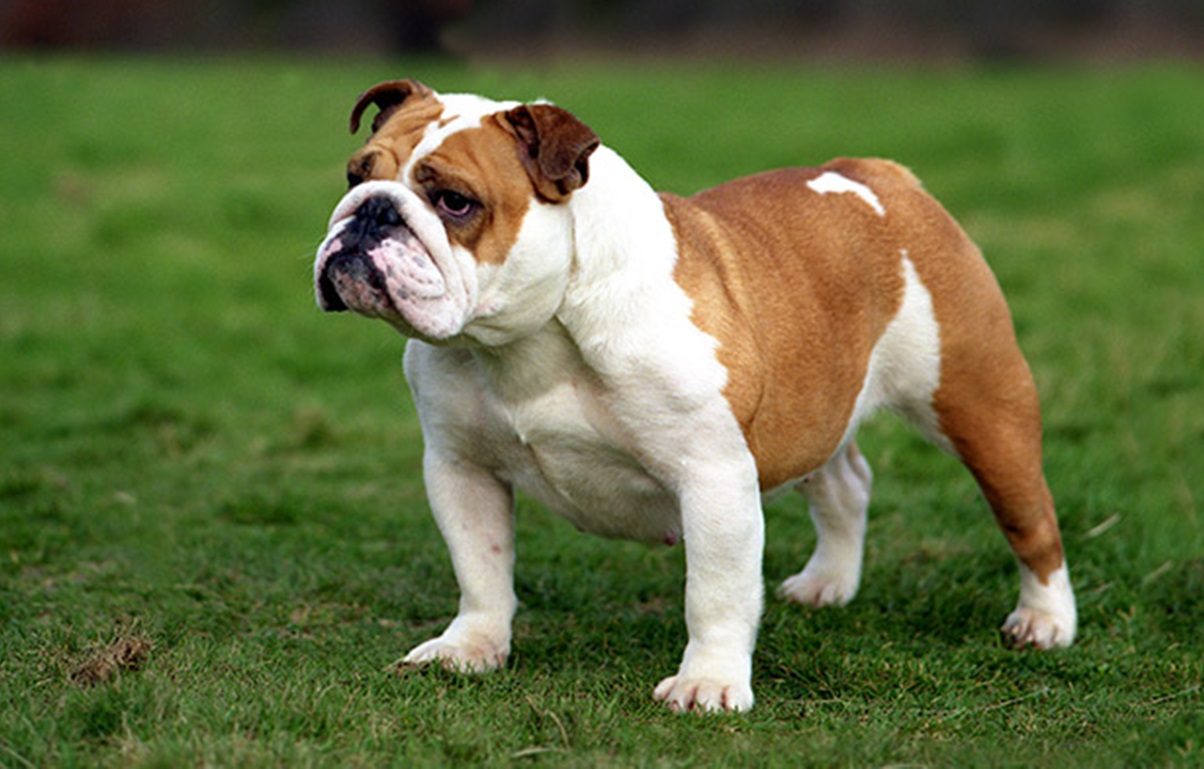
A 4-year-old Bulldog of Champion bloodlines, side view. Note the "rope" over the nose, and pronounced underbite.

Bulldogs have characteristically wide heads and shoulders along with a pronounced mandibular prognathism. There are generally thick folds of skin on the brow; round, black, wide-set eyes; a short muzzle with characteristic folds called a rope or nose roll above the nose; hanging skin under the neck; drooping lips and pointed teeth, and an underbite with an upturned jaw. The coat is short, flat, and sleek with colours of red, fawn, white, brindle, and piebald.[17] Bulldogs have short tails that can either hang down straight or be tucked in a coiled "corkscrew" into a tail pocket.[20]

Dogs weigh approximately 25 kg (55 lb), bitches about 23 kg (50 lb).[2][3] Standard weights in the United States are lower, approximately 50 lb (23 kg) for dogs and 40 lb (18 kg) for bitches.[21]

Temperament

[edit]
Six-month-old Bulldog puppy from AKC Champion bloodlines

According to the American Kennel Club, a Bulldog's disposition should be "equable and kind, resolute, and courageous (not vicious or aggressive), and demeanour should be pacifist and dignified. These attributes should be countenanced by the expression and behaviour".[22]

Bulldogs are known for getting along well with children, other dogs, and other pets.[23][24]

Health

[edit]

Lifespan

[edit]

A 2022 study in the UK of veterinary data found a life expectancy of 7.39 years, the second lowest of all breeds in the study.[25] A 2024 UK study found a life expectancy of 9.8 years for the breed compared to an average of 12.7 for purebreeds and 12 for crossbreeds.[26]

A 2004 UK survey found the leading cause of death of Bulldogs to be cardiac-related (20%), cancer (18%), and old age (9%).[27]

Brachycephaly

[edit]
Three bulldog skulls. From left to right, the face becomes flatter, with a shorter snout and pronounced underbite and protruding jaw.
Evolution of brachycephalia in Bulldogs. Left to right, the skulls are from approximately the 1910s, 1960s, and 1980s.

The shortened snout and pushed in face of the Bulldog is known as brachycephaly.[28][29] Brachycephaly results in deformation of the upper airway tract and leads to obstruction of breathing.[30] Effects of brachycephaly are stridor, stertorous breathing, emesis, skin fold dermatitis, brachycephalic airway obstructive syndrome, exophthalmos, pharyngeal gag reflex, cyanosis, and laryngeal collapse.[31][32][33][34][35][36][37] Other issues arising from brachycephaly are risk of complications while under anaesthesia,[38] and hyperthermia — with the latter caused due to an inability to effectively reduce body temperature via panting.[39] Many airlines ban the breed from flying in the cargo hold due to a high rate of deaths from air pressure interacting poorly with their breathing problems.[40]

Other conditions

[edit]

Statistics from the Orthopedic Foundation for Animals indicate that of the 467 Bulldogs tested between 1979 and 2009 (30 years), 73.9% were affected by hip dysplasia, the highest among all breeds.[41] Similarly, the breed has the worst score in the British Veterinary Association/Kennel Club Hip Dysplasia scoring scheme, although only 22 Bulldogs were tested in the scheme.[42]

A study in England found the Bulldog to have a nearly three times greater risk of patellar luxation, with 2.9% of all Bulldogs having the condition.[43] It is the dog breed that has been found to most often suffer from swimmer puppy syndrome, where the back legs are spread-eagled.[44]

In a 1963 UK study, 17% of Bulldogs surveyed had skin fold dermatitis.[45] The breed is also predisposed to atopic dermatitis.[46]

A study by the Royal Veterinary College found that Bulldogs are a much less healthy breed than average, with over twice the odds of being diagnosed with at least one of the common dog disorders investigated in the study.[47]

Over 80% of Bulldog litters are delivered by Caesarean section because their characteristically large heads can become lodged in the mother's birth canal and to avoid potential breathing problems for the mother during labour.[48][49]

A British study found demodicosis to be more prevalent in the Bulldog than other breeds. The overall prevalence was 1.5% in the breed compared to the 0.17% rate for all dogs. For dogs aged under 2 years, the prevalence was 3.6% compared to 0.48%.[50]

The Bulldog is one of the two most commonly affected breeds for hiatal hernia.[51]

[edit]
A painting of a bulldog standing on a British flag
Bulldogs are a national symbol of British culture; this is a bulldog on a British flag.

In January 2009, after the BBC documentary Pedigree Dogs Exposed, The Kennel Club introduced revised breed standards for the British Bulldog, along with 209 other breeds, to address health concerns. Opposed by the British Bulldog Breed Council, it was speculated by the press that the changes would lead to a smaller head, fewer skin folds, a longer muzzle, and a taller thinner posture, to combat problems with respiration and breeding due to head size and width of shoulders.[52] In 2019 the Dutch Kennel Club implemented some breeding rules to improve the health of the Bulldog. Among these is a fitness test where the dog has to walk 1 km (0.62 miles) in 12 minutes. Its temperature and heart rate have to recover after 15 minutes.[53]

In 2014, the Dutch government forbade the breeding of dogs with a snout shorter than a third of the skull, including Bulldogs, a law that it began enforcing in 2019.[54] In 2022, the Oslo District Court made a ruling that banned the breeding of Bulldogs in Norway due to their propensity for developing health problems. In its verdict the court judged that no dog of this breed could be considered healthy, therefore using them for breeding would be a violation of Norway's Animal Welfare Act.[55][56] The ban on breeding Bulldogs was overturned by Norway's Borgarting Court of Appeal, which ruled that it was legal to breed English bulldogs in Norway.[57]

Cultural significance

[edit]

Bulldogs are often associated with determination, strength, and courage due to their historical occupation, though the modern-day dog is bred for appearance and friendliness and not suited for significant physical exertion. They are often used as mascots by universities, sports teams, and other organisations. Some of the better-known Bulldog mascots include the University of Georgia's Uga, Mississippi State's Bully, Georgetown's Jack, Butler's Blue IV, Yale's Handsome Dan, and the United States Marine Corps' Chesty.[58][59]

The Bulldog originated in England and has a longstanding association with British culture; the BBC wrote: "To many the Bulldog is a national icon, symbolising pluck and determination".[60] During the Second World War, the Prime Minister Winston Churchill was likened to a Bulldog for his defiance of Nazi Germany.[61]

References

[edit]
Revisions and contributorsEdit on WikipediaRead on Wikipedia
from Grokipedia
The Bulldog, also known as the English , is a medium-sized canine breed originating in , selectively developed from mastiff-type dogs for the of as early as the 13th century. Featuring a stocky, low-slung frame, broad chest, and distinctive brachycephalic skull with pronounced facial wrinkles and an undershot jaw, the breed exemplifies muscular tenacity while weighing typically 40-50 pounds for males and exhibiting a calm, affectionate as a modern . Following the 1835 legislative prohibition of under the Cruelty to Animals Act, breeders shifted focus from utility to aesthetics, drastically altering the Bulldog's physique from a more agile, longer-muzzled to the current exaggerated form prone to conformational defects. This transformation, driven by show standards prioritizing extreme and body proportions, has causally linked to elevated rates of brachycephalic obstructive airway syndrome (BOAS), characterized by stenotic nares, elongated soft palates, and hypoplastic tracheas, impairing respiration and . Empirical veterinary data indicate English Bulldogs face over 300% higher odds of breathing disorders, alongside skin fold dermatitis, , and spinal issues, underscoring welfare challenges from intensified artificial selection over natural fitness. Despite these liabilities, the remains iconic for its loyal and cultural symbolism of British resolve, though ongoing debates question the of such breeding practices absent reforms to mitigate inherited pathologies.

Origins and Historical Development

Early Origins and Bull-Baiting Role

The English Bulldog originated in the , where it was selectively bred for the of , a practice documented as early as 1209 when butchers' dogs attacked fighting observed by the Earl of Warren. The breed's development emphasized physical traits suited to confronting large , deriving from larger mastiff-type dogs crossed with more agile varieties to produce compact, tenacious animals capable of gripping and holding a bull's despite violent attempts to dislodge them. Early references to the term "bulldog" appear in literature around 1500 under spellings such as "Bondogge" or "Bolddogge," reflecting its purpose-built role in this arena-based contest where a tethered bull faced multiple dogs until subdued or exhausted. In bull-baiting, which gained popularity from the 13th to 18th centuries, the bulldog's defining qualities included immense jaw strength, pain tolerance, and unrelenting grip, enabling it to target the bull's sensitive nostrils and lip—a tactic believed to weaken the animal by inducing blood loss and fatigue. These dogs, weighing around 40-50 pounds in their working form, were muscular and athletic, contrasting sharply with later companion variants, and were pitted against bulls secured by iron stakes to limit evasion while allowing shaking maneuvers. The sport's brutality demanded breeding for aggression and endurance, with successful dogs often reused across events, contributing to the standardization of the bulldog type by the 18th century. Bull-baiting's prevalence in , often held on public holidays and attended by all social classes, underscored the bulldog's cultural significance until opposition from reformers led to its prohibition under the Cruelty to Animals Act of 1835, which outlawed such animal combats nationwide. Prior to the ban, the practice had persisted despite intermittent royal edicts, such as those under and , highlighting its entrenched appeal as both entertainment and purported tenderizing method for beef, though for the latter remains anecdotal. This legislative shift marked the end of the bulldog's primary utilitarian function, prompting subsequent adaptations away from its origins in combat.

Transition from Working Dog to Companion Breed

Following the Cruelty to Animals Act of 1835, which outlawed in , the original working bulldog faced near as demand for its aggressive utility diminished sharply. Breeders shifted focus from combat prowess to companionship qualities, selectively breeding for reduced ferocity, smaller size, and more docile temperament to preserve the breed as a household pet rather than a sporting . This pivot emphasized aesthetic traits over athleticism, initiating the transformation into the modern companion form by the mid-19th century. By around 1860, exhibition breeding gained prominence, with enthusiasts refining the bulldog for dog shows that incentivized exaggerated physical features like a pronounced underjaw and compact build, diverging further from its agile, muscular ancestors. The first formal appeared in 1865, codifying these companion-oriented ideals and standardizing conformation for non-working roles. Early clubs, such as one formed in in 1864, supported this evolution by promoting the breed's gentler persona and visual appeal in competitive settings. This show-centric breeding, accelerated by the rise of organized dog exhibitions starting in , solidified the bulldog's status as a sedentary companion by the late , prioritizing and low-energy traits suited to urban homes over historical . Consequently, the breed's rebounded, but at the cost of diminished functionality, with later generations exhibiting trade-offs from intensified selective pressures.

Breed Characteristics

Physical Appearance and Conformation

The English Bulldog exhibits a distinctive conformation characterized by a thick-set, low-slung body that conveys stability and strength, with a smooth coat, massive short-faced head, wide shoulders, and sturdy limbs set close to the body. This build results in a pear-shaped outline when viewed from above, emphasizing compactness and power rather than height or speed. Mature males typically weigh approximately 50 pounds (23 kg), while females weigh about 40 pounds (18 kg), with height at the shoulder generally ranging from 12 to 16 inches, though the prioritizes proportional mass over exact measurements. The United Kingdom's standard specifies slightly higher weights of 55 pounds (25 kg) for dogs and 50 pounds (23 kg) for bitches, underscoring the breed's dense musculature without excess fat. The head is a defining feature, featuring a large, broad, and square with a at least equal to the at the shoulders, marked by loose wrinkles around the cheeks and that fold without exaggeration. The muzzle is very short, broad, and turned upward, with a pronounced under that projects beyond the upper jaw, forming a decided underbite essential to the breed's resolute expression; the is large, broad, and black, set between wide-open nostrils. Eyes are set low and wide apart, round and dark, while small, thin rose-shaped ears are carried high on the . The neck is short, thick, and deeply arched, merging into powerful, sloping shoulders that support the broad, deep chest. The body is capacious with full sides and well-sprung ribs, forming a roach back that arches slightly over the before descending to muscular hindquarters; the is short, either straight or screwed, and carried low. Forelegs are short, straight, and muscular, set wide apart to accommodate the expansive chest, while hind legs are longer and more angled, providing propulsion in the breed's characteristic loose-jointed, shuffling that rolls sidewise without restraint. The coat is fine, short, flat, and glossy, adhering closely to the contours of the heavy-boned frame, with colors ranging from solid red, white, or fawn to or patterns, though solid black is undesirable in American standards. These traits, codified in early 20th-century standards, reflect for a compact, low-center-of-gravity form originally suited to in confined spaces, though modern exemplars prioritize symmetrical proportions over functional extremes.

Temperament and Behavioral Traits

The English Bulldog exhibits a marked by , , resoluteness, and , without tendencies toward viciousness or aggression, as delineated in the breed's official standard. This disposition manifests as a pacific and dignified demeanor, with the dog displaying devotion and friendliness toward humans, often soliciting attention and forming strong bonds with family members. Empirical observations from breed registries note the dog's predictability and dependability, rendering it a stable companion rather than a high-drive . Loyalty is a prominent trait, with Bulldogs demonstrating protectiveness over their household while remaining non-aggressive toward strangers unless provoked. They are generally tolerant and gentle with children, tolerating handling without undue reactivity, though supervision is advised due to the breed's physical bulk potentially leading to accidental knocks during play. Socialization from puppyhood enhances compatibility with other pets, as unsocialized individuals may exhibit wariness or selective aggression toward unfamiliar dogs, a vestige of selective pressures for tenacity in historical roles. A notable behavioral characteristic is stubbornness, stemming from the breed's independent nature and low motivation for repetitive tasks, which demands consistent, positive reinforcement in training to avoid willful resistance. This trait, while challenging, coexists with an overall laid-back energy level; Bulldogs prefer sedentary activities, often described as "couch potatoes," with minimal exercise requirements beyond short walks to prevent obesity. Vocalizations such as snoring, snorting, and grunting are common, reflecting brachycephalic physiology rather than distress, and do not indicate temperament flaws. Breed experts emphasize early obedience training to channel inherent courage constructively, mitigating potential for resource guarding or lethargy-induced behavioral inertia.

Health Profile

Lifespan and General Vitality

The median lifespan of English Bulldogs, based on analysis of primary-care veterinary records from over 4,000 dogs in the UK, is 7.2 years, substantially lower than the 12-year average for companion dogs overall. This figure aligns with broader veterinary data indicating life expectancies around 7.4 years for the breed, reflecting the impact of conformational extremes on longevity. While some breed-specific estimates range from 8 to 10 years, these often derive from owner reports or club data prone to selection bias toward healthier individuals, whereas population-level vet records provide a more comprehensive view including euthanasia due to welfare-compromising conditions. English Bulldogs demonstrate generally low vitality, marked by sedentary behavior, poor heat tolerance, and limited endurance for , stemming directly from their brachycephalic structure and compact build that restrict efficient respiration and . Owners report frequent overheating even in moderate conditions, with —a common issue exacerbating strain and respiratory burden—affecting up to 40% of the breed in clinical populations. These traits result in a healthspan often curtailed by early-onset mobility limitations and chronic fatigue, though attentive management of diet and environment can extend functional years modestly. Veterinary assessments underscore that inherent breed predispositions, rather than solely environmental factors, drive this diminished vigor, with Bulldogs reaching reduced milestones earlier than non-brachycephalic peers.

Brachycephalic and Respiratory Challenges

English Bulldogs suffer from brachycephalic obstructive airway syndrome (BOAS), a condition arising from their genetically shortened and muzzle, which narrows the nasal passages, elongates the , and everts the laryngeal saccules, collectively impeding airflow. This results in increased respiratory resistance and effort, exacerbated by secondary complications like laryngeal in severe cases. Common symptoms include noisy breathing, snoring even when awake, exercise intolerance, heat sensitivity, and gagging or regurgitation, with affected dogs often exhibiting cyanosis during exertion or in warm environments. English Bulldogs display particularly severe manifestations compared to other brachycephalic breeds, with higher rates of complications such as aspiration pneumonia due to impaired swallowing and airway protection. A 2022 VetCompass study of UK primary-care records found English Bulldogs had 3.5 times the odds of upper respiratory tract disorders compared to other breeds, highlighting the breed's predisposition. BOAS significantly shortens lifespan and impairs quality of life; brachycephalic breeds like the English Bulldog have an average lifespan of 8.6 years, approximately three years less than non-brachycephalic counterparts, partly attributable to respiratory distress and related comorbidities. worsens symptoms by adding mechanical load on the airway, while environmental factors like high temperatures can precipitate life-threatening heatstroke due to inefficient panting. Diagnosis typically involves clinical examination, including assessment of respiratory noise and endoscopic evaluation to grade severity, with surgical interventions—such as resection, alar plasty, and sacculectomy—offered for moderate to severe cases to alleviate obstruction, though complications occur in up to 15.5% of procedures and mortality in 7%. Conservative management includes weight control, harness use over collars, and avoidance of stressors, but these measures provide only partial relief in genetically compromised individuals.

Reproductive and Orthopedic Issues

English Bulldogs exhibit severe reproductive challenges primarily attributable to their exaggerated brachycephalic conformation, including a disproportionately large relative to the dam's narrow , which frequently results in dystocia and necessitates cesarean sections for nearly all deliveries. Studies indicate that 86% of English Bulldog litters require surgical intervention rather than natural whelping. An international survey of breeders reported cesarean sections in 94.8% of cases, with the majority classified as emergencies due to or fetal distress. These difficulties stem from for extreme traits that prioritize appearance over functionality, rendering natural mating and parturition biomechanically improbable without veterinary assistance, such as or elective surgery. Associated risks include elevated puppy mortality, with neonatal death rates reaching 14.9% post-cesarean in English Bulldogs, exceeding general canine averages due to complications like hypoxia during dystocia. Broader data on brachycephalic breeds show and early mortality up to 20% in predisposed lines, compounded by smaller litter sizes averaging 4-5 pups and higher incidences of congenital defects from . Bitches face repeated surgical stress, increasing maternal mortality risks to approximately 1-2% per litter in high-dystocia breeds, though prompt intervention mitigates some outcomes. Orthopedic disorders in English Bulldogs arise from dysplastic joint development and spinal malformations exacerbated by their compact, low-slung build and breeding for conformational extremes, leading to chronic pain and mobility limitations. Hip dysplasia, characterized by malformed acetabulum-femoral head articulation, affects a substantial proportion of the breed, often manifesting subclinically in youth but progressing to lameness, arthritis, and reduced weight-bearing capacity. Radiographic evaluations reveal high prevalence of hip and elbow dysplasia, with over 50% of examined Bulldogs showing abnormalities correlating to gait asymmetries and altered limb loading. These conditions result from genetic predispositions amplified by rapid growth in heavy-bodied pups, causing joint laxity and secondary osteoarthritis. Additional orthopedic concerns include patellar luxation and vertebral anomalies such as hemivertebrae, which contribute to instability and potential , particularly in lines with "screw tails" from caudal dysgenesis. typically involves conservative therapies like weight control and anti-inflammatories, but severe cases require surgical corrections such as femoral head ostectomy, with outcomes varying by early detection. Despite these issues, many Bulldogs maintain functionality through adaptation, though population-level data underscore the breed's elevated morbidity from such heritable skeletal deviations.

Dermatological and Other Conditions

English Bulldogs are predisposed to skin fold dermatitis, also known as , due to their excessive facial and body wrinkles that trap moisture, debris, and bacteria, leading to inflammation and secondary bacterial or yeast infections such as . Annual prevalence of skin fold dermatitis reaches 6.1% in English Bulldogs, significantly higher than in non-brachycephalic breeds. Affected areas commonly include facial folds, tail pockets, and vulvar regions, with clinical signs including redness, odor, ulceration, and discomfort; untreated cases can progress to chronic infections requiring surgical correction of folds in severe instances. Atopic dermatitis and food allergies further exacerbate skin issues, manifesting as pruritus, recurrent , and , with environmental allergens playing a key role in genetically susceptible individuals. Beyond dermatological concerns, English Bulldogs exhibit elevated rates of ocular disorders, including , where eyelids roll inward causing corneal irritation; (prolapsed nictitating membrane gland); keratoconjunctivitis sicca (dry eye); and corneal ulcers, often linked to their prominent eyes and shallow orbits. infections () affect 12.7% of the breed annually, stemming from narrow ear canals, allergic predisposition, and conformational factors that hinder ventilation. Endocrine issues like occur with increasing frequency, resulting in lethargy, weight gain, and secondary skin infections due to impaired immune function and seborrhea. Cardiovascular conditions, particularly and congestive heart failure, represent a leading cause of mortality, with genetic factors and contributing to ventricular dilation and arrhythmias. impacts 8.7% of English Bulldogs, exacerbating multiple comorbidities through increased mechanical stress and metabolic dysregulation, though it is largely preventable via diet and exercise management. These conditions underscore the breed's vulnerability to conformational extremes, with veterinary interventions focusing on early screening, topical therapies, and lifestyle modifications to mitigate progression.

Breeding Practices and Ethical Considerations

Selective Breeding History and Standards

The Bulldog breed originated in England during the 13th century, selectively bred from larger mastiff-type dogs for the blood sport of bull-baiting, which involved dogs gripping and holding tethered bulls by the nose or neck to immobilize them. This required traits like immense strength, tenacity, and a powerful jaw, with the first recorded bull-baiting event occurring in 1210 under King John. Breeders emphasized dogs that could withstand punishment while maintaining an unyielding hold, often crossing regional variants to enhance these combat attributes. Following the 1835 Cruelty to Animals Act, which outlawed , the breed faced near extinction as its primary utility vanished, prompting breeders to redirect selective efforts toward companionship and exhibition. Enthusiasts reduced the dog's size from around 50-80 pounds to 40-50 pounds, tempered its aggression into docility, and accentuated conformational features such as a shortened muzzle, exaggerated wrinkles, and a stocky build to appeal to Victorian-era show standards. By the mid-19th century, crosses with pugs and other breeds introduced smoother coats and further miniaturized the frame, shifting the focus from functional athleticism to ornamental aesthetics. The first formal breed standard emerged in 1865 with the "PhiloKuon" guidelines, prioritizing a broad head, undershot , and muscular physique while codifying the transition to a sedentary companion. The Kennel Club in England recognized the Bulldog in 1873, adopting standards that described an ideal specimen as thick-set, low-slung, with a massive , wide nostrils, and a body of "great breadth and strength." These were mirrored by the Bulldog Club of America in 1890, emphasizing , vigor, and traits like a straight topline and turned-out feet, though later interpretations intensified brachycephalic features through closed stud books and show-ring preferences. Modern standards, such as those from the , retain these descriptors, requiring a minimum of 50 pounds for males and mandating exaggerated head proportions that reflect over a century of aesthetic-driven selection.

Criticisms of Modern Breeding for Extreme Traits

Modern breeding of English Bulldogs emphasizes extreme conformational traits, including severe , excessive , a compact body with short limbs, and a pronounced underbite, which have intensified since the early through selective pressures favoring show standards over functionality. These traits, while visually distinctive, impose significant physiological burdens, as evidenced by veterinary epidemiological data showing English Bulldogs experience a lifespan of 8.6 years, compared to 12.7 years for non- or moderately brachycephalic breeds. Critics, including veterinary researchers and animal welfare organizations, argue that such breeding prioritizes aesthetic exaggeration over , resulting in brachycephalic obstructive airway syndrome (BOAS), which causes chronic respiratory distress, , and heat vulnerability due to narrowed nasal passages and elongated soft palates. A 2022 VetCompass study of over 3,000 English Bulldogs in the UK found they were predisposed to 32 specific disorders at higher rates than other breeds, including (20.6%), skin infections (8.8%), and ear infections (12.7%), with overall health profiles indicating twice the annual risk of multiple conditions compared to non-Bulldogs. Upper respiratory disorders accounted for 17% of deaths in extreme brachycephalic breeds like Bulldogs, versus 0% in non-extreme types, underscoring a causal link between skull morphology and mortality. Ethical concerns center on the perpetuation of for human preference, with genetic analyses revealing insufficient diversity in the Bulldog gene estimated at under 100—to enable health improvements without , which many breed clubs resist to preserve "type." Professionals warn that unsustainable practices in breeds like lead to inherited diseases and reduced vitality, prompting calls for regulatory intervention; for instance, Norway's 2018 ruling banned breeding Bulldogs with extreme features after of chronic welfare compromises. While some breeders attribute issues to poor practices rather than inherent traits, empirical data consistently ties conformational extremes to compromised function, challenging claims of viability without reform.

Advocacy for Healthier Breeding Lines and Variants

Advocates for healthier bulldog breeding lines argue that should prioritize functional traits such as improved respiratory capacity, athleticism, and reproductive viability over exaggerated conformational extremes that exacerbate health disorders. Veterinary researchers and breed enthusiasts have called for crossbreeding with less brachycephalic dogs to introduce and moderate skull shapes, as purebred English Bulldogs exhibit diminished vitality due to intensified selective pressures for flat faces and compact bodies since the mid-20th century. A 2016 analysis suggested that represents a viable path to restore baseline health metrics, including better and exercise tolerance, which empirical data link to longer muzzles and proportionate limb structures. The exemplifies such efforts, developed in the 1970s through targeted crosses of English Bulldogs with American Bulldogs, Bullmastiffs, and other breeds to recapture pre-19th-century bulldog morphology. Proponents highlight its taller stature (up to 24 inches at the shoulder), longer snout, and enhanced agility, which correlate with reduced incidence of brachycephalic obstructive airway syndrome (BOAS) and extended lifespan averaging 10-14 years compared to the English Bulldog's 6-8 years. Breeders advocate genetic screening for hereditary conditions like and eye disorders prior to mating, asserting that these lines achieve natural whelping rates exceeding 80% without surgical interventions common in standard English Bulldogs. Similarly, the Continental Bulldog, originating from Danish breeding experiments in the early 2000s, seeks to refine bulldog traits by emphasizing moderate and robust skeletal proportions for improved mobility and endurance. Developers focused on to achieve silent and unassisted births, with protocols mandating orthopedic evaluations and cardiac screenings to exclude substandard individuals from reproduction. Advocates within European circles promote this variant as a welfare-oriented alternative, citing lower veterinary costs and fewer dermatological complications attributable to better airflow and reduced skin folds. In , a structured five-year breeding strategy for English Bulldogs, launched around 2015, directs breeders to score dogs on key welfare indicators like patency and efficiency, penalizing extremes in breed standards to foster gradual phenotypic shifts toward functionality. This approach, endorsed by data analyses showing disproportionate claims for respiratory and orthopedic issues in the breed, underscores empirical incentives for reform, though implementation faces resistance from traditionalist show circuits prioritizing aesthetics.

Breed-Specific Legislation and Restrictions

encompasses laws that impose restrictions or bans on dog ownership based on , typically justified by concerns over public safety and risks. The English Bulldog, selectively bred since the 19th century from its bull-baiting ancestors into a companion with reduced tenacity and heightened docility, is rarely targeted by such measures. Behavioral analyses indicate English Bulldogs pose a lower-than-expected risk relative to their body mass and historical , with documented cases of severe bites underrepresented in national statistics dominated by breeds like terriers and . In the United States, where BSL operates at the municipal and county levels rather than statewide in most cases, English Bulldogs encounter few prohibitions; targeted breeds commonly include American Bulldogs, Akitas, and Chow Chows, but not the brachycephalic English variety. For example, ordinances in cities like , , or , focus on pit bull phenotypes without extending to English Bulldogs, whose distinct facial structure and temperament differentiate them visually and behaviorally. Owners in regulated areas may still face general leashing requirements, but breed-specific muzzling or sterilization mandates are exceptional and often stem from misidentification under vague "bully breed" umbrellas rather than empirical data. Internationally, frameworks like the 's Dangerous Dogs Act of 1991 prohibit terriers and similar fighting breeds but exempt English Bulldogs, reflecting their low involvement in attack fatalities—none recorded in UK government data from 2005 to 2023 attributable solely to the breed. In contrast, broad categorizations in some locales, such as certain Australian states or Bermuda's prohibitions on "perceived dangerous" types, occasionally encompass bulldog-like appearances, though enforcement rarely applies to English Bulldogs absent individual incident history. Critics of BSL, including veterinary associations, argue it fails to correlate breed labels with causation, as aggression arises more from ownership factors like or poor than alone, a view substantiated by studies showing no for blanket restrictions.

International Bans and Welfare Regulations

In , a 2022 district court ruling initially prohibited the breeding of English Bulldogs under Section 25 of the Animal Welfare Act, which bans practices causing animals pain, suffering, or reduced vitality, citing the breed's predisposition to brachycephalic obstructive airway syndrome, spinal issues, and other hereditary conditions resulting from extreme conformational standards. On appeal, the Court of Appeal overturned the ban for English Bulldogs while upholding it for Cavalier King Charles Spaniels, determining that Bulldog breeding could comply with welfare laws if aligned with revised Norwegian Kennel Club guidelines emphasizing healthier phenotypes, such as longer muzzles and improved respiratory function. The affirmed this in October 2023, mandating that any breeding outside these frameworks violates the Act, with fines up to 6,000 euros for non-compliance, though existing Bulldogs remain legal to own. Elsewhere in Europe, no outright national bans on Bulldog breeding exist as of 2025, but regulatory scrutiny has intensified over welfare impacts of exaggerated . In the , a 2023 proposal by the seeks to prohibit the sale and eventual ownership of dogs with "harmful" traits like severe , potentially affecting extreme-type Bulldogs, building on a 2014 breeding ban for similar features in other . A 2023 Eurogroup for Animals report mapping European legislation found no uniform prohibitions on extreme breeds but highlighted varying national controls, such as Germany's restrictions on breeding dogs unable to reproduce naturally without , which applies to many Bulldogs requiring cesarean sections in over 80% of cases. At the level, a December 2023 Commission proposal establishes minimum welfare standards for dog breeding, including bans on and requirements for screenings, with amendments in June 2025 adding via microchipping and prohibitions on , though breed-specific measures remain absent. Internationally, bodies like the World Small Animal Veterinary Association have responded to cases like Norway's by advocating monitoring and over outright bans, arguing that targeted reforms to breed standards—such as those trialed in the UK Kennel Club's 2009 revisions—better address causal factors like closed studbooks exacerbating health declines without eliminating the breed. Veterinary consensus, including from the British Veterinary Association, links regulatory pushes to empirical data showing Bulldogs' average lifespan of 6-8 years, with studies estimating 50-70% exhibiting clinical respiratory distress, prompting calls for evidence-based limits on trait exaggeration rather than possession bans.

Cultural and Societal Role

Symbolism in Institutions and Media

The English bulldog has long symbolized British tenacity, courage, and stubborn determination, qualities encapsulated in the phrase "British Bulldog spirit" that emerged during the 19th century. This association peaked during , when was likened to a bulldog for his resolute leadership against , embodying national resilience and unyielding resolve. The breed's image was leveraged in wartime , including cartoons depicting Churchill as a bulldog to rally Allied forces and project defiance. In educational institutions, particularly universities, the bulldog serves as a representing strength, loyalty, and fighting spirit. introduced , the first live college , as an English bulldog in 1889, symbolizing the school's competitive ethos. The University of Georgia's Uga line of white English bulldogs, starting in 1956, epitomizes and institutional pride, with the mascot attending games and events to foster community spirit. Other institutions, such as Fresno State and UNC Asheville, adopted bulldogs in the to evoke similar attributes of perseverance and team unity. Media portrayals reinforce the bulldog's symbolic role as a figure of toughness and reliability, often in and films where it represents unwavering protection or grit. During , the bulldog's image extended to international media as a stand-in for British endurance, influencing postwar depictions in cartoons and logos. In modern contexts, such as , the breed embodies loyalty and stability, though some critiques note health concerns in exaggerated traits that may undermine the symbol's vitality. The English bulldog has been a prominent symbol in , often embodying resilience, loyalty, and British tenacity. During , it was leveraged in British propaganda as the "Bulldog Spirit," representing defiance against , with imagery associating Winston Churchill's stubborn resolve to the breed's determined expression and physique. This wartime symbolism persists, positioning the bulldog as a national icon of pluck and endurance in British media and lore. In American , English bulldogs serve as s for over 40 universities, including Yale's , introduced in 1892 as the first live animal in collegiate sports, and the University of Georgia's Uga line, which has attended events since 1956. Other notable examples include Georgetown University's Jack the Bulldog and Mississippi State's Bully, reinforcing the breed's image as tough yet affable in sports media. In animation and film, bulldogs appear as characters like Spike in (debuting 1942), portraying protective, gruff loyalty, and in features such as (1988) and 101 Dalmatians (1996 live-action), where they contribute to narratives of steadfast companionship. Public perception of bulldogs blends admiration for their perceived and amiability with growing over vulnerabilities from extreme breeding traits. Owners and enthusiasts often describe them as friendly, low-energy companions despite their muscular, wrinkled appearance evoking toughness, contributing to their ranking among top U.S. breeds by registration numbers through the . However, veterinary studies, such as a analysis of over 800 English bulldogs, reveal they suffer disorders at more than twice the rate of other breeds, including respiratory, skin, and mobility issues tied to and body conformation, prompting calls from institutions like Veterinary College to discourage purchases favoring healthier phenotypes. This data has shifted some public discourse toward welfare concerns, with media coverage highlighting ethical breeding debates, though the breed retains cultural cachet as a of unyielding spirit.

References

Add your contribution
Related Hubs
User Avatar
No comments yet.