
Recent from talks
Fringing reef
Knowledge base stats:
Talk channels stats:
Members stats:
Fringing reef
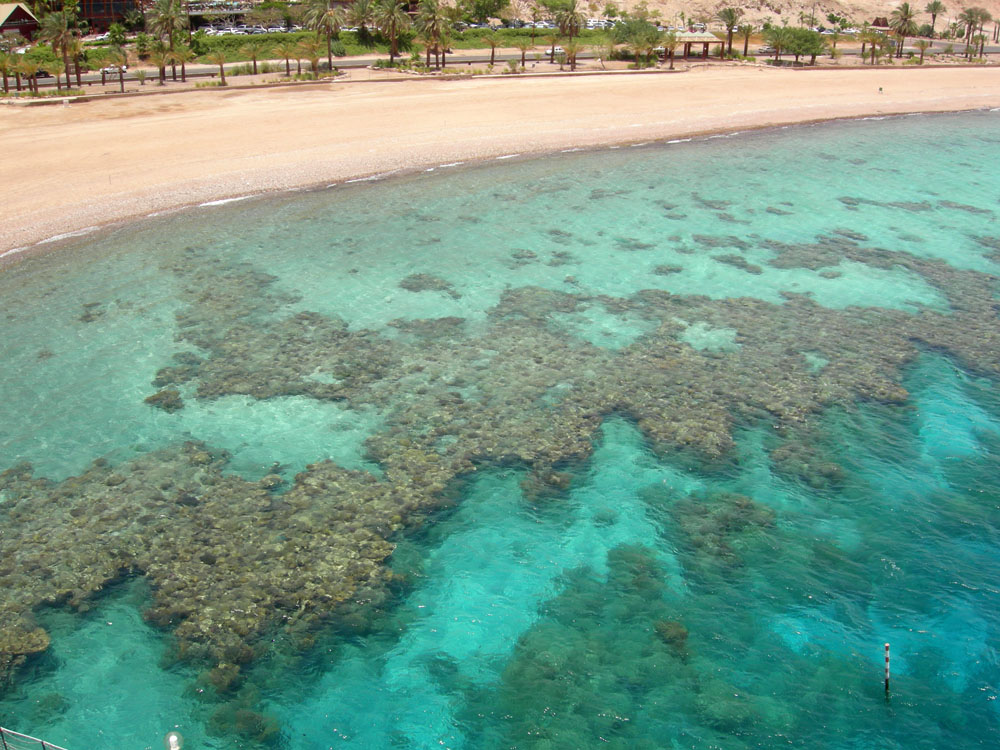
A fringing reef is one of the three main types of coral reef. It is distinguished from the other main types, barrier reefs and atolls, in that it has either an entirely shallow backreef zone (lagoon) or none at all. If a fringing reef grows directly from the shoreline, then the reef flat extends to the beach and there is no backreef. In other cases (e.g., most of the Bahamas), fringing reefs may grow hundreds of yards from shore and contain extensive backreef areas within which it contains food and water. Some examples of this are Philippines, Indonesia, Timor-Leste, the western coast of Australia, the Caribbean, East Africa, and Red Sea. Charles Darwin believed that fringing reefs are the first kind of reefs to form around a landmass in a long-term reef growth process. The largest fringing coral reef in the world is the Ningaloo Reef, stretching to around 260 km (160 mi) along the coastline of Western Australia.
There are few differences between fringing reefs and barrier reefs. Distinguishing between these two reef types involves assessing the depth of the lagoon behind the back reef. Barrier reefs feature deeper sections within the lagoon, while fringing reefs lack such depths. Additionally, a notable contrast lies in their proximity to the shore: barrier reefs are typically located much farther away from the coastline compared to fringing reefs.
There are two main components that make up a fringing reef: the reef flat and the reef slope.
The reef flat is the shoreward, flat, broadest area of the reef. The reef flat is found in fairly shallow water and can be uncovered during low tide. This area of the reef is only slightly sloped towards the open ocean. Since the reef flat is adjacent or nearly adjacent to land, it sustains the most damage from runoff and sediments. Typically, few of the flat's corals are alive. Seagrasses, seaweeds, and soft corals are often found there.
The reef slope is positioned at the outer edge of the fringing reef, bordering the open ocean. Usually characterized by a steep inclination, this part of the reef either descends to a relatively shallow sandy base or extends to depths too significant to facilitate the growth of coral. The diminished presence of runoff and sediments on this slope contributes to a higher abundance of coral and a broader variety of coral species. Greater wave action disperses pollutants while transporting nutrients to this specific area. A prevalent characteristic found on the fore reef involves the creation of spur-and-groove formations, facilitating the downslope transportation of sediment within the groove.
The upper segment of this slope is known as the reef crest. This crest enjoys an optimal balance of sunlight exposure and wave action, fostering the fastest coral growth in this area. Conversely, the base of the slope receives the least amount of sunlight and consequently exhibits the slowest growth among all sections of the slope.
Fringing reefs are located near shore in the tropics in many areas and are the most common reef type. Coral reefs are found in the tropics in which the water is between 18 and 30 °C (64 and 86 °F). Many of the Great Barrier Reef's components are actually fringing reefs. Of the close to 3,400 individual reefs, 760 are fringing reefs. Fringing reefs are the most common type of reef found in the Philippines, Indonesia, Timor-Leste, the western coast of Australia, the Caribbean, East Africa, and Red Sea.
The largest fringing coral reef in the world is the Ningaloo Reef, stretching to around 260 km (160 mi) along the coastline of Western Australia.
Hub AI
Fringing reef AI simulator
(@Fringing reef_simulator)
Fringing reef
A fringing reef is one of the three main types of coral reef. It is distinguished from the other main types, barrier reefs and atolls, in that it has either an entirely shallow backreef zone (lagoon) or none at all. If a fringing reef grows directly from the shoreline, then the reef flat extends to the beach and there is no backreef. In other cases (e.g., most of the Bahamas), fringing reefs may grow hundreds of yards from shore and contain extensive backreef areas within which it contains food and water. Some examples of this are Philippines, Indonesia, Timor-Leste, the western coast of Australia, the Caribbean, East Africa, and Red Sea. Charles Darwin believed that fringing reefs are the first kind of reefs to form around a landmass in a long-term reef growth process. The largest fringing coral reef in the world is the Ningaloo Reef, stretching to around 260 km (160 mi) along the coastline of Western Australia.
There are few differences between fringing reefs and barrier reefs. Distinguishing between these two reef types involves assessing the depth of the lagoon behind the back reef. Barrier reefs feature deeper sections within the lagoon, while fringing reefs lack such depths. Additionally, a notable contrast lies in their proximity to the shore: barrier reefs are typically located much farther away from the coastline compared to fringing reefs.
There are two main components that make up a fringing reef: the reef flat and the reef slope.
The reef flat is the shoreward, flat, broadest area of the reef. The reef flat is found in fairly shallow water and can be uncovered during low tide. This area of the reef is only slightly sloped towards the open ocean. Since the reef flat is adjacent or nearly adjacent to land, it sustains the most damage from runoff and sediments. Typically, few of the flat's corals are alive. Seagrasses, seaweeds, and soft corals are often found there.
The reef slope is positioned at the outer edge of the fringing reef, bordering the open ocean. Usually characterized by a steep inclination, this part of the reef either descends to a relatively shallow sandy base or extends to depths too significant to facilitate the growth of coral. The diminished presence of runoff and sediments on this slope contributes to a higher abundance of coral and a broader variety of coral species. Greater wave action disperses pollutants while transporting nutrients to this specific area. A prevalent characteristic found on the fore reef involves the creation of spur-and-groove formations, facilitating the downslope transportation of sediment within the groove.
The upper segment of this slope is known as the reef crest. This crest enjoys an optimal balance of sunlight exposure and wave action, fostering the fastest coral growth in this area. Conversely, the base of the slope receives the least amount of sunlight and consequently exhibits the slowest growth among all sections of the slope.
Fringing reefs are located near shore in the tropics in many areas and are the most common reef type. Coral reefs are found in the tropics in which the water is between 18 and 30 °C (64 and 86 °F). Many of the Great Barrier Reef's components are actually fringing reefs. Of the close to 3,400 individual reefs, 760 are fringing reefs. Fringing reefs are the most common type of reef found in the Philippines, Indonesia, Timor-Leste, the western coast of Australia, the Caribbean, East Africa, and Red Sea.
The largest fringing coral reef in the world is the Ningaloo Reef, stretching to around 260 km (160 mi) along the coastline of Western Australia.
Recent media