
Recent from talks
Caribbean Sea
Knowledge base stats:
Talk channels stats:
Members stats:
Caribbean Sea
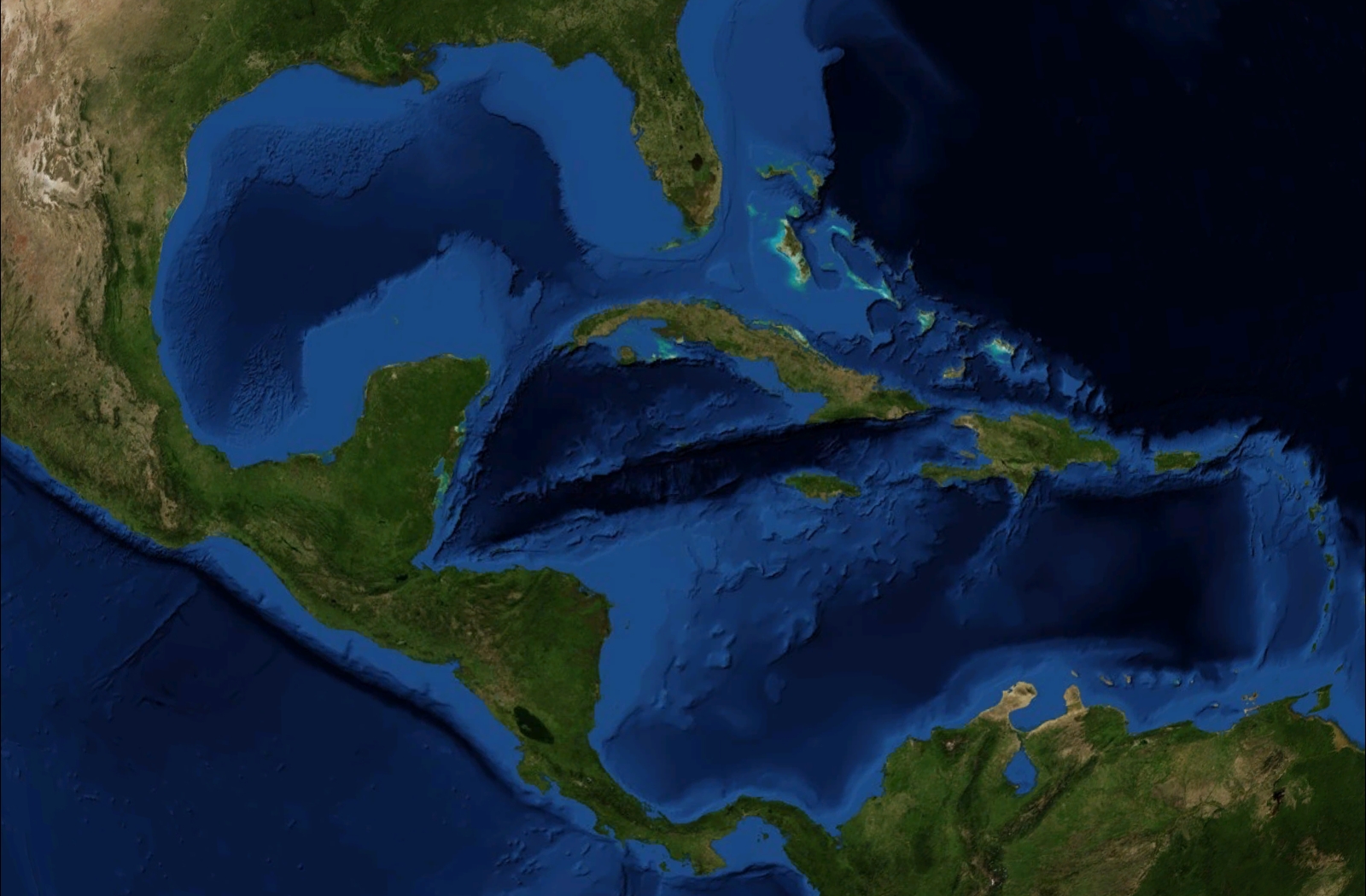
The Caribbean Sea is a sea of the North Atlantic Ocean in the tropics of the Western Hemisphere, located south of the Gulf of Mexico and southwest of the Sargasso Sea. It is bounded by the Greater Antilles to the north from Cuba to Puerto Rico, the Lesser Antilles to the east from the Virgin Islands to Trinidad and Tobago, South America to the south from the Venezuelan coastline to the Colombian coastline, and Central America and the Yucatán Peninsula to the west from Panama to Mexico. The geopolitical region around the Caribbean Sea, including the numerous islands of the West Indies and adjacent coastal areas in the mainland of the Americas, is known as the Caribbean.
The Caribbean Sea is one of the largest seas on Earth and has an area of about 2,754,000 km2 (1,063,000 sq mi). The sea's deepest point is the Cayman Trough, between the Cayman Islands and Jamaica, at 7,686 m (25,217 ft) below sea level. The Caribbean coastline has many gulfs and bays: the Gulf of Gonâve, the Gulf of Venezuela, the Gulf of Darién, Golfo de los Mosquitos, the Gulf of Paria and the Gulf of Honduras.
The Caribbean Sea has the world's second-largest barrier reef, the Mesoamerican Barrier Reef. It runs 1,000 km (620 mi) along the Mexico, Belize, Guatemala, and Honduras coasts.
The name Caribbean derives from the Caribs, one of the region's dominant native people at the time of Europe and contact during the late 15th century. After Christopher Columbus landed in The Bahamas in 1492 and later discovered some of the islands in the Caribbean, the Spanish term Antillas applied to the lands; stemming from this, the Sea of the Antilles became a common alternative name for the "Caribbean Sea" in various European languages. Spanish dominance in the region remained undisputed during the first century of European colonization.
From the 16th century, Europeans visiting the Caribbean region distinguished the "South Sea" (the Pacific Ocean south of the isthmus of Panama) from the "North Sea" (the Caribbean Sea north of the same isthmus).
The Caribbean Sea had been unknown to the populations of Eurasia until after 1492, when Christopher Columbus sailed into Caribbean waters to find a sea route to Asia. At that time, the Americas were generally unknown to most Europeans, although they had been visited in the 10th century by the Vikings. After Columbus's discovery of the islands, the area was quickly colonized by several Western cultures (initially Spain, then later England, the Dutch Republic, France, Courland and Denmark). After colonization of the Caribbean islands, the Caribbean Sea became a busy area for European-based marine trading and transports. The commerce eventually attracted pirates such as Samuel Bellamy and Blackbeard.
As of 2015[update] the area is home to 22 island territories and borders 12 continental countries.[citation needed]
The International Hydrographic Organization defines the limits of the Caribbean Sea as follows:
Hub AI
Caribbean Sea AI simulator
(@Caribbean Sea_simulator)
Caribbean Sea
The Caribbean Sea is a sea of the North Atlantic Ocean in the tropics of the Western Hemisphere, located south of the Gulf of Mexico and southwest of the Sargasso Sea. It is bounded by the Greater Antilles to the north from Cuba to Puerto Rico, the Lesser Antilles to the east from the Virgin Islands to Trinidad and Tobago, South America to the south from the Venezuelan coastline to the Colombian coastline, and Central America and the Yucatán Peninsula to the west from Panama to Mexico. The geopolitical region around the Caribbean Sea, including the numerous islands of the West Indies and adjacent coastal areas in the mainland of the Americas, is known as the Caribbean.
The Caribbean Sea is one of the largest seas on Earth and has an area of about 2,754,000 km2 (1,063,000 sq mi). The sea's deepest point is the Cayman Trough, between the Cayman Islands and Jamaica, at 7,686 m (25,217 ft) below sea level. The Caribbean coastline has many gulfs and bays: the Gulf of Gonâve, the Gulf of Venezuela, the Gulf of Darién, Golfo de los Mosquitos, the Gulf of Paria and the Gulf of Honduras.
The Caribbean Sea has the world's second-largest barrier reef, the Mesoamerican Barrier Reef. It runs 1,000 km (620 mi) along the Mexico, Belize, Guatemala, and Honduras coasts.
The name Caribbean derives from the Caribs, one of the region's dominant native people at the time of Europe and contact during the late 15th century. After Christopher Columbus landed in The Bahamas in 1492 and later discovered some of the islands in the Caribbean, the Spanish term Antillas applied to the lands; stemming from this, the Sea of the Antilles became a common alternative name for the "Caribbean Sea" in various European languages. Spanish dominance in the region remained undisputed during the first century of European colonization.
From the 16th century, Europeans visiting the Caribbean region distinguished the "South Sea" (the Pacific Ocean south of the isthmus of Panama) from the "North Sea" (the Caribbean Sea north of the same isthmus).
The Caribbean Sea had been unknown to the populations of Eurasia until after 1492, when Christopher Columbus sailed into Caribbean waters to find a sea route to Asia. At that time, the Americas were generally unknown to most Europeans, although they had been visited in the 10th century by the Vikings. After Columbus's discovery of the islands, the area was quickly colonized by several Western cultures (initially Spain, then later England, the Dutch Republic, France, Courland and Denmark). After colonization of the Caribbean islands, the Caribbean Sea became a busy area for European-based marine trading and transports. The commerce eventually attracted pirates such as Samuel Bellamy and Blackbeard.
As of 2015[update] the area is home to 22 island territories and borders 12 continental countries.[citation needed]
The International Hydrographic Organization defines the limits of the Caribbean Sea as follows:
Recent media