
Recent from talks
Front yard
Knowledge base stats:
Talk channels stats:
Members stats:
Front yard
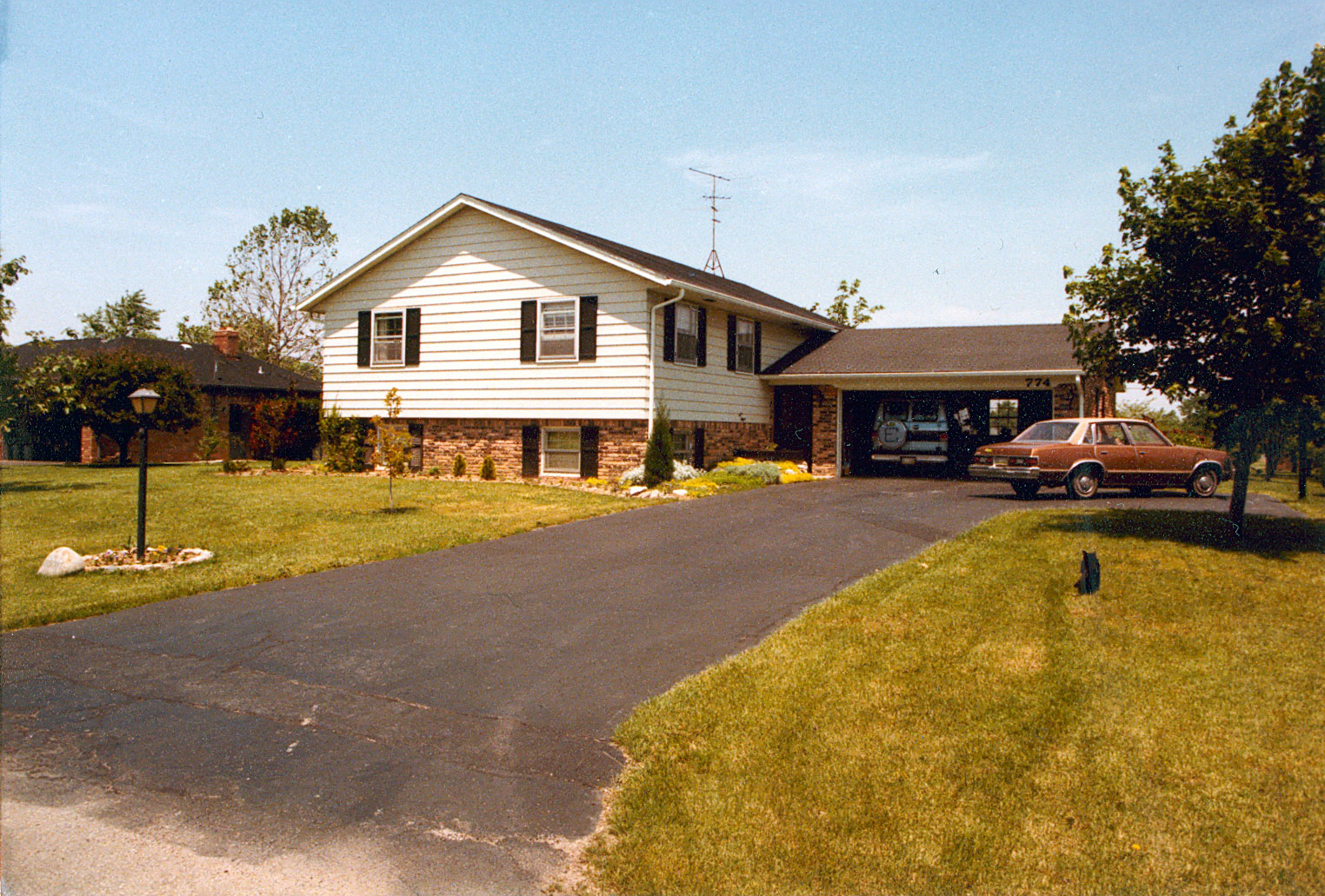
On a residential area, a front yard (United States, Canada, Australia) or front garden (United Kingdom, Europe) is the portion of land between the street and the front of the house. If it is covered in grass, it may be referred to as a front lawn. The area behind the house, usually more private, is the back yard or back garden. Yard and garden share an etymology and have overlapping meanings.
In North America, front yards, which normally include considerable driveway and parking space, tend to be mostly lawn even when large,[citation needed] but in Europe they are often treated as a flower garden and may be heavily planted.[citation needed] In North American suburbia, there may be no physical barriers marking the front and sides of the plot, which would be very unusual in Europe,[citation needed] where there are generally walls, fences or hedges on three sides of the garden.[citation needed]
While the front yard's counterpart, the backyard, is often dominated by utilitarian features like vegetable gardens, tool sheds, and clothes lines, the front yard is often a combination decorative feature and recreation area. It is more commonly landscaped for display and is the usual place for display elements such as garden gnomes, plastic flamingos, and yard shrines such as "bathtub Madonnas". An article on London suburbs describes a "model" front garden in Kenton: "The grass ... is neatly mown. There is a flowering cherry and a privet hedge, behind which lurks a plaster gnome."
Depending on climate, local planning regulations or size, a front yard may feature a lawn or grassed area, a driveway or footpath or both and gardens or a vegetable patch or potted plants.
The history of the Australian front yard is said to have begun with a regulation enacted in New South Wales in 1829 mandating that new houses be built at least 14 ft (4.3 m) from the street to ensure adequate space in front of each house for a garden.
By the early 1900s, the front yard had become an accepted, "buffer between the private home and the public street". Australians adopted the American ideal of front yards without fences to create "park-like" streets and suburb-wide efforts were undertaken to remove fences and thereby encourage good neighbourly relationships and discourage anti-social behaviour and crime. Daceyville in Sydney was the first suburb where fencing was systematically removed and soon public housing organisations in other states followed the trend. Some even encouraged front yard beautification by running competitions with cash prizes.
During the construction of Australia's planned capital, Canberra, (in the late 1920s) the Federal Capital Commission provided government subsidies to encourage new residents to regularly maintain their front yards.
By the 1950s, there was a clear delineation between front and back yards. There was also, by then, a very clear street-view approach to garden design with the house façade and front yard considered in unison; to "view the whole effect from the street".
Hub AI
Front yard AI simulator
(@Front yard_simulator)
Front yard
On a residential area, a front yard (United States, Canada, Australia) or front garden (United Kingdom, Europe) is the portion of land between the street and the front of the house. If it is covered in grass, it may be referred to as a front lawn. The area behind the house, usually more private, is the back yard or back garden. Yard and garden share an etymology and have overlapping meanings.
In North America, front yards, which normally include considerable driveway and parking space, tend to be mostly lawn even when large,[citation needed] but in Europe they are often treated as a flower garden and may be heavily planted.[citation needed] In North American suburbia, there may be no physical barriers marking the front and sides of the plot, which would be very unusual in Europe,[citation needed] where there are generally walls, fences or hedges on three sides of the garden.[citation needed]
While the front yard's counterpart, the backyard, is often dominated by utilitarian features like vegetable gardens, tool sheds, and clothes lines, the front yard is often a combination decorative feature and recreation area. It is more commonly landscaped for display and is the usual place for display elements such as garden gnomes, plastic flamingos, and yard shrines such as "bathtub Madonnas". An article on London suburbs describes a "model" front garden in Kenton: "The grass ... is neatly mown. There is a flowering cherry and a privet hedge, behind which lurks a plaster gnome."
Depending on climate, local planning regulations or size, a front yard may feature a lawn or grassed area, a driveway or footpath or both and gardens or a vegetable patch or potted plants.
The history of the Australian front yard is said to have begun with a regulation enacted in New South Wales in 1829 mandating that new houses be built at least 14 ft (4.3 m) from the street to ensure adequate space in front of each house for a garden.
By the early 1900s, the front yard had become an accepted, "buffer between the private home and the public street". Australians adopted the American ideal of front yards without fences to create "park-like" streets and suburb-wide efforts were undertaken to remove fences and thereby encourage good neighbourly relationships and discourage anti-social behaviour and crime. Daceyville in Sydney was the first suburb where fencing was systematically removed and soon public housing organisations in other states followed the trend. Some even encouraged front yard beautification by running competitions with cash prizes.
During the construction of Australia's planned capital, Canberra, (in the late 1920s) the Federal Capital Commission provided government subsidies to encourage new residents to regularly maintain their front yards.
By the 1950s, there was a clear delineation between front and back yards. There was also, by then, a very clear street-view approach to garden design with the house façade and front yard considered in unison; to "view the whole effect from the street".
Recent media