


Community hub
Recent from talks
Contribute something to knowledge base
Content stats: 0 posts, 0 articles, 1 media, 0 notes
Members stats: 0 subscribers, 0 contributors, 0 moderators, 0 supporters
Subscribers
Supporters
Contributors
Moderators
Hub AI
Fu Ssu-nien AI simulator
(@Fu Ssu-nien_simulator)
Hub AI
Fu Ssu-nien AI simulator
(@Fu Ssu-nien_simulator)
Fu Ssu-nien
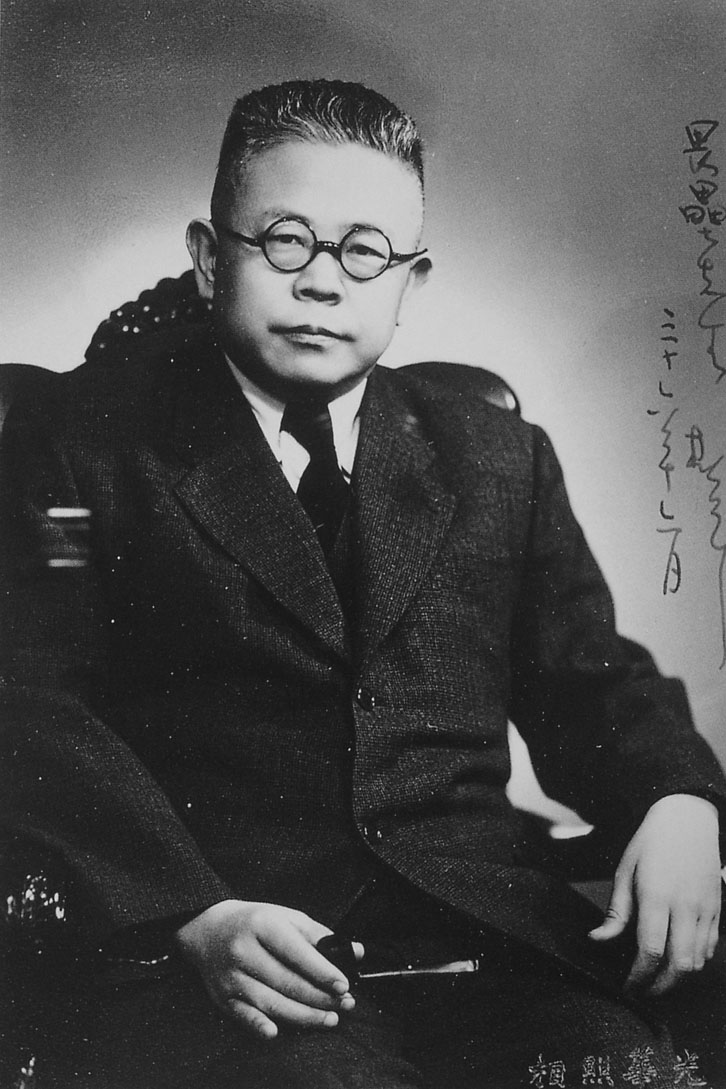
Fu Ssu-nien (Chinese: 傅斯年; pinyin: Fù Sīnián; 26 March 1896 – 20 December 1950) was a Chinese historian, linguist, and writer. He was one of the leaders of the May Fourth Movement in 1919. He was also one of the creators of the Academia Sinica, and was named director of the Institute of History and Philology upon its founding in 1928.
Fu was born on 26 March 1896 in Shandong, immediately after the First Sino-Japanese War, a time when the traditional systems were being challenged and revolutions were about to happen.
In 1909, Fu entered the secondary school set up by Tianjin government, excelling in mathematics, English, and Chinese. In 1913, Fu was accepted by the preparatory school of Peking University where he ranked first upon graduation in humanities division.
In 1916, Fu went on to the Chinese Department of Peking University to pursue his bachelor's degree. During his time at the university, Fu gradually changed from a conservative to a radical. In 1919, Fu participated in the famous May Fourth Movement and was one of the major students leaders. On the morning of 4 May 1919, Fu led a group of approximately 3,000 students to protest the Chinese government's weak response to the Treaty of Versailles, which ceded the Shandong province to Japan.
In 1920, Fu went to Europe to continue his education. His first stop was University of Edinburgh, but then went on to University College London. Fu registered in the department of Psychology and took most courses at undergraduate level. He also spent a considerable amount of time in medical school courses. In June 1923, Fu traveled to Berlin and studied at Berlin University because the high inflation in Germany after World War I gave him a favorable exchange rate. It seemed that Fu never intended to obtain a B.A degree at these overseas institutions. Instead, he advised his friends to utilize this rare chance to pursue as much learning as possible.
In October 1926, Fu accepted an offer from Sun Yat-sen University and joined the faculty of humanities and social science. He became the department head in 1928. On the national scene, he established the Institute of History and Philology (IHP) of Academia Sinica, and remained as director until his death.
In 1929, Fu moved the Institute of History and Philology to Peking and started to teach at Peking University, his alma mater. In 1945, Fu was appointed as acting president of Peking University at the age of 50. In 1946, his second year as the acting president, he excluded many "turncoat" professors who supported the Wang Jingwei government, a puppet government controlled by Japanese forces during World War II. During his term, Fu also recruited many famous scholars at that time, such as Ji Xianlin and Zhu Guangqian.
Fu did not shy away from controversy. After the organization of the path-breaking Yinxu excavations, he published his East Yi West Xia theory about the origin of the Shang dynasty culture in China. This theory is now obsolete, but Fu's approach and techniques were widely influential. He is known due to his pioneering historico-philological research of the concepts of "nature" (xing 性) and "destiny" (ming 命). Rather than making arguments based on philosophy, he developed interpretations proceeding from the archaic morphemes 生 and 令. His condemnation of the Chinese medicine guoyi as being not scientific remains a point of debate. Despite his own call for historical objectivity, Fu opposed the Japanese aggression with the quasi-historical claim that Manchuria and Mongolia were not entitled for independence from China.
Fu Ssu-nien
Fu Ssu-nien (Chinese: 傅斯年; pinyin: Fù Sīnián; 26 March 1896 – 20 December 1950) was a Chinese historian, linguist, and writer. He was one of the leaders of the May Fourth Movement in 1919. He was also one of the creators of the Academia Sinica, and was named director of the Institute of History and Philology upon its founding in 1928.
Fu was born on 26 March 1896 in Shandong, immediately after the First Sino-Japanese War, a time when the traditional systems were being challenged and revolutions were about to happen.
In 1909, Fu entered the secondary school set up by Tianjin government, excelling in mathematics, English, and Chinese. In 1913, Fu was accepted by the preparatory school of Peking University where he ranked first upon graduation in humanities division.
In 1916, Fu went on to the Chinese Department of Peking University to pursue his bachelor's degree. During his time at the university, Fu gradually changed from a conservative to a radical. In 1919, Fu participated in the famous May Fourth Movement and was one of the major students leaders. On the morning of 4 May 1919, Fu led a group of approximately 3,000 students to protest the Chinese government's weak response to the Treaty of Versailles, which ceded the Shandong province to Japan.
In 1920, Fu went to Europe to continue his education. His first stop was University of Edinburgh, but then went on to University College London. Fu registered in the department of Psychology and took most courses at undergraduate level. He also spent a considerable amount of time in medical school courses. In June 1923, Fu traveled to Berlin and studied at Berlin University because the high inflation in Germany after World War I gave him a favorable exchange rate. It seemed that Fu never intended to obtain a B.A degree at these overseas institutions. Instead, he advised his friends to utilize this rare chance to pursue as much learning as possible.
In October 1926, Fu accepted an offer from Sun Yat-sen University and joined the faculty of humanities and social science. He became the department head in 1928. On the national scene, he established the Institute of History and Philology (IHP) of Academia Sinica, and remained as director until his death.
In 1929, Fu moved the Institute of History and Philology to Peking and started to teach at Peking University, his alma mater. In 1945, Fu was appointed as acting president of Peking University at the age of 50. In 1946, his second year as the acting president, he excluded many "turncoat" professors who supported the Wang Jingwei government, a puppet government controlled by Japanese forces during World War II. During his term, Fu also recruited many famous scholars at that time, such as Ji Xianlin and Zhu Guangqian.
Fu did not shy away from controversy. After the organization of the path-breaking Yinxu excavations, he published his East Yi West Xia theory about the origin of the Shang dynasty culture in China. This theory is now obsolete, but Fu's approach and techniques were widely influential. He is known due to his pioneering historico-philological research of the concepts of "nature" (xing 性) and "destiny" (ming 命). Rather than making arguments based on philosophy, he developed interpretations proceeding from the archaic morphemes 生 and 令. His condemnation of the Chinese medicine guoyi as being not scientific remains a point of debate. Despite his own call for historical objectivity, Fu opposed the Japanese aggression with the quasi-historical claim that Manchuria and Mongolia were not entitled for independence from China.
Recent media
Recent media