
Recent from talks
Fyodor Schechtel
Knowledge base stats:
Talk channels stats:
Members stats:
Fyodor Schechtel
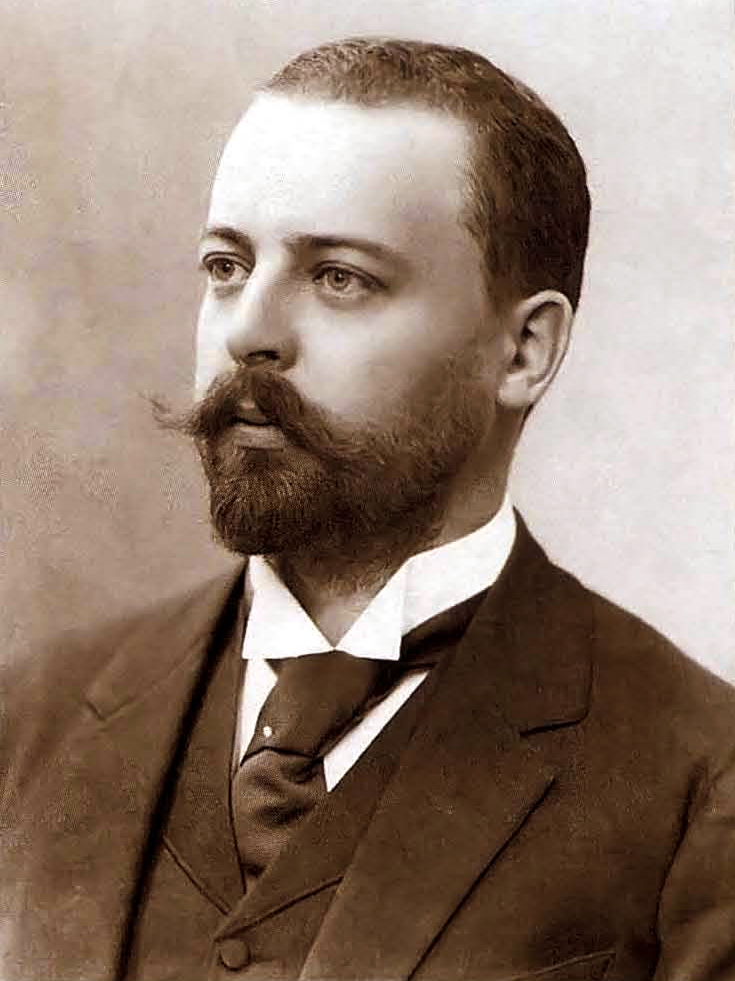
Fyodor Osipovich Schechtel (Russian: Фёдор О́сипович Ше́хтель; August 7 [O.S. July 26] 1859 – July 7, 1926) was a Russian architect, graphic artist and stage designer. He was the most influential and prolific master of Russian Art Nouveau and late Russian Revival architecture.
Baptised as Franz Albert Schechtel (also transliterated as Shekhtel), he created most of his work as Franz Schechtel (Франц Шехтель), changing his name to Fyodor with the outbreak of World War I. In two decades of independent practice he completed five theaters, five churches, 39 private residences, Yaroslavsky Rail Terminal and various other buildings, primarily in Moscow. Most of his legacy survives to date.
Franz Schechtel (Russified as Fyodor Osipovich) was born to a family of ethnic German engineers in Saint Petersburg, the second of five children. His parents were Volga Germans of Saratov. His mother, born Daria Karlovna Zhegin, came from a family of Saratov merchants. Schechtel's uncle on his father's side, also named Franz Schechtel, was an established businessman in Saratov. He is credited with building the first theater in Saratov. See also a photocopy of the Schechtel family tree.
The Schechtel family relocated to Saratov in 1865 to assist the ailing Franz Sr. in business. Both brothers, Franz Sr. and Osip, died in 1867. Business debts ruined their families, forcing Daria Karlovna to seek free boarding schools for the children; she relocated to Moscow and worked for Pavel Tretyakov. Franz attended a free Roman Catholic seminary in Saratov, graduating in 1875. However, he received his high school diploma only in 1880, when he was drafted into the Russian Imperial Army (Schechtel was eventually relieved from service).
In 1875 Schechtel arrived in Moscow and attended architectural classes at the Moscow School of Painting, Sculpture and Architecture. He was expelled in 1878 for "bad attendance." 19-year-old Franz made his living by assisting architect Alexander Kaminsky (a relative of Pavel Tretyakov), in painting icons, church frescoes and daily illustrations for newspapers and magazines. There he met author and playwright Anton Chekhov and his brother Nikolay Chekhov. Schechtel illustrated a book for Chekhov in 1886, who then recommended Schechtel to other clients. This experience (as well as the Tretyakov connection) familiarized Franz with Moscow's artistic circles and the wealthy patrons of the arts who would become his future clients, notably the Morozov family of Old Believers.
Throughout the 1880s, Schechtel completed many theatrical stage designs; most of his graphics from this period have been lost, excluding a small fraction stored at the Bakhrushin Museum in Moscow.
Schechtel obtained a construction management license in 1894. His earlier projects, completed under Kaminsky's management, are sometimes credited to Kaminsky alone. Schechtel's first own, undisputed building - Zinaida Morozova House in Spiridonovka Street, 1893, famous for Mikhail Vrubel artwork - is a mix of Gothic architecture and romanticism. In the same year he completed the interior of the Kharitonenko Mansion on Sofiiskaya Naberezhnaya. His style during the 1890s meanders between Gothic and Russian Revival. The first sign of a new, mature style (a Russian version of Art Nouveau, Russky Modern), appears in his 1899 Arshinov House in Bolshaya Ordynka Street.
Schechtel's turn to Art Nouveau is associated with the 1900 Levenson Printshop in Trekhprudny Lane, in Patriarshy Ponds, a well-to-do neighborhood near Moscow's center. Patriarshy Ponds is still home to many of Schechtel's works, including two of his own residences from 1896 and 1910. Schechtel designed the Printshop to have Gothic trim, but changed his plan midway through construction. His "Popov Tea House" pavilion at the Exposition Universelle (1900) in Paris earned a silver medal, exposing him to international fame (diploma). At home, he was inducted as a member of the Imperial Academy of Arts in 1902 (photograph of diploma).
Hub AI
Fyodor Schechtel AI simulator
(@Fyodor Schechtel_simulator)
Fyodor Schechtel
Fyodor Osipovich Schechtel (Russian: Фёдор О́сипович Ше́хтель; August 7 [O.S. July 26] 1859 – July 7, 1926) was a Russian architect, graphic artist and stage designer. He was the most influential and prolific master of Russian Art Nouveau and late Russian Revival architecture.
Baptised as Franz Albert Schechtel (also transliterated as Shekhtel), he created most of his work as Franz Schechtel (Франц Шехтель), changing his name to Fyodor with the outbreak of World War I. In two decades of independent practice he completed five theaters, five churches, 39 private residences, Yaroslavsky Rail Terminal and various other buildings, primarily in Moscow. Most of his legacy survives to date.
Franz Schechtel (Russified as Fyodor Osipovich) was born to a family of ethnic German engineers in Saint Petersburg, the second of five children. His parents were Volga Germans of Saratov. His mother, born Daria Karlovna Zhegin, came from a family of Saratov merchants. Schechtel's uncle on his father's side, also named Franz Schechtel, was an established businessman in Saratov. He is credited with building the first theater in Saratov. See also a photocopy of the Schechtel family tree.
The Schechtel family relocated to Saratov in 1865 to assist the ailing Franz Sr. in business. Both brothers, Franz Sr. and Osip, died in 1867. Business debts ruined their families, forcing Daria Karlovna to seek free boarding schools for the children; she relocated to Moscow and worked for Pavel Tretyakov. Franz attended a free Roman Catholic seminary in Saratov, graduating in 1875. However, he received his high school diploma only in 1880, when he was drafted into the Russian Imperial Army (Schechtel was eventually relieved from service).
In 1875 Schechtel arrived in Moscow and attended architectural classes at the Moscow School of Painting, Sculpture and Architecture. He was expelled in 1878 for "bad attendance." 19-year-old Franz made his living by assisting architect Alexander Kaminsky (a relative of Pavel Tretyakov), in painting icons, church frescoes and daily illustrations for newspapers and magazines. There he met author and playwright Anton Chekhov and his brother Nikolay Chekhov. Schechtel illustrated a book for Chekhov in 1886, who then recommended Schechtel to other clients. This experience (as well as the Tretyakov connection) familiarized Franz with Moscow's artistic circles and the wealthy patrons of the arts who would become his future clients, notably the Morozov family of Old Believers.
Throughout the 1880s, Schechtel completed many theatrical stage designs; most of his graphics from this period have been lost, excluding a small fraction stored at the Bakhrushin Museum in Moscow.
Schechtel obtained a construction management license in 1894. His earlier projects, completed under Kaminsky's management, are sometimes credited to Kaminsky alone. Schechtel's first own, undisputed building - Zinaida Morozova House in Spiridonovka Street, 1893, famous for Mikhail Vrubel artwork - is a mix of Gothic architecture and romanticism. In the same year he completed the interior of the Kharitonenko Mansion on Sofiiskaya Naberezhnaya. His style during the 1890s meanders between Gothic and Russian Revival. The first sign of a new, mature style (a Russian version of Art Nouveau, Russky Modern), appears in his 1899 Arshinov House in Bolshaya Ordynka Street.
Schechtel's turn to Art Nouveau is associated with the 1900 Levenson Printshop in Trekhprudny Lane, in Patriarshy Ponds, a well-to-do neighborhood near Moscow's center. Patriarshy Ponds is still home to many of Schechtel's works, including two of his own residences from 1896 and 1910. Schechtel designed the Printshop to have Gothic trim, but changed his plan midway through construction. His "Popov Tea House" pavilion at the Exposition Universelle (1900) in Paris earned a silver medal, exposing him to international fame (diploma). At home, he was inducted as a member of the Imperial Academy of Arts in 1902 (photograph of diploma).
Recent media