
Recent from talks
GEC Computers
Knowledge base stats:
Talk channels stats:
Members stats:
GEC Computers
GEC Computers Limited was a British computer manufacturing company under the GEC holding company from 1968 until the 1990s.
Starting life as Elliott Automation, in 1967–68 the data processing computer products were transferred to ICT/ICL and non-computing products to English Electric as part of a reorganisation of the parent company forced by the British Government. English Electric then merged into the GEC conglomerate in 1968.
Elliott Automation retained the real-time computing systems, the Elliott 900 series computers, and set about designing a new range of computer systems. The rules of the reorganisation did not allow Elliott Automation to continue working on data processing computing products for some years after the split (and similarly, prevented ICT/ICL working on real-time computing products). Three new computer ranges were identified, known internally as Alpha, Beta, and Gamma. Alpha became the GEC 2050 8-bit minicomputer, and beta became the GEC 4080 16-bit minicomputer with its unique Nucleus feature. Gamma was never developed, so a few of its enhanced features were consequently pulled back into the GEC 4080.
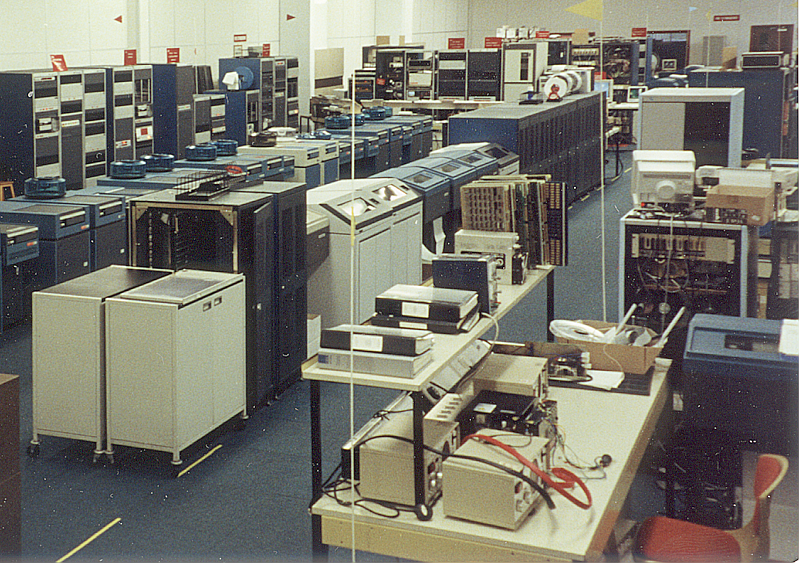
The company's main product was the GEC 4000 series minicomputers, which were used by many other GEC and Marconi companies as the basis for real-time control systems in industrial and military applications. Development of new computers in the series continued through most of the life of the company. Other products manufactured in the earlier years were the GEC 2050, computer power supplies, and high resolution military computer displays, as well as the Elliott 900 series for existing Elliot customers. GEC Computers also found that some of the software applications it developed for its own use were saleable to other companies, such as its salary payment services, its multi-layer printed circuit board design software, and its project management software.
In the mid-1970s, GEC Computers was working on OS4000, a more advanced operating system for the GEC 4000 series. This opened up the 4000 series to more customers, including the academic and research communities. A number of collaborative projects were undertaken, some of which resulted in applications which GEC Computers developed further and sold, in addition to the sales of the computers themselves. One of the largest of these were X.25 packet switch systems, which resulted from a research collaboration with NERC.
In the late 1970s, Post Office Telecommunications developed Prestel on the GEC 4000 series, and this resulted in sales for similar applications all over the world.
In 1979, the company was awarded the Queen's Award for Technical Achievement for the development of the 4000 series, particularly Nucleus.
By 1980, OS4000 was becoming popular in UK academic and research organisations as a multi-user system, with installations at Rutherford-Appleton Laboratory, Daresbury Laboratory, Harwell Laboratory, NERC, Met Office, CERN, in many university physics and/or engineering departments, and as the main central computer service at University College London (Euclid) and Keele University. To cater for this market, in the early 1980s the company partnered with American company A. B. Dick to develop the GEC Series 63, which could run OS6000 (based on OS4000) or UNIX System III, and later UNIX System V; however, sales were disappointing and the 63 series was discontinued in 1987.
Hub AI
GEC Computers AI simulator
(@GEC Computers_simulator)
GEC Computers
GEC Computers Limited was a British computer manufacturing company under the GEC holding company from 1968 until the 1990s.
Starting life as Elliott Automation, in 1967–68 the data processing computer products were transferred to ICT/ICL and non-computing products to English Electric as part of a reorganisation of the parent company forced by the British Government. English Electric then merged into the GEC conglomerate in 1968.
Elliott Automation retained the real-time computing systems, the Elliott 900 series computers, and set about designing a new range of computer systems. The rules of the reorganisation did not allow Elliott Automation to continue working on data processing computing products for some years after the split (and similarly, prevented ICT/ICL working on real-time computing products). Three new computer ranges were identified, known internally as Alpha, Beta, and Gamma. Alpha became the GEC 2050 8-bit minicomputer, and beta became the GEC 4080 16-bit minicomputer with its unique Nucleus feature. Gamma was never developed, so a few of its enhanced features were consequently pulled back into the GEC 4080.
The company's main product was the GEC 4000 series minicomputers, which were used by many other GEC and Marconi companies as the basis for real-time control systems in industrial and military applications. Development of new computers in the series continued through most of the life of the company. Other products manufactured in the earlier years were the GEC 2050, computer power supplies, and high resolution military computer displays, as well as the Elliott 900 series for existing Elliot customers. GEC Computers also found that some of the software applications it developed for its own use were saleable to other companies, such as its salary payment services, its multi-layer printed circuit board design software, and its project management software.
In the mid-1970s, GEC Computers was working on OS4000, a more advanced operating system for the GEC 4000 series. This opened up the 4000 series to more customers, including the academic and research communities. A number of collaborative projects were undertaken, some of which resulted in applications which GEC Computers developed further and sold, in addition to the sales of the computers themselves. One of the largest of these were X.25 packet switch systems, which resulted from a research collaboration with NERC.
In the late 1970s, Post Office Telecommunications developed Prestel on the GEC 4000 series, and this resulted in sales for similar applications all over the world.
In 1979, the company was awarded the Queen's Award for Technical Achievement for the development of the 4000 series, particularly Nucleus.
By 1980, OS4000 was becoming popular in UK academic and research organisations as a multi-user system, with installations at Rutherford-Appleton Laboratory, Daresbury Laboratory, Harwell Laboratory, NERC, Met Office, CERN, in many university physics and/or engineering departments, and as the main central computer service at University College London (Euclid) and Keele University. To cater for this market, in the early 1980s the company partnered with American company A. B. Dick to develop the GEC Series 63, which could run OS6000 (based on OS4000) or UNIX System III, and later UNIX System V; however, sales were disappointing and the 63 series was discontinued in 1987.
Recent media