
Recent from talks
Gaia
Knowledge base stats:
Talk channels stats:
Members stats:
Gaia
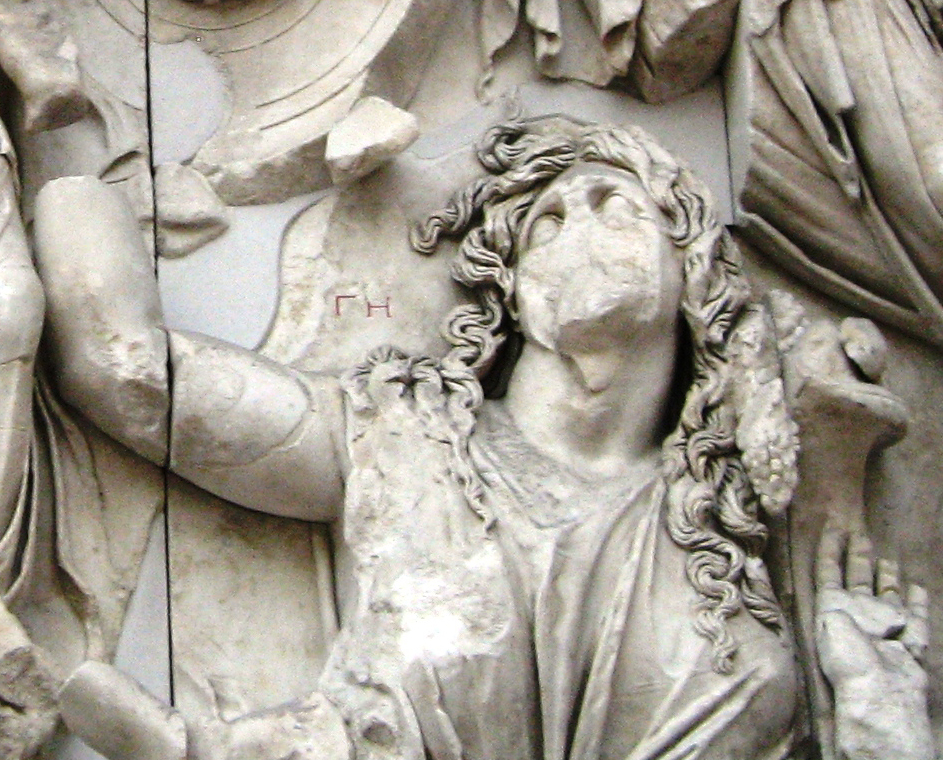
In Greek mythology, Gaia (/ˈɡeɪə, ˈɡaɪə/; Ancient Greek: Γαῖα, romanized: Gaîa, a poetic form of Γῆ (Gê), meaning 'land' or 'earth'), also spelled Gaea (/ˈdʒiːə/), is the personification of Earth. She is the mother of Uranus (Sky), with whom she conceived the Titans (themselves parents of many of the Olympian gods), the Cyclopes, and the Giants, as well as of Pontus (Sea), from whose union she bore the primordial sea gods. Her equivalent in the Roman pantheon was Terra.
The Greek name Γαῖα (Gaia Ancient Greek: [ɡâi̯.a] or [ɡâj.ja]) is a mostly epic, collateral form of Attic Γῆ (Gē [ɡɛ̂ː]), and Doric Γᾶ (Ga [ɡâː]), perhaps identical to Δᾶ (Da [dâː]), both meaning "Earth". Some scholars believe that the word is of uncertain origin. Beekes suggested a probable Pre-Greek origin. M.L. West derives the name from the Indo-European form *dʰéǵʰōm (earth). Greek: gaia (<*gm-ya), chamai (χαμαί) on the earth, Hittite: tekan, Tocharian: tkam, Phrygian zemelo, Proto-Slavonic:*zem-yã, Avestan: za (locative: zemi), Vedic: ksam, Latin: hum-us, Albanian: dhé.
In Mycenean Greek Ma-ka (probably transliterated as Ma-ga, "Mother Gaia") also contains the root ga-.
The Greeks invoked Gaia in their oaths, and she should be aware if one broke his oath. In the Homeric poems she appears usually in forms of oath. In the Iliad, the sacrifice of a black lamb is offered to Gaia and she is invoked in the formula of an oath. Homer considers her a physical distinct existence not clearly conceived in anthropomorphic form. Gaia does not seem to have any personal activity. In the Iliad, Alpheia beats with her hands the bountiful ("Polyphorbos" = epithet for Gaia) earth, but she calls Hades and Persephone to avenge her against her son. In the poems of Hesiod, she is personified. Gaia has a significant role in the evolution of the world. She is the nurse of Zeus, and she has the epithet "Kourotrophos". Kourotrophos was the name of an old goddess who was subordinate to Ge. Dieterich believed that Kourotrophos and Potnia theron construct precisely the mother goddess. Ge is also personified in the myths of Erichthonius and Pluto. Erichthonius is early mentioned in the Catalogue of ships. He is born by the Homeric earth which produces fruits and cereals (zeidoros arura). The name of Erichthonius includes chthon which is not the underground kingdom of the dead, but the Homeric earth.
In ancient times, the earth was considered a plane or a flat disk with a wide extent. The earth-goddess can be identified with the nymph "Plataia" (broad one) in Plataea of Boeotia as the spouse of Zeus. Homer uses the form "eureia chthon" (broad earth). Hesiod speaks of the broad-breasted earth, ("eurysternos") the sure seat of all immortals. The same epithet appears in her cults at Delphi and Aegae in Achaea. In the Homeric hymn her conception is more clear and detailed. She is the Mother of the Gods, the goddess that brings forth life and blesses men with children. She is called "pammе̄tōr", the all-mother who nourishes everything. This conception is closer to the popular belief. In the hymn to Apollo she is called "pheresvios" (life giving) The "mother of the gods" is a form of Gaia. According to Pausanias an epithet of Ge in Athens is "the Great goddess", which is an appellation of the "Mother of the gods". She is related to the mystery cult of Phlya which seems to be original. At Athens Gaia had the cult-title Themis. In the Ashmolean Museum, a vase shows Pandora (all-giving) rising from the earth and according to some scholars she may be identified with Gaia. "Anesidora" (sending up gifts) on a vase in the British Museum is an epithet of Gaia.
Traditionally "gaia" means "earth" and chthon, "under or "beneath the earth" however chthon has occasionally the same meaning with the earth. Pherecydes uses the name Chthonie for the primeval goddess who later became Ge and Musaeus the same name for the oracular goddess of Delphi. Homer uses for chthon the epithets "euryodeia" (broad-seated) and "polyvoteira" (all-nourishing) which can also be used for the earth. In some plays of Aeschylus "chthon" is the earth-goddess Gaia.
The tragic poets usually describe Gaia as mother of all, all-nourishing and all-productive who must be honoured. In Aeschylus' Prometheus Unbound, Gaia is the mother mother of all ("pammetor") and in a fragment of Euripides chthon has the same epithet. In Persai of Aeschylus, offerings are recommended to Ge and the spirit of the departed. She is called "pamphoros", (all bearing). In Choephori, Electra in her prayer describes Gaia as an avenger of wrong. Sophocles in Philoctetes calls Gaia "pamvōtis" (all nourishing). A famous fragment of Danaides describes the sacred marriage between heaven and earth. Ouranos and Gaia are cosmic powers and natural processes. In Chrysippus of Euripides, Gaia is the mother of all in a philosophical poetic thought. "Gaia receives the drops of rain bearing the mortals and bearing food and beasts, therefore she is rightly called 'mother of all'. Aether of Zeus bears men and gods. Everything which is born by the earth returns to the earth, and everything born from aether returns to the sky. Nothing is destroyed, but it is transformed to another form." An inscription on a gravestone in Potidaia mentions: "Aether receives the souls and 'chthon' receives the bodies". According to Plutarch: "The name of Ge is beloved to every Greek and she is traditionally honoured like any other god".
Hesiod's Theogony tells how, after Chaos, "wide-bosomed" Gaia (Earth) arose to be the everlasting seat of the immortals who possess Olympus above. And after Gaia came "dim Tartarus in the depth of the wide-pathed Earth", and next Eros the god of love. Hesiod goes on to say that Gaia brought forth her equal Uranus (Heaven, Sky) to "cover her on every side". Gaia also bore the Ourea (Mountains), and Pontus (Sea), "without sweet union of love" (i.e., with no father).
Hub AI
Gaia AI simulator
(@Gaia_simulator)
Gaia
In Greek mythology, Gaia (/ˈɡeɪə, ˈɡaɪə/; Ancient Greek: Γαῖα, romanized: Gaîa, a poetic form of Γῆ (Gê), meaning 'land' or 'earth'), also spelled Gaea (/ˈdʒiːə/), is the personification of Earth. She is the mother of Uranus (Sky), with whom she conceived the Titans (themselves parents of many of the Olympian gods), the Cyclopes, and the Giants, as well as of Pontus (Sea), from whose union she bore the primordial sea gods. Her equivalent in the Roman pantheon was Terra.
The Greek name Γαῖα (Gaia Ancient Greek: [ɡâi̯.a] or [ɡâj.ja]) is a mostly epic, collateral form of Attic Γῆ (Gē [ɡɛ̂ː]), and Doric Γᾶ (Ga [ɡâː]), perhaps identical to Δᾶ (Da [dâː]), both meaning "Earth". Some scholars believe that the word is of uncertain origin. Beekes suggested a probable Pre-Greek origin. M.L. West derives the name from the Indo-European form *dʰéǵʰōm (earth). Greek: gaia (<*gm-ya), chamai (χαμαί) on the earth, Hittite: tekan, Tocharian: tkam, Phrygian zemelo, Proto-Slavonic:*zem-yã, Avestan: za (locative: zemi), Vedic: ksam, Latin: hum-us, Albanian: dhé.
In Mycenean Greek Ma-ka (probably transliterated as Ma-ga, "Mother Gaia") also contains the root ga-.
The Greeks invoked Gaia in their oaths, and she should be aware if one broke his oath. In the Homeric poems she appears usually in forms of oath. In the Iliad, the sacrifice of a black lamb is offered to Gaia and she is invoked in the formula of an oath. Homer considers her a physical distinct existence not clearly conceived in anthropomorphic form. Gaia does not seem to have any personal activity. In the Iliad, Alpheia beats with her hands the bountiful ("Polyphorbos" = epithet for Gaia) earth, but she calls Hades and Persephone to avenge her against her son. In the poems of Hesiod, she is personified. Gaia has a significant role in the evolution of the world. She is the nurse of Zeus, and she has the epithet "Kourotrophos". Kourotrophos was the name of an old goddess who was subordinate to Ge. Dieterich believed that Kourotrophos and Potnia theron construct precisely the mother goddess. Ge is also personified in the myths of Erichthonius and Pluto. Erichthonius is early mentioned in the Catalogue of ships. He is born by the Homeric earth which produces fruits and cereals (zeidoros arura). The name of Erichthonius includes chthon which is not the underground kingdom of the dead, but the Homeric earth.
In ancient times, the earth was considered a plane or a flat disk with a wide extent. The earth-goddess can be identified with the nymph "Plataia" (broad one) in Plataea of Boeotia as the spouse of Zeus. Homer uses the form "eureia chthon" (broad earth). Hesiod speaks of the broad-breasted earth, ("eurysternos") the sure seat of all immortals. The same epithet appears in her cults at Delphi and Aegae in Achaea. In the Homeric hymn her conception is more clear and detailed. She is the Mother of the Gods, the goddess that brings forth life and blesses men with children. She is called "pammе̄tōr", the all-mother who nourishes everything. This conception is closer to the popular belief. In the hymn to Apollo she is called "pheresvios" (life giving) The "mother of the gods" is a form of Gaia. According to Pausanias an epithet of Ge in Athens is "the Great goddess", which is an appellation of the "Mother of the gods". She is related to the mystery cult of Phlya which seems to be original. At Athens Gaia had the cult-title Themis. In the Ashmolean Museum, a vase shows Pandora (all-giving) rising from the earth and according to some scholars she may be identified with Gaia. "Anesidora" (sending up gifts) on a vase in the British Museum is an epithet of Gaia.
Traditionally "gaia" means "earth" and chthon, "under or "beneath the earth" however chthon has occasionally the same meaning with the earth. Pherecydes uses the name Chthonie for the primeval goddess who later became Ge and Musaeus the same name for the oracular goddess of Delphi. Homer uses for chthon the epithets "euryodeia" (broad-seated) and "polyvoteira" (all-nourishing) which can also be used for the earth. In some plays of Aeschylus "chthon" is the earth-goddess Gaia.
The tragic poets usually describe Gaia as mother of all, all-nourishing and all-productive who must be honoured. In Aeschylus' Prometheus Unbound, Gaia is the mother mother of all ("pammetor") and in a fragment of Euripides chthon has the same epithet. In Persai of Aeschylus, offerings are recommended to Ge and the spirit of the departed. She is called "pamphoros", (all bearing). In Choephori, Electra in her prayer describes Gaia as an avenger of wrong. Sophocles in Philoctetes calls Gaia "pamvōtis" (all nourishing). A famous fragment of Danaides describes the sacred marriage between heaven and earth. Ouranos and Gaia are cosmic powers and natural processes. In Chrysippus of Euripides, Gaia is the mother of all in a philosophical poetic thought. "Gaia receives the drops of rain bearing the mortals and bearing food and beasts, therefore she is rightly called 'mother of all'. Aether of Zeus bears men and gods. Everything which is born by the earth returns to the earth, and everything born from aether returns to the sky. Nothing is destroyed, but it is transformed to another form." An inscription on a gravestone in Potidaia mentions: "Aether receives the souls and 'chthon' receives the bodies". According to Plutarch: "The name of Ge is beloved to every Greek and she is traditionally honoured like any other god".
Hesiod's Theogony tells how, after Chaos, "wide-bosomed" Gaia (Earth) arose to be the everlasting seat of the immortals who possess Olympus above. And after Gaia came "dim Tartarus in the depth of the wide-pathed Earth", and next Eros the god of love. Hesiod goes on to say that Gaia brought forth her equal Uranus (Heaven, Sky) to "cover her on every side". Gaia also bore the Ourea (Mountains), and Pontus (Sea), "without sweet union of love" (i.e., with no father).
Recent media