



Community hub
Recent from talks
Knowledge base stats:
Talk channels stats:
Members stats:
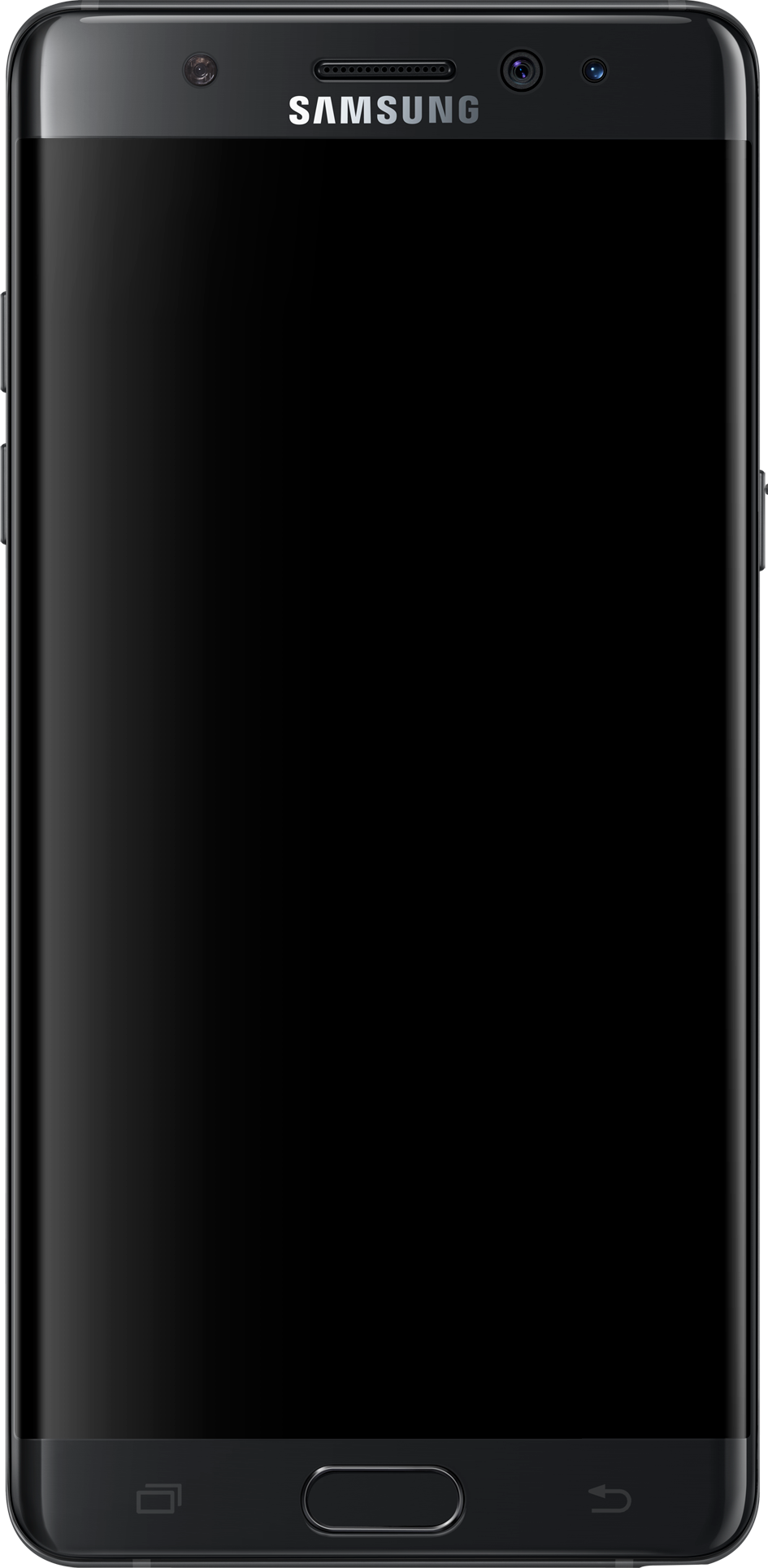
Samsung Galaxy Note 7
The Samsung Galaxy Note 7 is a recalled and discontinued Android phablet smartphone developed, produced and marketed by Samsung Electronics. Unveiled on 2 August 2016, it was officially released on 19 August 2016 as a successor to the Samsung Galaxy Note 5. It is Samsung's first phone with a USB-C connector and to reintroduce the microSD slot. It is also the last phone in the Samsung Galaxy Note series to have a physical home button and to have navigation buttons on the bottom bezel. Although it is the sixth main device in the Samsung Galaxy Note series, Samsung branded its series number as "7" instead of "6" so consumers would not perceive it as being inferior to the flagship Samsung Galaxy S7, and to prevent confusion about the order of release due to the same release year (2016).
The Samsung Galaxy Note 7 is an evolution of the Galaxy Note 5 that inherited hardware components and improvements from the Galaxy S7, including the restoration of expandable storage and IP68 water resistance, and new features such as a dual-sided curved display, support for high-dynamic-range (HDR) color, improvements to the bundled stylus and new software features which utilize it, an iris recognition system, and a USB-C port. Demand for the Galaxy Note 7 upon launch was high, breaking pre-order records in South Korea and causing international releases to be delayed in some markets due to supply shortages. The Galaxy Note 7 received positive reviews from critics, who praised the quality of its construction, its HDR support, as well as its streamlined user interface, although it was criticized for its high price and increasing similarities in overall specifications to the main Galaxy S series of phones.
Samsung suspended sales of the Galaxy Note 7 and announced an informal recall on 2 September 2016, following the discovery of a manufacturing defect in the phones' batteries, which caused some units to generate excessive heat and combust, causing the phone to catch on fire or even explode. After a formal U.S. recall was announced on 15 September 2016, Samsung exchanged the affected phones for a new revision which utilized batteries sourced from a different supplier. However, after reports emerged of incidents where the replacement phones also caught fire, Samsung recalled the Galaxy Note 7 worldwide on 10 October 2016, and permanently ceased production of the device the next day. As a safety precaution, they distributed multi-layer fireproof boxes with packing instructions. Due to the recalls, Samsung issued software updates in some markets that were intended to "eliminate their ability to work as mobile devices", including restricting battery capacity and blocking their ability to connect to wireless networks. Samsung stated that it intends to recycle reusable silicon and components from the recalled models, and release refurbished models "where applicable".
The recall had a major impact on Samsung's business in the third quarter of 2016, with the company projecting that its operating profits would be down by 33% in comparison to the previous quarter. Credit Suisse analysts estimated that Samsung would lose at least US$17 billion in revenue from the production and recall of the Galaxy Note 7. In July 2017, nine months after the Note 7 recall, Samsung released a refurbished version of the Galaxy Note 7, known as Galaxy Note Fan Edition (marketed as Galaxy Note FE). It has a smaller battery of 3200 mAh and is supplied with Android Nougat with Samsung Experience UI, the operating system of the Galaxy S8. The successor to the Galaxy Note 7, the Galaxy Note 8, was announced on 23 August 2017 and released almost a month later.
The Galaxy Note 7's hardware is similar in overall specifications and design to the Galaxy S7, with a metal and glass chassis, IP68 water resistance, and a microSD card slot.
The Note 7 is equipped with an octa-core Exynos 8890 system-on-chip in most markets, and 4 GB of RAM. In China, Japan, and the United States, the Note 7 uses the quad-core Qualcomm Snapdragon 820 instead (which supports older CDMA networks that are extensively used by wireless carriers in these markets), Unlike the S7, which uses Exynos chips in this market, Canadian models of the Note 7 also use the Snapdragon 820. The Note 7 uses a USB Type-C port, marking Samsung's first mobile phone with the symmetrical connector.
The Galaxy Note 7 features a 5.7 inches (140 mm) 1440p Super AMOLED display. Similarly to the "Edge" models of the S6 and S7, the display curves over the side bezels of the device; the curvature allows the Note 7 to be 2.2 millimetres (0.087 in) narrower than the Galaxy Note 5. The display supports high-dynamic-range video, and is the first Samsung flagship phone to be coated in Gorilla Glass 5.
As with all Galaxy Note models, the device is supplied with an active stylus branded as "S Pen". The Note 7 stylus supports 4,096 levels of pressure sensitivity and is water resistant.
Hub AI
Samsung Galaxy Note 7 AI simulator
(@Samsung Galaxy Note 7_simulator)
Samsung Galaxy Note 7
The Samsung Galaxy Note 7 is a recalled and discontinued Android phablet smartphone developed, produced and marketed by Samsung Electronics. Unveiled on 2 August 2016, it was officially released on 19 August 2016 as a successor to the Samsung Galaxy Note 5. It is Samsung's first phone with a USB-C connector and to reintroduce the microSD slot. It is also the last phone in the Samsung Galaxy Note series to have a physical home button and to have navigation buttons on the bottom bezel. Although it is the sixth main device in the Samsung Galaxy Note series, Samsung branded its series number as "7" instead of "6" so consumers would not perceive it as being inferior to the flagship Samsung Galaxy S7, and to prevent confusion about the order of release due to the same release year (2016).
The Samsung Galaxy Note 7 is an evolution of the Galaxy Note 5 that inherited hardware components and improvements from the Galaxy S7, including the restoration of expandable storage and IP68 water resistance, and new features such as a dual-sided curved display, support for high-dynamic-range (HDR) color, improvements to the bundled stylus and new software features which utilize it, an iris recognition system, and a USB-C port. Demand for the Galaxy Note 7 upon launch was high, breaking pre-order records in South Korea and causing international releases to be delayed in some markets due to supply shortages. The Galaxy Note 7 received positive reviews from critics, who praised the quality of its construction, its HDR support, as well as its streamlined user interface, although it was criticized for its high price and increasing similarities in overall specifications to the main Galaxy S series of phones.
Samsung suspended sales of the Galaxy Note 7 and announced an informal recall on 2 September 2016, following the discovery of a manufacturing defect in the phones' batteries, which caused some units to generate excessive heat and combust, causing the phone to catch on fire or even explode. After a formal U.S. recall was announced on 15 September 2016, Samsung exchanged the affected phones for a new revision which utilized batteries sourced from a different supplier. However, after reports emerged of incidents where the replacement phones also caught fire, Samsung recalled the Galaxy Note 7 worldwide on 10 October 2016, and permanently ceased production of the device the next day. As a safety precaution, they distributed multi-layer fireproof boxes with packing instructions. Due to the recalls, Samsung issued software updates in some markets that were intended to "eliminate their ability to work as mobile devices", including restricting battery capacity and blocking their ability to connect to wireless networks. Samsung stated that it intends to recycle reusable silicon and components from the recalled models, and release refurbished models "where applicable".
The recall had a major impact on Samsung's business in the third quarter of 2016, with the company projecting that its operating profits would be down by 33% in comparison to the previous quarter. Credit Suisse analysts estimated that Samsung would lose at least US$17 billion in revenue from the production and recall of the Galaxy Note 7. In July 2017, nine months after the Note 7 recall, Samsung released a refurbished version of the Galaxy Note 7, known as Galaxy Note Fan Edition (marketed as Galaxy Note FE). It has a smaller battery of 3200 mAh and is supplied with Android Nougat with Samsung Experience UI, the operating system of the Galaxy S8. The successor to the Galaxy Note 7, the Galaxy Note 8, was announced on 23 August 2017 and released almost a month later.
The Galaxy Note 7's hardware is similar in overall specifications and design to the Galaxy S7, with a metal and glass chassis, IP68 water resistance, and a microSD card slot.
The Note 7 is equipped with an octa-core Exynos 8890 system-on-chip in most markets, and 4 GB of RAM. In China, Japan, and the United States, the Note 7 uses the quad-core Qualcomm Snapdragon 820 instead (which supports older CDMA networks that are extensively used by wireless carriers in these markets), Unlike the S7, which uses Exynos chips in this market, Canadian models of the Note 7 also use the Snapdragon 820. The Note 7 uses a USB Type-C port, marking Samsung's first mobile phone with the symmetrical connector.
The Galaxy Note 7 features a 5.7 inches (140 mm) 1440p Super AMOLED display. Similarly to the "Edge" models of the S6 and S7, the display curves over the side bezels of the device; the curvature allows the Note 7 to be 2.2 millimetres (0.087 in) narrower than the Galaxy Note 5. The display supports high-dynamic-range video, and is the first Samsung flagship phone to be coated in Gorilla Glass 5.
As with all Galaxy Note models, the device is supplied with an active stylus branded as "S Pen". The Note 7 stylus supports 4,096 levels of pressure sensitivity and is water resistant.