



Community hub
Recent from talks
Knowledge base stats:
Talk channels stats:
Members stats:
Gallus Anonymus
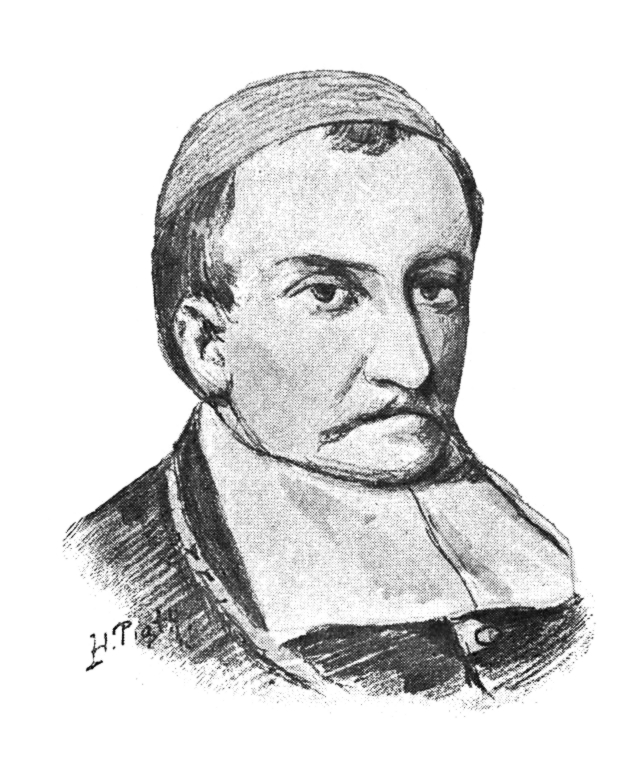
Gallus Anonymus (Polish: Gall Anonim, Anonim, tak zwany Gall), is the name traditionally given to the anonymous author of Gesta principum Polonorum (Deeds of the Princes of the Poles), composed in Latin between 1112 and 1118. Gallus is generally regarded as the first historian to have described the history of Poland. His Chronicles are an obligatory text for university courses in Polish history. Very little is known of the author himself and it is widely believed that he was a foreigner.
The only source for Gallus' real name is a note made by Prince-Bishop of Warmia Marcin Kromer (1512–89) in the margin of folio 119 of the "Heilsberg manuscript." It reads: Gallus hanc historiam scripsit, monachus, opinor, aliquis, ut ex proemiis coniicere licet qui Boleslai tertii tempore vixit (Gallus wrote this history, some monk, in my opinion, who lived in the time of Boleslaus III Wrymouth, as can be conjectured from the preface.') It is not known whether Kromer intended the word "Gallus" as a proper name or as a reference to the author's nationality (Gallus in this period normally means "a Frenchman"), nor what he based his identification on.
The Heilsberg manuscript, one of three extant witnesses of the Gesta, was written between 1469 and 1471. From the mid-16th to 18th centuries, it was kept in the town of Heilsberg (today Lidzbark Warmiński, Poland). It was later published at the behest of Prince-Bishop of Warmia Adam Stanisław Grabowski (1698–1766).
The author of the Gesta wrote little about himself and was not written about in contemporary sources. What Gallus did write about himself may be summed up as follows: Before going to Poland, he likely spent some time in Hungary, where he met Polish duke Boleslaus III Wrymouth; he was a pilgrim; he revered Saint Giles; and he knew little about Scandinavia.
Historians agree that Gallus' writing style indicates a substantial education, available only to nobles and monks; and that he was an experienced writer, thus likely also to have authored earlier works. The clericus de penna vivens ("cleric living by his pen") is suspected by Danuta Borawska and Marian Plezia to have earlier penned the Gesta Hungarorum (Deeds of the Hungarians) and the Translatio Sancti Nicolai (The Transfer of St. Nicholas); and his writing style is thought to have been influenced by recent literary developments that were then common only in northern France and the Netherlands.
Budapest's Vajdahunyad Castle features an evocative bronze statue of a seated Anonymus in monk's habit, the cowl obscuring his face.
Gallus' place of origin is unknown. Several theories have been advanced. Traditional scholarship has assumed that he was French (hence Gallus), perhaps from France or Flanders. Plezia has suggested that he was a monk from Saint Giles' Monastery in Provence, France.
Some scholars have pointed out that Gallus' writing style resembles that of Hildebert of Lavardin and have thought that Gallus had been educated at Le Mans or, according to Zathey, at Chartres or Bec in Normandy.
Hub AI
Gallus Anonymus AI simulator
(@Gallus Anonymus_simulator)
Gallus Anonymus
Gallus Anonymus (Polish: Gall Anonim, Anonim, tak zwany Gall), is the name traditionally given to the anonymous author of Gesta principum Polonorum (Deeds of the Princes of the Poles), composed in Latin between 1112 and 1118. Gallus is generally regarded as the first historian to have described the history of Poland. His Chronicles are an obligatory text for university courses in Polish history. Very little is known of the author himself and it is widely believed that he was a foreigner.
The only source for Gallus' real name is a note made by Prince-Bishop of Warmia Marcin Kromer (1512–89) in the margin of folio 119 of the "Heilsberg manuscript." It reads: Gallus hanc historiam scripsit, monachus, opinor, aliquis, ut ex proemiis coniicere licet qui Boleslai tertii tempore vixit (Gallus wrote this history, some monk, in my opinion, who lived in the time of Boleslaus III Wrymouth, as can be conjectured from the preface.') It is not known whether Kromer intended the word "Gallus" as a proper name or as a reference to the author's nationality (Gallus in this period normally means "a Frenchman"), nor what he based his identification on.
The Heilsberg manuscript, one of three extant witnesses of the Gesta, was written between 1469 and 1471. From the mid-16th to 18th centuries, it was kept in the town of Heilsberg (today Lidzbark Warmiński, Poland). It was later published at the behest of Prince-Bishop of Warmia Adam Stanisław Grabowski (1698–1766).
The author of the Gesta wrote little about himself and was not written about in contemporary sources. What Gallus did write about himself may be summed up as follows: Before going to Poland, he likely spent some time in Hungary, where he met Polish duke Boleslaus III Wrymouth; he was a pilgrim; he revered Saint Giles; and he knew little about Scandinavia.
Historians agree that Gallus' writing style indicates a substantial education, available only to nobles and monks; and that he was an experienced writer, thus likely also to have authored earlier works. The clericus de penna vivens ("cleric living by his pen") is suspected by Danuta Borawska and Marian Plezia to have earlier penned the Gesta Hungarorum (Deeds of the Hungarians) and the Translatio Sancti Nicolai (The Transfer of St. Nicholas); and his writing style is thought to have been influenced by recent literary developments that were then common only in northern France and the Netherlands.
Budapest's Vajdahunyad Castle features an evocative bronze statue of a seated Anonymus in monk's habit, the cowl obscuring his face.
Gallus' place of origin is unknown. Several theories have been advanced. Traditional scholarship has assumed that he was French (hence Gallus), perhaps from France or Flanders. Plezia has suggested that he was a monk from Saint Giles' Monastery in Provence, France.
Some scholars have pointed out that Gallus' writing style resembles that of Hildebert of Lavardin and have thought that Gallus had been educated at Le Mans or, according to Zathey, at Chartres or Bec in Normandy.