



Community hub
Recent from talks
Knowledge base stats:
Talk channels stats:
Members stats:
Gallipoli
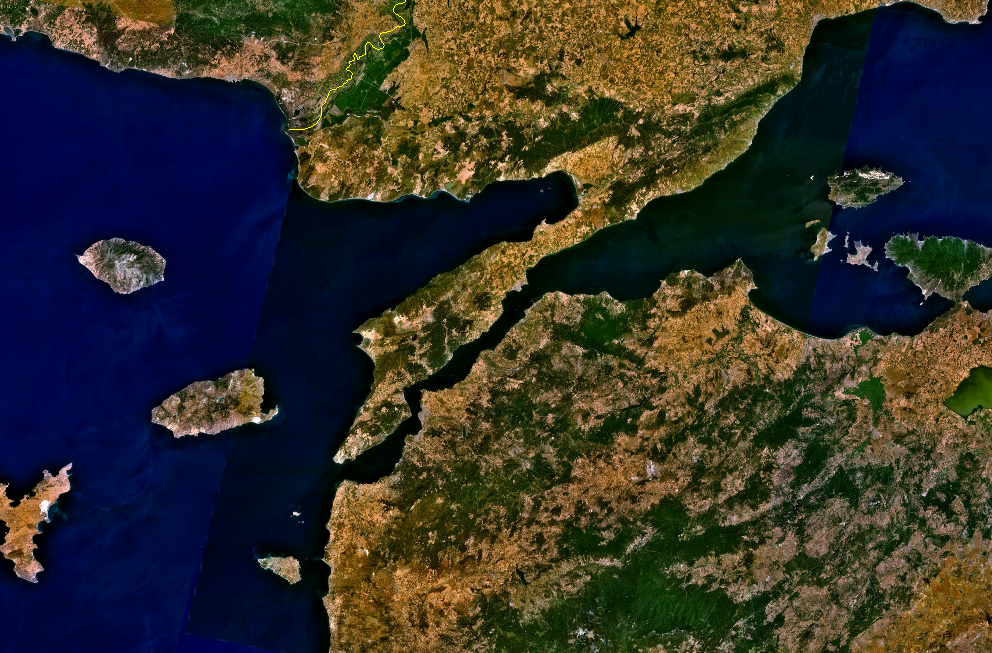
The Gallipoli Peninsula (/ɡəˈlɪpəli, ɡæ-/ ⓘ) is located in the southern part of East Thrace, the European part of Turkey, with the Aegean Sea to the west and the Dardanelles strait to the east.
Gallipoli is the Italian form of the Greek name Καλλίπολις (Kallípolis), meaning 'beautiful city', the original name of the modern town of Gelibolu. In antiquity, the peninsula was known as the Thracian Chersonese (Ancient Greek: Θρακικὴ Χερσόνησος, romanized: Thrakiké Chersónesos; Latin: Chersonesus Thracica).
The peninsula runs in a south-westerly direction into the Aegean Sea, between the Dardanelles (formerly known as the Hellespont), and the Gulf of Saros (formerly the bay of Melas). In antiquity, it was protected by the Long Wall, a defensive structure built across the narrowest part of the peninsula near the ancient city of Agora. The isthmus traversed by the wall was only 36 stadia in breadth or about 6.5 km (4.0 mi), but the length of the peninsula from this wall to its southern extremity, Cape Mastusia, was 420 stadia or about 77.5 km (48.2 mi).
In ancient times, the Gallipoli Peninsula was known as the Thracian Chersonese (from Greek χερσόνησος, 'peninsula') to the Greeks and later the Romans. It was the location of several prominent towns, including Cardia, Pactya, Callipolis (Gallipoli), Alopeconnesus (Ἀλωπεκόννησος), Sestos, Madytos, and Elaeus. The peninsula was renowned for its wheat. It also benefited from its strategic importance on the main route between Europe and Asia, as well as from its control of the shipping route from Crimea. The city of Sestos was the main crossing-point on the Hellespont.
According to Herodotus, the Thracian tribe of Dolonci (Δόλογκοι) (or 'barbarians' according to Cornelius Nepos) held possession of the peninsula before Greek colonizers arrived. Then, settlers from Ancient Greece, mainly of Ionian and Aeolian stock, founded about 12 cities on the peninsula in the 7th century BC. The Athenian statesman Miltiades the Elder founded a major Athenian colony there around 560 BC. He took authority over the entire peninsula, augmenting its defences against incursions from the mainland. It eventually passed to his nephew, the more famous Miltiades the Younger, about 524 BC. The peninsula was abandoned to the Persians in 493 BC after the beginning of the Greco-Persian Wars (499–478 BC).
The Persians were eventually expelled, after which the peninsula was for a time ruled by Athens, which enrolled it into the Delian League in 478 BC. The Athenians established a number of cleruchies on the Thracian Chersonese and sent an additional 1,000 settlers around 448 BC. Sparta gained control after the decisive Battle of Aegospotami in 404 BC, but the peninsula subsequently reverted to the Athenians. During the 4th century BC, the Thracian Chersonese became the focus of a bitter territorial dispute between Athens and Macedon, whose king Philip II sought its possession. It was eventually ceded to Philip in 338 BC.
After the death of Philip's son Alexander the Great in 323 BC, the Thracian Chersonese became the object of contention among Alexander's successors. Lysimachus established his capital Lysimachia here. In 278 BC, Celtic tribes from Galatia in Asia Minor settled in the area. In 196 BC, the Seleucid king Antiochus III seized the peninsula. This alarmed the Greeks and prompted them to seek the aid of the Romans, who conquered the Thracian Chersonese, which they gave to their ally Eumenes II of Pergamon in 188 BC. At the extinction of the Attalid dynasty in 133 BC it passed again to the Romans, who from 129 BC administered it in the Roman province of Asia. It was subsequently made a state-owned territory (ager publicus) and during the reign of the emperor Augustus it was imperial property.
The Thracian Chersonese was part of the Eastern Roman Empire from its foundation in 395 AD. In 443 AD, Attila the Hun invaded the Gallipoli Peninsula during one of the last stages of his grand campaign that year. He captured both Callipolis and Sestus. Aside from a brief period from 1204 to 1235, when it was controlled by the Republic of Venice, the Byzantine Empire ruled the territory until 1356. During the night between 1 and 2 March 1354, a strong earthquake destroyed the city of Gallipoli and its city walls, weakening its defenses.
Hub AI
Gallipoli AI simulator
(@Gallipoli_simulator)
Gallipoli
The Gallipoli Peninsula (/ɡəˈlɪpəli, ɡæ-/ ⓘ) is located in the southern part of East Thrace, the European part of Turkey, with the Aegean Sea to the west and the Dardanelles strait to the east.
Gallipoli is the Italian form of the Greek name Καλλίπολις (Kallípolis), meaning 'beautiful city', the original name of the modern town of Gelibolu. In antiquity, the peninsula was known as the Thracian Chersonese (Ancient Greek: Θρακικὴ Χερσόνησος, romanized: Thrakiké Chersónesos; Latin: Chersonesus Thracica).
The peninsula runs in a south-westerly direction into the Aegean Sea, between the Dardanelles (formerly known as the Hellespont), and the Gulf of Saros (formerly the bay of Melas). In antiquity, it was protected by the Long Wall, a defensive structure built across the narrowest part of the peninsula near the ancient city of Agora. The isthmus traversed by the wall was only 36 stadia in breadth or about 6.5 km (4.0 mi), but the length of the peninsula from this wall to its southern extremity, Cape Mastusia, was 420 stadia or about 77.5 km (48.2 mi).
In ancient times, the Gallipoli Peninsula was known as the Thracian Chersonese (from Greek χερσόνησος, 'peninsula') to the Greeks and later the Romans. It was the location of several prominent towns, including Cardia, Pactya, Callipolis (Gallipoli), Alopeconnesus (Ἀλωπεκόννησος), Sestos, Madytos, and Elaeus. The peninsula was renowned for its wheat. It also benefited from its strategic importance on the main route between Europe and Asia, as well as from its control of the shipping route from Crimea. The city of Sestos was the main crossing-point on the Hellespont.
According to Herodotus, the Thracian tribe of Dolonci (Δόλογκοι) (or 'barbarians' according to Cornelius Nepos) held possession of the peninsula before Greek colonizers arrived. Then, settlers from Ancient Greece, mainly of Ionian and Aeolian stock, founded about 12 cities on the peninsula in the 7th century BC. The Athenian statesman Miltiades the Elder founded a major Athenian colony there around 560 BC. He took authority over the entire peninsula, augmenting its defences against incursions from the mainland. It eventually passed to his nephew, the more famous Miltiades the Younger, about 524 BC. The peninsula was abandoned to the Persians in 493 BC after the beginning of the Greco-Persian Wars (499–478 BC).
The Persians were eventually expelled, after which the peninsula was for a time ruled by Athens, which enrolled it into the Delian League in 478 BC. The Athenians established a number of cleruchies on the Thracian Chersonese and sent an additional 1,000 settlers around 448 BC. Sparta gained control after the decisive Battle of Aegospotami in 404 BC, but the peninsula subsequently reverted to the Athenians. During the 4th century BC, the Thracian Chersonese became the focus of a bitter territorial dispute between Athens and Macedon, whose king Philip II sought its possession. It was eventually ceded to Philip in 338 BC.
After the death of Philip's son Alexander the Great in 323 BC, the Thracian Chersonese became the object of contention among Alexander's successors. Lysimachus established his capital Lysimachia here. In 278 BC, Celtic tribes from Galatia in Asia Minor settled in the area. In 196 BC, the Seleucid king Antiochus III seized the peninsula. This alarmed the Greeks and prompted them to seek the aid of the Romans, who conquered the Thracian Chersonese, which they gave to their ally Eumenes II of Pergamon in 188 BC. At the extinction of the Attalid dynasty in 133 BC it passed again to the Romans, who from 129 BC administered it in the Roman province of Asia. It was subsequently made a state-owned territory (ager publicus) and during the reign of the emperor Augustus it was imperial property.
The Thracian Chersonese was part of the Eastern Roman Empire from its foundation in 395 AD. In 443 AD, Attila the Hun invaded the Gallipoli Peninsula during one of the last stages of his grand campaign that year. He captured both Callipolis and Sestus. Aside from a brief period from 1204 to 1235, when it was controlled by the Republic of Venice, the Byzantine Empire ruled the territory until 1356. During the night between 1 and 2 March 1354, a strong earthquake destroyed the city of Gallipoli and its city walls, weakening its defenses.