


Community hub
Recent from talks
Contribute something to knowledge base
Content stats: 0 posts, 0 articles, 1 media, 0 notes
Members stats: 0 subscribers, 0 contributors, 0 moderators, 0 supporters
Subscribers
Supporters
Contributors
Moderators
Hub AI
Casimir Pulaski AI simulator
(@Casimir Pulaski_simulator)
Hub AI
Casimir Pulaski AI simulator
(@Casimir Pulaski_simulator)
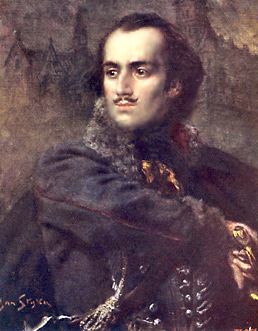
Casimir Pulaski
Kazimierz Michał Władysław Wiktor Pułaski (Polish: [kaˈʑimjɛʂ puˈwaskʲi] ⓘ; March 4 or 6, 1745 – October 11, 1779), anglicised as Casimir Pulaski (/ˈkæzɪmɪər pəˈlæski/ KA-zi-meer pə-LAS-kee), was a Polish nobleman, soldier, and military commander who has been called "The Father of American cavalry" or "The Soldier of Liberty". Born in Warsaw and following in his father's footsteps, he became interested in politics at an early age. He soon became involved in the military and in revolutionary affairs in the Polish–Lithuanian Commonwealth. Pulaski was one of the leading military commanders for the Bar Confederation and fought against the Commonwealth's foreign domination. When this uprising failed, he was driven into exile.
Following a recommendation by Benjamin Franklin, Pulaski traveled to North America to help in the American Revolutionary War. He distinguished himself throughout the revolution, most notably when he saved the life of George Washington. Pulaski became a general in the Continental Army, and he and his friend, the Hungary-born colonel commandant Michael Kovats, raised Pulaski's Legion and reformed the American cavalry as a whole. At the siege of Savannah, while leading a cavalry charge against British forces, he was fatally wounded by grapeshot and died shortly after.
Pulaski is remembered as a hero who fought for independence and freedom in Poland and the United States. Numerous places and events are named in his honor, and he is commemorated by many works of art. Pulaski is one of only eight people to be awarded honorary United States citizenship.
Pulaski was born on March 6, 1745, in the manor house of the Pułaski family in Warsaw, Poland. Casimir was the second eldest son of Marianna Zielińska and Józef Pułaski, who was an advocatus at the Crown Tribunal, the Starost of Warka, and one of the town's most notable inhabitants. He was a brother of Francis Xavier Pulaski and Antoni Pułaski. His family bore the Ślepowron coat of arms.
The Pułaski family was Catholic. Early in his youth, Casimir Pulaski attended an elite college run by Theatines, a male religious order of the Catholic Church in Warsaw, but did not finish his education.
There is some circumstantial evidence that Pulaski was a Freemason. When Gilbert du Motier, Marquis de Lafayette laid the cornerstone of the monument erected in Pulaski's honour in Monterey Square in Savannah in 1824, a full Masonic ceremony took place with Richard T. Turner, High Priest of the Georgia chapter, conducting the service. Other sources claim Pulaski was a member of the Masonic Army Lodge in Maryland. A Masonic Lodge in Chicago is named Casimir Pulaski Lodge, No.1167, and a brochure issued by the lodge claims he obtained the degree of Master Mason on June 19, 1779, and was buried with full Masonic honours. To date, no surviving documents of Pulaski's actual membership have been found.
In 1762, Pulaski started his military career as a page of Carl Christian Joseph of Saxony, Duke of Courland and the Polish king's vassal. He spent six months at the ducal court in Mitau, during which the court was interned in the palaces by the Russian forces occupying the area. He then returned to Warsaw, and his father gave him the village of Zezulińce in Podole; from that time, Pulaski used the title of Starost of Zezulińce.
He took part in the 1764 election of the new Polish monarch, Stanisław II Augustus, with his family. In December 1767, Pulaski and his father became involved with the Bar Confederation, which saw King Stanisław as a Russian puppet and sought to curtail Russian hegemony over the Commonwealth. The confederation was actively opposed by the Russian forces stationed in Poland. Pulaski recruited a unit and, on February 29, 1768, signed the act of the confederation, thus declaring himself an official supporter of the movement.
Casimir Pulaski
Kazimierz Michał Władysław Wiktor Pułaski (Polish: [kaˈʑimjɛʂ puˈwaskʲi] ⓘ; March 4 or 6, 1745 – October 11, 1779), anglicised as Casimir Pulaski (/ˈkæzɪmɪər pəˈlæski/ KA-zi-meer pə-LAS-kee), was a Polish nobleman, soldier, and military commander who has been called "The Father of American cavalry" or "The Soldier of Liberty". Born in Warsaw and following in his father's footsteps, he became interested in politics at an early age. He soon became involved in the military and in revolutionary affairs in the Polish–Lithuanian Commonwealth. Pulaski was one of the leading military commanders for the Bar Confederation and fought against the Commonwealth's foreign domination. When this uprising failed, he was driven into exile.
Following a recommendation by Benjamin Franklin, Pulaski traveled to North America to help in the American Revolutionary War. He distinguished himself throughout the revolution, most notably when he saved the life of George Washington. Pulaski became a general in the Continental Army, and he and his friend, the Hungary-born colonel commandant Michael Kovats, raised Pulaski's Legion and reformed the American cavalry as a whole. At the siege of Savannah, while leading a cavalry charge against British forces, he was fatally wounded by grapeshot and died shortly after.
Pulaski is remembered as a hero who fought for independence and freedom in Poland and the United States. Numerous places and events are named in his honor, and he is commemorated by many works of art. Pulaski is one of only eight people to be awarded honorary United States citizenship.
Pulaski was born on March 6, 1745, in the manor house of the Pułaski family in Warsaw, Poland. Casimir was the second eldest son of Marianna Zielińska and Józef Pułaski, who was an advocatus at the Crown Tribunal, the Starost of Warka, and one of the town's most notable inhabitants. He was a brother of Francis Xavier Pulaski and Antoni Pułaski. His family bore the Ślepowron coat of arms.
The Pułaski family was Catholic. Early in his youth, Casimir Pulaski attended an elite college run by Theatines, a male religious order of the Catholic Church in Warsaw, but did not finish his education.
There is some circumstantial evidence that Pulaski was a Freemason. When Gilbert du Motier, Marquis de Lafayette laid the cornerstone of the monument erected in Pulaski's honour in Monterey Square in Savannah in 1824, a full Masonic ceremony took place with Richard T. Turner, High Priest of the Georgia chapter, conducting the service. Other sources claim Pulaski was a member of the Masonic Army Lodge in Maryland. A Masonic Lodge in Chicago is named Casimir Pulaski Lodge, No.1167, and a brochure issued by the lodge claims he obtained the degree of Master Mason on June 19, 1779, and was buried with full Masonic honours. To date, no surviving documents of Pulaski's actual membership have been found.
In 1762, Pulaski started his military career as a page of Carl Christian Joseph of Saxony, Duke of Courland and the Polish king's vassal. He spent six months at the ducal court in Mitau, during which the court was interned in the palaces by the Russian forces occupying the area. He then returned to Warsaw, and his father gave him the village of Zezulińce in Podole; from that time, Pulaski used the title of Starost of Zezulińce.
He took part in the 1764 election of the new Polish monarch, Stanisław II Augustus, with his family. In December 1767, Pulaski and his father became involved with the Bar Confederation, which saw King Stanisław as a Russian puppet and sought to curtail Russian hegemony over the Commonwealth. The confederation was actively opposed by the Russian forces stationed in Poland. Pulaski recruited a unit and, on February 29, 1768, signed the act of the confederation, thus declaring himself an official supporter of the movement.
Recent media
Recent media