
Recent from talks
Geoffrey Gurrumul Yunupingu
Knowledge base stats:
Talk channels stats:
Members stats:
Geoffrey Gurrumul Yunupingu
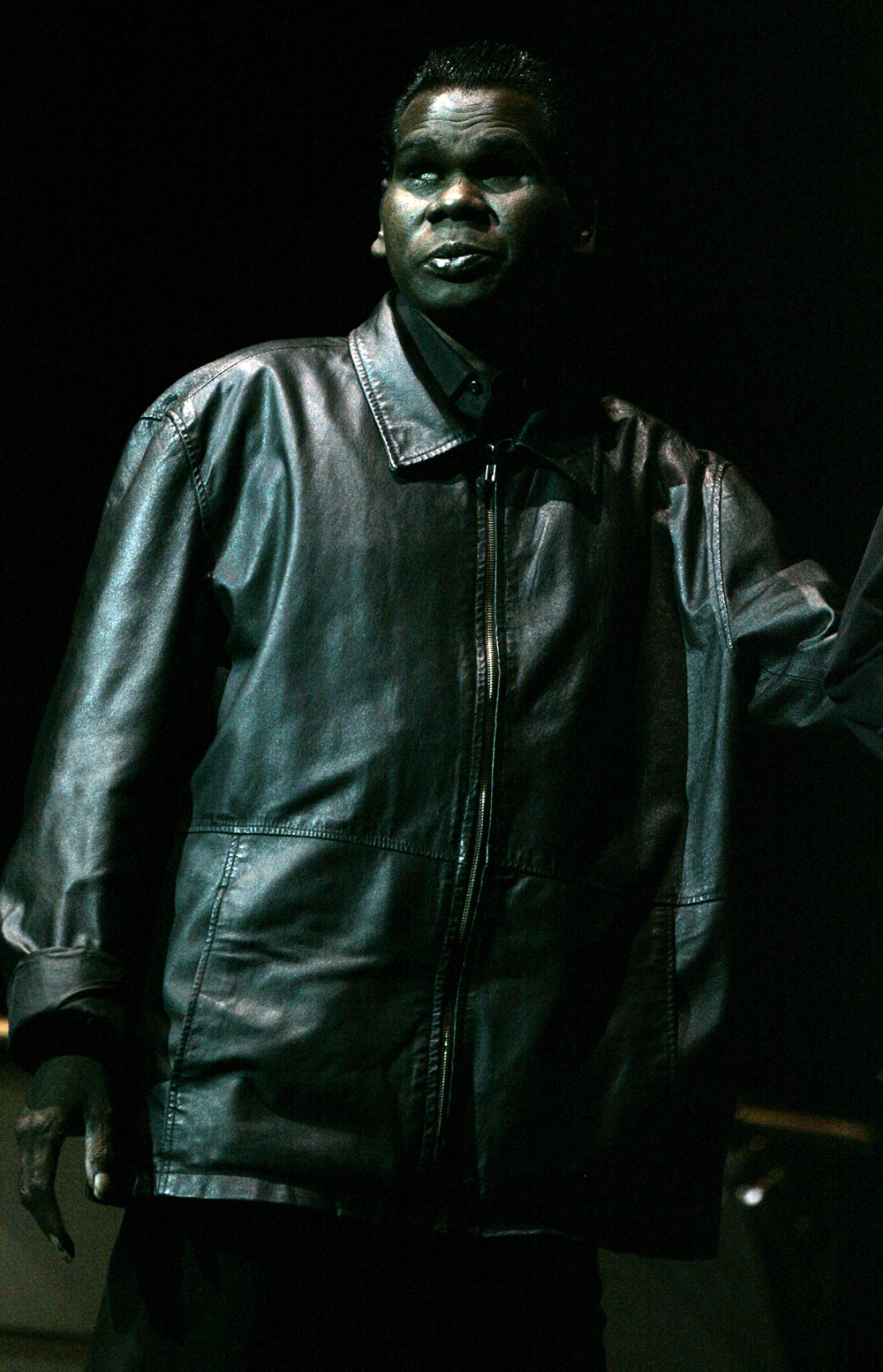
Geoffrey Gurrumul Yunupingu (22 January 1971 – 25 July 2017), commonly known as Gurrumul and also referred to since his death as Dr G. Yunupingu, was a Yolŋu Aboriginal Australian musician. A multi-instrumentalist, he played drums, keyboards, guitar (a right-hand-strung guitar played left-handed) and didgeridoo, but is best known for the clarity of his singing voice. He sang stories of his land both in Yolŋu languages, such as Gaalpu, Gumatj, or Djambarrpuynu (related to Gumatj), and in English. He began his career as a member of Yothu Yindi and later Saltwater Band, and his solo career brought him wider acclaim; he was the most commercially successful Aboriginal Australian musician at the time of his death. As of 2020, it is estimated that Yunupingu has sold half a million records globally. Yunupingu performed for Queen Elizabeth II, US President Barack Obama, Prince Charles, Prince William and Catherine Middleton, and Crown Prince Frederik and Crown Princess Mary of Denmark. He was one of only two Australian performers at the Queen's Diamond Jubilee Concert at Buckingham Palace in 2012. At the 2026 ARIA Music Awards he will be inducted in the ARIA Hall of Fame.
The first of four sons born to Ganyinurra (Daisy), of the Gumal clan, and Nyambi "Terry" Yunupingu, a Gumatj clansman, Yunupingu was born blind in Galiwin'ku, Elcho Island, in 1971, situated off the coast of Arnhem Land in northern Australia, about 530 kilometres (330 mi) east of Darwin. When he was four years old, he taught himself how to play a toy piano and an accordion. A year later he began to play a guitar; despite being a left-hander, he played a right-handed guitar, holding it upside down, which he would continue to do throughout his career. His friend, spokesperson, and collaborator Michael Hohnen described his early musical experiences as follows: "Gurrumul was educated by immersion, cultural immersion—from his aunties, parents and grandmothers, with love and lullabies; from his uncles, fathers and grandfathers through ceremony songs and storytelling, much of it through music. Throughout his childhood, he was built, given or bought tin cans, sticks, toy keyboards, piano accordions, nylon string guitars, and, later, clap sticks (bilma) and didgeridoos (yidaki). He learned foot stomping calling and whooping, vocalisations of traditional songs and their different sounds, and so much more." He later sang hymns in the mission choir and also enjoyed Western pop music, particularly Dire Straits, Cliff Richard, and Stevie Wonder. An adventurous child, he was taught how to play basketball and ride a push-bike around his community. He left school at the age of 12, having attended his local school, Shepherdson College, along with a brief stint at an institute in the Victorian city of Geelong for instruction in Braille, which did not interest him.
In 1989, at the age of 18, Yunupingu joined Yothu Yindi as a multi-instrumentalist and backing vocalist, notably contributing to their 1991 album, Tribal Voice. He left the group in 1995 to live full-time on Elcho Island and later co-founded and co-led the Saltwater Band, which was active from 1999 to 2009. His first solo album, Gurrumul, was released in 2008, debuting at No. 69 on the ARIA Charts and No. 1 on the independent chart. Gurrumul peaked at No. 3 on the ARIA Charts. The album was certified triple platinum. Yunupingu's friend Michael Hohnen produced the album and was his translator, collaborator and confidant. Critics heaped praise on the singer, describing his voice as having "transcendental beauty". Elton John, Sting and Björk were among his fans. The money he made was largely shared with his family, following the Aboriginal tradition of sharing wealth. He did not generally give interviews, instead relying on Hohnen to speak for him, following a Yolŋu custom that dictated that Yunupingu's role was only to sing, while his elders spoke publicly. In a 2009 interview with him and Hohnen, Yunupingu said that he was generally shy but more comfortable playing music, and went on to say: "I don't have much to say to people when I talk. That is for other Yolŋu. But I can play and sing and tell people things through my songs. We have an encyclopedia of stories ready to tell people, if they want to listen."
In 2008 Yunupingu was nominated for four ARIA Awards, winning the awards for Best World Music Album and Best Independent Release. He also won three Deadlys, winning for Artist of the Year, Album of the Year for Gurrumul and Single of the Year for "Gurrumul History (I Was Born Blind)".
In November 2009, Yunupingu was named Best New Independent Artist and his album, Gurrumul, Best Independent Release and Best Independent Blues/Roots Release at the Australian Independent Record (AIR) Awards held at Melbourne's Corner Hotel. In 2009 a portrait of Yunupingu by Guy Maestri won Australia's major art prize, the Archibald Prize.
He was again awarded the Australian Independent Record (AIR) Award for Best Independent Blues and Roots Album in 2011 for his album Rrakala. At the ARIA Music Awards of 2011, he won Best World Music Album and performed "Warwu" featuring Missy Higgins on piano. In 2019, Double J's Dan Condon described it as one of "7 great performances from the history of the ARIA Awards."
In 2012, Yunupingu was one of the contributing vocalists on Gary Barlow's commemorative single "Sing" for Queen Elizabeth II's diamond jubilee celebrations, which features artists from across the Commonwealth. He performed "Sing" live at the Diamond Jubilee Concert on 4 June 2012 together with many of the song's contributing artists. In 2012, Yunupingu was conferred with an Honorary Doctorate of Music by the University of Sydney.
In 2013, Yunupingu joined Delta Goodrem for a special performance of "Bayini" on The Voice Australia. In December 2013, Yunupingu released a live album, titled His Life and Music, which was recorded in the Sydney Opera House and released through ABC Music. It was nominated for Australian Independent Record Labels Association and ARIA awards. "Bayini" became the first track by an indigenous musician to reach the top five of the Australian charts.
Hub AI
Geoffrey Gurrumul Yunupingu AI simulator
(@Geoffrey Gurrumul Yunupingu_simulator)
Geoffrey Gurrumul Yunupingu
Geoffrey Gurrumul Yunupingu (22 January 1971 – 25 July 2017), commonly known as Gurrumul and also referred to since his death as Dr G. Yunupingu, was a Yolŋu Aboriginal Australian musician. A multi-instrumentalist, he played drums, keyboards, guitar (a right-hand-strung guitar played left-handed) and didgeridoo, but is best known for the clarity of his singing voice. He sang stories of his land both in Yolŋu languages, such as Gaalpu, Gumatj, or Djambarrpuynu (related to Gumatj), and in English. He began his career as a member of Yothu Yindi and later Saltwater Band, and his solo career brought him wider acclaim; he was the most commercially successful Aboriginal Australian musician at the time of his death. As of 2020, it is estimated that Yunupingu has sold half a million records globally. Yunupingu performed for Queen Elizabeth II, US President Barack Obama, Prince Charles, Prince William and Catherine Middleton, and Crown Prince Frederik and Crown Princess Mary of Denmark. He was one of only two Australian performers at the Queen's Diamond Jubilee Concert at Buckingham Palace in 2012. At the 2026 ARIA Music Awards he will be inducted in the ARIA Hall of Fame.
The first of four sons born to Ganyinurra (Daisy), of the Gumal clan, and Nyambi "Terry" Yunupingu, a Gumatj clansman, Yunupingu was born blind in Galiwin'ku, Elcho Island, in 1971, situated off the coast of Arnhem Land in northern Australia, about 530 kilometres (330 mi) east of Darwin. When he was four years old, he taught himself how to play a toy piano and an accordion. A year later he began to play a guitar; despite being a left-hander, he played a right-handed guitar, holding it upside down, which he would continue to do throughout his career. His friend, spokesperson, and collaborator Michael Hohnen described his early musical experiences as follows: "Gurrumul was educated by immersion, cultural immersion—from his aunties, parents and grandmothers, with love and lullabies; from his uncles, fathers and grandfathers through ceremony songs and storytelling, much of it through music. Throughout his childhood, he was built, given or bought tin cans, sticks, toy keyboards, piano accordions, nylon string guitars, and, later, clap sticks (bilma) and didgeridoos (yidaki). He learned foot stomping calling and whooping, vocalisations of traditional songs and their different sounds, and so much more." He later sang hymns in the mission choir and also enjoyed Western pop music, particularly Dire Straits, Cliff Richard, and Stevie Wonder. An adventurous child, he was taught how to play basketball and ride a push-bike around his community. He left school at the age of 12, having attended his local school, Shepherdson College, along with a brief stint at an institute in the Victorian city of Geelong for instruction in Braille, which did not interest him.
In 1989, at the age of 18, Yunupingu joined Yothu Yindi as a multi-instrumentalist and backing vocalist, notably contributing to their 1991 album, Tribal Voice. He left the group in 1995 to live full-time on Elcho Island and later co-founded and co-led the Saltwater Band, which was active from 1999 to 2009. His first solo album, Gurrumul, was released in 2008, debuting at No. 69 on the ARIA Charts and No. 1 on the independent chart. Gurrumul peaked at No. 3 on the ARIA Charts. The album was certified triple platinum. Yunupingu's friend Michael Hohnen produced the album and was his translator, collaborator and confidant. Critics heaped praise on the singer, describing his voice as having "transcendental beauty". Elton John, Sting and Björk were among his fans. The money he made was largely shared with his family, following the Aboriginal tradition of sharing wealth. He did not generally give interviews, instead relying on Hohnen to speak for him, following a Yolŋu custom that dictated that Yunupingu's role was only to sing, while his elders spoke publicly. In a 2009 interview with him and Hohnen, Yunupingu said that he was generally shy but more comfortable playing music, and went on to say: "I don't have much to say to people when I talk. That is for other Yolŋu. But I can play and sing and tell people things through my songs. We have an encyclopedia of stories ready to tell people, if they want to listen."
In 2008 Yunupingu was nominated for four ARIA Awards, winning the awards for Best World Music Album and Best Independent Release. He also won three Deadlys, winning for Artist of the Year, Album of the Year for Gurrumul and Single of the Year for "Gurrumul History (I Was Born Blind)".
In November 2009, Yunupingu was named Best New Independent Artist and his album, Gurrumul, Best Independent Release and Best Independent Blues/Roots Release at the Australian Independent Record (AIR) Awards held at Melbourne's Corner Hotel. In 2009 a portrait of Yunupingu by Guy Maestri won Australia's major art prize, the Archibald Prize.
He was again awarded the Australian Independent Record (AIR) Award for Best Independent Blues and Roots Album in 2011 for his album Rrakala. At the ARIA Music Awards of 2011, he won Best World Music Album and performed "Warwu" featuring Missy Higgins on piano. In 2019, Double J's Dan Condon described it as one of "7 great performances from the history of the ARIA Awards."
In 2012, Yunupingu was one of the contributing vocalists on Gary Barlow's commemorative single "Sing" for Queen Elizabeth II's diamond jubilee celebrations, which features artists from across the Commonwealth. He performed "Sing" live at the Diamond Jubilee Concert on 4 June 2012 together with many of the song's contributing artists. In 2012, Yunupingu was conferred with an Honorary Doctorate of Music by the University of Sydney.
In 2013, Yunupingu joined Delta Goodrem for a special performance of "Bayini" on The Voice Australia. In December 2013, Yunupingu released a live album, titled His Life and Music, which was recorded in the Sydney Opera House and released through ABC Music. It was nominated for Australian Independent Record Labels Association and ARIA awards. "Bayini" became the first track by an indigenous musician to reach the top five of the Australian charts.
Recent media