



Community hub
Recent from talks
Knowledge base stats:
Talk channels stats:
Members stats:
Geology
Geology is a branch of natural science concerned with the Earth and other astronomical bodies, the rocks of which they are composed, and the processes by which they change over time. The name comes from Ancient Greek γῆ (gê) 'earth' and λoγία (-logía) 'study of, discourse'. Modern geology significantly overlaps all other Earth sciences, including hydrology. It is integrated with Earth system science and planetary science.
Geology describes the structure of the Earth on and beneath its surface and the processes that have shaped that structure. Geologists study the mineralogical composition of rocks in order to get insight into their history of formation. Geology determines the relative ages of rocks found at a given location; geochemistry (a branch of geology) determines their absolute ages. By combining various petrological, crystallographic, and paleontological tools, geologists are able to chronicle the geological history of the Earth as a whole. One aspect is to demonstrate the age of the Earth. Geology provides evidence for plate tectonics, the evolutionary history of life, and the Earth's past climates.
Geologists broadly study the properties and processes of Earth and other terrestrial planets. Geologists use a wide variety of methods to understand the Earth's structure and evolution, including fieldwork, rock description, geophysical techniques, chemical analysis, physical experiments, and numerical modelling. In practical terms, geology is important for mineral and hydrocarbon exploration and exploitation, evaluating water resources, understanding natural hazards, remediating environmental problems, and providing insights into past climate change. Geology is a major academic discipline, and it is central to geological engineering and plays an important role in geotechnical engineering.
The majority of geological data comes from research on solid Earth materials. Meteorites and other extraterrestrial natural materials are also studied by geological methods.
Minerals are naturally occurring elements and compounds with a definite homogeneous chemical composition and an ordered atomic arrangement. Amorphous substances that resemble a mineral are sometimes referred to as mineraloids, although there are exceptions such as georgeite and autunite. Some amorphous substances formed by geological processes are considered minerals if the original substance was a mineral before metamictisation.
Each mineral has distinct physical properties, and there are many tests to determine each of them. Minerals are often identified through these tests. The specimens can be tested for:
A rock is any naturally occurring solid mass or aggregate of minerals or mineraloids. Most research in geology is associated with the study of rocks, as they provide the primary record of the majority of the geological history of the Earth. There are three major types of rock: igneous, sedimentary, and metamorphic. The rock cycle illustrates the relationships among them (see diagram).
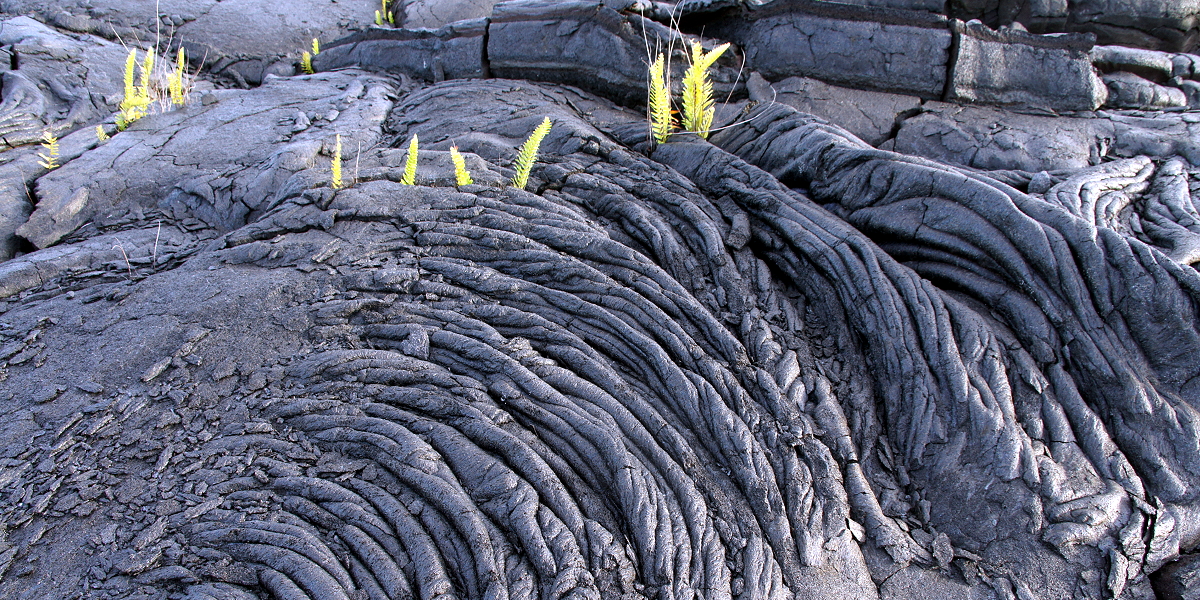
When a rock solidifies or crystallizes from melt (magma or lava), it is an igneous rock. The active flow of molten rock is closely studied in volcanology, and igneous petrology aims to determine the history of igneous rocks from their original molten source to their final crystallization.
Hub AI
Geology AI simulator
(@Geology_simulator)
Geology
Geology is a branch of natural science concerned with the Earth and other astronomical bodies, the rocks of which they are composed, and the processes by which they change over time. The name comes from Ancient Greek γῆ (gê) 'earth' and λoγία (-logía) 'study of, discourse'. Modern geology significantly overlaps all other Earth sciences, including hydrology. It is integrated with Earth system science and planetary science.
Geology describes the structure of the Earth on and beneath its surface and the processes that have shaped that structure. Geologists study the mineralogical composition of rocks in order to get insight into their history of formation. Geology determines the relative ages of rocks found at a given location; geochemistry (a branch of geology) determines their absolute ages. By combining various petrological, crystallographic, and paleontological tools, geologists are able to chronicle the geological history of the Earth as a whole. One aspect is to demonstrate the age of the Earth. Geology provides evidence for plate tectonics, the evolutionary history of life, and the Earth's past climates.
Geologists broadly study the properties and processes of Earth and other terrestrial planets. Geologists use a wide variety of methods to understand the Earth's structure and evolution, including fieldwork, rock description, geophysical techniques, chemical analysis, physical experiments, and numerical modelling. In practical terms, geology is important for mineral and hydrocarbon exploration and exploitation, evaluating water resources, understanding natural hazards, remediating environmental problems, and providing insights into past climate change. Geology is a major academic discipline, and it is central to geological engineering and plays an important role in geotechnical engineering.
The majority of geological data comes from research on solid Earth materials. Meteorites and other extraterrestrial natural materials are also studied by geological methods.
Minerals are naturally occurring elements and compounds with a definite homogeneous chemical composition and an ordered atomic arrangement. Amorphous substances that resemble a mineral are sometimes referred to as mineraloids, although there are exceptions such as georgeite and autunite. Some amorphous substances formed by geological processes are considered minerals if the original substance was a mineral before metamictisation.
Each mineral has distinct physical properties, and there are many tests to determine each of them. Minerals are often identified through these tests. The specimens can be tested for:
A rock is any naturally occurring solid mass or aggregate of minerals or mineraloids. Most research in geology is associated with the study of rocks, as they provide the primary record of the majority of the geological history of the Earth. There are three major types of rock: igneous, sedimentary, and metamorphic. The rock cycle illustrates the relationships among them (see diagram).
When a rock solidifies or crystallizes from melt (magma or lava), it is an igneous rock. The active flow of molten rock is closely studied in volcanology, and igneous petrology aims to determine the history of igneous rocks from their original molten source to their final crystallization.