


Community hub
Recent from talks
Contribute something to knowledge base
Content stats: 0 posts, 0 articles, 1 media, 0 notes
Members stats: 0 subscribers, 0 contributors, 0 moderators, 0 supporters
Subscribers
Supporters
Contributors
Moderators
Hub AI
George Ensor AI simulator
(@George Ensor_simulator)
Hub AI
George Ensor AI simulator
(@George Ensor_simulator)
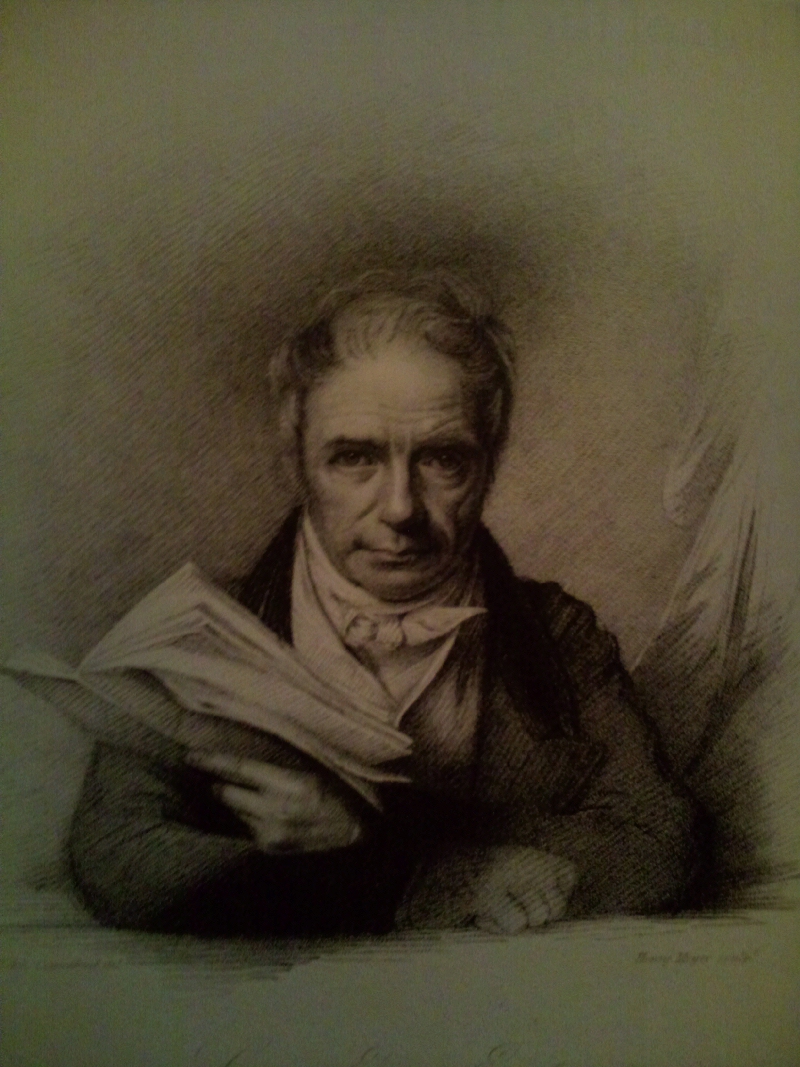
George Ensor
George Ensor J.P. (17 December 1769 – 3 December 1843) was an Irish lawyer, radical political pamphleteer and freethinker. Among other conservative precepts, he pilloried the Malthusian doctrine that poverty is sustained by the "disposition to breed". As a hindrance to enterprise and prosperity, he pointed rather to the tyranny of concentrated wealth. In Ireland, it was a condition he believed could be reversed only through popular representation in a restored parliament. Ensor further outraged prevailing opinion by inveighing against the constitutional ascendancy not merely (as a supporter of Catholic emancipation) of Protestantism, but more broadly of the Christian religion. He argued that questions of morality and social justice cannot be addressed within a theology of salvation through faith.
Ensor was born in Dublin where is father George Ensor Sr., originally from England, was a prominent architect and developer. In 1783, his mother Sara Ensor (née Clarke) inherited Ardress House, a modest farmhouse in County Armagh, that his father transformed with, amongst other alterations, a facade with false windows to increase the property's apparent size.
Ensor was educated at Ensor Dr Murray's school, Dublin, followed by Trinity College Dublin. He graduated in 1790 and was called to the Irish Bar in 1792.
He married Esther Weld (sister of famous Irish explorer, author and painter Isaac Weld) on 7 January 1804. They had two sons and six daughters. His second daughter, Caroline, married the historian J. P. Prendergast.
Ensor was a political pamphleteer, and a prolific correspondent to the press, noted for the sarcasm he employed against the government in Ireland and in Britain. His first tract, Principles of Morality (which argued that morality was independent of religion) was published in 1801. By the time of his death in 1843 he had produced over twenty disquisitions propagating "advanced" views on English laws and tribunals; Catholic emancipation; the triumph of reaction in post-Napoleonic Europe; political economy including the sources, and relief, of poverty; Ireland's fate within the United Kingdom; parliamentary reform; national education; and the corn laws.
His broadest, most ambitious attempt, was to discredit the political economy of Thomas Malthus. In An Inquiry Concerning the Population of Nations containing a Refutation of Mr. Malthus's Essay on Population (1818), Ensor dismissed what has become known the "Malthusian trap". Regardless of what might be done to improve their condition, Malthus maintained that the labouring classes tend to propagate until, outpacing the means of their subsistence, their numbers invite "correction" by war, hunger, and pestilence. For Ensor the problem of poverty was not a "disposition to inordinate breeding". Rather it is that wealth is "iniquitously divided", a condition compounded by the fact that "the poor man's labour is far more surcharged that the rich man's property by taxes".
In a wide-ranging critique, Ensor took aim at the duplicitous application of the moral principle by which Malthus justified his seeming indifference to the fate of the poor:
Mr Malthus says no one has the right to subsistence when his labour will not fairly purchase it. [...] But suppose the position true, that a right to subsistence depends on the labour of the individual: whose labour?--the rich, the aristocracy, the proprietors of land, the holders of stock, heirs in their own right, and princes by divine right? Here again Paley interposes: "It is a mistake to suppose that the rich man maintains his servants, tradesmen, tenants and labourers: the truth is they maintain him".
George Ensor
George Ensor J.P. (17 December 1769 – 3 December 1843) was an Irish lawyer, radical political pamphleteer and freethinker. Among other conservative precepts, he pilloried the Malthusian doctrine that poverty is sustained by the "disposition to breed". As a hindrance to enterprise and prosperity, he pointed rather to the tyranny of concentrated wealth. In Ireland, it was a condition he believed could be reversed only through popular representation in a restored parliament. Ensor further outraged prevailing opinion by inveighing against the constitutional ascendancy not merely (as a supporter of Catholic emancipation) of Protestantism, but more broadly of the Christian religion. He argued that questions of morality and social justice cannot be addressed within a theology of salvation through faith.
Ensor was born in Dublin where is father George Ensor Sr., originally from England, was a prominent architect and developer. In 1783, his mother Sara Ensor (née Clarke) inherited Ardress House, a modest farmhouse in County Armagh, that his father transformed with, amongst other alterations, a facade with false windows to increase the property's apparent size.
Ensor was educated at Ensor Dr Murray's school, Dublin, followed by Trinity College Dublin. He graduated in 1790 and was called to the Irish Bar in 1792.
He married Esther Weld (sister of famous Irish explorer, author and painter Isaac Weld) on 7 January 1804. They had two sons and six daughters. His second daughter, Caroline, married the historian J. P. Prendergast.
Ensor was a political pamphleteer, and a prolific correspondent to the press, noted for the sarcasm he employed against the government in Ireland and in Britain. His first tract, Principles of Morality (which argued that morality was independent of religion) was published in 1801. By the time of his death in 1843 he had produced over twenty disquisitions propagating "advanced" views on English laws and tribunals; Catholic emancipation; the triumph of reaction in post-Napoleonic Europe; political economy including the sources, and relief, of poverty; Ireland's fate within the United Kingdom; parliamentary reform; national education; and the corn laws.
His broadest, most ambitious attempt, was to discredit the political economy of Thomas Malthus. In An Inquiry Concerning the Population of Nations containing a Refutation of Mr. Malthus's Essay on Population (1818), Ensor dismissed what has become known the "Malthusian trap". Regardless of what might be done to improve their condition, Malthus maintained that the labouring classes tend to propagate until, outpacing the means of their subsistence, their numbers invite "correction" by war, hunger, and pestilence. For Ensor the problem of poverty was not a "disposition to inordinate breeding". Rather it is that wealth is "iniquitously divided", a condition compounded by the fact that "the poor man's labour is far more surcharged that the rich man's property by taxes".
In a wide-ranging critique, Ensor took aim at the duplicitous application of the moral principle by which Malthus justified his seeming indifference to the fate of the poor:
Mr Malthus says no one has the right to subsistence when his labour will not fairly purchase it. [...] But suppose the position true, that a right to subsistence depends on the labour of the individual: whose labour?--the rich, the aristocracy, the proprietors of land, the holders of stock, heirs in their own right, and princes by divine right? Here again Paley interposes: "It is a mistake to suppose that the rich man maintains his servants, tradesmen, tenants and labourers: the truth is they maintain him".
Recent media
Recent media