Hubbry Logo
George PearceGeorge PearceMain
Open search
George Pearce
Community hub
George Pearce
logo
8 pages, 0 posts
0 subscribers
Be the first to start a discussion here.
George Pearce
George Pearce
from Wikipedia

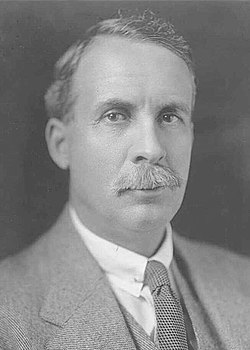
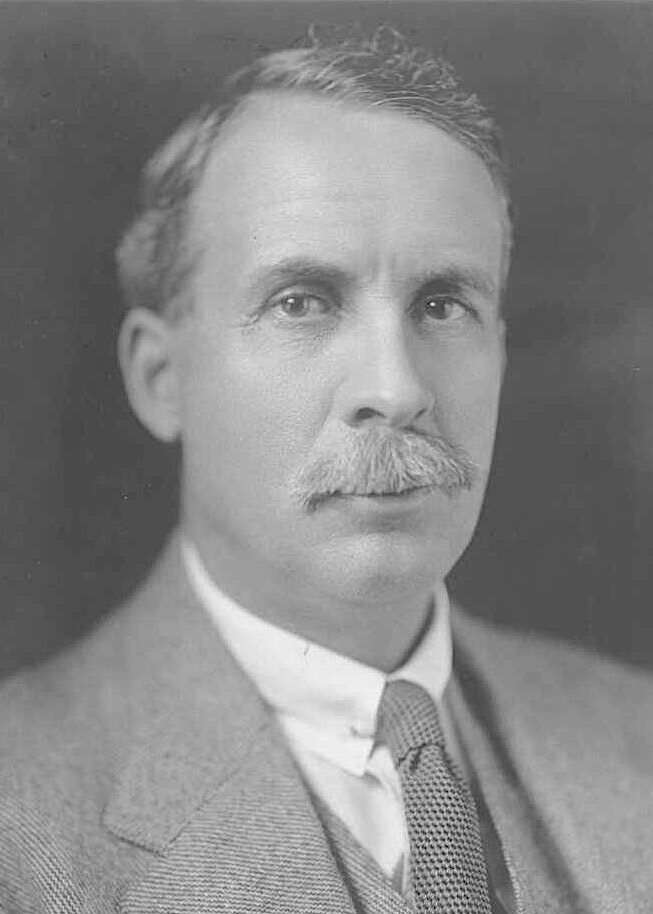
Sir George Foster Pearce KCVO (14 January 1870 – 24 June 1952) was an Australian politician who served as a Senator for Western Australia from 1901 to 1938. He began his career in the Labor Party but later joined the National Labor Party, the Nationalist Party, and the United Australia Party; he served as a cabinet minister under prime ministers from all four parties.

Key Information

Pearce was born in Mount Barker, South Australia. He left school at the age of 11 and trained as a carpenter, later moving to Western Australia and becoming involved in the union movement. He helped establish the Labor Party there, and in 1901 – aged 31 – was elected to the new federal parliament. Pearce was elevated to cabinet in 1908, under Andrew Fisher, and served in each of Fisher's three governments. He continued on in cabinet when Billy Hughes became prime minister in 1915, and after the Labor Party split of 1916 followed Hughes to the National Labor Party and then to the Nationalists. Pearce also served in cabinet under Stanley Bruce and, after joining the UAP in 1931, Joseph Lyons. He was Minister for Defence from 1908 to 1909, 1910 to 1913, 1914 to 1921, and 1932 to 1934. His 24 years in cabinet and 37 years as a senator are both records.

Early life

[edit]

Pearce was born on 14 January 1870 in Mount Barker, South Australia. He was the fifth of eleven children born to Jane (née Foster) and James Pearce.[1] His father was a blacksmith of Cornish descent, born in the village of Altarnun, while his mother was born in London.[2] An uncle, George Pearce, briefly served in the South Australian House of Assembly.[3]

During Pearce's childhood his family lived in various locations in rural South Australia. His mother died when he was ten years old, and he left school the following year by which time the family was living in Redhill. His father briefly tried wheat farming on the Eyre Peninsula, then moved the family to Kilkerran on the Yorke Peninsula where he returned to blacksmithing. Pearce began working as a farm labourer at the age of twelve in nearby Maitland. He took up a carpentry apprenticeship in Maitland in 1885, where he also received free evening lessons from the local school headmaster. He moved to Adelaide after completing his apprenticeship, but lost his job in the early 1890s depression.[2]

In 1892, Pearce moved to Western Australia where he found work as a carpenter in Perth. Following the discovery of gold at Coolgardie, he left Perth in March 1894 and went to the Eastern Goldfields where he joined thousands of others in prospecting for alluvial gold.[2] While camped at Kurnalpi, Pearce and two others were attacked by Wangkatha men armed with spears, to which he responded by firing his revolver three times. He had little success in prospecting and returned to Perth in 1895.[4]

After returning to Perth, Pearce resumed his work as a carpenter and his involvement in the labour movement, where he was a member of the Amalgamated Society of Carpenters and Joiners.[4] In the late 1890s he "became one of Perth's most prominent trade unionists".[3] The local labour movement at the time largely consisted of small craft unions of skilled tradesmen, with an atmosphere less militant than in the other Australian colonies.[4] In 1897 Pearce nonetheless led a strike on building sites that led to him being blacklisted for several weeks.[3][5] In the same year he purchased a home in the working-class suburb of Subiaco, working at the local Whittaker Bros. timber mill.[4]

Early political career

[edit]
Pearce in 1901

In 1893, Pearce helped found the Progressive Political League, a precursor to the Western Australian branch of the ALP.[1] He was elected to the Subiaco Municipal Council in 1898.[4]

In the lead-up to Federation in 1901, Pearce joined the executive of the Western Australian Federal League and campaigned for the "Yes" vote at the referendum in July 1900 which approved Western Australia as an original state. A Trades and Labour Conference held in Perth in August 1900 agreed that labour candidates for the inaugural federal election would be subject to a preselection process for the House of Representatives and that the conference would endorse two candidates for the Senate – one from Perth and one from the Eastern Goldfields.[6] Pearce was selected as the labour candidate from Perth and was elected to a six-year Senate term at the March 1901 federal election. He joined the parliamentary Australian Labor Party (ALP) on its formation in May 1901.[7]

In Pearce's maiden speech to parliament, he outlined his views as a moderate socialist and looked forward to a time when "the representatives of labour and capital could join hands to the advantage of both".[8] He also called for the nationalisation of natural monopolies, and in 1906 introduced an unsuccessful private member's bill to amend the constitution to that effect. Pearce was one of the few free traders in the Labor Party in his first years in parliament, believing high tariff policies made imports more expensive for Western Australia and had few benefits given the state's limited secondary industries.[9] He narrowly missed out on being a member of the first Labor Party cabinet when Chris Watson became Prime Minister in 1904. He was later Chairman of Committees in the Senate from 1907 to 1908.[10]

Fisher governments

[edit]

In 1908, Pearce was elected to cabinet by the ALP caucus as a member of the first Fisher Ministry. He had long shown an interest in defence matters in the Senate and was chosen by Prime Minister Andrew Fisher to become Minister for Defence.[11] He believed it was his duty as minister to accept "any reasonable expenditure on armament, ammunition, and accoutrements" recommended by his advisers and to resolve disagreements between sections of the military.[12] During his first term as minister, Pearce ordered three River-class torpedo-boat destroyers for the what would become the Royal Australian Navy.[3]

Pearce regained the defence portfolio in the second Fisher Ministry (1910–1913). During his second term as minister, he was responsible for the Naval Defence Act 1910, which created the Australian Commonwealth Naval Board and the Royal Australian Naval College.[1] In 1911 he announced that orders had been placed for Australia's first two submarines, AE1 and AE2.[13] Pearce attended the 1911 Imperial Conference in London where the relationship between the Royal Navy and Royal Australian Navy was determined. He oversaw the implementation of the Universal Service Scheme of compulsory military training scheme, and in 1912 approved the creation of the Central Flying School at Point Cook, Victoria, which became the "birthplace of Australian military aviation".[3]

Defence minister, 1914–1921

[edit]

World War I

[edit]
Pearce photographed by Alice Mills in the 1910s

In 1914, Australia entered World War I. Upon Billy Hughes' ascension as prime minister, Pearce was named deputy leader of the party.[1]

Pearce served as acting prime minister from January to August 1916, while Hughes was in England and France.[14] He was the first senator to hold the position, and the only senator to do so until Bill Spooner in 1962.[15] Outside of the defence portfolio, Pearce oversaw the creation of Advisory Council of Science and Industry, the predecessor of the CSIRO, which Hughes had approved before his departure. In March 1916, he used the War Precautions Act 1914 to set price controls on bread and flour in metropolitan areas. On 6 July he extended this to all other foods, and on 20 July he created the Necessary Commodities Commission with the power to set prices on any item.[16]

By the time of Hughes' return, Australia's prosecution of the war made the introduction of conscription an intensely divisive issue for the ALP. Pearce was convinced of the necessity of introducing conscription, but the majority of his party did not agree. Pearce, along with many other of the party's founding members, subsequently followed Hughes out of the party and into the new "National Labor Party". A few months later, the National Labor Party merged with the Commonwealth Liberal Party to form the Nationalist Party, with Hughes as its leader.[1]

Aftermath

[edit]
Caricature of Pearce by John Henry Chinner, c. 1920

In December 1918, following the signing of the Armistice of 11 November 1918 which ended World War I, it was announced that Pearce would be sent to London to oversee the demobilisation and repatriation of Australian troops, although a separation Repatriation Department had been established in 1917 headed by Edward Millen.[17] The announcement received public criticism from those dissatisfied with his performance as defence minister, and a crowd gathered to boo and cat-call Pearce as his ship left Melbourne in January 1919.[18] In London, Pearce faced a number of challenges, including conflict with British authorities over the availability of troop transport ships.[19] In September 1919, he signed the Treaty of Saint-Germain-en-Laye with Austria on behalf of Australia. He returned to Australia the following month in time to campaign at the 1919 federal election.[20]

In January 1920, Pearce and navy minister Joseph Cook approved the proposal of the Air Service Committee to establish the Australian Air Force as a standalone service arm, successfully lobbying cabinet for its independence from the army and navy.[20] In the same month he convened the Senior Officers Conference to report on the size and structure of Australia's post-war military.[21] He approved the report's recommendations around the reorganisation of the Citizen Military Force and retention of compulsory military training, but rejected a proposal to amend the Defence Act to allow Australian soldiers to serve overseas as part of British expeditionary forces.[22] Pearce was the Australian representative at the Washington Naval Conference of 1921.[23]

Post-war politics

[edit]

Bruce–Page government

[edit]

Most of the defectors to the Nationalists subsequently faded into obscurity, but Pearce went on to have a successful career in the party of his erstwhile opponents. After Hughes was deposed as Nationalist leader, Pearce accepted a position in the ministry of Hughes' successor and rival, Stanley Bruce. As Minister for Home and Territories he showed a particular interest in the Northern Territory and was "the driving force" behind its division in 1927 into separate territories of Central Australia and North Australia. It was reversed by the Scullin government in 1931.[1] He became the first Father of the Senate in 1923. He was appointed a Knight Commander of the Royal Victorian Order (KCVO) in 1927.[24]

Lyons government

[edit]
Pearce in 1927

In January 1932, following the UAP's victory at the 1931 election, Pearce was appointed defence minister for a fourth time.[25] He articulated the defence policies that he had supported throughout his career in a September 1933 speech to the Millions Club in Sydney: "an efficient Australian navy capable of operating with the Royal Navy; a well-equipped army based on a militia; a modern air force; armaments and munitions factories; and a closer defence relationship with New Zealand".[26] Pearce's speech attracted international attraction for its commitment to rearmament, a policy subsequently adopted by the United Kingdom and other dominions later in the 1930s. He announced that the Lyons government would allocate an additional £1.5 million in defence expenditure,[27] effectively doubling the previous year's defence budget and reversing cuts made during the Great Depression.[28]

Following the 1934 federal election, Pearce requested to be removed from the defence portfolio, which had begun to exhaust him. He was instead appointed Minister for External Affairs in October 1934, although he continued to maintain an interest in defence policy.[29] He played no significant role in formulating policy, but helped establish his department as an institution in its own right, expanding the diplomatic corps and supporting the establishment of one of Australia's first foreign affairs journals, Current Notes on International Affairs.[30] The external affairs department had previously been run as a branch of the Prime Minister's Department and did not receive its own separate head until 1935.[31]

As external affairs minister, Pearce supported the Lyons government's diplomatic policy of appeasement of Imperial Japan while Australia continued to rearm. In October 1935, he told U.S. consul-general Jay Pierrepont Moffat that "the government remained suspicious of [Japan]'s ultimate intentions, but with British naval strength reduced below the safety point, and with American aid discounted, there was no policy open to her other than trying to be friendly with Japan and to give her no excuse to adopt an aggressive policy vis-à-vis the Commonwealth".[32] He later echoed Lyons' calls for a Pacific non-aggression treaty between the United States and Japan.[33]

Pearce campaigned for the "No" vote in the 1933 Western Australian secession referendum, touring the state with Lyons and Tom Brennan for two weeks. The "Yes" vote won almost a two-thirds majority, but ultimately secession did not occur.[34] Pearce's opposition to secession played a key role in his defeat at the 1937 federal election, along with claims he had failed to defend Western Australia's interests and had not visited the state often enough. The pro-secession Sunday Times ran an anti-Pearce editorial line, while the Dominion League of Western Australia and the Wheatgrowers' Union ran a "Put Pearce Last" campaign.[35] He resigned as a minister after the election and spent the remainder of his term as a backbencher, concluding his service on 30 June 1938.[36] He was a senator for 37 years and three months, a record term. His total service as a minister was 24 years and seven months, also a record in the Australian Parliament.[1]

Later life

[edit]

Pearce made no attempts to re-enter parliament after his defeat. He served on the Commonwealth Grants Commission from 1939 to 1944, and as chairman of the Defence Board of Business Administration from 1940 until it was abolished in 1947.[3] Prime Minister John Curtin retained him in the latter position despite the opposition of some within the Labor Party, including Arthur Calwell and Eddie Ward.[37] The board supervised all defence expenditure of over £10,000.[1]

Pearce had lived mainly in Melbourne since entering the Senate, but co-owned a farm in Tenterden, Western Australia, with his son and visited regularly.[3] He published an autobiography, Carpenter to Cabinet, in 1951, which had been written over a decade earlier.[1] Pearce died at his home in Elwood on 24 June 1952, aged 82.[3] At the time of his death, he was the last surviving member of the first Australian Senate elected at Federation in 1901; MHRs Billy Hughes and King O'Malley from the First Parliament would outlive him.[1]

Personal life

[edit]
Pearce and his wife Eliza in Washington, D.C., in 1922

In 1897, Pearce married Eliza Maud Barrett, a domestic servant, at Trinity Church, Perth.[4] They had two sons and two daughters together.[1] He was widowed in 1947.[38] His great-granddaughter Jane Prentice was elected to federal parliament in 2010.[39]

Legacy

[edit]

Places named in Pearce's honour include RAAF Base Pearce and the electoral Division of Pearce in Western Australia, Pearce Peak in Antarctica, and the Canberra suburb of Pearce.

Australia's longest-serving prime minister Robert Menzies wrote the introduction to Peter Heydon's 1965 biography of Pearce, Quiet Decision, and recalled that he had "never sat with an abler man than George Pearce" in cabinet. Menzies praised Pearce's "profound and reflective mind", analytical way of thinking, and ability to express ideas and policy recommendations.[3]

References

[edit]

Further reading

[edit]
[edit]
Revisions and contributorsEdit on WikipediaRead on Wikipedia
from Grokipedia

Sir George Foster Pearce KCVO (14 January 1870 – 24 June 1952) was an Australian politician who represented Western Australia in the Senate from Federation in 1901 until his defeat in 1937, making him one of the chamber's longest-serving members. A former carpenter and trade unionist, Pearce began his parliamentary career with the Labor Party but defected in 1917 amid the conscription debate, aligning thereafter with conservative coalitions including the Nationalists and United Australia Party.
Pearce's most significant contributions centered on defense policy, as he held the portfolio of Minister for Defence four times: briefly in 1908–1909, from 1910 to 1913, continuously through until 1921, and again from 1932 to 1934. During his early tenure, he authorized the purchase of torpedo-boat destroyers that formed the nucleus of the Royal Australian Navy and introduced compulsory military training for male citizens aged 12 to 26 in 1911, a measure aimed at building national preparedness amid regional tensions. In overseeing Australia's effort, Pearce managed the recruitment, transportation, and supply of over 400,000 troops to overseas theaters while maintaining home defenses, though his support for referendums led to his expulsion from Labor and enduring political realignments. His later roles included advocating for aviation development, with the RAAF base at Pearce named in his honor. Pearce's career was marked by both acclaim for institutionalizing Australia's defense apparatus and criticisms, including controversies over early naval procurement decisions and his opposition to Western Australia's 1933 secession referendum, during which he faced public hostility. Despite these, his pragmatic focus on imperial defense and military modernization positioned him as a foundational figure in Australian strategic policy, spanning from pre-Federation concerns over Japanese expansion to interwar rearmament.

Early Life and Background

Birth and Family Origins

George Foster Pearce was born on 14 January 1870 in . He was the fifth of eleven children born to English immigrant parents, James Pearce, a , and his wife Jane (née Foster). The Pearce family had emigrated from England, with James establishing himself as a tradesman in the colony's rural districts. Jane Pearce managed the household amid the challenges of a large family in frontier South Australia, where economic opportunities were limited for working-class immigrants. These modest origins in a blacksmith's family shaped Pearce's early exposure to manual labor and colonial hardships, influencing his later alignment with labor movements.

Education and Early Employment

Pearce attended Red Hill Public School near , leaving formal education at the age of 11. Following his departure from school, he initially worked as a farm laborer in rural , enduring several years of dissatisfaction in agricultural employment before transitioning to skilled trades. Pearce then commenced a carpentry apprenticeship, completing his training and establishing himself as a journeyman carpenter, initially in Adelaide. In the mid-1890s, he migrated to Western Australia during the gold rush, prospecting unsuccessfully on the fields before returning to Perth to resume carpentry work under demanding conditions, including 57-hour weeks for minimal wages around two shillings per day. This period marked his entry into the building trade unions, where he began advocating for workers' rights amid the colony's rapid expansion.

Entry into Politics and Labor Movement

Pre-Federation Activism

Pearce migrated to in 1892, initially joining a prospecting party and spending about a year on the goldfields, primarily at Coolgardie. Returning to Perth, he resumed work as a carpenter and immersed himself in the labor movement, helping to establish the West Australian Timber Workers' Union. In 1897, Pearce played a key role in the Perth building trades strike, advocating for carpenters' wages by organizing meetings in response to petitions from non-union workers and navigating tensions between unionists and employers amid economic pressures from . His involvement highlighted emerging divisions within the labor ranks, as he sought to balance militancy with practical negotiation to secure better conditions for tradesmen. By 1898, Pearce had entered local governance, securing election to the Subiaco Municipal Council, where he represented working-class interests in suburban Perth. This position amplified his visibility within the labor community, positioning him as a bridge between municipal reform and broader union advocacy. As approached, Pearce rose to prominence in 's labor circles, actively campaigning for colonial unification from 1893 onward. In January 1900, at the second West Australian Trades' Union and Labor Congress, he was elected president of the platform committee, where he helped draft policies endorsing while prioritizing labor protections such as an eight-hour workday and mechanisms. By that year, his leadership had elevated him to a pre-eminent role in the state labor movement, founding elements of what became the Labour Council of .

Election to the First Senate

Pearce, a carpenter active in Western Australia's labor movement, chaired the second West Australian Trades' Union and Labor in 1900, which resolved to field two Labor candidates for the in the inaugural federal election. The Perth Trades and Labor Council selected him as one of those candidates, representing views, while goldfields workers chose Hugh de Largie as a protectionist. Despite lacking prior elective office experience, Pearce campaigned vigorously across the state in the lead-up to the held on 29–30 March 1901. Labor's platform emphasized workers' rights, federation benefits, and economic reforms, aligning with Pearce's union background and advocacy for protective labor legislation. Western Australia elected six senators, with Labor securing three seats: de Largie first, Edward Dawson second, and Pearce third. Pearce's election marked his entry into federal politics, where he served continuously until 1938, becoming one of the youngest members of the first .

Ministerial Roles in Early Commonwealth Governments

Fisher Governments and Initial Defence Portfolio

Pearce served as Minister for Defence in Fisher's first ministry from November 1908 to June 1909. In this initial tenure, he initiated naval expansion by placing an order on 9 February 1909 for three torpedo boat destroyers—HMAS Parramatta, Yarra, and Swan—to be constructed in Britain, marking the first major step toward an independent Australian naval capability following the 1909 naval crisis prompted by British concerns over German expansion. These vessels, delivered between 1910 and 1912, bolstered coastal defence amid fears of imperial vulnerability. Upon Fisher's return to power, Pearce regained the Defence portfolio in the second ministry, sworn in on 29 April 1910 and lasting until 24 June 1913. He oversaw the implementation of compulsory military training under the Defence Act 1909, enacted by the preceding Fusion government, which required physical and military drills for boys aged 12 to 18 and annual training for men up to 26, with penalties including fines or imprisonment for non-compliance; by 1912, over 200,000 cadets and trainees were enrolled, establishing a citizen foundation. Pearce also drove the Naval Defence Act 1910, creating the Australian Commonwealth Naval Board for centralized administration and authorizing the Royal Australian Naval College at (though initially sited at , , from 1911). These measures reflected a shift from reliance on British imperial forces to self-reliant defence, informed by strategic assessments of regional threats. During this period, Pearce addressed administrative inefficiencies inherited from prior ministries, including duplicative state forces and inadequate equipment, by standardizing uniforms, rifles, and training protocols across the Commonwealth Military Forces. He established initial defence manufacturing, such as small arms production at Lithgow, to reduce import dependence, though output remained limited until wartime expansion. In 1911, Pearce attended the in , advocating for Australian control over its fleet units while committing to imperial defence contributions, resulting in agreements for battleships if needed, though none were ultimately ordered before war. His tenure laid groundwork for unified command structures, despite challenges from fiscal constraints and opposition to within Labor ranks.

Pre-War Defence Reforms

Upon assuming the role of Minister for Defence in the second Fisher Labor government on 13 April 1910, Pearce prioritized reforms informed by Lord Kitchener's report on 's land forces, delivered earlier that year. Kitchener had recommended a citizen based on compulsory , which Pearce advanced through amendments to the Defence Act 1903, extending mandatory service to boys aged 12 to 18 as senior cadets and establishing a framework for a universal system. These changes took effect on 1 January 1911, requiring all physically fit males aged 12-26 to undergo annual , with penalties for non-compliance including fines or imprisonment, though enforcement faced resistance from pacifist and religious groups. By mid-1912, Pearce adjusted cadet punishments to encourage participation amid compliance challenges, aiming to build a force of 127,000 men by 1919-20. Pearce also oversaw naval expansion under the Naval Defence Act of 1910, which created a Naval Board to administer the fleet and funded the establishment of the Royal Australian Naval College at , , commencing operations in 1911. At the 1911 Imperial Conference in , he secured British agreement for an Australian fleet unit within the Royal Navy, including the acquisition of destroyers, submarines, and cruisers to form the core of the Royal Australian Navy (RAN). This built on prior orders for three E-class destroyers, enhancing coastal defence capabilities against potential threats from or . The Defence Act 1912, passed under Pearce's stewardship, authorized government-owned factories for munitions production, including field guns and small arms, to reduce reliance on imports and support local manufacturing at sites like . Complementing this, Pearce established the Central Flying School at Point Cook, Victoria, in 1912, marking early investment in with the purchase of initial aircraft for training. These measures collectively modernized Australia's defence infrastructure, emphasizing self-reliance and preparedness, though budgetary constraints limited full realization before the outbreak of war in 1914.

Defence Leadership During World War I

Mobilization and War Effort

Upon the outbreak of war on 4 August 1914, Pearce, as Minister for Defence, directed the rapid mobilization of Australian forces, leveraging pre-war reforms including the Universal Training Scheme introduced in 1911, which had expanded the to 45,645 personnel by mid-1914. Recruitment for the Australian Imperial Force (AIF) commenced on 10 August 1914, targeting an initial expeditionary force of 20,000 volunteers, with the first contingent trained and ready for embarkation by 21 September 1914, comprising 52,561 enlistees by December. Pearce initially decreed a preference for single men in enlistments to optimize recruitment efficiency, though this policy was soon retracted amid concerns over its impact on volunteer numbers. Pearce's oversight extended to the logistical backbone of the , where he was primarily responsible for the transportation and provisioning of troops overseas, including the coordination of shipping convoys that deployed the initial AIF divisions to and subsequent reinforcements to fronts in Gallipoli, the Western Front, and the . Under his administration, the Defence Department expanded dramatically from 400 to 6,000 employees, facilitating the establishment of new training camps, supply depots, hospitals, and coastal defence vessels to support a that grew to over 300,000 enlistees by mid-1916 through sustained recruitment drives. These efforts enabled to commit significant manpower voluntarily, with Pearce initiating complex purchasing and welfare arrangements that sustained reinforcements despite overseas command by British generals. A into defence administration acknowledged organizational deficiencies in supply chains but commended Pearce's overall achievements in scaling the , highlighting his administrative acumen in managing the unprecedented demands of expeditionary operations without compulsory service at that stage. His focus on empirical efficiencies, such as prioritizing rifle club enrollments for officer training, contributed to the AIF's early , though challenges in and inter-service coordination persisted amid rapid expansion.

Conscription Referendums and Party Split

As Minister for Defence, Pearce became increasingly convinced of the need for to sustain Australia's voluntary enlistment system amid heavy casualties on the Western Front, viewing it initially as a necessary measure for national survival and later as a principle of equal sacrifice to protect . By mid-1916, he informed that troop reinforcements would fall short by December even under optimistic projections, urging compulsory service for overseas deployment. Pearce served as chief advocate and planner for the referendums, acting as Hughes's key deputy and even as for over seven months in 1916 while campaigning vigorously, particularly in where majorities favored conscription. The first on 28 October 1916 proposed conscripting men aged 21-45 for overseas service but was narrowly defeated nationally with 48.4% voting yes and 51.6% no, though it passed in . The defeat intensified divisions within the Australian Labor Party (ALP), where anti-conscriptionists held sway; on 14 November 1916, Pearce joined Hughes and other pro-conscription members in walking out of the federal Labor caucus, leading to their expulsion from the party. This schism fragmented the ALP, with Hughes forming the breakaway comprising about 24 federal parliamentarians, including Pearce, who retained his defence portfolio in the new . Despite the split, Pearce remained loyal to Hughes and supported a second on 17 December 1917, which again failed with 46.2% yes and 53.8% no votes, further entrenching opposition from labor unions, , and pacifists. The referendums' outcomes did not derail Pearce's career; he transitioned with Hughes into the Nationalist Party coalition in 1917, aligning with conservative elements while continuing defence reforms amid ongoing war pressures. The party split marked a pivotal shift for Pearce from Labor roots to non-Labor politics, reflecting irreconcilable tensions over wartime imperatives versus party ideology.

Administrative Challenges and Royal Commission

As Minister for Defence from September 1914 to January 1921, George Pearce oversaw the rapid expansion of Australia's military forces amid , which entailed recruiting and training over 400,000 volunteers, establishing training camps, procuring vast quantities of equipment, and coordinating logistics for overseas deployment. These efforts strained the Department of Defence, where public servants and military officers lacked prior experience in managing such scale, leading to inefficiencies in purchasing, supply chains, and administrative processes. Officer shortages and the need for hasty infrastructure development further compounded operational difficulties, though Pearce implemented reforms including and new administrative units to address bottlenecks. By mid-1917, public and parliamentary scrutiny intensified over perceived mismanagement, including delays in supplies to troops, wasteful spending, and irregularities in contracts, prompting accusations of incompetence and favoritism within the department. Critics, including Labor opponents and elements of , highlighted specific cases such as the controversial purchase of the Shaw Wireless Works, which became emblematic of broader flaws. In response, Hughes appointed a in 1917 to investigate the department's administration since the war's outset. The Royal Commission, chaired by Mr. Justice Higgins, examined accounting practices, record-keeping, and supply organization, ultimately finding evidence of in these areas but delivering a generally favorable verdict on the department's overall wartime achievements given the unprecedented demands. It acknowledged systemic unpreparedness and commended Pearce's leadership in mobilizing forces effectively, though it criticized inadequate documentation and oversight that allowed inefficiencies and minor irregularities to persist. The report's release in early fueled media outrage, with outlets decrying "Pearce's muddle" and demanding his resignation, despite the commission's balanced assessment that attributed many issues to wartime exigencies rather than deliberate . Pearce defended his record in , arguing that the commission validated the department's successes while overlooking the context of rapid scaling without adequate resources or expertise. No charges of personal were upheld, and he retained his position, implementing recommendations for improved auditing and to mitigate future risks. These events underscored the tensions between political oversight and military exigency, with Pearce's tenure marked by transformative expansion at the cost of administrative growing pains.

Interwar Political Career

Nationalist Party Alignment and Bruce-Page Government

Following the 1916 conscription referendum crisis, Pearce resigned from the Australian Labor Party on 14 November 1916, joining the pro-conscription National Labor Party under Prime Minister William Morris Hughes. In 1917, the National Labor Party merged with the Commonwealth Liberal Party to form the Nationalist Party of Australia, a conservative coalition emphasizing imperial loyalty, defence preparedness, and economic liberalism; Pearce aligned with this party, representing its shift toward non-Labor politics. Pearce entered the Bruce-Page —formed on 9 by the Nationalist Party and Country Party—as the sole former Labor member, appointed Minister for Home and Territories (1923–1926). In this role, he administered federal territories including , and the , oversaw immigration policy to promote British settlement, and advanced Canberra's development as the national capital. In 1926, he supported the administrative division of the between North and South to improve governance efficiency. From 18 June 1926 until the government's electoral defeat on 12 October 1929, Pearce served as Vice-President of the Executive Council, managing legislation as Leader of the Government in the and chairing key bodies such as the Council for Scientific and Industrial Research (established 1926) and the Development and Migration Commission (1926–1929). He contributed to the 1928 Transport Workers Act, which reformed arbitration processes for waterfront and transport sectors in response to industrial disputes. Pearce's influence extended to policy formulation, with the Bruce-Page administrations reflecting his emphasis on administrative efficiency and strategic planning. Pearce regarded the Bruce-Page government as the most capable he served in, crediting its focus on attracting "men, money, and markets" to drive economic expansion within the . He maintained a strong mutual respect with , acting as a and leveraging his experience from prior defence roles to advise on broader .

Opposition and Lyons Government Roles

From late 1929, following the defeat of the , Pearce assumed leadership of the Opposition in the under James Scullin's Labor administration. In this capacity, he played a key role in devising parliamentary strategies to impede the government's agenda amid the , emphasizing obstruction without precipitating an immediate election. Pearce executed these tactics with notable persistence, including high-profile interventions such as summoning Sir Robert Gibson, chairman of the Board, to Senate proceedings to scrutinize financial policies. His leadership contributed to the Senate's rejection of several economic bills in 1931, delaying Labor's proposed measures on banking and fiscal relief until the government's collapse. Pearce's opposition efforts aligned with broader conservative resistance to Scullin's expansionary policies, which he and fellow Nationalists viewed as exacerbating Australia's financial instability through and hikes. By mid-1931, amid mounting economic distress—with reaching 30% and exports plummeting—Pearce supported the formation of a cross-party coalition, culminating in the establishment of the (UAP) after the December 1931 federal election, which delivered a to anti-Labor forces. This shift positioned Pearce for reinstatement in government under the incoming UAP Prime Minister . In the Lyons ministry formed on 6 January 1932, Pearce was appointed Minister for Defence, a portfolio he held until 12 October , overseeing military reorganization and initial rearmament amid rising Pacific tensions. He concurrently served as Minister for External Affairs from , advocating a pragmatic foreign policy that balanced toward —through non-aggression assurances—with domestic calls for defence preparedness, including naval expansions and air force modernization funded by £1.5 million in annual allocations by 1933. Pearce's tenure reflected his longstanding emphasis on imperial coordination, as evidenced in his correspondence with Lyons on joint defence consultations with and Britain. Despite internal UAP frictions over budget constraints, Pearce maintained influence, drawing on his prior experience to prioritize cost-effective reforms over expansive commitments.

Later Defence Tenure and Controversies

1932-1934 Ministry

Pearce was appointed Minister for Defence on 6 January 1932 in the government led by , following the coalition's victory in the December 1931 federal election. His tenure occurred amid the , which imposed severe fiscal constraints on defence spending, requiring prioritization of limited resources. Adopting a 'navalist' influenced by imperial defence doctrines, Pearce emphasized naval primacy for Australia's , subordinating the army and primarily to coastal raid defence rather than expeditionary capabilities. In 1932, he received the Board's reorganization proposal, envisioning a force structure of three brigades, two divisions, and supporting and engineer units, though implementation was hampered by budget cuts. The 1932-33 budget further reduced defence allocations, reflecting demands for , but economic recovery from 1933 permitted modest funding increases for maintenance and limited modernization. By March 1933, Pearce publicly affirmed the government's view that Australia's defence posture required enhancement, signaling early concerns over adequacy amid rising international tensions, though substantive expansions remained deferred. His naval administration drew criticism, notably from Senator Thomas "Digger" Dunn in July 1934, who accused Pearce of mismanagement in fleet operations and procurement. Exhausted by the portfolio's demands after over two years, Pearce requested reassignment following the September 1934 election; he was succeeded by Francis Forde on 23 October 1934, shifting to a non-portfolio role assisting the .

Emu War and Rural Policy Failures

In late 1932, amid the Great Depression, large numbers of emus migrated into wheat-growing areas of Western Australia, devastating crops planted by struggling veteran farmers settled under post-World War I soldier settlement schemes. These settlers, facing low wheat prices and drought, petitioned the federal government for aid, requesting machine guns from military stocks to cull the birds. As Minister for Defence in the Lyons government, George Pearce approved the deployment of a small Royal Australian Artillery contingent, armed with two Lewis machine guns and led by Major G. P. W. Meredith, to assist the farmers on the condition that they provide transport, accommodation, and fodder. The operation, informally dubbed the "Emu War," commenced on 2 1932 near Campion in the Wheatbelt region. Initial efforts proved ineffective: emus scattered easily due to their speed—up to 50 km/h—and the guns' overheating from sustained fire, with only about 50 birds killed using 2,500 rounds over two days. By 8 , media reports highlighted the 's struggles, prompting parliamentary ridicule and public mockery of Pearce, who earned the derisive nickname "Minister for the ." Pearce defended the action in the on 19 , citing a report of 300 emus killed and arguing it demonstrated support for primary producers without direct expenditure. He authorized a resumption on 13 , but the campaign ended in December after killing an estimated 986 emus total, at a cost exceeding 10,000 rounds, far short of the 20,000 emus in the area. The Emu War exemplified broader shortcomings in federal rural policy under Pearce's oversight, as the military approach ignored cheaper alternatives like bounties or emu-proof fencing advocated by farmers and state officials. During the Depression, Western Australian wheat farmers, isolated from eastern markets, received limited relief; federal tariff protections and subsidies disproportionately benefited industrialized states, exacerbating peripheral neglect. Pearce's reluctance to prioritize regional aid over centralized fiscal restraint contributed to mounting rural discontent, culminating in Western Australia's 1933 secession , which passed locally but failed federally— a stance Pearce opposed, alienating his rural base. Critics, including WA parliamentarians, accused him of failing to safeguard state interests against eastern dominance, a that factored into his 1937 defeat. These episodes underscored causal disconnects in policy: Depression-era orthodoxy prioritized balanced budgets over targeted rural interventions, yielding ineffective ad-hoc measures like the emu cull rather than systemic solutions.

Senate Career Conclusion and Retirement

Electoral Defeat and Reflections

Pearce sought re-election to the Senate for in the federal election held on 23 1937 but was defeated, ending his continuous parliamentary service that had begun with the inaugural Commonwealth Parliament in 1901. His term formally concluded on 30 June 1938. The nationwide results reflected a significant swing to Labor in Senate contests across most states, with the securing only three seats overall while Labor claimed the rest. In , Pearce and fellow veteran Senator Patrick Lynch—both former Labor members who had defected during the 1916 conscription split—suffered comprehensive losses amid a state-specific Labor surge that captured nearly 48.5 percent of the national first-preference vote. The defeat's causes were multifaceted, combining broader electoral dynamics with localized grievances. A marked anti-government shift in Senate voting patterns nationally eroded non-Labor support, exacerbated by economic recovery debates and Labor's platform emphasizing social welfare amid the Great Depression's aftermath. In , Pearce faced accusations of neglecting state interests by failing to counter federal encroachments on local autonomy, alongside lingering personal animosity from his early Labor defection, prolonged anti-union stances, and unpopular rural policies such as the 1932 . Contemporary observers, including Postmaster-General Senator A. J. McLachlan, decried the outcome as a "calamity" for the nation, underscoring Pearce's institutional expertise in defense and administration. Following his electoral loss, Pearce accepted the result philosophically and transitioned to advisory roles, including directorship on the Grants Commission from 1939 to 1944 and chairmanship of the Defence Board of Business Administration from 1939 to 1942, where he continued influencing informally. In his 1951 memoirs, Carpenter to Cabinet: Thirty-Seven Years of , Pearce reflected on his ideological evolution from Labor radicalism to conservative alignment, attributing his longevity in office to pragmatic adaptations in defense strategy, free-trade advocacy, and ministerial endurance despite party realignments—though he did not dwell extensively on the 1937 defeat itself, framing his career as a defense of empirical national priorities over ideological purity. These writings emphasized causal lessons from interwar failures, such as underinvestment in preparedness, while critiquing Labor's and as misaligned with Australia's geopolitical vulnerabilities.

Post-Parliamentary Activities

After retiring from the in 1938 following his defeat at the 1937 federal election, Pearce accepted various private directorships to provide financial stability in his later years. He was appointed a member of the Commonwealth Grants Commission in 1939, later serving as its chairman from 1940 until 1947; the commission's 1944 report commended his contributions as providing "inestimable value" to its operations in advising on federal financial assistance to states. During , Pearce chaired the Board of until 1947, directing efforts to manage government service expenditure, rationalize operations, and inventory surplus wartime stocks. Pearce drafted much of his , Carpenter to Cabinet: Thirty-Seven Years of Parliament, between 1938 and 1939, though it remained unpublished until 1951, offering anecdotal reflections on his political career without systematic analysis. He died on 24 June 1952 at his home in , aged 82, and received a before .

Personal Life

Marriage and Family

George Pearce married Maud Barrett on 23 April 1897 at Trinity Church in Perth. The couple had four children: two sons, Phillip and George, and two daughters, Dorothy and . Eliza Pearce died in 1947, predeceasing her husband by five years.

Health and Death

Pearce retired from public life following the publication of his , Carpenter to Cabinet, in 1951, and resided at his home in Elwood, , where he engaged in leisure activities including bridge, , and visits to his farm at . He died there on 24 June 1952 at the age of 82. Survived by two sons and two daughters, Pearce received a before .

Legacy and Historical Assessments

Contributions to Australian Defence


As Australia's first Minister for Defence in the Fisher government from November 1908, Pearce initiated the development of an independent naval force by approving the construction of three torpedo-boat destroyers in 1909. In 1910, he oversaw the passage of Australia's first Naval Defence Act, which established the Naval Board to administer the Royal Australian Navy (RAN) and founded the Royal Australian Naval College at Jervis Bay. That same year, Pearce ordered the destroyers HMAS Parramatta and HMAS Yarra from British shipyards, marking early steps toward a self-reliant fleet capable of operating independently of the Royal Navy.
Pearce implemented compulsory military training for males aged 12 to 26 following Lord Kitchener's report on Australia's defences, amending the Defence Act to enforce universal service and establishing a citizen force. Under his direction, the Royal Military College at Duntroon opened in 1911 to train professional officers for the Australian Army, enhancing the nation's land force leadership. In , Pearce founded the Central Flying School at Point Cook in , which served as a precursor to the Royal Australian Air Force (RAAF) established in 1921, and played a key role in its formal creation during his extended tenure. He also developed a network of defence factories to produce munitions and equipment domestically. During , as Defence Minister from 1914 to 1921, Pearce managed the recruitment, training, transportation, and provisioning of Australian Imperial Force (AIF) troops, ensuring the supply and reinforcement of over 400,000 volunteers dispatched overseas. His responsibilities included maintaining home defence through the , coordinating welfare for returned soldiers, and facilitating the AIF's post-armistice, during which he collaborated with General Monash to acquire surplus British military equipment. Pearce advocated for in the 1916 and 1917 plebiscites to sustain reinforcements amid voluntary enlistment shortfalls. In the , he represented at the 1921 , contributing to arms limitation agreements. In his final ministerial term from 1932 to 1937, Pearce pursued a "navalist" strategy prioritizing , initiating a three-year defence expansion program in 1934–1935 that increased funding to pre-Depression levels and modernized forces amid rising international tensions. During , as Chairman of the Board of from 1940 to 1947, he rationalized and expenditure across the services, supporting efficient wartime . These efforts laid institutional foundations for Australia's permanent defence forces, including the RAN, professional army cadre, and air service, which endured beyond his career.

Criticisms and Political Realignments

Pearce underwent a major political realignment in November 1916, when he broke from the Australian Labor Party over support for Billy Hughes's conscription referendum, aligning instead with the pro-conscription faction that formed the short-lived before its merger into the Nationalist Party of Australia in 1917. This shift positioned him as one of the few former Labor members in subsequent conservative coalitions, including the Bruce-Page Nationalist-Country Party government from 1923 to 1929. The Nationalists' evolution into the in 1931 further entrenched Pearce in center-right politics, where he served as a cabinet minister under until his 1937 electoral defeat. Post-parliament, Pearce contributed to the formation of the in 1944, reflecting his enduring conservative trajectory. These realignments drew sharp criticisms from Labor ranks, who branded Pearce a betrayer for abandoning party principles on and social reform in favor of imperial defense priorities. As Opposition Leader in the early , he intensified these animosities by obstructing Labor initiatives, compounding perceptions of disloyalty among former colleagues. His defense administration faced scrutiny in amid allegations of maladministration in accounting and military supplies, prompting a that highlighted inefficiencies under his oversight as Minister for Defence. Further rebukes targeted Pearce's perceived subordination of free-trade advocacy—rooted in his early Western Australian interests—to protectionist expediency within coalition governments. By , regional critics, including Nationalist Edward Johnston, accused him of neglecting Western Australia's economic defenses against federal policies, contributing to his narrow defeat on 21 September 1937 amid a state swing to Labor. These episodes underscored broader tensions between Pearce's evolving pro-Empire and his origins in Labor's reformist wing, though supporters credited his adaptability with advancing Australia's strategic preparedness.

References

Add your contribution
Related Hubs
User Avatar
No comments yet.