



Community hub
Recent from talks
Contribute something to knowledge base
Content stats: 0 posts, 0 articles, 1 media, 0 notes
Members stats: 0 subscribers, 0 contributors, 0 moderators, 0 supporters
Subscribers
Supporters
Contributors
Moderators
Hub AI
George Prevost AI simulator
(@George Prevost_simulator)
Hub AI
George Prevost AI simulator
(@George Prevost_simulator)
George Prevost
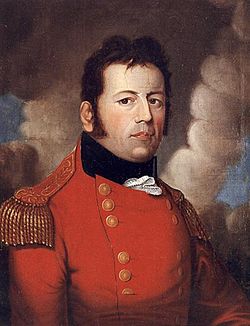
Sir George Prevost, 1st Baronet (19 May 1767 – 5 January 1816) was a British Army officer and colonial administrator who is most well known as the "Defender of Canada" during the War of 1812. Born in New Jersey, the eldest son of Genevan Augustine Prévost, he joined the British Army as a youth and became a captain in 1784. Prevost served in the West Indies during the French Revolutionary Wars and the Napoleonic Wars, and was commander of St. Vincent from 1794 to 1796. He became Lieutenant-Governor of Saint Lucia from 1798 to 1802 and Governor of Dominica from 1802 to 1805. He is best known to history for serving as both the civilian Governor General and the military Commander in Chief in British North America (now part of Canada) during the War of 1812 between Britain and the United States.
George Prevost was born on 19 May 1767, in New Barbadoes Township (now Hackensack), New Jersey. His father was Augustin Prévost (1723–1786), a French-speaking Protestant from the Republic of Geneva, and a lieutenant-colonel in the British Army. His mother was Anne Francoise Marguerite "Nanette" Grand. George Prevost was educated at schools in England and in the North American continent.
On 3 May 1779, Prevost was commissioned at the age of eleven, as an ensign in the 60th Regiment of Foot, in which his father was a senior officer. In 1782, he transferred to the 47th Regiment of Foot, as a lieutenant, followed in 1784 by a move to the 25th Regiment of Foot as a captain. He then returned to the 60th Foot on 18 November 1790 with the rank of major, at the age of 23. Prevost's maternal grandfather was a wealthy banker in Amsterdam, and his money is considered to have certainly been responsible for his grandson's quick advancement up the chain of command in the British Army, as promotion could then be obtained "by purchase".
While serving in the 60th, Prevost was promoted to lieutenant-colonel on 6 August 1794. He was stationed in St Vincent from 1794–1795. During fighting on 20 January 1796, he was wounded twice, and he returned to England shortly after, where he was appointed to become an inspecting field officer. On 1 January 1798, Prevost became a colonel, and on 8 March he became a brigadier-general, at the age of 30. In May he was appointed to be the lieutenant governor of St Lucia, where his fluency in French and conciliatory administration won him the respect of the French planters living there. In 1802, he returned to Britain as a result of ill health.
On 27 September 1802, soon after fighting against France resumed, Prevost was chosen to be the Governor of Dominica. In 1803, the French attempted to seize the island, and Prevost fought against them. He would also fight against the French in an effort to reclaim St Lucia. On 1 January 1805, at the age of 37, Prevost was promoted to major-general, and soon after he was granted leave to return to England, where he became Lieutenant-Governor of Portsmouth and General Officer Commanding South-West District in December 1805, and where he was appointed to be a baronet. In 1806, Prevost became a colonel commandant of his regiment.
On 15 January 1808, Prevost was appointed to become the Lieutenant Governor of Nova Scotia, and he was also promoted to lieutenant-general, although this was a rank that he held only in Nova Scotia. He was tasked with improving the military defences of the Atlantic colonies. He arrived at Halifax on 7 April 1808 and by the end of April he had taken steps to increase opposition in New England to the American government's hostile attitude towards Britain. The President of the United States of America in 1808, Thomas Jefferson, had placed an embargo on American trading with Britain. From 1808, to the beginning of the War of 1812, Prevost tried to encourage New England to trade with Britain by setting up "free ports" in Nova Scotia and New Brunswick, where American goods could be landed without a need to pay customs duties. This led to a substantial increase in Nova Scotia's trade not only with New England, but also with the West Indies. Prevost could do little to improve the sub-standard fortifications in Nova Scotia, but was able to secure the approval of the legislature in Nova Scotia to amend a militia law, which led to Prevost's ability to mobilize a small, effective militia force to work with the regular garrison during an emergency.
The amendment of the law is considered to be a good achievement by Prevost, because his predecessor as lieutenant governor, John Wentworth, had been responsible for relations between the executive and legislative bodies of Nova Scotia weakening. Wentworth had tried to increase his own executive power at the expense of the legislative House of Assembly. When Prevost arrived, the House of Assembly, led by William Cottnam Tonge, was struggling to control government expenditures. In an effort to appease Tonge, Prevost appointed him to be his second-in-command during an expedition against Martinique.
They departed from Halifax on 6 December 1808. Unfortunately, Tonge’s departure did not lead to a peaceful relationship between the House of Assembly and the executive body as Prevost’s replacement during his absence, Alexander Croke, fought with the Assembly over a supply bill. Eventually, Croke rejected the bill on the basis that it did not fit in with royal prerogatives, and then could not reach an agreement with the Legislative Council over how to settle the dispute between himself and the Assembly.
George Prevost
Sir George Prevost, 1st Baronet (19 May 1767 – 5 January 1816) was a British Army officer and colonial administrator who is most well known as the "Defender of Canada" during the War of 1812. Born in New Jersey, the eldest son of Genevan Augustine Prévost, he joined the British Army as a youth and became a captain in 1784. Prevost served in the West Indies during the French Revolutionary Wars and the Napoleonic Wars, and was commander of St. Vincent from 1794 to 1796. He became Lieutenant-Governor of Saint Lucia from 1798 to 1802 and Governor of Dominica from 1802 to 1805. He is best known to history for serving as both the civilian Governor General and the military Commander in Chief in British North America (now part of Canada) during the War of 1812 between Britain and the United States.
George Prevost was born on 19 May 1767, in New Barbadoes Township (now Hackensack), New Jersey. His father was Augustin Prévost (1723–1786), a French-speaking Protestant from the Republic of Geneva, and a lieutenant-colonel in the British Army. His mother was Anne Francoise Marguerite "Nanette" Grand. George Prevost was educated at schools in England and in the North American continent.
On 3 May 1779, Prevost was commissioned at the age of eleven, as an ensign in the 60th Regiment of Foot, in which his father was a senior officer. In 1782, he transferred to the 47th Regiment of Foot, as a lieutenant, followed in 1784 by a move to the 25th Regiment of Foot as a captain. He then returned to the 60th Foot on 18 November 1790 with the rank of major, at the age of 23. Prevost's maternal grandfather was a wealthy banker in Amsterdam, and his money is considered to have certainly been responsible for his grandson's quick advancement up the chain of command in the British Army, as promotion could then be obtained "by purchase".
While serving in the 60th, Prevost was promoted to lieutenant-colonel on 6 August 1794. He was stationed in St Vincent from 1794–1795. During fighting on 20 January 1796, he was wounded twice, and he returned to England shortly after, where he was appointed to become an inspecting field officer. On 1 January 1798, Prevost became a colonel, and on 8 March he became a brigadier-general, at the age of 30. In May he was appointed to be the lieutenant governor of St Lucia, where his fluency in French and conciliatory administration won him the respect of the French planters living there. In 1802, he returned to Britain as a result of ill health.
On 27 September 1802, soon after fighting against France resumed, Prevost was chosen to be the Governor of Dominica. In 1803, the French attempted to seize the island, and Prevost fought against them. He would also fight against the French in an effort to reclaim St Lucia. On 1 January 1805, at the age of 37, Prevost was promoted to major-general, and soon after he was granted leave to return to England, where he became Lieutenant-Governor of Portsmouth and General Officer Commanding South-West District in December 1805, and where he was appointed to be a baronet. In 1806, Prevost became a colonel commandant of his regiment.
On 15 January 1808, Prevost was appointed to become the Lieutenant Governor of Nova Scotia, and he was also promoted to lieutenant-general, although this was a rank that he held only in Nova Scotia. He was tasked with improving the military defences of the Atlantic colonies. He arrived at Halifax on 7 April 1808 and by the end of April he had taken steps to increase opposition in New England to the American government's hostile attitude towards Britain. The President of the United States of America in 1808, Thomas Jefferson, had placed an embargo on American trading with Britain. From 1808, to the beginning of the War of 1812, Prevost tried to encourage New England to trade with Britain by setting up "free ports" in Nova Scotia and New Brunswick, where American goods could be landed without a need to pay customs duties. This led to a substantial increase in Nova Scotia's trade not only with New England, but also with the West Indies. Prevost could do little to improve the sub-standard fortifications in Nova Scotia, but was able to secure the approval of the legislature in Nova Scotia to amend a militia law, which led to Prevost's ability to mobilize a small, effective militia force to work with the regular garrison during an emergency.
The amendment of the law is considered to be a good achievement by Prevost, because his predecessor as lieutenant governor, John Wentworth, had been responsible for relations between the executive and legislative bodies of Nova Scotia weakening. Wentworth had tried to increase his own executive power at the expense of the legislative House of Assembly. When Prevost arrived, the House of Assembly, led by William Cottnam Tonge, was struggling to control government expenditures. In an effort to appease Tonge, Prevost appointed him to be his second-in-command during an expedition against Martinique.
They departed from Halifax on 6 December 1808. Unfortunately, Tonge’s departure did not lead to a peaceful relationship between the House of Assembly and the executive body as Prevost’s replacement during his absence, Alexander Croke, fought with the Assembly over a supply bill. Eventually, Croke rejected the bill on the basis that it did not fit in with royal prerogatives, and then could not reach an agreement with the Legislative Council over how to settle the dispute between himself and the Assembly.
Recent media
Recent media