
Recent from talks
Georges Clemenceau
Knowledge base stats:
Talk channels stats:
Members stats:
Georges Clemenceau
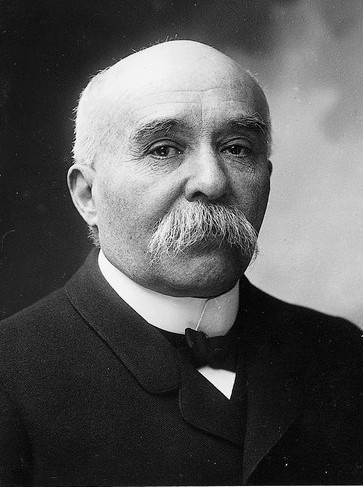
Georges Benjamin Clemenceau (28 September 1841 – 24 November 1929) was a French statesman who was prime minister of France from 1906 to 1909 and again from 1917 until 1920. A physician turned journalist, he played a central role in the politics of the Third Republic, particularly amid the end of the First World War. He was a key figure of the Independent Radicals, advocating for the separation of church and state, as well as the amnesty of the Communards exiled to New Caledonia.
After about 1,400,000 French soldiers were killed between the German invasion and Armistice, he demanded a total victory over the German Empire. Clemenceau stood for reparations, a transfer of colonies, strict rules to prevent a rearming process, as well as the restitution of Alsace–Lorraine, which had been annexed to Germany in 1871. He achieved these goals through the Treaty of Versailles signed at the Paris Peace Conference (1919–1920). Nicknamed Père la Victoire ("Father Victory") or Le Tigre ("The Tiger"), he continued his harsh position against Germany in the 1920s, although not quite so much as President Raymond Poincaré or former Supreme Allied Commander Ferdinand Foch, who thought the treaty was too lenient on Germany, prophetically stating: "This is not peace. It is an armistice for twenty years." Clemenceau obtained mutual defence treaties with the United Kingdom and the United States against possible future German aggression, but these never took effect due to the U.S. Senate's failure to ratify the treaty, which in turn released Britain from its obligation.
Clemenceau was a native of Vendée, born in Mouilleron-en-Pareds. During the period of the French Revolution, Vendée had been a hotbed of monarchist sympathies. The department was remote from Paris, rural, and poor. His mother, Sophie Eucharie Gautreau (1817–1903), was of Huguenot descent. His father, Benjamin Clemenceau (1810–1897), came from a long line of physicians, but lived off his lands and investments and did not practice medicine. Benjamin was a political activist; he was arrested and briefly held in 1851 and again in 1858. He instilled in his son a love of learning, devotion to radical politics, and a hatred of Catholicism. The lawyer Albert Clemenceau (1861–1955) was his brother. His mother was a devout Protestant; his father was an atheist and insisted that his children should have no religious education. Clemenceau was interested in religious issues. He was a lifelong atheist with a sound knowledge of the Bible.[citation needed] He became a leader of anti-clerical or "Radical" forces that battled against the Catholic Church in France and the Catholics in politics. He stopped short of the more extreme attacks. His position was that if church and state were kept rigidly separated, he would not support oppressive measures designed to further weaken the Catholic Church.
After his studies in the Lycée in Nantes, Clemenceau received his French baccalaureate of letters in 1858. He went to Paris to study medicine and eventually graduated with the completion of his thesis "De la génération des éléments anatomiques" in 1865.
In Paris, the young Clemenceau became a political activist and writer. In December 1861, he and some friends co-founded a weekly newsletter, Le Travail. On 23 February 1862, he was arrested by the imperial police for having placed posters summoning a demonstration. He spent 77 days in the Mazas Prison. Around the same time, Clemenceau also visited the old French revolutionary Auguste Blanqui and another Republican activist, Auguste Scheurer-Kestner, in jail, further deepening his hatred of the Napoleon III regime and advancing his fervent republicanism.
He was graduated as a doctor of medicine on 13 May 1865, founded several literary magazines, and wrote many articles, most of which attacked the imperial regime of Napoleon III. After a failed love affair, Clemenceau left France for the United States as the imperial agents began cracking down on dissidents and sending most of them to the bagne de Cayenne (Devil's Island Penal System) in French Guiana.
Clemenceau worked in New York City during the years 1865–1869, following the American Civil War. He maintained a medical practice, but spent much of his time on political journalism for a Parisian newspaper, Le Temps. He taught French in Great Barrington, Massachusetts, and also taught and rode horseback at a private girls' school in Stamford, Connecticut, where he would meet his future wife. During this time, he joined French exile clubs in New York that were opposing the imperial regime.
As part of his journalistic activity, Clemenceau covered the country's recovery following the Civil War, the workings of American democracy, and the racial questions related to the end of slavery. From his time in America, he retained a strong faith in American democratic ideals as opposed to France's imperial regime, as well as a sense of political compromise that later would become a hallmark of his political career.
Hub AI
Georges Clemenceau AI simulator
(@Georges Clemenceau_simulator)
Georges Clemenceau
Georges Benjamin Clemenceau (28 September 1841 – 24 November 1929) was a French statesman who was prime minister of France from 1906 to 1909 and again from 1917 until 1920. A physician turned journalist, he played a central role in the politics of the Third Republic, particularly amid the end of the First World War. He was a key figure of the Independent Radicals, advocating for the separation of church and state, as well as the amnesty of the Communards exiled to New Caledonia.
After about 1,400,000 French soldiers were killed between the German invasion and Armistice, he demanded a total victory over the German Empire. Clemenceau stood for reparations, a transfer of colonies, strict rules to prevent a rearming process, as well as the restitution of Alsace–Lorraine, which had been annexed to Germany in 1871. He achieved these goals through the Treaty of Versailles signed at the Paris Peace Conference (1919–1920). Nicknamed Père la Victoire ("Father Victory") or Le Tigre ("The Tiger"), he continued his harsh position against Germany in the 1920s, although not quite so much as President Raymond Poincaré or former Supreme Allied Commander Ferdinand Foch, who thought the treaty was too lenient on Germany, prophetically stating: "This is not peace. It is an armistice for twenty years." Clemenceau obtained mutual defence treaties with the United Kingdom and the United States against possible future German aggression, but these never took effect due to the U.S. Senate's failure to ratify the treaty, which in turn released Britain from its obligation.
Clemenceau was a native of Vendée, born in Mouilleron-en-Pareds. During the period of the French Revolution, Vendée had been a hotbed of monarchist sympathies. The department was remote from Paris, rural, and poor. His mother, Sophie Eucharie Gautreau (1817–1903), was of Huguenot descent. His father, Benjamin Clemenceau (1810–1897), came from a long line of physicians, but lived off his lands and investments and did not practice medicine. Benjamin was a political activist; he was arrested and briefly held in 1851 and again in 1858. He instilled in his son a love of learning, devotion to radical politics, and a hatred of Catholicism. The lawyer Albert Clemenceau (1861–1955) was his brother. His mother was a devout Protestant; his father was an atheist and insisted that his children should have no religious education. Clemenceau was interested in religious issues. He was a lifelong atheist with a sound knowledge of the Bible.[citation needed] He became a leader of anti-clerical or "Radical" forces that battled against the Catholic Church in France and the Catholics in politics. He stopped short of the more extreme attacks. His position was that if church and state were kept rigidly separated, he would not support oppressive measures designed to further weaken the Catholic Church.
After his studies in the Lycée in Nantes, Clemenceau received his French baccalaureate of letters in 1858. He went to Paris to study medicine and eventually graduated with the completion of his thesis "De la génération des éléments anatomiques" in 1865.
In Paris, the young Clemenceau became a political activist and writer. In December 1861, he and some friends co-founded a weekly newsletter, Le Travail. On 23 February 1862, he was arrested by the imperial police for having placed posters summoning a demonstration. He spent 77 days in the Mazas Prison. Around the same time, Clemenceau also visited the old French revolutionary Auguste Blanqui and another Republican activist, Auguste Scheurer-Kestner, in jail, further deepening his hatred of the Napoleon III regime and advancing his fervent republicanism.
He was graduated as a doctor of medicine on 13 May 1865, founded several literary magazines, and wrote many articles, most of which attacked the imperial regime of Napoleon III. After a failed love affair, Clemenceau left France for the United States as the imperial agents began cracking down on dissidents and sending most of them to the bagne de Cayenne (Devil's Island Penal System) in French Guiana.
Clemenceau worked in New York City during the years 1865–1869, following the American Civil War. He maintained a medical practice, but spent much of his time on political journalism for a Parisian newspaper, Le Temps. He taught French in Great Barrington, Massachusetts, and also taught and rode horseback at a private girls' school in Stamford, Connecticut, where he would meet his future wife. During this time, he joined French exile clubs in New York that were opposing the imperial regime.
As part of his journalistic activity, Clemenceau covered the country's recovery following the Civil War, the workings of American democracy, and the racial questions related to the end of slavery. From his time in America, he retained a strong faith in American democratic ideals as opposed to France's imperial regime, as well as a sense of political compromise that later would become a hallmark of his political career.
Recent media